Beyond the Screen: How Hands-On Learning Toys Shape the Architects of Tomorrow
Introduction
In an era dominated by digital screens, where toddlers swipe before they stack and preschoolers prefer tablets to building blocks, a quiet revolution is taking place in living rooms and classrooms around the world. Parents and educators are rediscovering a timeless truth: the most profound learning happens not through passive consumption, but through active creation. At the heart of this rediscovery lie toys that build hands-on learning—physical objects that demand manipulation, experimentation, and problem-solving. These are not mere distractions; they are the silent curricula that wire young brains for creativity, resilience, and critical thinking.
Hands-on learning toys—whether a simple set of wooden blocks, a complex robotics kit, or a bucket of kinetic sand—engage multiple senses simultaneously. They invite children to touch, feel, build, fail, and rebuild. Unlike digital apps that offer instant feedback and predetermined outcomes, physical toys require patience, spatial reasoning, and the fine motor coordination that is essential for later academic success. This article explores why these toys matter more than ever, what types exist, and how they transform children from passive observers into active architects of their own understanding.
The Science Behind Hands-On Play
To understand the power of toys that build hands-on learning, we must first look at how the brain develops. Neuroscientific research shows that during early childhood, the brain forms neural connections at an astonishing rate—up to one million new synapses per second. These connections are strengthened through repeated, multi-sensory experiences. When a child picks up a wooden block, feels its weight, stacks it, and watches it topple, the brain is not just observing; it is encoding cause and effect, gravity, balance, and spatial relationships into neural circuitry.
Dr. Maria Montessori, the pioneering educator, long ago recognized that “the hands are the instruments of man’s intelligence.” Modern studies confirm this. A 2017 study published in *Frontiers in Psychology* found that children who engaged in structured block play demonstrated significantly better mathematical reasoning skills than those who did not. The act of physically manipulating objects activates the prefrontal cortex, the area responsible for executive functions such as planning, attention, and impulse control. In contrast, passive screen time often overstimulates the reward centers without engaging the problem-solving networks.
Toys that build hands-on learning are therefore not just fun; they are biological necessities. They provide the “scaffolding” that helps children move from concrete actions (touching a block) to abstract concepts (understanding that two halves make a whole). This is why educational toys that require assembly, sorting, balancing, or connecting are far more valuable than those that simply light up or make noise.
Categories of Hands-On Learning Toys
The market for hands-on learning toys is vast and varied, but they can be broadly grouped into several categories, each targeting different developmental domains.
*Construction and Building Sets*
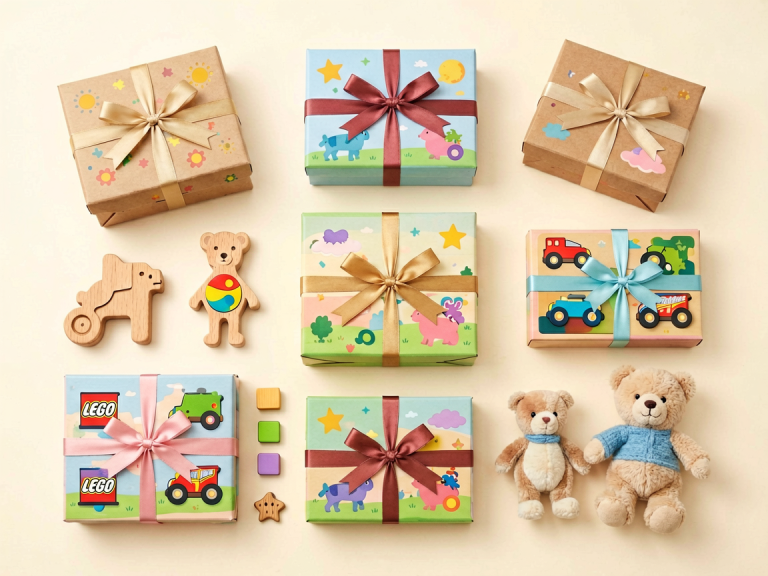
The classic building block—whether LEGO, wooden unit blocks, or magnetic tiles—remains the gold standard. These toys teach spatial awareness, symmetry, and structural integrity. When a child builds a tower, they must estimate height, weight distribution, and the need for a stable base. More advanced sets, such as K’NEX or Meccano, introduce principles of engineering and mechanics, complete with gears, axles, and pulleys. The open-ended nature of these toys means there is no single “right” answer; every creation is a unique solution to a self-imposed problem.
*Science and Discovery Kits*
From crystal-growing labs to volcano kits, science toys transform abstract concepts into tangible experiences. A child who mixes baking soda and vinegar to create a fizzy eruption is learning about chemical reactions in a way no textbook can replicate. Robotics kits, such as those from LEGO Mindstorms or littleBits, go a step further, introducing coding and electronics. Children learn to build circuits, program sensors, and troubleshoot errors—skills that are directly transferable to STEM careers. These toys build hands-on learning by making failure visible and acceptable: when a robot doesn’t move, the child must trace the problem back to a loose wire or a bug in the code, fostering a growth mindset.
*Art and Craft Materials*
Often overlooked in discussions of “educational” toys, art supplies are among the most powerful hands-on learning tools. Play-Doh, modeling clay, paint, scissors, and glue challenge fine motor skills and encourage creative expression. More structured craft kits—such as weaving looms, bead sets, or sewing projects—teach patterns, sequencing, and patience. The act of creating something from raw materials builds executive function: a child must plan, execute, and adapt when the glue drips or the paper tears. These experiences are crucial for developing the ability to delay gratification and persist through difficulty.
*Sensory and Manipulative Toys*
For younger children, sensory bins filled with rice, sand, or water, along with tools like scoops, funnels, and tweezers, provide rich hands-on learning. These toys develop hand-eye coordination, pincer grip, and early math concepts such as volume and measurement. Similarly, puzzles—from simple chunky shapes to complex jigsaws—teach pattern recognition, shape matching, and the cognitive strategy of trial and error. Montessori-style materials like the Pink Tower or the Cylinder Blocks isolate specific skills, allowing children to focus on one concept at a time without distraction.
Developmental Benefits Across Ages
The impact of hands-on learning toys is not limited to early childhood. As children grow, the complexity of the toys can scale with their cognitive abilities, providing lifelong benefits.
*Infants and Toddlers (0–3 years)*
At this stage, the brain is most plastic, and the foundation for fine motor control is laid. Toys that require grasping, shaking, stacking, and pulling—such as nesting cups, rattles, and shape sorters—help develop the small muscles of the hands and fingers. These are the same muscles needed later for writing, typing, and playing musical instruments. Moreover, cause-and-effect toys (e.g., a ball dropped into a hole that appears in a different place) build early logic.
*Preschoolers (3–5 years)*
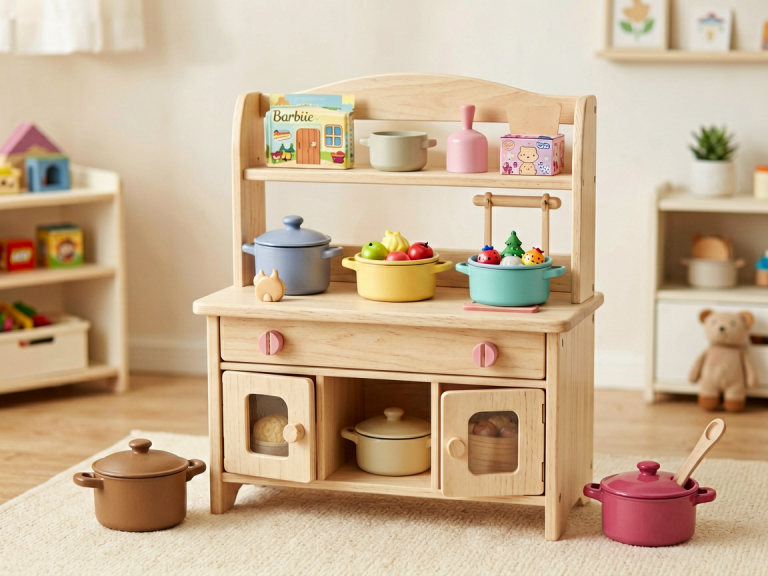
Preschoolers thrive on open-ended construction, simple board games, and pretend play props. Building blocks during this stage often involve elaborate scenarios—castles, bridges, spaceships—that integrate storytelling with engineering. Hands-on learning toys for this age also include simple counting beads, letter puzzles, and pattern tiles, which lay the groundwork for literacy and numeracy. Importantly, these toys encourage social interaction: when two children build together, they must negotiate, share, and communicate, developing language and emotional intelligence.
*School-Age Children (6–12 years)*
As children enter formal education, hands-on learning toys can supplement classroom instruction. Advanced LEGO sets with motors, coding robots, and science experiment kits allow children to apply abstract concepts from textbooks to real-world problems. A child learning about physics can build a catapult; a child studying biology can grow crystals or dissect a owl pellet. These toys build hands-on learning by bridging the gap between theory and practice. They also foster independence: a child who successfully assembles a complex model experiences a deep sense of accomplishment that boosts self-esteem.
*Adolescents (13+ years)*
Teenagers benefit from sophisticated kits like Arduino, Raspberry Pi, or 3D printing pens. These toys teach programming, electronics, and design thinking. They encourage iteration—a core principle of innovation. A teenager who builds a weather station or a programmable drone is not just playing; they are engaging in project-based learning that mirrors real-world engineering. Such toys also offer a constructive alternative to passive entertainment, providing a sense of purpose and the satisfaction of tangible creation.
Social and Emotional Growth
Beyond cognitive and motor skills, hands-on learning toys are powerful tools for emotional regulation and social development. When a child builds a tower that falls, they experience frustration. The toy itself—neutral and responsive only to physical laws—teaches the child that failure is not a judgment but a signal to try a different approach. This is resilience training in its purest form.
Collaborative building projects, such as constructing a large marble run or a group mosaic, require teamwork. Children learn to listen to others’ ideas, compromise, and take pride in collective achievement. They also learn to handle disappointment when their design is not chosen, or conversely, to lead when their idea is adopted. These are the soft skills that employers increasingly value in the 21st century.
In an age of social media and curated online personas, hands-on toys also offer a space for quiet, uninterrupted focus—a form of mindfulness. The repetitive motion of connecting bricks or threading beads can be calming, helping children regulate their own arousal levels. This is especially valuable for children with attention difficulties, who may find solace in the predictable, rhythmic nature of hands-on work.
Choosing the Right Toys: A Practical Guide
Not all toys marketed as “educational” truly build hands-on learning. To maximize the benefits, parents and educators should look for certain qualities.
First, the toy should be open-ended, meaning it can be used in multiple ways without a fixed end goal. A set of wooden blocks is open-ended; a battery-operated toy that only sings one song is not. Open-ended toys encourage creativity and problem-solving because there is no “correct” answer.
Second, the toy should require active engagement rather than passive observation. A toy that requires the child to push, pull, twist, assemble, or manipulate is superior to one that simply plays a video or produces sound. The child’s actions should directly affect the outcome.
Third, consider the complexity gradient. The best toys grow with the child. For example, a simple puzzle can be replaced by a more challenging one; LEGO sets come in varying difficulty levels. Look for toys that offer a range of possibilities, so the child does not outgrow them quickly.
Fourth, prioritize natural materials—wood, fabric, metal, and paper—over plastic. Not only are they more durable and safer (toxic chemicals in some plastics are a concern), but they also provide richer sensory feedback. The grain of wood, the weight of metal, the texture of fabric all contribute to the learning experience.
Finally, avoid overstimulation. Toys with flashing lights, loud noises, and automated responses can actually hinder deep learning by making the child a spectator. The best hands-on toys are quiet, allowing the child’s own mind to generate the excitement.
Conclusion: The Timeless Power of Hands
As we push forward into an increasingly virtual world, the value of toys that build hands-on learning only grows. They anchor children in physical reality, teaching them that their actions have consequences and that persistence pays off. They offer a sanctuary where the mind and body work together—a unity that is too often fragmented by screens. From the simple satisfaction of stacking a tower to the triumph of programming a robot, these toys build not just structures and circuits, but character, curiosity, and competence.
Parents today face immense pressure to prepare their children for a future that is unpredictable. Yet the answer may be simpler than we think: give them a box of blocks, a set of gears, a lump of clay, and the freedom to explore. In those small, humble toys lies the power to build not just models, but minds. And that is a lesson that no digital app can ever replace.