The Power of Play: How Learning Through Play Shapes the Development of 5-Year-Olds
Introduction
At the age of five, children stand at a remarkable crossroads of cognitive, social, emotional, and physical development. They are no longer toddlers whose world revolves solely around immediate sensory experiences, nor are they yet school-age children capable of sustained abstract reasoning. For five-year-olds, the most natural and effective vehicle for acquiring knowledge and skills is play. Learning through play is not a luxury or a reward to be earned after “real work” is done; it is, in fact, the very engine of early childhood development. This article explores why play is indispensable for five-year-olds, what forms of play are most beneficial, and how parents, educators, and caregivers can intentionally design environments that maximize learning through joyful, self-directed activity.
The Science Behind Play-Based Learning
The notion that play is merely frivolous entertainment has been thoroughly debunked by decades of research in neuroscience, developmental psychology, and education. For a five-year-old brain, play is a high-stakes neurological workout. During pretend play, for example, the prefrontal cortex—the region responsible for executive functions such as planning, impulse control, and flexible thinking—is intensely activated. When a child pretends to be a doctor giving a checkup to a stuffed animal, she is practicing perspective-taking (theory of mind), sequencing (first the stethoscope, then the reflex test), and emotional regulation (staying in character while the patient “cries”).
Moreover, play stimulates the release of brain-derived neurotrophic factor (BDNF), a protein that supports the growth and survival of neurons. Active, physically engaging play also promotes myelination—the process by which nerve fibers become coated with an insulating layer that speeds up signal transmission. This means that when a five-year-old runs, jumps, climbs, or balances on a beam during outdoor play, she is literally building a faster, more efficient brain. In short, learning through play is not a soft option; it is a biologically wired, hardcore learning mechanism.
Key Types of Play That Foster Learning in Five-Year-Olds
Not all play is created equal, and the most powerful learning experiences for five-year-olds often come from a blend of several play types. Understanding these categories helps adults provide the right materials, time, and space.
1. Pretend or Symbolic Play
At five, children’s imaginations are at their peak. They can hold complex storylines in their heads, assign roles to peers or toys, and negotiate conflicts within the fictional world. This type of play directly supports literacy and narrative skills. A child who sets up a “restaurant” with a menu of scribbled pictures is practicing emergent writing, categorization, and even basic math when she “charges” customers. More importantly, symbolic play requires children to hold abstract ideas in mind—a chair becomes a spaceship, a block becomes a phone—which is foundational for later mathematical and scientific thinking.
2. Constructive Play
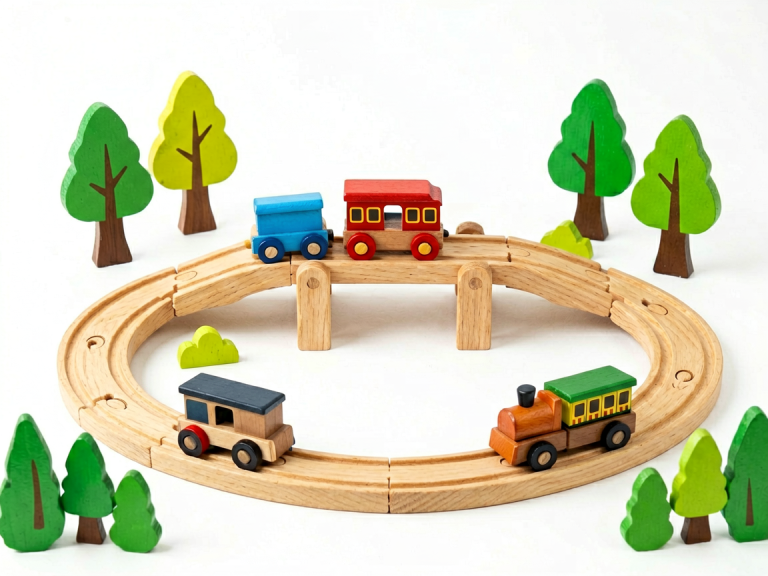
Building with blocks, Legos, sand, or recycled materials is a form of problem-solving. When a five-year-old tries to build a tower that won’t collapse, she inadvertently experiments with physics (balance, gravity, load distribution). She learns to plan ahead, revise her strategy, and persist through frustration. Constructive play also develops fine motor skills essential for handwriting. Teachers and parents can scaffold this learning by asking open-ended questions: “What if you made the base wider?” or “How could you connect these two parts?”
3. Physical and Outdoor Play
Running, jumping, swinging, and climbing are not mere energy burners. They develop gross motor skills, body awareness, and spatial reasoning. For five-year-olds, activities like hopping on one foot, skipping, or playing catch strengthen the vestibular system and proprioception, which in turn support attention and classroom readiness. Outdoor play also offers rich sensory input—feeling bark, smelling grass, hearing birds—that grounds children in the natural world and sparks curiosity about biology and the environment.
4. Games with Rules
Simple board games, card games, and group games like “Duck, Duck, Goose” introduce children to the concept of rules that are mutually agreed upon. This is a critical step in social-emotional learning: children learn to take turns, manage disappointment when they lose, and cooperate with others. Games also implicitly teach early math concepts such as counting, one-to-one correspondence, and pattern recognition.
Practical Strategies for Parents and Educators
Adults play a crucial role in facilitating learning through play, but the key is to facilitate rather than direct. The following strategies can help create a rich play-based learning environment for five-year-olds.
1. Provide Open-Ended Materials
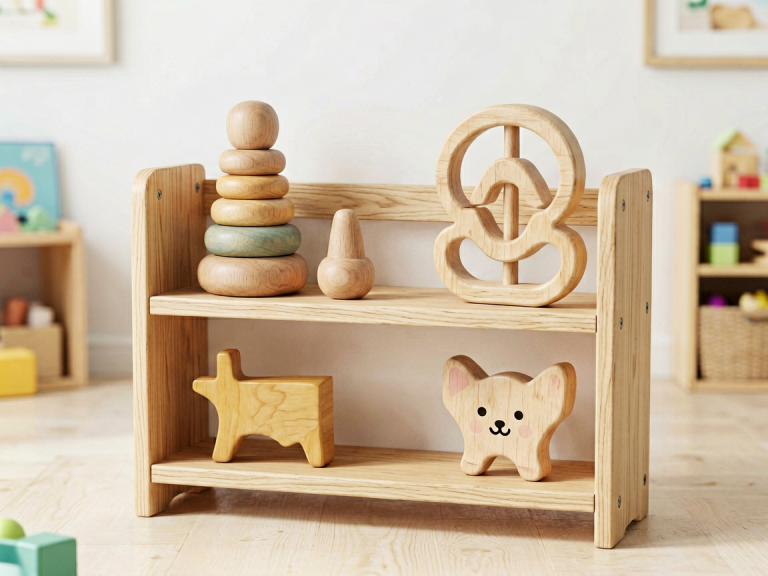
Instead of toys that do only one thing (like a battery-powered singing robot), offer loose parts: blocks, fabric scraps, cardboard boxes, playdough, natural objects like pinecones and shells. These materials invite infinite creative uses and do not prescribe a single “correct” outcome. A cardboard box can become a car, a castle, a cave, or a time machine on different days.
2. Carve Out Uninterrupted Time
Five-year-olds need long, unhurried blocks of time—at least 45 to 60 minutes—to enter a deep state of play. When play is constantly interrupted by scheduled activities or screens, children are denied the chance to develop sustained focus, narrative complexity, and problem-solving depth. In many preschools and kindergartens, the push for early literacy and numeracy drills has unfortunately squeezed out this essential time.
3. Use Intentional Observation and Gentle Scaffolding
Adults should watch what children are doing and then ask questions or add materials that extend the learning without taking over. For example, if a child is building a road out of blocks, you might ask, “How will the cars get across this river?” This invites the child to think about bridges or tunnels. Alternatively, you could place a small basket of toy animals nearby and say nothing—the child may incorporate them spontaneously.
4. Embrace Mess and Risk
Learning through play is often messy, loud, and unpredictable. Spilled water, scattered sand, and paint-splattered tables are signs of engaged learning. Similarly, appropriate physical risk—like climbing a little higher on the jungle gym—builds confidence and risk-assessment skills. Adults need to resist the urge to over-protect and instead focus on setting safe boundaries while allowing experimentation.
5. Integrate Play with Academic Concepts
Play does not have to be separate from academic learning. A five-year-old can practice letter sounds by “writing” a shopping list for her pretend grocery store. She can learn counting by distributing “treats” to stuffed animals. She can learn patterns by arranging colored blocks in a sequence. The key is that the academic content emerges naturally from the play context rather than being imposed from above.
Overcoming Misconceptions About Play
Despite overwhelming evidence, many parents and policymakers still view play as a “break” from learning rather than learning itself. This misconception is particularly dangerous at age five, when children are often entering kindergarten environments that emphasize worksheets, phonics drills, and high-stakes assessment. The pressure to “get children ready for school” has led to a narrowing of curricula that robs five-year-olds of the very experiences that prepare them for lifelong learning.
Research consistently shows that children who attend play-based kindergartens perform as well or better in later grades on measures of reading and math compared to those in direct-instruction settings—and they also demonstrate superior social skills, creativity, and motivation. Play is not the opposite of learning; it is the most sophisticated and developmentally appropriate form of learning for a five-year-old brain. When we confuse “teaching” with “telling,” we miss the profound fact that children construct understanding through active engagement, not passive reception.
Conclusion
Learning through play for five-year-olds is not a pedagogical trend; it is a biological and psychological necessity. In the seemingly simple acts of building a tower, staging a puppet show, or chasing a friend across the playground, a child is weaving together cognitive, social, emotional, and physical threads into the tapestry of a capable, curious human being. As parents, educators, and communities, we have a profound responsibility to protect and prioritize play—not as a reward or a luxury, but as the core curriculum for the most critical years of human development. By embracing play, we are not stepping back from teaching; we are stepping into the most powerful classroom of all: the child’s own imagination.