Unlocking the Magic of Play: Creative Learning Through Play Ideas for Kids
Introduction
In a world that often equates education with rigid textbooks, worksheets, and standardized tests, it is easy to forget that the most natural and powerful way children learn is through play. From the moment they grasp a rattle or stack a block, children are actively constructing meaning about their environment. Play is not a break from learning; it is the very engine of cognitive, social, emotional, and physical development. When we intentionally design playful experiences that embed educational goals, we honor children’s innate curiosity while building essential skills. This article explores a rich collection of learning-through-play ideas for kids, organized into clear categories. Each idea is simple, low-cost, and adaptable for different ages, ensuring that every parent, educator, or caregiver can turn everyday moments into vibrant learning opportunities.
The Science Behind Learning Through Play
Before diving into specific activities, it helps to understand why play works. Neuroscientific research shows that play stimulates the brain’s executive functions—problem-solving, planning, self-regulation, and creative thinking. When children engage in pretend play, they practice language, negotiate roles, and develop empathy. Construction play builds spatial reasoning and early math concepts. Physical play enhances motor skills and releases endorphins that reduce stress and improve focus. Crucially, play is intrinsically motivating; children persist longer and retain more when they are having fun. Therefore, the following ideas are not just “games added to a lesson,” but authentic learning experiences woven into play.
1. Imaginative and Pretend Play: Building Social and Language Skills
Children naturally love to pretend. A cardboard box becomes a spaceship, a blanket becomes a castle, and a stick becomes a magic wand. Through imaginative play, kids practice dialogue, story structure, and emotional expression.
| Idea | Learning Focus |
|———-|———————|
| “Grocery Store” at Home | Set up a pretend grocery store using empty food cartons, toy cash register, and play money. Children take turns being shopper and cashier. They write shopping lists, count items, and calculate change. This builds early literacy (list-making), math (counting and simple addition), and social skills (turn-taking, polite requests). |
| Dress-Up and Role-Play | Provide a collection of old clothes, hats, and props. Suggest scenarios: doctor’s office, restaurant, fire station, or a day at the beach. Children narrate their actions, invent problems to solve (e.g., “Oh no, the patient has a fever!”) and collaborate with siblings or friends. This develops vocabulary, narrative thinking, and empathy. |
| Puppet Show Storytelling | Create simple sock puppets or paper-bag puppets. Have children act out familiar stories or invent new ones. Encourage them to give each puppet a distinct voice and personality. They learn sequencing (beginning, middle, end), character development, and public speaking confidence. |
2. Construction and Building Play: Engineering, Math, and Problem-Solving
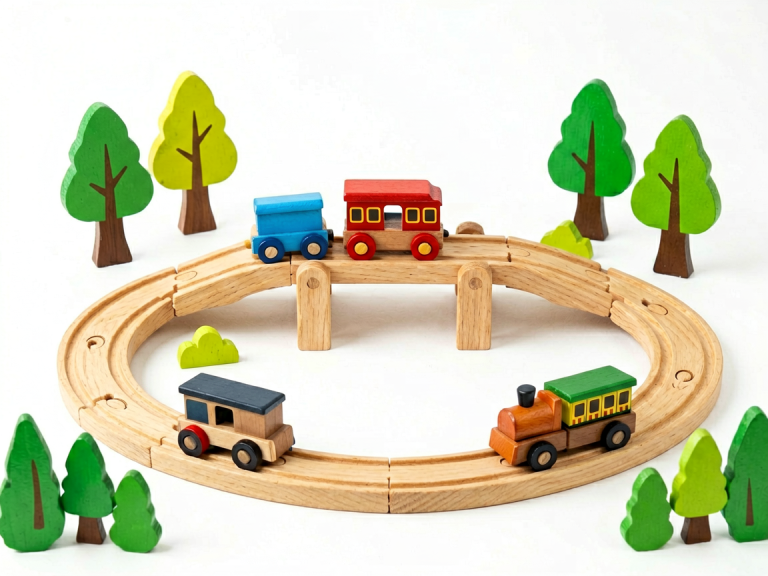
Blocks, LEGOs, magnets, and loose parts provide endless opportunities to explore geometry, balance, and cause-and-effect. This type of play is particularly rich for STEM learning.
| Idea | Learning Focus |
|———-|———————|
| “Marshmallow and Toothpick Engineering” | Give children a pile of mini marshmallows and toothpicks. Challenge them to build the tallest tower, a bridge that can hold a small toy, or a 3D shape like a cube or pyramid. They learn about structural stability, trial and error, and spatial visualization. |
| Loose Parts Play | Collect natural objects (pinecones, acorns, stones), recycled items (bottle caps, cardboard tubes), and craft materials (yarn, buttons). Let children assemble creatures, vehicles, or abstract sculptures. This open-ended activity encourages creativity and fine motor control, while also introducing concepts of symmetry, pattern, and weight. |
| Magnetic Tile Patterns | Use magnetic tiles (like Magna-Tiles) to create patterns, symmetry, and even simple fractions. For instance, ask a child to make a “half-blue, half-red” square or to build a castle with exactly four towers. They absorb early math vocabulary and learn to follow multi-step instructions. |
3. Outdoor and Nature Play: Science, Observation, and Gross Motor Skills
The outdoor world is a classroom without walls. Mud, leaves, water, and insects all spark curiosity and scientific thinking.
| Idea | Learning Focus |
|———-|———————|
| Nature Scavenger Hunt | Create a simple checklist: “Find something smooth, something rough, something that floats, something that makes a sound.” As children search, they practice categorization, sensory observation, and descriptive language. Older kids can use a clipboard to draw or write notes, developing early scientific recording skills. |
| Mud Kitchen | Set up a corner of the yard or a large plastic tub with dirt, water, bowls, spoons, and natural decorations (leaves, flowers, sticks). Children mix “potions,” bake “mud pies,” and serve imaginary tea. This is sensory-rich play that supports creativity, measurement (how many scoops?), and even basic chemistry (mixing wet and dry ingredients). |
| Water Flow Experiment | With a hose, buckets, and a few plastic pipes or tubes, let children explore how water flows. They can build “rivers” in the sandbox, dam the flow with rocks, or divert water into different channels. This hands-on physics lesson teaches gravity, resistance, and the water cycle in the most engaging way possible. |
4. Art and Sensory Play: Creativity, Emotional Regulation, and Fine Motor Development
Art play is often messy, but that messiness is precisely what makes it powerful. Children process emotions, experiment with color and texture, and develop hand-eye coordination.
| Idea | Learning Focus |
|———-|———————|
| “Rainbow Rice” Sensory Bins | Dye rice in different colors and place it in a shallow bin. Add scoops, funnels, small toys, and cups. Children pour, sift, and hide objects. This repetitive motion is calming and improves fine motor precision. As they sort colors or count scoops, they also reinforce math concepts. |
| Process Art with Recycled Materials | Instead of giving a coloring page, offer a box of bottle caps, fabric scraps, corks, and glue. Ask children to create a “robot” or a “sunset collage.” There is no right answer—only exploration. They learn to make choices, combine materials, and express their unique vision. |
| Playdough Letters and Numbers | Use homemade or store-bought playdough. Have children roll “snakes” and shape them into letters, numbers, or even simple words. This is a multi-sensory way to practice pre-writing and letter recognition. Bonus: add cookie cutters or stamps for extra fun. |
5. Board Games and Card Games: Logic, Strategy, and Social Skills
Structured games with rules are a fantastic way to teach turn-taking, patience, and flexible thinking.
| Idea | Learning Focus |
|———-|———————|
| Classic Memory Game | Use a set of matching cards (pictures, letters, or numbers). Children exercise working memory and concentration. You can make it thematic by using animal cards while learning habitats: “Do you remember where the polar bear card was?” |
| Simple Dice Games | Games like “Roll and Add” (roll two dice, add the numbers, then cover that number on a sheet) make arithmetic automatic. Or play “Race to 100” by rolling a die and moving a counter along a number line. Children internalize addition and number sense without drill. |
| Cooperative Puzzles | Work on a jigsaw puzzle together. Talk about strategies: “Which piece do you think goes next? How can we tell?” Children learn spatial reasoning, collaboration, and how to break a big problem into smaller steps. |
6. Music and Movement: Literacy, Rhythm, and Kinesthetic Learning
Rhyme, song, and dance engage both hemispheres of the brain, making them powerful tools for literacy and math.
| Idea | Learning Focus |
|———-|———————|
| Action Songs with Literacy | Songs like “Head, Shoulders, Knees, and Toes” teach body parts. “The Alphabet Song” links letters to sounds. Make up silly verses about daily routines (e.g., “This is the way we brush our teeth…”). Children learn vocabulary, phonological awareness, and sequencing. |
| Homemade Instruments | Fill empty bottles with different levels of water to create a “xylophone.” Stretch rubber bands over a shoebox for a guitar. Shake dried beans in a sealed container for a shaker. Children experiment with pitch, volume, and rhythm—all while exploring physics and cause-and-effect. |
| Dance and Freeze with Commands | Play music and have children dance. When the music stops, they must freeze in a pose that represents a shape (circle, triangle), a letter, or an emotion (happy, surprised). This kinesthetic activity links movement with conceptual understanding. |
7. Everyday Life Play: Practical Skills and Math in Context
The most overlooked learning-through-play opportunities happen during daily routines.
| Idea | Learning Focus |
|———-|———————|
| Cooking Together | Let children measure flour, count eggs, set the timer, and stir. They practice fractions (1/2 cup), sequencing (follow a recipe), and scientific observation (how batter changes when baked). Plus, the reward is delicious! |
| Sorting Laundry | Turn laundry into a color-sorting game. Ask: “Can you put all the white socks in this pile and all the blue socks in that pile?” Older children can match pairs, count items, and even create a simple bar graph of the different colored pieces. |
| “Store” with Real Coins | When you come home from a store, let your child help you count the change. Or set up a small stand where they “sell” old toys to siblings using real or play money. This builds financial literacy and decimal understanding. |
Conclusion
Learning through play is not a luxury or a frivolous break from “real” learning—it is the most authentic, effective, and joyful way for children to understand the world. The ideas shared here are merely a starting point. Each child will bring their own creativity to these activities, reshaping them in ways that meet their unique developmental needs. As adults, our role is simple: provide the time, space, and materials; ask open-ended questions; and then step back and marvel at the learning unfolding naturally. When we trust play, we trust children. And when children play, they build not only knowledge but also the confidence, resilience, and curiosity that will serve them for a lifetime. So put away the flashcards, go outside, grab some blocks, and let the learning begin.