Unlocking Early Numeracy: Engaging Math Activities for 4-Year-Olds
Mathematics is often seen as a subject reserved for older children and adults, but the foundation for mathematical thinking is laid much earlier. At age four, children are naturally curious, energetic, and eager to explore the world around them. This is the perfect time to introduce math concepts through play, everyday routines, and hands-on activities. Research shows that early numeracy skills—such as counting, recognizing shapes, comparing sizes, and understanding patterns—are strong predictors of later academic success. The key is to make math fun, meaningful, and stress-free. In this article, we will explore a variety of engaging math activities designed specifically for four-year-olds, helping them develop number sense, spatial awareness, logical reasoning, and a positive attitude towards learning.
Counting Adventures in Everyday Life
Counting is one of the most basic and essential math skills for a four-year-old. Instead of using flashcards or worksheets, turn everyday moments into counting adventures. While setting the dinner table, ask your child to count out the plates: “How many plates do we need? One for Daddy, one for Mommy, one for you—let’s count them together!” During a walk around the neighborhood, challenge them to count the number of red cars they see, the steps from the front door to the mailbox, or the birds sitting on a fence. You can also make counting physical by having them hop three times, clap five times, or touch their nose four times. These simple activities reinforce one-to-one correspondence—the idea that each number corresponds to one object—and build a solid foundation for addition and subtraction later on. For added fun, use colorful counting toys like plastic animals, buttons, or blocks, and let your child group them into sets of two, three, or five. Remember, the goal is not perfection but exposure and enjoyment.
Shape Hunt and Geometry Fun
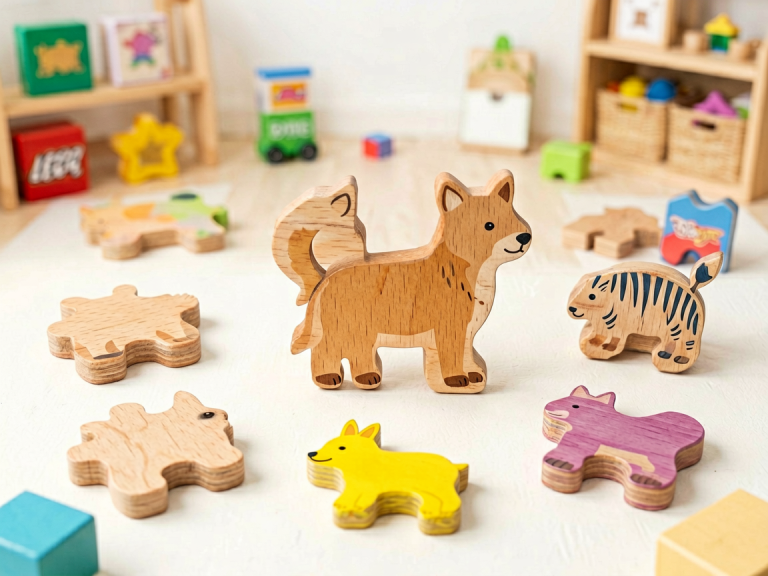
Four-year-olds are naturally drawn to shapes—circles, squares, triangles, and rectangles appear everywhere in their environment. A “shape hunt” is a wonderful way to develop geometric awareness. Start by naming a shape, then go on a scavenger hunt around your home or yard. Look for a round clock, a square window, a triangular slice of pizza, or a rectangular book. You can also use playdough or clay to mold different shapes, or cut out shapes from colored paper and have your child match them to objects. Another engaging activity is building with shape blocks (like pattern blocks or tangrams). Encourage your child to create pictures—a house using a square and a triangle, a train using rectangles and circles. This not only teaches shape names and attributes but also introduces concepts like symmetry, position words (above, below, next to), and spatial reasoning. As your child becomes more confident, you can introduce more complex shapes like hexagons or stars, always keeping the tone playful and exploratory.
Sorting, Patterning, and Classification Games
Sorting and patterning are fundamental pre-math skills that help children organize information and recognize relationships. Provide a basket of mixed objects—for example, colored buttons, pasta shapes, or toy animals—and ask your child to sort them by color, size, or type. You can also sort laundry together: “Let’s put all the socks in one pile and all the shirts in another.” This teaches classification and sets the stage for understanding categories and sets. Patterning is equally important. Start with simple AB patterns: red block, blue block, red block, blue block—and ask your child to continue the pattern. Then move to ABC patterns (red, blue, green) or more complex sequences. Use objects like beads, fruit loops, or stickers to create patterns on a string or paper. You can also make pattern sounds—clap, stomp, clap, stomp—and have your child copy them. These activities develop logical thinking, memory, and the ability to predict what comes next, all of which are crucial for mathematical reasoning.
Measurement and Comparison Activities
Measurement is a natural part of a four-year-old’s world. They love comparing who is taller, whose cup holds more juice, or which toy is heavier. Capitalize on this curiosity with simple, hands-on measurement activities. Fill two containers with water and let your child guess which one holds more, then pour the water into a measuring cup to check. Use a kitchen scale to weigh fruit and compare: “Is the apple heavier or the orange?” For length, have your child line up toys in order from shortest to tallest, or use a piece of string to measure the length of a teddy bear and then compare it to the length of a dinosaur. Another favorite activity is “How many steps?”—ask your child how many steps it takes to cross the room, then have them walk heel-to-toe and count. You can also use non-standard units like paper clips, blocks, or hands to measure objects around the house. These experiences introduce terms like longer, shorter, heavier, lighter, fuller, and emptier, and build an intuitive understanding of measurement without the pressure of formal units.
Number Sense Through Songs and Rhymes
Music and movement are powerful tools for learning at this age. Classic counting songs like “Five Little Ducks,” “Ten in the Bed,” and “Five Green and Speckled Frogs” help children internalize number sequences and understand subtraction in a fun, memorable way. Sing these songs together and act them out using fingers or small toys. For example, with “Five Little Ducks,” use five toy ducks and remove one each time the mother duck says “quack.” This visual and auditory repetition reinforces counting backward and the concept of “one less.” You can also create your own simple rhymes: “One, two, buckle my shoe / Three, four, knock on the door.” Add hand gestures or clapping to make it multisensory. Another idea is to use a number line on the floor (tape numbers 1–10 on the ground) and have your child hop from one number to another while you sing a song. This kinesthetic approach links physical movement to numerical order, making abstract numbers feel concrete and engaging.
Hands-On Math with Manipulatives
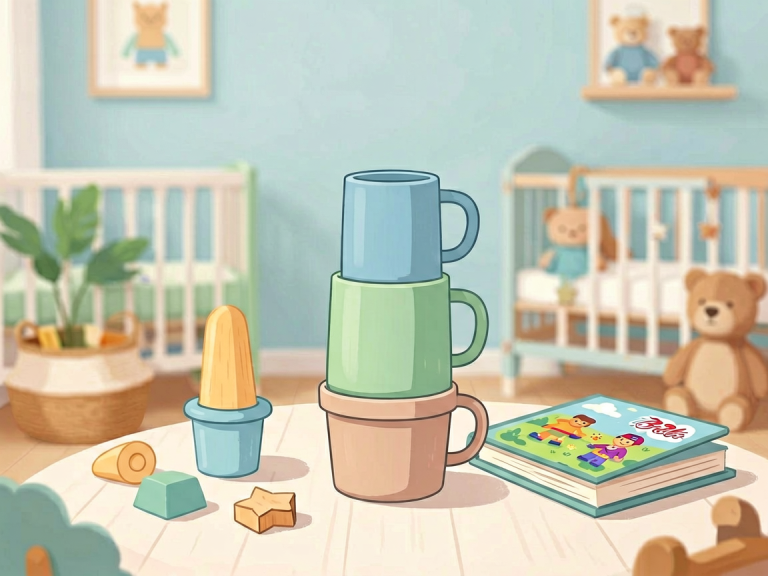
Manipulatives—physical objects that children can touch, move, and arrange—are the cornerstone of early math education. Simple items like counting bears, linking cubes, or even dried beans and pasta can be used for countless activities. For example, give your child a pile of counting bears and a set of small cups. Ask them to put two bears in each cup, then count the total. This introduces the idea of grouping and early multiplication concepts. You can also play “one more” or “one less” games: “I have three blocks. Can you give me one more? How many now?” Or “I have five crackers. If I eat one, how many are left?” Use a ten-frame (a grid of ten squares) with counters to help children visualize numbers and understand that seven is five and two more. These hands-on experiences build number sense, addition and subtraction readiness, and problem-solving skills in a low-stress, exploratory way.
Math in the Kitchen: Real-World Learning
The kitchen is a rich environment for math. Baking cookies, for instance, involves counting eggs, measuring flour, and dividing dough. Let your four-year-old help with simple tasks: pour one cup of milk, count out three apples for a pie, or set the timer for five minutes. While cooking, talk about fractions in a natural way: “We need half a cup of sugar. Look, this measuring cup has a line that says 1/2. Let’s fill it up to that line.” Use cookie cutters of different shapes to make geometric cookies, then count and compare them. You can also sort utensils, match lids to containers, or arrange vegetables by size. These activities integrate math into daily life, showing your child that math is not just a school subject but a useful tool for real-world tasks.
Outdoor Math Games
Take math outside for some active learning. Draw a hopscotch grid with chalk on the driveway; instead of just hopping on numbers, call out a number and have your child hop on it, or toss a beanbag onto a number and say its name. Play “number tag”—assign each child a number, and when you call that number, they run to a designated spot. Set up a nature scavenger hunt: “Find three leaves, two sticks, and one smooth rock.” Count the items together. Use a jump rope and count how many jumps your child can do before missing, then try to beat the record. Another fun activity is “balloon counting”: blow up several balloons, write numbers on them with a marker, and have your child find the balloon with the correct number when you call it out. Outdoor games combine physical activity with number recognition, counting, and even simple addition (e.g., “We found two leaves and three sticks, that’s five items in total!”).
Conclusion
The goal of math activities for four-year-olds is not to produce little mathematicians overnight but to nurture a positive, curious, and confident approach to numbers and patterns. By integrating math into play, daily routines, and creative exploration, you provide your child with the building blocks for future learning. Remember to keep activities short, varied, and pressure-free. Praise effort and celebrate small successes—a correct count, a completed pattern, or a discovered shape. With these engaging ideas, you can help your four-year-old see math not as a chore but as an exciting adventure full of discovery. Happy counting, sorting, and shaping!
Start with the complete guide: Beyond Counting: The Best Early Math Toys That Build a Foundation for Lifelong Numeracy.