Educational Language Toys for Kids: Unlocking the Power of Playful Learning
Introduction
In an age where screens dominate children’s attention, the humble toy has quietly undergone a remarkable transformation. Educational language toys for kids have emerged not merely as sources of entertainment, but as powerful catalysts for cognitive development, linguistic acquisition, and emotional growth. These thoughtfully designed playthings bridge the gap between fun and learning, turning every giggle, puzzle piece, and spoken word into a building block for a child’s future. From the first babble of a toddler to the complex sentences of a preschooler, language toys provide the scaffolding that supports a child’s natural curiosity about words, sounds, and communication. This article explores the multifaceted world of educational language toys, examining their benefits, categories, selection criteria, and practical integration into daily life, all while emphasizing that the most effective learning often happens when children are simply having fun.
The Cognitive and Linguistic Benefits of Language Toys
Language toys are far more than colorful distractions. They actively engage multiple regions of a child’s brain, fostering neural connections that underpin literacy, vocabulary, and communication skills. When a child presses a button on a talking book and hears the word “elephant,” the auditory cortex processes the sound, the visual cortex recognizes the image, and the motor cortex registers the action. This multisensory integration accelerates word retention and comprehension. Research in developmental psychology consistently shows that children who interact with language-rich toys from an early age demonstrate stronger phonological awareness—the ability to hear and manipulate sounds in words—which is a critical predictor of later reading success.
Beyond vocabulary, these toys nurture syntactic awareness. Sentence-building puzzles, for instance, require children to arrange words in a logical order, teaching them subject-verb-object structures without a single grammar worksheet. They also encourage narrative thinking. Storytelling puppets or magnetic storyboards allow children to create their own tales, thereby practicing sequencing, cause and effect, and expressive language. Moreover, many language toys incorporate repetition and rhyme, which are fundamental to language acquisition. The playful repetition of sounds in a singing toy or a rhyming card game helps children internalize phonetic patterns, making them more confident in their spoken and written language.
Socially, language toys often promote interaction. A set of conversation dice or a cooperative word game requires turn-taking, listening, and responding—skills that are the bedrock of effective communication. Role-playing toys, such as a pretend telephone or a doctor’s kit with vocabulary cards, encourage children to adopt different perspectives and use context-appropriate language. This not only builds linguistic flexibility but also emotional intelligence, as children learn to modulate their tone and word choice based on the imaginary scenario. In essence, educational language toys create microcosms of authentic communication, allowing children to practice language in low-stakes, joyful settings.
Types of Educational Language Toys
The market today offers a dazzling array of language toys, each with unique strengths. Understanding the categories helps parents and educators make informed choices tailored to a child’s age, interests, and developmental stage.
Interactive Talking Toys and Electronic Books
These are perhaps the most recognizable language toys. From plush animals that recite the alphabet to interactive pens that read aloud from specially designed books, electronic toys combine audio feedback with tactile engagement. High-quality options, such as those from LeapFrog or VTech, use a “learn-to-read” journey, starting with letter sounds and progressing to full sentences. They often feature adjustable difficulty levels, allowing children to revisit the same toy at different stages. The key advantage is immediate auditory feedback, which reinforces correct pronunciation and word recognition. However, it is important to balance electronic play with human interaction, as the warmth of a parent’s voice cannot be replaced by a speaker.
Phonics and Spelling Games
These toys target the mechanics of reading and writing. Magnetic letter sets, for example, allow children to form words on a refrigerator or a whiteboard, combining kinesthetic learning with visual pattern recognition. More advanced sets include spelling puzzles where children match letter tiles to pictures. Phonics wheels, spin-and-match games, and letter dice transform abstract phonetic rules into hands-on fun. A particularly effective subtype is the “word builder” toy, often consisting of a board with slots for letters that when inserted correctly produce a sound or reveal a picture. These toys are ideal for pre-readers and early elementary children who are gaining confidence in decoding.
Storytelling and Narrative Toys
Storytelling fosters language at a higher level. Story cubes, where children roll dice with pictures and must create a story incorporating those images, stimulate imagination and oral language fluency. Puppets and felt boards encourage children to narrate their own tales, practicing plot development and character dialogue. Some toys come with blank books and stickers, prompting children to write and illustrate their own stories. For older kids, travel-based language games (like “Mad Libs”) provide structured yet hilarious opportunities to learn parts of speech such as nouns, verbs, and adjectives. These toys transform language learning from a solitary drill into a collaborative, creative process.
Role-Playing and Communication Sets
Toys that simulate real-world communication scenarios are invaluable for pragmatic language skills. Play telephones, walkie-talkies, and even simple microphones encourage back-and-forth dialogue. More elaborate sets include play kitchens, grocery stores, or post offices with accompanying vocabulary cards and signs. When children pretend to order food, give directions, or write a letter, they practice the social rules of language: turn-taking, asking questions, and using polite forms. For children learning English as a second language, these toys provide a safe environment to experiment with new phrases without fear of judgment. They also build cultural awareness, as different role-play scenarios can introduce customs and vocabulary from various communities.
Multi-Sensory Language Toys
Children with diverse learning styles benefit from toys that engage multiple senses simultaneously. Texture puzzles with letters, for instance, allow children to trace a sandpaper “A” while saying its sound. Scented playdough letter molds combine olfactory and tactile cues. Even simple finger puppets that require children to move their hands while speaking activate motor areas of the brain, reinforcing memory. These toys are particularly effective for kinesthetic learners—children who learn best through movement and touch. They also support children with speech delays or processing disorders by providing alternative pathways to language.
How to Choose the Right Educational Language Toys
Selecting the perfect language toy can feel overwhelming given the abundance of options. However, a few guiding principles can simplify the process.
First, consider the child’s developmental stage. A one-year-old benefits most from toys that make sounds and have bright contrasting colors—such as a simple musical book with animal noises. A three-year-old might thrive with a matching game that pairs pictures with first letters. A five-year-old may be ready for sentence-building puzzles or beginner phonics games. Age recommendations on packaging are useful but not absolute; observe the child’s actual skills and interests. A child who loves animals might engage with a language toy themed around the zoo, even if she is slightly younger than the suggested range.
Second, prioritize open-ended play. The best language toys are not one-trick ponies. A set of alphabet blocks can be used for stacking, sorting, spelling, and even storytelling. An interactive pen that works with multiple books can grow with the child. Open-ended toys encourage creativity and repeated use, whereas toys with a single correct answer may lose their appeal quickly. Also, look for toys that allow for adult-child interaction. Many electronic toys have a “parent mode” or come with activity guides that suggest games to play together. Language learning is inherently social, and a toy that facilitates conversation between parent and child is far more valuable than one that simply talks at the child.
Third, evaluate the toy’s linguistic richness. Does it introduce new vocabulary in context? Does it encourage the child to produce language, not just receive it? Toys that ask questions (“What sound does a cow make?”) or prompt the child to repeat words are more effective than those that only play prerecorded phrases. Check the quality of the audio—clear, native-speaker pronunciation is important for phonetic modeling. Avoid toys with distorted sound or overly fast speech.
Finally, think about balance. No single toy can teach everything. A well-rounded collection might include one electronic talking toy, one set of magnetic letters, one storytelling game, and one role-play set. Rotate toys to maintain novelty, and remember that the most powerful language-learning tool is still a caring adult who talks, reads, and plays alongside the child.
Integrating Language Toys into Daily Learning
Language toys are most effective when woven into a child’s everyday routine rather than isolated as special “learning time.” A few simple strategies can maximize their impact.
Morning routines can incorporate a word-of-the-day calendar or a talking clock that announces the time and day. During car rides, audio-based language toys like talking flashcards or sing-along microphones turn travel time into vocabulary drills. At mealtime, conversation starter cards placed on the table can prompt family discussions. Evening storytelling can be enhanced with story cubes or puppet shows, making bedtime a language-rich ritual.
For parents and educators, it is crucial to engage actively with the toy. When a child presses a button on a phonics toy and hears “buh—buh—ball,” the parent can repeat the sound and point to the ball on the page. This joint attention—where the child and adult focus on the same object or sound—significantly boosts learning. Ask open-ended questions: “What other words start with ‘b’?” or “Can you tell me a story about this ball?” This extends the toy’s utility far beyond its built-in features.
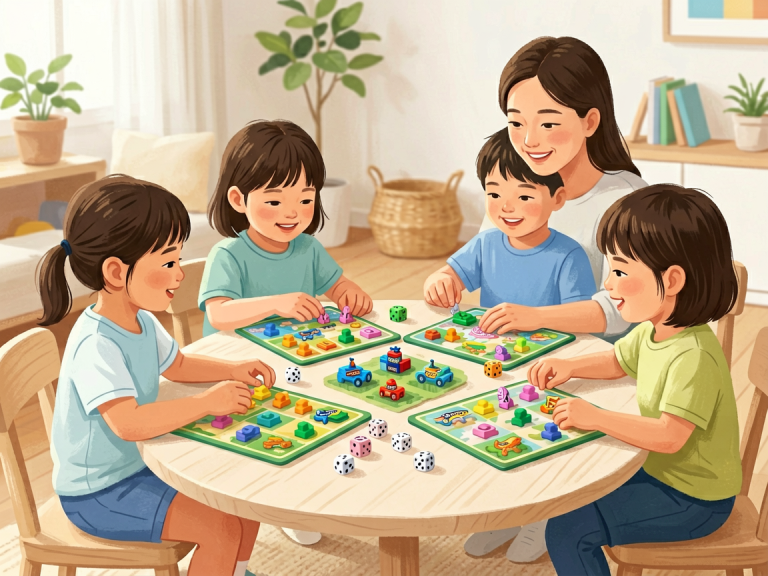
Group settings, such as playdates or classrooms, offer additional opportunities. Cooperative games like “I Spy” using a language toy’s picture cards or a word-building race with magnetic letters turn learning into a social event. Children often teach each other, reinforcing their own knowledge. For children with speech delays, a patient adult can use the toy to model correct pronunciation without pressure, celebrating every attempt.
Technology can also support language toys in complementary ways. Many toy companies offer free companion apps that provide printable activity sheets or additional digital games. However, screen time should be limited. The hands-on, tactile nature of physical toys is irreplaceable for developing fine motor skills and sustaining attention.
Conclusion
Educational language toys for kids occupy a unique and vital space in the landscape of childhood development. They transform the daunting task of language acquisition into a joyful adventure, where every sound, word, and story is a discovery. From the earliest coos to the confident reading of a first book, these toys accompany children on their journey to becoming articulate, literate, and imaginative communicators. Yet, we must remember that toys are tools, not teachers. Their magic is unlocked through the presence of engaged adults who talk, laugh, and learn alongside their children. In the end, the greatest gift a parent can give is not the most expensive talking doll, but the time spent sharing the wonder of language—one playful word at a time. As children string together sounds, sentences, and stories, they are not just playing; they are building the very foundation of their future. And that is the most educational play of all.