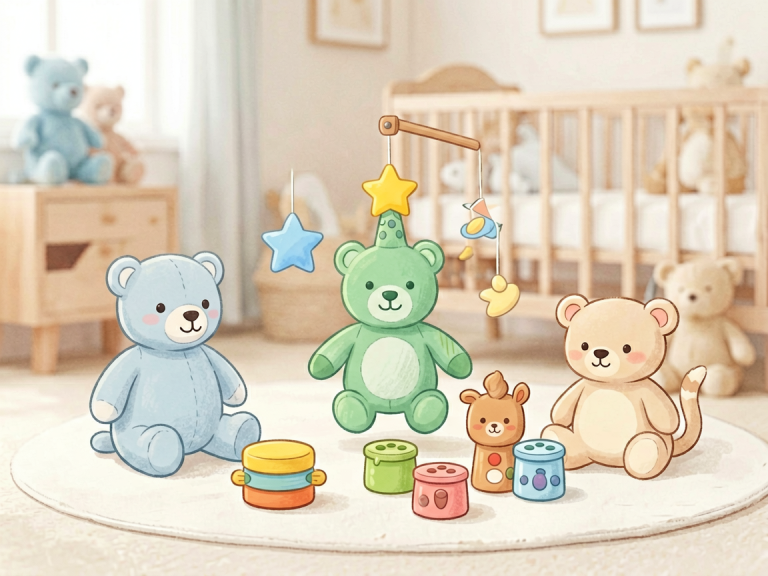
The Joy of Unplugged: Why Screen-Free Play is the Ultimate Birthday Gift
In an era dominated by glowing rectangles and endless notifications, the simple act of giving a birthday gift that encourages screen-free play has become a revolutionary statement. Parents, educators, and psychologists alike are increasingly advocating for a return to tangible, hands-on experiences that foster creativity, social skills, and cognitive development. A birthday is the perfect occasion to celebrate a child's individuality—not by adding another digital device to their collection, but by offering a gift that invites them to step away from the screen and into a world of imagination, movement, and genuine connection. This article explores the profound benefits of screen-free play, presents a curated selection of gift ideas, and offers guidance on choosing the perfect present that will be remembered long after the battery dies.
The Importance of Screen-Free Play in Child Development
The first and most compelling reason to prioritize screen-free play for birthday gifts lies in its irreplaceable role in healthy child development. Research has consistently shown that excessive screen time—especially among young children—can lead to attention deficits, delayed language acquisition, and reduced physical activity. But the problem is not simply the presence of screens themselves; it is the absence of the rich, multisensory experiences that only physical play can provide.
When a child builds a castle with wooden blocks, they are not just stacking shapes. They are learning about gravity, balance, spatial relationships, and cause and effect. When they engage in pretend play with dolls or action figures, they are developing empathy, narrative skills, and emotional regulation. These are lessons that no app, no matter how sophisticated, can replicate because they involve the child’s entire body and mind in an active, self-directed process.
Moreover, screen-free play is intrinsically linked to the development of what psychologists call “executive functions”—the mental processes that enable us to plan, focus attention, remember instructions, and juggle multiple tasks successfully. A child who must negotiate the rules of a board game with siblings, or who must figure out how to construct a sturdy bridge from popsicle sticks, is strengthening these crucial skills in a natural, engaging way. By choosing a screen-free birthday gift, you are not just giving a toy; you are giving the tools for a lifetime of learning and resilience.
Types of Screen-Free Birthday Gifts That Inspire Creativity and Connection
Construction and Building Sets
The timeless appeal of construction toys never fades, and for good reason. From classic wooden blocks to advanced magnetic tiles and model-building kits, these gifts encourage spatial thinking, fine motor skills, and problem-solving. Unlike digital building games that provide instant feedback and pre-programmed solutions, physical building sets require patience and trial-and-error. A child might spend an entire afternoon perfecting a tower that finally collapses—only to laugh and start again with new strategies. That process of failure and revision is a gift in itself.
For different age groups, consider:
- For toddlers (1–3): Large, lightweight foam blocks or Duplo-style bricks that are safe and easy to grasp.
- For preschoolers (3–5): Magnetic tiles or simple interlocking sets that allow for colorful structures.
- For older kids (6+): More complex kits like LEGO Technic, marble runs, or wooden architecture sets that challenge their engineering minds.
Arts and Crafts Supplies
There is something magical about a box of fresh crayons, a stack of blank paper, and no instructions. Art supplies are among the most screen-free gifts you can give, because they demand that the child become the creator rather than the consumer. Whether it's a set of watercolor paints, a pottery wheel, a knitting loom, or a jewelry-making kit, the act of making something with one’s own hands is deeply satisfying and confidence-building.
Moreover, arts and crafts naturally slow down the pace of life. In a world where screens encourage rapid scrolling and instant gratification, painting a picture or sculpting a clay figure forces a child to focus, to observe details, and to appreciate the process rather than just the outcome. These gifts also foster non-verbal expression, which is especially valuable for children who struggle to articulate their emotions through words.
Outdoor and Active Play Equipment
Perhaps the most effective antidote to screen addiction is fresh air and physical movement. Birthday gifts that get children outdoors—such as a bicycle, a scooter, a skipping rope, a set of badminton rackets, or even a simple kite—provide not only exercise but also opportunities for risk-taking, spatial awareness, and interaction with nature. The benefits are compounded when the gift is one that can be shared with friends or family, turning solo screen time into group play.
Consider also gifts that encourage unstructured outdoor exploration: a nature scavenger hunt kit, a bug-catching set with a magnifying glass, or a small gardening set. These gifts teach children to observe the world around them with curiosity and patience—skills that are often dulled by the fast-paced, synthetic environments of digital media.
Board Games and Puzzles
Board games have experienced a renaissance in recent years, and for good reason. They are one of the few forms of entertainment that simultaneously engage multiple players in face-to-face interaction, strategic thinking, and good-natured competition. Unlike video games, which often feature individual play or anonymous online opponents, board games require players to read each other’s expressions, take turns, and negotiate rules—all essential social skills.
Choose games that match the child’s age and interests. For younger children, cooperative games like “Hoot Owl Hoot!” or “The Sneaky, Snacky Squirrel Game” teach teamwork. For older kids, strategy games like “Catan Junior,” “Ticket to Ride: First Journey,” or classic puzzle sets (jigsaw puzzles of 500–1000 pieces) offer hours of focused, screen-free engagement.
How to Choose the Perfect Screen-Free Birthday Gift
Selecting the right gift requires thoughtful consideration of the child’s personality, developmental stage, and existing interests. The goal is not to force a child away from screens, but to offer an alternative so compelling that they choose it willingly. Here are some practical tips:
Consider the child’s current screen habits. A child who spends hours on tablets might benefit from a gift that offers a completely different sensory experience—something tactile, like modeling clay or a sandbox kit. Conversely, a child who already enjoys drawing might appreciate high-quality art materials that elevate their hobby.
Think about the social context. Is the child an only child, or do they have siblings? A gift that encourages solo play, such as a complex puzzle or a model-building kit, might be perfect for a quiet introvert. But for a child who craves interaction, a board game or a set of outdoor toys that invite friends over could be far more valuable.
Prioritize open-ended play. The best screen-free gifts are those that can be used in multiple ways. A set of simple wooden blocks can become a castle, a farm, a racetrack, or a spaceship depending on the child’s imagination. A blank notebook and set of markers can be a diary, a comic book, a science journal, or a map of an invented world. Avoid toys that have only one function or that “play themselves” with lights and sounds; these often mimic the passive consumption of screens.
Don’t overlook the gift of experience. Sometimes the best screen-free birthday gift is not a physical object at all, but an experience. Tickets to a children’s theater performance, a family membership to a science museum, a day of horseback riding, or even a subscription to a craft-box delivery service can create memories that outlast any toy. These experiences also model for children that joy can be found in real-world activities, not just digital ones.
Conclusion: The Lasting Impact of Unplugged Giving
As we navigate a world where screens are increasingly pervasive, the act of giving a screen-free birthday gift becomes a powerful statement. It says: *I value your imagination more than your screen time. I believe in your ability to create, to move, to connect, and to explore without the mediation of a device.* Such a gift is not a rejection of technology, but a celebration of the full range of human experience.
The beauty of screen-free play is that it leaves room for mess, for mistakes, for boredom even—and out of that boredom can spring the most extraordinary creativity. A child who is given a set of watercolors might paint a masterpiece, or might just mix all the colors into a brown puddle. Either way, they are learning. A child who receives a board game might argue over the rules, but in that argument they are negotiating, empathizing, and growing.
So the next time you are invited to a birthday party, consider stepping away from the usual gadgets. Pick up a jigsaw puzzle, a wooden train set, a kite, or a sketchbook. Wrap it with care, and hand it over with the silent hope that for at least a few hours, the screens will dim, and the real magic of childhood will take center stage. In that moment, you are not just giving a gift—you are giving permission to play, to imagine, and to be fully, wonderfully human.