The Art of Selecting Age-Appropriate Toys: A Comprehensive Guide for Parents
Introduction
In a world overflowing with brightly colored plastic gadgets, electronic gizmos, and marketing campaigns that promise to turn every child into a genius, choosing the right toy can feel overwhelming. Parents often find themselves standing in a store aisle, smartphone in hand, comparing star ratings while a toddler tugs at their sleeve. Yet the most important criterion is not how many lights a toy flashes or how popular it is on social media — it is whether the toy matches the child’s developmental stage. Age-appropriate toys do more than entertain; they nurture cognitive skills, motor development, social abilities, and emotional resilience. When a toy is too simple, a child becomes bored; when it is too complex, frustration replaces joy. This guide will help parents navigate the nuanced landscape of toy selection, offering evidence-based insights into how to match playthings with a child’s growing mind and body.
Why Age-Appropriate Toys Matter
The concept of “age-appropriate” is not merely a marketing label slapped on packaging by manufacturers. It reflects decades of developmental psychology, pediatric research, and hands-on observation. Children’s brains undergo rapid, stage-specific changes. For instance, an infant’s world is sensory and motor-based; a preschooler’s mind is bursting with imaginative stories; a school-age child craves rules, strategy, and social interaction. Selecting a toy that aligns with these natural progressions ensures that play remains a positive, growth-oriented experience. Moreover, age-appropriate toys reduce safety risks: small parts choke infants, sharp edges injure toddlers, and overly complex electronics frustrate young children. When parents choose wisely, they foster confidence, curiosity, and a lifelong love of learning. Conversely, mismatched toys can lead to tantrums, disengagement, or even developmental delays if they consistently bypass the skills a child is ready to practice.
Understanding Child Development Stages
Infants (0–12 Months): Sensory Exploration and Cause-Effect
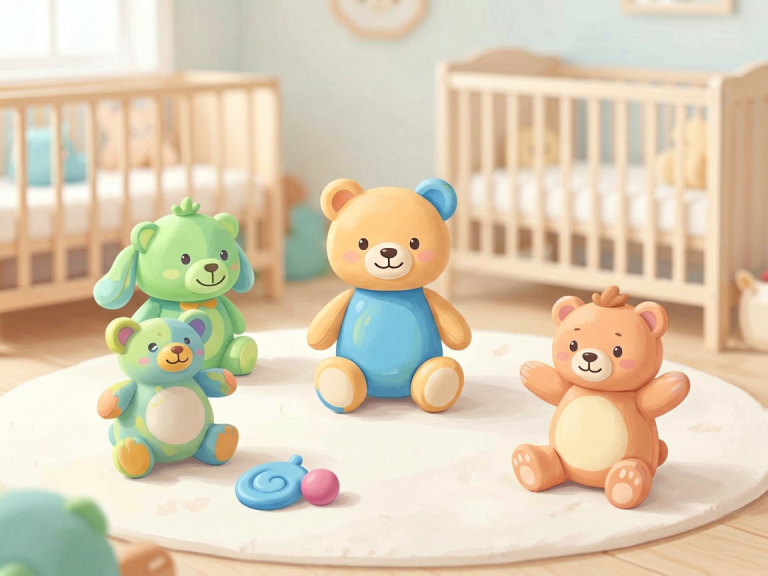
During the first year, infants rely on their senses to understand the world. They grasp, mouth, shake, and bat at objects. The best toys for this stage are simple, safe, and multi-sensory. Soft blocks, rattles, teething rings, and unbreakable mirrors encourage tactile and auditory exploration. Mobile toys that hang above a crib stimulate visual tracking. Around six months, toys that respond to an infant’s action — such as a ball that lights up when rolled or a pop-up toy that appears when a button is pressed — introduce the fundamental concept of cause and effect. Parents should avoid toys with loud, jarring sounds or excessive electronic stimulation, as these can overwhelm a developing nervous system. The key phrase is “responsive, not demanding.” An infant should be able to interact with a toy at their own pace without needing complex instructions.
Toddlers (1–3 Years): Movement, Imitation, and Simple Problem Solving
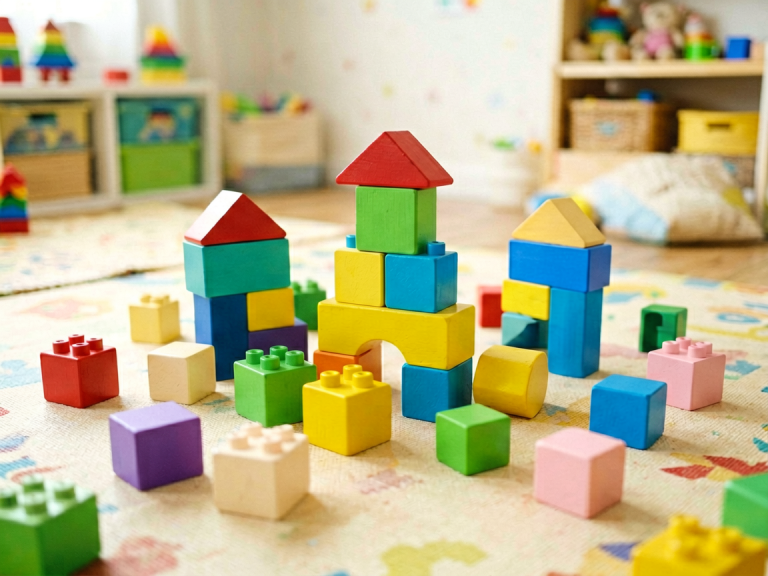
Toddlers are on the move. They are learning to walk, run, climb, and manipulate objects with increasing dexterity. Their play often involves imitation of adults — pushing a toy stroller, pretending to talk on a play phone, or “feeding” a doll. Age-appropriate toys for this group include push-and-pull toys, large wooden building blocks, shape sorters, nesting cups, and simple puzzles with few pieces. Art supplies such as chunky crayons and finger paints support fine motor development. Importantly, toddlers have short attention spans but boundless energy. Toys that encourage gross motor activity — like small slides, tunnels, or ride-on vehicles — are excellent. Safety is paramount: avoid toys with long cords, small detachable parts (which pose choking hazards), or sharp edges. Also, beware of “educational” apps on tablets; the American Academy of Pediatrics discourages screen time for children under 18 months (except video chatting) and recommends high-quality, interactive, non-digital play for toddlers.
Preschoolers (3–5 Years): Imagination, Language, and Social Play
The preschool years mark an explosion of imagination, language, and social awareness. Children create elaborate fantasies, engage in pretend play with peers, and begin to understand rules and turn-taking. Ideal toys include dress-up costumes, play kitchens, tool sets, puppets, and dolls. Building sets like large LEGO Duplo or magnetic tiles allow for open-ended construction. Simple board games (e.g., Candy Land, Memory) teach cooperation, patience, and basic counting. Art supplies become more sophisticated — safety scissors, glue sticks, washable markers, and modeling clay — enabling creative expression. Puzzles with 20–48 pieces challenge spatial reasoning. At this stage, parents should look for toys that encourage storytelling and interaction rather than passive consumption. A good test: if the toy does more than the child (e.g., a battery-operated toy that sings and dances on its own), it may limit imaginative involvement. Instead, choose toys that require the child to drive the action.
School-Age Children (6–9 Years): Rules, Strategy, and Mastery
As children enter elementary school, their cognitive abilities expand rapidly. They can follow multi-step instructions, understand time and sequence, and engage in games with complex rules. This is the golden age for board games like chess, checkers, Scrabble, or strategy games such as Settlers of Catan (junior versions). Construction kits with smaller pieces (e.g., LEGO Technic, K’NEX) challenge engineering skills. Science kits, rock tumblers, and simple coding toys (like programmable robots) satisfy budding curiosity about how things work. Sports equipment — from bikes to jump ropes to soccer balls — develops coordination and teamwork. Books, of course, remain essential; illustrated chapter books encourage independent reading. Parents should also consider hobbies that require patience and practice, such as knitting, model building, or learning a musical instrument. The key shift is from purely imaginative play to structured, goal-oriented activities. However, unstructured free play with friends remains vital; toys should facilitate social interaction, not replace it.
Tweens and Teens (10+ Years): Identity, Creativity, and Complex Thinking
Adolescence brings a need for autonomy, self-expression, and deeper intellectual engagement. Age-appropriate toys for this age group often blur the line between play and serious hobbies. Advanced board games like Dungeons & Dragons, Carcassonne, or cooperative survival games promote strategic thinking and social bonding. DIY craft kits for embroidery, jewelry-making, or soap-crafting allow for personalization. Science and technology toys — robotics kits, 3D pens, coding platforms — can ignite career interests. Musical instruments, cameras, and video-editing software support creative outlets. Importantly, digital play is more acceptable at this stage, but parents should guide choices toward games that foster problem-solving (e.g., Minecraft, Kerbal Space Program) rather than mindless consumption. Collectibles such as trading cards or model building also satisfy the need for systemization and mastery. The best toys for teens respect their growing independence while still offering the joy of discovery.
Key Factors to Consider Beyond Age Labels
Safety First
No matter how educational a toy appears, safety is non-negotiable. Always check for small parts if you have a child under three. Inspect for sharp edges, toxic paints, and loose strings. Look for certifications such as ASTM (in the US) or CE (in Europe). Battery compartments should be secured with screws. Avoid toys that make sounds above 85 decibels, as prolonged exposure can damage hearing. For older children, ensure that online-enabled toys have robust privacy settings and no unmoderated chat features.
Interests and Temperament
A shy child may prefer quiet, solitary play with puzzles or art, while an energetic child might thrive with active toys like trampolines or obstacle courses. Age labels are a guideline, not a rule. A five-year-old who loves dinosaurs might enjoy a more complex fossil-digging kit intended for seven-year-olds, as long as a parent supervises. Similarly, a gifted nine-year-old may find age-marked toys boring. Observe your child’s natural curiosity and adjust accordingly.
Open-Ended vs. Structured Play
Open-ended toys — blocks, play dough, loose parts, art supplies — allow children to create their own rules and scenarios. They grow with the child and encourage divergent thinking. Structured toys — puzzles, board games, coding kits — have specific objectives and teach following directions, patience, and logic. A balanced toy chest includes both. Beware of toys that are purely “single-use” (e.g., a plastic figure that only makes one sound) and offer little room for creativity.
Educational Value without Overstimulation
Many so-called “educational” toys overpromise. A toy that flashes lights and sings the alphabet may actually distract a child from learning because the child becomes passive. True learning happens when a child actively manipulates, experiments, and makes mistakes. Look for toys that invite exploration: a set of gears that can be assembled in multiple ways, a microscope that reveals unseen worlds, or a simple wooden train set that requires the child to design the track. Avoid toys that claim to make your baby a genius — they are marketing hype, not science.
Practical Tips for Toy Shopping
- Read age labels, but use them as starting points. Consider your child’s actual abilities and interests.
- Choose toys that encourage multiple ways to play. A cardboard box is infinitely more valuable than a single-purpose plastic toy.
- Rotate toys regularly. Keep a small selection available; store the rest in a closet. This refreshes interest and reduces overwhelm.
- Involve your child in the selection process — within limits. Ask what they enjoy, but steer them toward appropriate options.
- Prioritize quality over quantity. A few well-made, durable toys outlast dozens of cheap, breakable ones. Wood, fabric, and metal often outshine plastic.
- Set limits on electronic toys. Screen-based toys should be used sparingly and with active parental involvement. Hands-on play is irreplaceable for brain development.
- Consider second-hand treasures. Thrift stores often have classic toys like wooden blocks or simple puzzles that are both affordable and developmentally rich.
Conclusion
Choosing age-appropriate toys is both an art and a science. It requires parents to observe, research, and reflect on their child’s unique developmental journey. While no toy can replace the warmth of a parent’s lap or the joy of a shared story, the right plaything can be a powerful catalyst for growth. By focusing on safety, developmental alignment, and open-ended possibilities, parents can build a toy collection that nurtures curiosity, resilience, and creativity. Remember: the best toy is not the one with the highest price tag or the most glowing reviews — it is the one that makes a child pause, wonder, and say, “Let’s play again.” In that simple moment, learning happens naturally, effortlessly, and joyfully.