Unlocking Potential: How to Use Toys for Learning Through Play
Introduction
Play is often dismissed as a mere pastime, yet it constitutes the most profound vehicle for childhood development. When children engage with toys, they are not simply passing time—they are constructing knowledge, testing hypotheses, and building neural pathways. The concept of “learning through play” has gained substantial traction in educational psychology, supported by research from pioneers such as Jean Piaget, Lev Vygotsky, and more contemporary voices like Kathy Hirsh-Pasek. Toys, when chosen and used intentionally, become powerful tools for cognitive, social, emotional, and physical growth. This article explores how parents, educators, and caregivers can harness the potential of toys to transform playtime into a rich learning experience. Drawing on developmental principles and practical strategies, we will examine the criteria for selecting effective toys, the specific learning domains they can target, the critical role of adult facilitation, and actionable methods to integrate purposeful play into daily routines.
Choosing the Right Toys: The Foundation of Purposeful Play
Not all toys are created equal when it comes to learning. The most effective educational toys share several characteristics: they are open-ended, age-appropriate, and encourage active engagement rather than passive consumption.
Open-Ended vs. Closed-Ended Toys
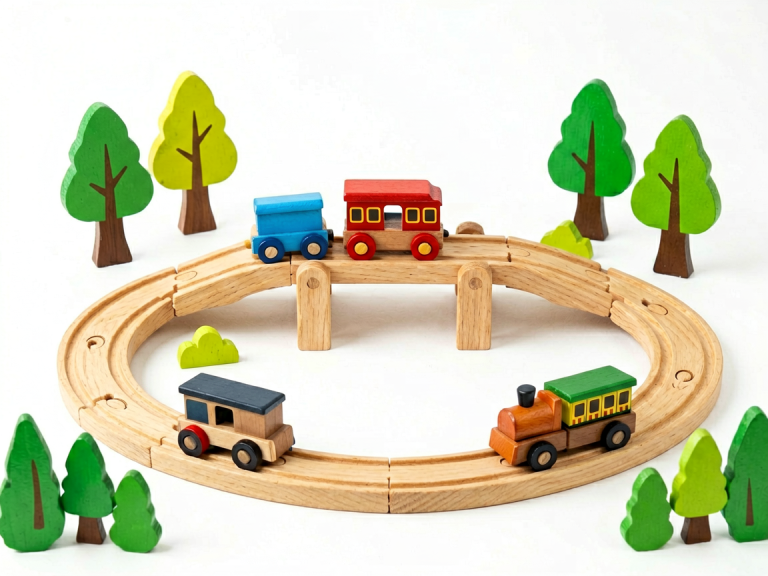
Open-ended toys—such as building blocks, wooden train sets, art supplies, and loose parts like sand or water—offer limitless possibilities. A set of simple wooden blocks can become a castle, a spaceship, a bridge, or a mathematical pattern. These toys stimulate creativity, problem-solving, and flexible thinking because they require children to impose their own structure. In contrast, closed-ended toys, such as electronic devices with fixed functions or single-purpose puzzles, often limit exploration once the intended task is completed. While they have their place for developing specific skills, the priority for learning through play should be on toys that invite multiple uses and encourage children to ask “What if?”
Age and Developmental Stage Considerations
A toy that sparks curiosity in a three-year-old may frustrate a six-year-old. For infants and toddlers, toys that stimulate sensory exploration—textured balls, rattles, stacking rings—lay the groundwork for cause-and-effect understanding and motor coordination. For preschoolers, pretend-play kits (kitchen sets, doctor kits) foster language development, empathy, and narrative skills. School-age children benefit from more complex construction kits (LEGO Technic, marble runs), strategy board games (Chess, Settlers of Catan), and science kits that introduce systematic experimentation. Matching toys to a child’s zone of proximal development—the sweet spot between what they can do alone and what they can achieve with guidance—maximizes learning without causing discouragement.
Resistance to Over-Stimulation
In an age of bright, noisy, flashing toys, simplicity often wins. Research indicates that highly stimulating electronic toys can reduce the quality and duration of parent-child interaction, a key component of learning. Natural materials, neutral colors, and minimal battery-operated features encourage children to focus, imagine, and engage in sustained play. A cardboard box, for instance, can teach more about physics and creativity than an expensive plastic toy that performs actions by itself.
Types of Toys and Their Specific Learning Benefits
Understanding the learning domains that different toys target allows adults to curate a balanced play environment.
Building and Construction Toys: Developing STEM Skills
Blocks, magnetic tiles, LEGO bricks, and Tinkertoys are quintessential STEM (Science, Technology, Engineering, Mathematics) tools. As children stack, balance, and connect pieces, they intuitively grasp concepts of gravity, spatial awareness, symmetry, and structural integrity. When a tower collapses, they engage in iterative problem-solving: “Why did it fall? Was the base too narrow? Should I add more support?” This trial-and-error process mirrors the scientific method. Additionally, following complex instructions for LEGO sets strengthens sequencing skills and working memory. For older children, building programmable robots adds a layer of coding and computational thinking, making abstract algorithms tangible.
Pretend Play Toys: Fostering Social and Emotional Intelligence
Dolls, action figures, dress-up costumes, play kitchens, and puppet theaters are gateways to social learning. Through role-playing, children practice empathy by stepping into another character’s shoes. They negotiate scenarios (“You be the doctor, I’ll be the patient”), develop language skills by narrating stories, and explore emotional regulation by simulating conflict and resolution. Research shows that children who engage in rich pretend play demonstrate stronger executive function skills—including self-control, cognitive flexibility, and working memory—because they must hold multiple roles and rules in mind simultaneously. Moreover, these play experiences prepare children for real-world social interactions, teaching turn-taking, cooperation, and perspective-taking.
Art and Creative Toys: Nurturing Imagination and Fine Motor Skills
Crayons, modeling clay, finger paints, scissors, and collage materials are not just for fun—they are essential for developing fine motor coordination and visual-spatial skills. More importantly, creative expression allows children to process emotions, explore identity, and build confidence. When a child decides to paint a purple sun or a three-legged cat, they are exercising divergent thinking—the ability to generate novel ideas. Art also provides a safe space for failure; a smudged drawing can be turned into something new, teaching resilience. For older children, tools like stop-motion animation kits or graphic design apps combine creativity with technological literacy, preparing them for multimedia communication.
Board Games and Card Games: Teaching Rules, Strategy, and Math
Traditional board games like Candy Land, Chutes and Ladders, and Monopoly Jr. teach number recognition, counting, and one-to-one correspondence. Strategy games like Carcassonne, Blokus, and Checkers require forward planning, probability assessment, and pattern recognition. Perhaps most importantly, board games are social contracts: children learn to follow rules, take turns, and tolerate winning and losing gracefully. Losing a game offers a low-stakes environment to practice emotional control and perseverance—skills critical for academic and life success. Cooperative games (e.g., The Sneaky, Snacky Squirrel Game, where players work together) build teamwork and communication without the pressure of competition.
Puzzles: Strengthening Cognitive and Spatial Abilities
Jigsaw puzzles, tangrams, and logic puzzles engage visual-spatial reasoning, attention to detail, and persistence. A child learns to scan for shapes, compare edges, and categorize pieces by color or pattern. Completing a puzzle provides a powerful sense of accomplishment, reinforcing a growth mindset. Multi-step logic puzzles (like Rush Hour) challenge older children to plan sequences of moves, a skill directly related to executive function and even to coding algorithms.
The Critical Role of Adults: Guided Play vs. Free Play
While children learn immensely through self-directed play, the presence of an intentional adult can amplify learning outcomes. The concept of “guided play” bridges the gap between free play and direct instruction. In guided play, the adult creates an environment rich in learning opportunities and then follows the child’s lead, asking open-ended questions and offering gentle scaffolding.
Asking Questions Instead of Giving Answers
When a child is building a block tower, a parent might ask, “What do you think will happen if we add one more block to the top?” instead of saying, “It will fall.” This encourages prediction and hypothesis testing. During pretend play, a question like “How does the patient feel?” prompts emotional vocabulary and narrative development. Effective adults observe first, then intervene briefly to extend thinking—making comments that highlight patterns (“You’ve lined up the dinosaurs from smallest to largest!”) or pose challenges (“I wonder how you can make a bridge tall enough for the toy boat to pass under.”).
Modeling Language and Social Scripts
Toys become richer when adults model language associated with them. Playing with a kitchen set, an adult can introduce words like “simmer,” “ingredients,” “recipe,” and “measure.” Playing with a doctor kit, they can say “stethoscope,” “diagnosis,” “symptom.” This not only expands vocabulary but also familiarizes children with abstract concepts through concrete play. Additionally, adults model social scripts—how to greet, apologize, or ask for help—within the safety of the play scenario.
Balancing Structure and Freedom
The best learning-through-play environments are neither chaotic nor rigid. Adults can structure time by offering choice (e.g., “Would you like to do puzzles or blocks today?”) without micro-managing. They can also prepare provocations—an intentionally arranged set of materials designed to spark curiosity. For instance, placing a magnet, paper clips, a wooden spoon, and a coin on a tray invites investigation of magnetic properties. The child decides what to do, but the adult has curated the learning opportunity.
Practical Tips for Implementing Learning Through Play at Home
Toys alone do not create learning; the context and attitude matter equally. Here are actionable strategies for parents and educators.
Rotate Toys to Maintain Engagement and Reduce Overwhelm
Children pay more attention when they have fewer options. Store the majority of toys out of sight and rotate them every few weeks. A bin of building blocks that has been “newly discovered” will inspire more creative use than a toy that sits in the same bin for months. This also aligns with the Montessori principle of a prepared environment that supports deep concentration.
Create Themed Play Centers
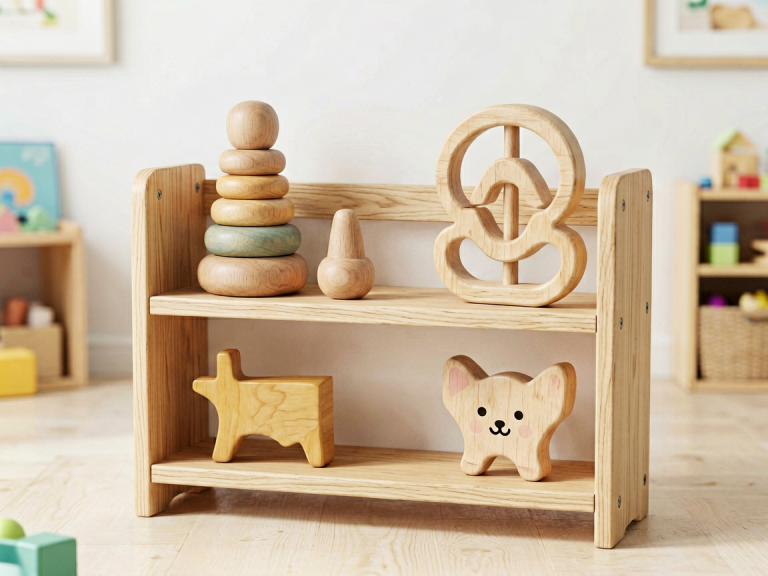
Designate specific areas for different types of play: a reading nook with puppets, a building table, an art station, a corner for pretend play. Thematic organization helps children understand expectations and encourages focused engagement. A simple shelf with clearly labeled bins allows even toddlers to learn classification and responsibility for cleaning up.
Integrate Everyday Objects
Not all learning toys come from a store. A set of measuring cups teaches fractions. A kitchen scale introduces weight comparison. Empty containers prompt nesting or stacking experiments. A colander and pipe cleaners become a threading activity that fine-tunes motor skills. Everyday objects often demand more creativity because they lack predetermined functions, making them ideal for open-ended play.
Use Toys to Bridge School and Home Learning
If a child is learning about animals in school, setting up a small toy farm or zoo at home allows them to explore the topic through play. Similarly, phonics skills can be practiced with magnetic letters on a cookie sheet, and math facts can be embedded into board games. This connects formal learning with intrinsic motivation, reducing resistance to academic practice.
Embrace Repetition
Children often repeat the same play scenarios many times. This is not boredom; it is mastery. Through repetition, they consolidate skills and gradually add complexity. A child who builds the same tower over and over is actually refining their motor control, understanding of balance, and perseverance. Adults should resist the urge to push novelty and instead respect the child’s rhythm.
Conclusion: The Power of Purposeful Play
Learning through play is not a luxury—it is a biological imperative. Toys, when used thoughtfully, become catalysts for curiosity, resilience, creativity, and social understanding. The key lies not in the price tag or the latest technology, but in the quality of interaction between child, toy, and adult. By choosing open-ended, developmentally appropriate toys, asking guiding questions, and creating rich environments, we can transform everyday play into a powerful educational journey. As the psychologist Bruno Bettelheim once wrote, “Play is the work of childhood.” Recognizing that work as valuable, and equipping it with the right tools and support, is among the most important investments we can make in a child’s future. So next time you see a child absorbed in building with blocks or dressing up as a superhero, remember: they are not just playing—they are learning who they are and how the world works.