The Best Toys for Learning Through Play: Unlocking Cognitive, Social, and Emotional Growth
Play is not a break from learning—it is the brain’s most natural and powerful way to absorb knowledge. When children engage in purposeful play, they are not merely entertaining themselves; they are constructing neural pathways, testing hypotheses, developing empathy, and practicing problem-solving. The toys we choose can either amplify or stifle these processes. Selecting the best toys for learning through play requires understanding not only a child’s age and interests but also the underlying psychological and educational principles that make certain objects transformative. Below, I explore five categories of toys that excel at turning play into profound learning experiences.
1. Open-Ended Building Systems: The Foundation of Spatial Reasoning and Creativity
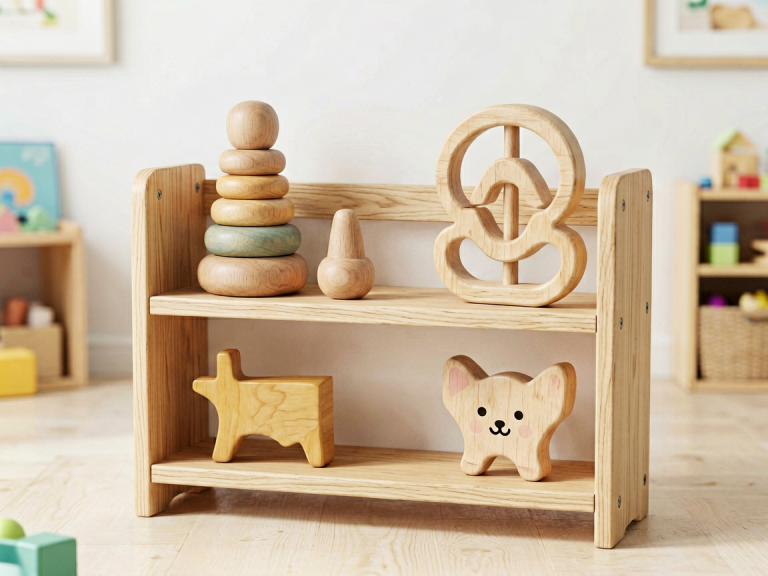
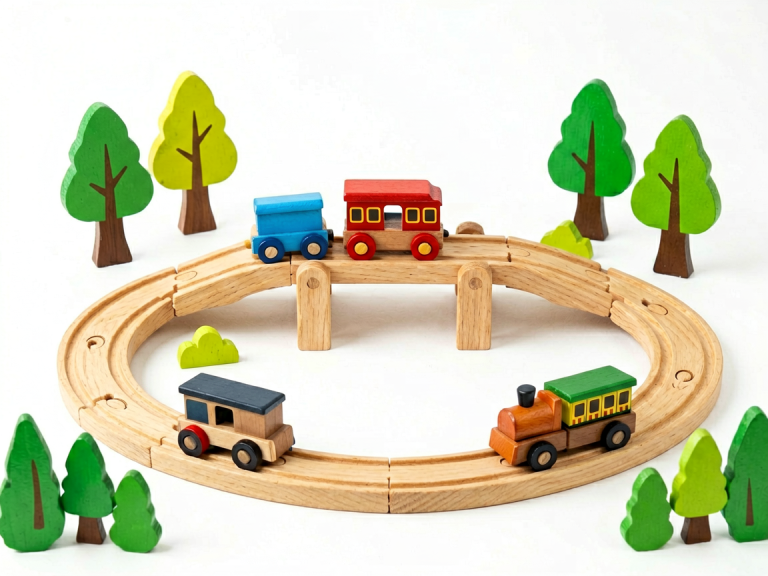
Toys that have no single correct outcome are among the most potent learning tools. Magnetic tiles, wooden blocks, LEGO bricks, and modular construction kits invite children to become engineers, architects, and artists simultaneously. When a toddler stacks blocks and watches them tumble, she is internalizing gravity, balance, and cause-effect relationships. When an older child designs a three-dimensional castle with magnetic tiles, he practices spatial visualization, symmetry, and iterative design—<a href="https://www.playlearningguide.com/category/skills/”>skills directly linked to success in mathematics and science.
What makes these toys exceptional is their infinite reconfigurability. Unlike a toy that performs one trick, a set of simple geometric shapes can become a rocket ship, a zoo enclosure, or a model of a molecule. This flexibility encourages divergent thinking, the ability to generate multiple solutions to a single problem. Research from the University of Cambridge has shown that children who regularly play with open-ended construction toys score higher on tests of creative problem-solving later in life. Moreover, building together with peers or adults fosters communication, negotiation, and collaborative planning—skills that are increasingly valued in modern workplaces.
2. Strategy and Logic Games: Developing Executive Function Through Fun
Board games and card games that require planning, memory, and rule-following are stealthy educators. Classics like Chess, Checkers, Settlers of Catan, and even simpler games like Memory or Uno train the brain’s executive functions: working memory, cognitive flexibility, and inhibitory control. For example, a child playing Memory must hold the location of multiple cards in mind, update that information as new cards are revealed, and resist the urge to flip a card impulsively. This is a workout for the prefrontal cortex.
More complex games like Catan introduce resource management, probability estimation, and strategic negotiation. A child learns that trading a sheep for wood today might yield a better settlement tomorrow, but only if she can predict what opponents will do. These are mini lessons in economics, psychology, and risk assessment. Importantly, digital versions of these games can also be effective, but physical board games offer the added benefit of face-to-face social interaction, turn-taking, and learning to handle wins and losses gracefully. Losing a game teaches resilience and self-reflection: “What could I have done differently?” That question is the seed of metacognition.
3. Science and Exploration Kits: Hands-On Inquiry That Sparks Curiosity
Children are natural-born scientists. They ask “why” constantly, and the best learning-through-play toys feed that curiosity with hands-on experiments. Microscopes, chemistry sets, crystal growing kits, weather stations, and simple robotics kits turn abstract concepts into tangible experiences. When a child mixes baking soda and vinegar to create a volcanic eruption, she is not just watching a reaction—she is forming hypotheses, observing variables, and drawing conclusions. If she adds more vinegar, does the eruption get bigger? If she uses cold water, does it fizz differently? These miniature experiments build scientific literacy long before a formal classroom introduces the periodic table.
Advanced kits, such as those that teach basic circuitry or programming via building robots, provide early exposure to technology and engineering. A child who assembles a simple light-sensitive alarm learns about sensors, feedback loops, and troubleshooting. These toys are especially powerful because they offer immediate, visible feedback: the light turns on, the robot moves, the crystal grows. That feedback loop reinforces learning and keeps motivation high. Importantly, the best kits include open-ended challenges rather than step-by-step recipes, so children must adapt and invent.
4. Arts, Crafts, and Sensory Play: Emotional Regulation and Fine Motor Mastery
Learning is not only cognitive; it is also emotional and physical. Playdough, modeling clay, paint, bead kits, and sensory bins offer a different kind of education. Molding clay strengthens the small muscles in hands and fingers that are essential for writing. Squeezing and rolling playdough provides proprioceptive input that calms an anxious child. Creating a collage or painting a picture requires planning, aesthetic judgment, and the ability to tolerate imperfection—a lesson in growth mindset.
Sensory play, especially with materials like sand, water, rice, or slime, is deeply regulating. For children with sensory processing challenges or high energy, these activities help them organize their nervous system, which in turn improves focus and readiness to learn. Moreover, art toys encourage symbolic thinking: a blob of clay is not just clay; it is a dinosaur, a mountain, a spaceship. This capacity for symbolization is the foundation of language and mathematics. When a child draws a tree and narrates a story about it, she is practicing narrative skills, sequencing, and imagination. Research consistently shows that children who engage in rich pretend play with art materials develop stronger verbal abilities and emotional understanding.
5. Pretend Play Sets and Dolls: Social-Emotional Learning in Miniature
The most underestimated toys for learning are often simple: dolls, action figures, play kitchens, doctor’s kits, and dress-up costumes. Through pretend play, children rehearse complex social scenarios. A child who makes a doll “sad” because it lost its favorite toy is practicing empathy and emotion recognition. When two children negotiate who gets to be the “doctor” and who will be the “patient,” they learn turn-taking, perspective-taking, and conflict resolution. These are the building blocks of social intelligence.
Pretend play also allows children to process real-life experiences. A child who visits the doctor and later plays with a toy stethoscope is mastering a potentially frightening situation by reenacting it in a safe context. This therapeutic aspect of play is crucial for emotional resilience. Furthermore, modern pretend play toys have expanded to include diversity and inclusivity, such as dolls with disabilities, different skin tones, and non-traditional family sets. These toys help children develop a more nuanced understanding of the world, combating stereotypes before they take root.
Conclusion: Quality Over Quantity, Engagement Over Distraction
The best toys for learning through play share one defining characteristic: they require active participation rather than passive consumption. A flashy electronic toy that lights up and sings on its own may captivate a child for a few minutes, but it does not invite the child to construct, to wonder, to negotiate, or to create. In contrast, a box of wooden blocks can spark hours of deep play because the child is the agent of discovery.
Parents and educators should resist the urge to buy the newest “educational” gadget. Instead, invest in toys that are durable, simple, and versatile. Observe how your child plays: does the toy lead, or does your child lead? Does it offer multiple ways to engage? Does it encourage interaction with others or promote solitary focus in a healthy way? When we choose toys that align with how children naturally learn—through curiosity, repetition, social interaction, and hands-on exploration—we are not just giving them entertainment. We are giving them a foundation for lifelong learning.
Ultimately, a child’s playroom should be a laboratory of possibility. The best toys for learning through play are those that whisper, “What if?” and then wait for the child to answer.