The Best Language Toys for Kids: Unlocking Communication Skills Through Play
Introduction
In the early years of a child’s development, language acquisition is one of the most critical milestones. From first coos to full sentences, the journey of learning to communicate is both fascinating and foundational. While everyday conversations with parents and caregivers are invaluable, the right toys can accelerate this process by making learning engaging, interactive, and fun. Language toys are specifically designed to stimulate vocabulary, grammar, listening comprehension, and even early reading skills. But with an overwhelming array of products on the market, how do parents choose the best ones? This article explores the top categories of language toys for kids, explains why they work, and offers practical recommendations for different age groups. Whether you are looking for a gift or a tool to support your child’s linguistic growth, understanding the features of effective language toys will help you make informed choices.
Why Language Toys Matter
Language development is not a passive process. Children learn best when they are actively engaged, curious, and motivated. High-quality language toys provide a multisensory experience—combining sight, sound, touch, and sometimes movement—that captures a child’s attention and encourages repetition. Repetition is key to language learning; hearing the same words in different contexts helps solidify neural connections. Moreover, language toys often incorporate storytelling, role-playing, or problem-solving, which naturally require children to use language in meaningful ways. Unlike passive screen time, well-designed toys foster two-way interaction: a child speaks, presses a button, or moves a piece, and the toy responds. This feedback loop builds confidence and reinforces cause-and-effect thinking. Finally, language toys can bridge the gap between a child’s current language level and the next step, providing just enough challenge to promote growth without causing frustration.
Best Categories of Language Toys
1. Interactive Storytelling and Audio Books
Interactive books and audio players are among the most effective language toys for young children. Products like the *LeapFrog LeapReader* or *VTech Magic Star Learning Table* offer touch-sensitive pages that read aloud words, play sound effects, and ask questions. For example, a child might tap a picture of a dog and hear “dog,” then see the word appear on the screen. This direct association between image, text, and sound accelerates vocabulary acquisition. Similarly, audio story players such as *Yoto Player* or *Toniebox* allow children to insert cards or figurines to listen to narrated stories, songs, and educational content. These devices are screen-free, encouraging auditory processing and imagination. The best part is that children can control the pace—replaying a favorite story or song as many times as they wish, which reinforces language patterns naturally.
2. Alphabet and Phonics Toys
Phonemic awareness—the ability to hear and manipulate sounds in words—is a predictor of later reading success. Alphabet toys that combine letters with sounds are excellent tools. The *LeapFrog Fridge Phonics Magnetic Letter Set* is a classic: each letter plays its name and sound when placed on a magnetic base. Children can arrange letters to form simple words, hearing them pronounced correctly. Similarly, *Briarpatch’s “Alphabet Puzzle”* or *Melissa & Doug Wooden ABC Blocks* allow hands-on exploration. More advanced options like the *VTech Touch and Learn Activity Desk* include interactive phonics games that build from letters to words to sentences. These toys are particularly effective because they turn abstract symbols into tangible, auditory experiences, laying a strong foundation for reading.
3. Talking and Recording Toys
Toys that encourage children to speak into a microphone or record their own voice are powerful for language practice. *The Fisher-Price Laugh & Learn Smart Stages Puppy* responds to the child’s voice, asking simple questions like “What sound does a cow make?” and then praising correct responses. This motivates children to vocalize and expand their expressive language. Recording toys, such as the *Educational Insights “Recordable Answer Buzzers”* or the *Yoto Player’s “Make Your Own Cards”* feature, allow kids to record their own stories or answers. When a child hears their own voice played back, it builds self-awareness and confidence. For older preschoolers, *LeapFrog’s “Mr. Pencil’s Scribble and Write”* teaches how to trace letters by guiding a stylus, with corrective feedback that encourages self-correction through verbal prompts.
4. Conversation-Starter Games and Playsets
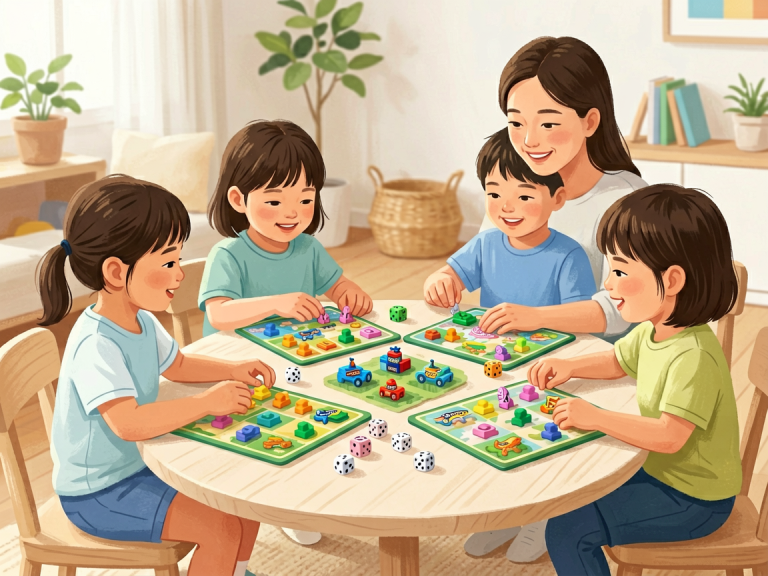
Language is inherently social. Toys that promote pretend play or turn-taking conversations are invaluable. *The *Melissa & Doug “Let’s Play House”* or *Playmobil 1.2.3. sets* come with characters, furniture, and props that inspire children to create dialogues. A child might role-play being a doctor, asking “Where does it hurt?” or order food in a pretend restaurant. These open-ended scenarios naturally expand vocabulary (e.g., “stethoscope,” “menu,” “appointment”) and teach pragmatic language skills like asking questions, making requests, and taking turns. Card games like *Dixit* or *Story Cubes* (for ages 4+) are also fantastic for narrative development. Players take turns creating stories based on whimsical images, encouraging descriptive language and logical sequencing. Even simple board games like *Zingo!* (a bingo-style game with picture-word matching) promote quick word retrieval and spoken responses.
5. Multilingual and Bilingual Toys
For families raising bilingual children or wanting to introduce a second language early, specialized bilingual toys are a smart investment. Brands like *LeapFrog* and *VTech* often offer versions in Spanish, French, Mandarin, and other languages. The *LeapFrog Learning Friends 100 Words Book* lets children switch between English and Spanish with the flip of a switch, teaching the same vocabulary in both languages side by side. Similarly, *Wooden puzzles with bilingual labels* or *Bilingual talking globes* (e.g., *Oregon Scientific Smart Globe*) label countries and their capitals in multiple languages. These toys expose children to different phonetic structures and cultural contexts without requiring formal instruction. The best bilingual toys are those that use repetition and context clues, so a child can infer meaning naturally—much like immersive language learning.
6. Musical Instruments That Teach Language
Music and language share neural pathways. Singing songs, rhyming, and clapping to rhythms all support phonological awareness. Instruments like the *Hape “Early Melodies” series*—tambourines, xylophones, and castanets—can be paired with songbooks or call-and-response games. Electronic instruments like *B. Toys “Pound and Tap” Bench* produce sounds that match colors and letters when struck. More advanced options like *LeapFrog’s “Scoop and Learn Ice Cream Cart”* incorporate counting and ordering vocabulary while playing music. The key is to choose instruments that encourage verbal participation, not just noise-making. For example, a toy that prompts “Sing the ABC’s along with me!” or “What word rhymes with cat?” turns musical play into a language lesson.
Age-Specific Recommendations
For Toddlers (1–3 years): Focus on cause-and-effect toys with simple words and sounds. *The VTech “Crawl and Learn Bright Lights Ball”* that rolls and says colors and numbers or *The *Fisher-Price “Laugh & Learn Storybook”* with buttons that trigger short phrases are ideal. At this stage, repetition and rhythm matter more than complexity. Bilingual options are also excellent because toddlers’ brains are primed to absorb multiple phonemic systems.
For Preschoolers (3–5 years): Introduce interactive storybooks, phonics puzzles, and conversation-starter playsets. The *LeapFrog “LeapStart”* system with level-appropriate storybooks covers pre-reading skills. *Story Cubes* and simple board games like *“Zingo!”* sharpen quick recall and narrative abilities. Recording toys become especially fun as children gain confidence in forming sentences.
For Early Elementary (5–7 years): Move to more advanced language toys that involve spelling, sentence building, and longer narratives. *The *Educational Insights “Hot Dots”* sets allow independent learning with a pen that provides audio feedback. *“Bananagrams”* (a word-building game) and *“Scrabble Junior”* encourage vocabulary expansion and strategic thinking. Audio players like *Yoto Player* with story cards that have chapter books support listening comprehension and vocabulary in context.
Safety and Quality Considerations
When selecting language toys, safety should never be compromised. Always check for non-toxic materials, rounded edges, and batteries that are securely enclosed. For younger children, avoid small parts that could pose a choking hazard. Look for toys that have been tested to international standards (such as ASTM or CE). Additionally, consider the toy’s durability: language toys often get handled a lot, so choose those with sturdy construction and washable surfaces. Finally, read reviews to see how other parents rate the toy’s educational value versus entertainment value—the best language toys balance both.
Conclusion
The best language toys for kids are those that combine purposeful design, developmental appropriateness, and sheer enjoyment. They turn the abstract process of learning words, sounds, and sentences into a playful adventure. From interactive audio books to bilingual puzzles and conversation-starting playsets, each category offers unique benefits that support different aspects of language acquisition. As a parent or educator, the key is to observe your child’s interests and choose toys that align with their current stage while gently challenging them to grow. Remember, no toy can replace the power of real human interaction, but the right language toy can be a wonderful bridge—building vocabulary, sparking curiosity, and laying a joyful foundation for lifelong communication. Invest in quality, play alongside your child, and watch their language skills blossom through the magic of play.
*(Word count: approximately 1,150 words)*