Best Play Ideas to Choose Age-Appropriate Toys
Choosing the right toys for children is far more than a simple shopping decision—it is an investment in their cognitive, physical, emotional, and social development. The best toys are those that match a child’s current stage of growth while also challenging them just enough to encourage new skills. However, with countless options on the market, parents and caregivers often feel overwhelmed. The key lies not in the toy itself, but in the play ideas that come with it. This article explores the best play ideas for selecting age-appropriate toys, organized by developmental stages, to help you make informed choices that nurture a child’s natural curiosity and joy.
Infants (0–12 Months): Sensory Exploration and Bonding
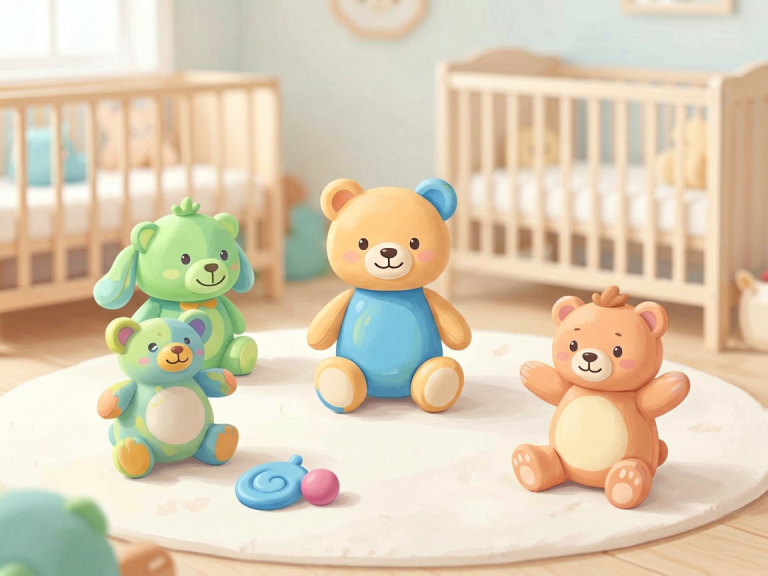
During the first year of life, babies learn about the world through their senses. They are attracted to high-contrast colors, different textures, sounds, and movements. Toys for this age should be safe, soft, and easy to grasp, but the play ideas are what truly make them valuable.
Sensory Mats and Rattles
Place your baby on a soft, textured play mat with attached toys like crinkly fabric, a small mirror, or a gentle rattle. The play idea here is tummy time: let your infant lie on their belly and reach for these objects. This strengthens neck, shoulder, and arm muscles while stimulating visual tracking. You can also dangle a colorful mobile above the changing table; as your baby bats at it, they learn cause and effect. For older infants (6–12 months), provide rattles that are easy to shake. Model shaking the rattle yourself and encourage your baby to imitate. This simple back-and-forth game builds early communication skills.
Stacking Rings and Soft Blocks
Around eight months, babies begin to understand object permanence and enjoy taking things apart. A classic stacking ring toy offers the play idea of “take down and rebuild.” Show your baby how to remove the rings one by one, then try to stack them again. Even if they cannot yet stack, the act of grasping and pulling off rings hones fine motor control. Soft blocks can be knocked over repeatedly—a delightful game that teaches early physics concepts like gravity and balance. Always supervise to ensure no small parts become choking hazards.
Mirror Play
Attach a unbreakable mirror to the side of the crib or playpen. Babies are fascinated by their own reflections. The play idea is simple: let your baby gaze, smile, and make faces. This promotes self-awareness and emotional development. You can also sit behind the mirror and peek around it, playing peek-a-boo, which reinforces object permanence in a fun, social way.
Toddlers (1–3 Years): Gross Motor Skills and Imaginative Play
Toddlers are on the move—they walk, run, climb, and explore everything. Their attention spans are short, but their energy is boundless. The best toys for this age encourage physical activity, language development, and the beginnings of pretend play.
Push-and-Pull Toys
A sturdy wooden push toy (like a lawn mower or a train on a string) is excellent for a toddler learning to walk or run. The play idea: create an obstacle course using pillows or cardboard boxes and encourage your toddler to push the toy through it. This builds balance, coordination, and spatial awareness. For pull toys, have your child “walk the dog” around the house or yard. You can narrate the action: “The dog is walking fast! Now slow down…” This introduces vocabulary for speed and direction.
Shape Sorters and Simple Puzzles
Toddlers love fitting objects into holes. A shape sorter box is a timeless toy. The best play idea is to turn it into a guessing game: hide one shape behind your back, describe its characteristics (“It has three corners—it’s a triangle!”), and ask your toddler to find the matching hole. This sharpens problem-solving skills and language comprehension. Similarly, wooden peg puzzles with large knobs help toddlers practice hand-eye coordination. Let them remove all the pieces and then find the correct spots; offer encouragement when they succeed, but resist the urge to correct them immediately—allow trial and error.
Pretend Play Sets
A toy kitchen, a doctor’s kit, or a simple set of plastic animals can spark hours of imaginative play. The play idea is role-playing: you be the patient, and your toddler becomes the doctor. Ask them to check your “temperature” or give you a “shot.” This social play develops empathy, language, and narrative thinking. For younger toddlers, keep the props simple—a phone, a spoon, a doll. Let them imitate your daily routines, like cooking or tidying up. Remember that the toy itself does not have to be realistic; a cardboard box can become a car, a boat, or a house.
Preschoolers (3–5 Years): Fine Motor Skills, Creativity, and Social Play
Preschoolers are bursting with imagination and are ready for more complex games. They start to play cooperatively with peers and can follow simple rules. Toys at this stage should foster creativity, logical thinking, and early academic concepts.
Building Blocks and Construction Sets
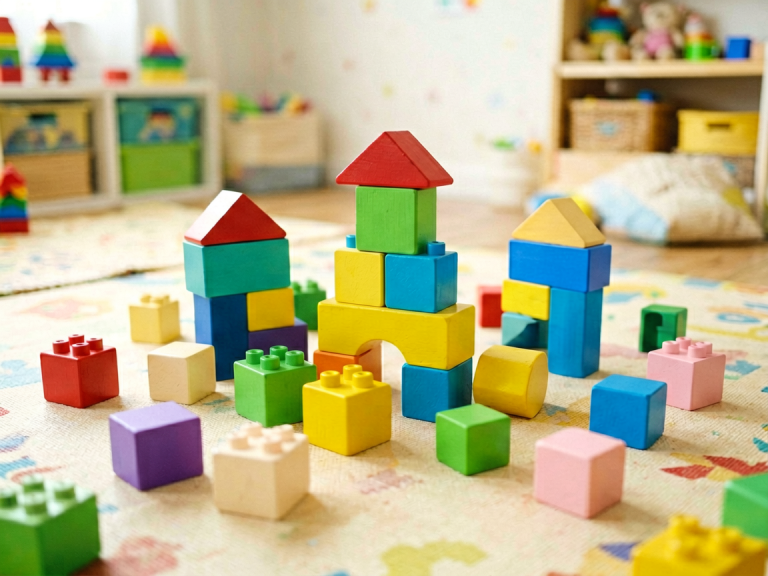
Large wooden blocks, LEGO Duplo, or magnetic tiles are staples. The play idea: challenge your child to build a specific structure—a bridge for toy cars, a castle for a princess, or a tower as tall as their knees. This encourages planning, symmetry, and problem-solving. You can also introduce the concept of patterns: “Let’s make a red-blue-red-blue tower.” For group play, have two children collaborate on a zoo enclosure for plastic animals. They will learn negotiation and teamwork.
Art Supplies and Open-Ended Materials
Crayons, washable markers, playdough, scissors (safety), and glue are perfect for this age. The best play idea is not to give a coloring book but instead provide a blank sheet of paper and ask, “What do you see in your mind today?” Let them draw a story, then ask them to tell you about it. This develops fine motor control and narrative skills. With playdough, make snakes, balls, or pretend cookies. Add natural materials like leaves or pebbles to create imprints, merging art with science. For group plays, set up a “playdough bakery” and take orders from each other.
Board Games and Card Games
Simple board games like “Candy Land” or “Memory” teach turn-taking, patience, and basic counting. The play idea: play in pairs, emphasizing that winning is not the goal—following the rules and having fun is. You can adapt games by making your own memory cards with family photos. For cooperative play, try games where everyone works together (like “Hoot Owl Hoot!”). This reduces competition and builds empathy. Always explain the rules in short, clear sentences, and be prepared to repeat them.
School-Age Children (6–12 Years): Complex Games, STEM, and Collaborative Play
As children enter elementary school, their cognitive abilities expand rapidly. They enjoy strategy, logic puzzles, and activities that require sustained attention. Toys should challenge their growing intellect and allow for independent as well as group play.
Science Kits and STEM Toys
A chemistry set, a microscope, or a robotics kit can be incredibly engaging. The play idea: treat it like a mini-experiment. For example, with a simple volcano kit, ask your child to predict what will happen if they add more vinegar. Document the results together. This teaches the scientific method—hypothesis, observation, conclusion. For older children (9–12), coding toys like programmable robots (e.g., Sphero or LEGO Mindstorms) allow them to create sequences and debug errors. Turn it into a challenge: “Can you make the robot navigate a maze?” This develops computational thinking.
Construction and Engineering Sets
Advanced LEGO sets, K’Nex, or marble runs are fantastic. The play idea: give a design challenge, not just instructions. For instance, “Build a bridge that can hold a small weight without collapsing.” Let them experiment with different shapes and materials. This fosters innovation and resilience (learning from failure). For group play, have teams compete to build the tallest free-standing tower using only paper and tape. This combines creativity with physics.
Strategy Board Games and Role-Playing Games
Games like chess, checkers, Settlers of Catan, or Dungeons & Dragons (simplified for younger ones) promote critical thinking, planning, and social interaction. The play idea: create a family game night where each person chooses a game. For role-playing, help your child design a character with a backstory and then act out scenarios. This enhances literacy, empathy, and problem-solving. Even video games can be age-appropriate if they emphasize strategy rather than violence; choose games that involve puzzle-solving, resource management, or cooperative play.
Outdoor and Active Play
Bicycles, jump ropes, sports equipment (basketball, soccer ball) are essential for physical health. The play idea: organize a mini Olympics with events like sack races, relay races, and obstacle courses. This builds gross motor skills, teamwork, and sportsmanship. For children who prefer solitary play, give them a nature scavenger hunt list: find a leaf shaped like a star, three different rocks, etc. This encourages observation and connection with the outdoors.
Tweens and Teens (13+): Hobbies, Strategy, and Skill-Building
Adolescents are developing their identities and interests. They crave autonomy and meaningful challenges. Toys and games for this age should align with their passions—whether artistic, technological, or athletic—and also foster deeper social bonds.
DIY Craft Kits and Maker Tools
Kits for knitting, sewing, woodworking, or jewelry making allow teens to create tangible products. The play idea: set a project goal, such as making a scarf for a friend or building a birdhouse. This teaches patience, precision, and pride in craftsmanship. For tech-savvy teens, 3D pens or soldering kits for electronics can be engaging. Encourage them to follow online tutorials or invent their own designs. This is a perfect way to channel screen time into productive creation.
Complex Board Games and Puzzles
Games like “Ticket to Ride,” “Pandemic,” or “Codenames” require strategic thinking, communication, and collaboration. The play idea: host a game marathon with peers where they debate strategies and learn to adapt. Jigsaw puzzles with 1000+ pieces foster concentration and pattern recognition. You can make it a family activity by having everyone contribute to one large puzzle over several days.
Musical Instruments and Art Supplies
A guitar, keyboard, or digital drawing tablet can become lifelong companions. The play idea: encourage self-directed learning through apps or online lessons. For group play, form a band or a digital art collective. Teens can share their creations on safe platforms (with parental guidance). This nurtures creativity and confidence. Even something as simple as a high-quality sketchbook and charcoal pencils can lead to daily practice.
Sports and Adventure Gear
Skateboards, rollerblades, climbing gear, or kayaks (with proper supervision) provide physical challenges. The play idea: set personal goals—learning a new trick, completing a trail, or improving a lap time. Team sports (basketball, soccer, volleyball) teach discipline, leadership, and resilience. For less competitive teens, consider orienteering (using a map and compass) or geocaching, which combines technology with outdoor exploration.
Conclusion: The Golden Rule of Toy Selection
No matter the age, the most important principle is to observe your child. Watch what they naturally gravitate toward—do they love building, pretending, or moving? Then choose toys and play ideas that extend that interest. Avoid the trap of buying the most expensive or popular toy; instead, prioritize open-ended items that can be used in multiple ways. Safety remains paramount: check for small parts, sharp edges, and toxic materials. Finally, remember that the greatest gift you can give a child is your presence. Sit on the floor, play alongside them, and let their imagination lead. The best toy in the world is a parent or caregiver who engages, listens, and plays. By combining thoughtful play ideas with age-appropriate toys, you create a foundation for lifelong learning, joy, and connection.