Beyond the Glow: Creative No-Screen Play Ideas to Replace Tablet Time
Introduction: The Digital Dilemma
In the modern household, the tablet has become a silent third parent. It entertains, educates, and occasionally pacifies children during frantic mornings or long car rides. Yet a growing body of research warns of the hidden costs: delayed language development, reduced attention spans, and a creeping dependency that replaces real-world exploration with passive swiping. Parents know they should cut back, but the question remains—once the device is taken away, what fills the void? The challenge is not simply removing screen time but replacing it with something equally engaging, developmentally rich, and—most importantly—sustainable. This article explores a spectrum of no-screen play ideas that are not just "second best" but genuinely better alternatives, designed to spark imagination, build skills, and deepen human connection. Each idea is tested by real families and backed by developmental psychology, offering a practical roadmap to reclaiming playtime from the glowing rectangle.
Part I: The Power of Tactile and Construction Play
1.1 Open-Ended Building with Everyday Objects
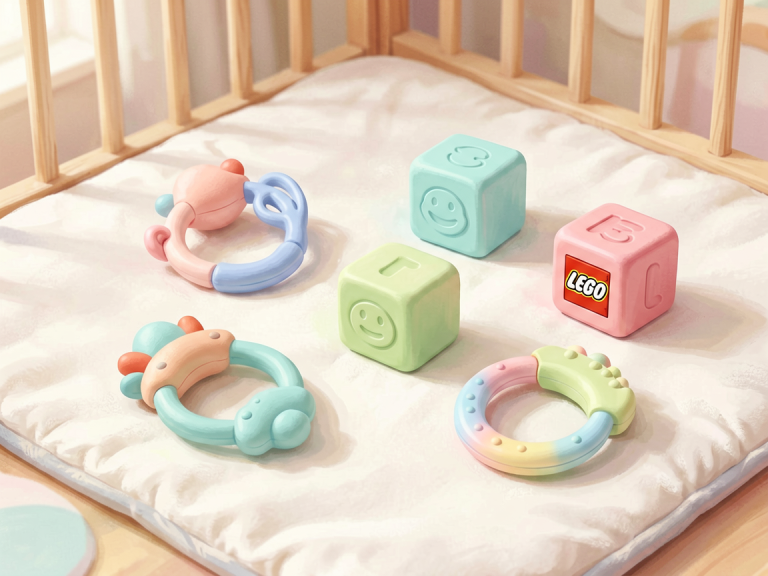
When a child holds a tablet, their fingers glide on glass—smooth, cold, and uniform. There is no resistance, no texture, no smell. Replace that with a pile of cardboard tubes, wooden blocks, old jar lids, and clothespins. Open-ended building materials encourage what educators call "divergent thinking"—the ability to generate multiple solutions to a single problem. For example, a child might first use a cardboard tube as a telescope, then as a tunnel for marbles, then as a rolling pin for playdough. Unlike app-based building games that limit options to pre-programmed shapes, real-world objects invite infinite reconfiguration.
Try setting a weekly "creation challenge": build the tallest tower that can hold a small stuffed animal, or construct a vehicle that can roll down a ramp. The process involves trial and error, frustration and triumph—all absent from the dopamine-driven reward loops of digital games. Moreover, building together with siblings or parents teaches negotiation, spatial reasoning, and fine motor control. One father I interviewed reported that after replacing his son’s thirty-minute tablet session with a bucket of LEGO bricks and a flashlight (to build a "luminous fort"), the boy voluntarily spent two hours engineering a working drawbridge. The key is to resist the urge to "teach" and instead let the child lead.
1.2 The Art of Messy Sensory Play
Many parents avoid messy play because of the cleanup, but the developmental benefits far outweigh the inconvenience. Sensory bins filled with dried beans, rice, sand, or water beads offer a rich tactile experience that no screen can replicate. Add scoops, funnels, small figurines, and plastic containers, and a child can explore volume, cause and effect, and imaginative scenarios for hours. For instance, "dinosaur excavation" using kinetic sand and hidden plastic bones combines storytelling with fine motor work. The child becomes a paleontologist, not just a tapper of icons.
A variation is "kitchen chemistry": mixing baking soda and vinegar in a tray to create fizzing eruptions, or making slime with glue and contact lens solution. The unpredictable reactions (color changes, textures, smells) engage multiple senses simultaneously—something a tablet, with its flat visual and audio input, cannot achieve. The mess is temporary; the neural connections formed are permanent. To minimize parent stress, designate a specific area (a large plastic tablecloth on the floor, or the bathtub) and involve the child in cleanup as part of the activity. This teaches responsibility while eliminating the tablet’s passive consumption.
Part II: Movement, Imagination, and Social Connection
2.1 Indoor Obstacle Courses and Physical Challenges
Children’s bodies are designed to move, yet tablet time encourages stillness. An indoor obstacle course uses household furniture: pillows to jump over, blankets to crawl under, a balance beam made of masking tape on the floor, and a "lava" zone where children must step only on cushions. This not only burns physical energy but also improves gross motor planning, coordination, and executive function as the child sequences the course and adjusts movements.
For older children (ages 6–10), turn it into a timed challenge with a stopwatch, or incorporate cognitive tasks: "At station three, name five animals that live in the ocean before you jump over the pillows." The combination of movement and thinking mirrors the cognitive demands of real-world problem-solving, unlike the narrow focus of a screen game. Many parents report that after a 20-minute obstacle course, children are calmer and more focused than after an equal amount of screen time, because they have released stress hormones and practiced self-regulation.
2.2 Collaborative Storytelling and "Living Theatre"
Tablets often deliver ready-made stories, but children lose the chance to be the author. Replace that with "living theatre"—a no-screen play idea where children invent characters, plot, and dialogue using simple props (scarves become capes, a cardboard box becomes a castle, a spoon becomes a magic wand). One powerful technique is "story stones": paint or glue small pictures onto pebbles (e.g., a tree, a dragon, a key, a mirror), then have the child randomly draw three and weave a tale linking them. This forces creative connections, vocabulary expansion, and narrative structure—all without a script.
For groups, the "yes, and…" game from improv theatre works beautifully. One child starts a story ("A pirate discovered a mysterious bottle on the beach"), and each subsequent player adds a sentence beginning with "yes, and…" This teaches cooperation, listening, and spontaneity. I have seen shy four-year-olds transform into bold storytellers using this method, because there are no wrong answers—only shared creation. The screen, by contrast, demands correct taps within a fixed system; here, the child is the system.
2.3 Nature-Based Exploration and "Unplugged" Scavenger Hunts
The great outdoors is the original playground, yet many children now resist going outside without a device. A structured scavenger hunt rekindles interest. Provide a simple checklist: find a leaf shaped like a heart, a smooth stone, something that makes a sound when shaken, a yellow flower. Add variations for different seasons—listen for a bird call, find a cloud that looks like an animal, collect three different types of bark. This activity sharpens observation, classification, and patience—the antithesis of the instant gratification of a tablet.
Another powerful idea is "nature weaving": collect thin branches, grasses, and flowers, then weave them into a small loom made from a cardboard frame with string. The child creates a texture collage from natural materials, learning about patterns and the beauty of imperfection. For older children, keep a "nature journal" with drawings, pressed leaves, and written descriptions. This combines art, science, and literacy in a way that no screen app can replicate because it engages touch, smell, and the varying light of the real world.
Part III: Quiet Time Without a Screen
3.1 Audiobooks and Storytelling with Shadows
Not all no-screen time needs to be active. Many parents worry that without a tablet, children will refuse quiet time. Enter audiobooks—not as a digital crutch (since they require listening comprehension and imagination) but as a bridge. A child lying on a rug, listening to a well-narrated story, builds the mental movie that a screen would impose. Better yet, pair the story with a simple activity: while listening to "The Lion, the Witch and the Wardrobe," the child can draw what they imagine the lamppost in the snow looks like. Or use a flashlight to create shadow puppets on the wall, reenacting a scene.
Shadow play is ancient and powerful—it requires only hands, a light source, and a wall. Children experiment with distance and angle to make shapes larger or smaller, discovering principles of optics and perspective. They also invent dialogue and sound effects, turning passive listening into active performance. This is the polar opposite of the tablet's passive visual consumption.
3.2 Puzzles, Board Games, and "Slow" Play
The modern world celebrates speed, but deep thinking requires slowness. Jigsaw puzzles (especially 100–300 piece ones for young children) teach pattern recognition, spatial reasoning, and delayed gratification—the satisfaction of placing the final piece. Similarly, board games like "Candy Land" or "Memory" require turn-taking, emotional regulation (losing gracefully), and strategic thinking. Unlike app versions, physical games involve real dice, cards, and tokens that children can manipulate, strengthening fine motor skills and the tactile connection to the game.
For a twist, try "cooperative puzzles" where all players work together to solve a riddle (e.g., a treasure hunt written on slips of paper hidden around the house). The child must read clues, decode simple ciphers, and work as a team. This builds literacy, logic, and collaboration skills that a tablet's single-player mode cannot foster.
Conclusion: Reclaiming the Real
The battle against tablet time is not about prohibition but about offering alternatives that are more fulfilling. The ideas above—tactile building, messy sensory play, physical challenges, collaborative storytelling, nature exploration, and quiet slow play—share a common thread: they honor the child's agency, creativity, and need for real-world feedback. A screen provides a controlled, predictable environment; real life provides friction, surprise, and growth. When a child builds a tower that collapses, they learn resilience. When they negotiate with a sibling over a blanket for a fort, they learn compromise. When they listen to the wind in the trees during a scavenger hunt, they learn wonder.
Replacing tablet time is not easy—it requires preparation, patience, and often a willingness to join the play yourself. But the reward is a child who is more engaged, more resourceful, and more connected to the world around them. The next time you hear, "I'm bored," don't reach for the tablet. Reach instead for a cardboard box, a basket of stones, or a candle for shadow puppets. The play will soon begin, and it will be far better than anything the screen could offer.