Building the Foundation: How Educational Toys Foster Social Skills in Babies
Introduction
From the moment they enter the world, babies are wired for connection. Their first smiles, coos, and reaching hands are early attempts to engage with the people around them. While many parents focus on cognitive milestones like object permanence or first words, the development of social skills—sharing, turn-taking, empathy, and nonverbal communication—is equally critical. Surprisingly, one of the most effective tools for nurturing these abilities is not a structured class or a screen-based app, but rather a carefully chosen collection of educational toys. This article explores how educational toys designed for babies can become powerful catalysts for social skill building, offering parents and caregivers a practical roadmap for early social development through play.
Why Social Skills Matter in Infancy
Social skills are the invisible threads that weave human relationships. In infancy, these skills begin as simple back-and-forth exchanges: a baby smiles, a parent smiles back; the baby coos, the adult responds. These interactions form the neural pathways for empathy, cooperation, and emotional regulation. Research in developmental psychology consistently shows that children who develop strong social skills in their first two years are more likely to form secure attachments, experience less anxiety in group settings, and perform better in school environments later on. Yet social skills are not innate—they are learned through experience. Educational toys provide a structured yet playful context for babies to practice these skills repeatedly, turning abstract concepts like “sharing” into tangible, hands-on learning moments.
The Science Behind Play and Social Development
Play is the brain’s preferred mode of learning, especially for babies. Neuroscientists have discovered that during play, the prefrontal cortex—the region responsible for impulse control and social understanding—is highly active. When a baby rolls a ball to a parent and waits for it to come back, they are not just having fun; they are training their brain to understand reciprocity, timing, and cause-effect in a social context. Educational toys amplify this process by introducing specific features that encourage interaction rather than solitary manipulation. Toys that require two people to operate, that have mirrors for self-recognition, or that produce sounds when touched by another person, all serve as scaffolding for social learning. The key is that the toy itself becomes a “social partner” that mediates the interaction between baby and caregiver, or between baby and another child.
Types of Educational Toys That Promote Social Interaction
Not all toys are created equal when it comes to social skill building. Below are several categories of educational toys that have proven particularly effective in fostering social development in babies aged six months to two years.
Building Blocks and Cooperative Play
Simple wooden or soft plastic blocks are perhaps the most underestimated social toys. A single block does little; a pile of blocks invites building together. When a parent sits on the floor and stacks blocks while a baby watches and then tries to knock them over, a reciprocal game emerges. Over time, babies learn to wait for their turn, to hand a block to a parent, and to imitate stacking motions. More advanced block sets with different colors and textures encourage pointing, requesting, and shared attention—“Look, the red one!” This cooperative play lays the groundwork for understanding that actions can be synchronized with others, a core component of social competence.
Role-Playing and Imitation Toys
Between nine and eighteen months, babies enter what psychologists call the “gestural period,” where they begin imitating adult behaviors. Educational toys that mimic real-world objects—toy telephones, plastic cups and saucers, small baby dolls with bottles, or play food items—are perfect for this stage. When a baby “feeds” a doll or “calls” grandma on a toy phone, they are rehearsing social scripts. If a parent joins in by pretending to eat the toy food or by “answering” the phone, the interaction becomes a shared narrative. These toys encourage joint pretend play, which is one of the earliest forms of collaboration. Babies learn to read facial expressions, adjust their actions based on a partner’s response, and develop a sense of shared intentionality.
Musical and Turn-Taking Toys
Music inherently involves rhythm, anticipation, and response. Educational toys like baby xylophones, shakers, drums, or musical activity tables encourage turn-taking in a natural way. A parent plays a note, then hands the mallet to the baby; the baby shakes a rattle, and the parent shakes along. The back-and-forth rhythm mirrors conversational turn-taking. Some toys are designed with “call and response” features—for example, a toy that plays a short melody and then waits for the baby to press a button to hear the next part. These toys teach patience, listening, and the pleasure of synchronized interaction. Even simple maracas used together in a game of “shake-shake-stop” help babies learn to coordinate their actions with a social partner.
Soft Books and Picture Cards for Shared Attention
Shared attention—when two people look at the same object—is a foundational social skill that emerges around nine months. Educational soft books with mirrors, crinkle pages, and high-contrast images invite a parent and baby to look together. The parent can point to a picture, name it, and then wait for the baby to look or babble. Picture cards with faces showing different emotions (happy, sad, surprised) serve a dual purpose: they introduce emotional vocabulary and create a shared focus. When a parent says “Look, the baby is happy!” and then mirrors that expression, the baby learns to connect internal states with external cues. These toys transform solitary reading into a dyadic social experience.
Practical Tips for Parents and Caregivers
Even the best educational toys cannot build social skills in a vacuum. The adult’s role is crucial. Here are actionable strategies for maximizing the social benefits of toy play:
- Be Present and Responsive: Sit on the floor at the baby’s level. Narrate the play in simple terms: “You have the red block. I have the blue block. Can I have your red block?” Wait for the baby to respond—even a glance or a grunt is a social signal that you can acknowledge.
- Model Turn-Taking Explicitly: Use phrases like “my turn” and “your turn” while physically demonstrating the exchange. This verbal labeling helps babies map the concept onto their actions.
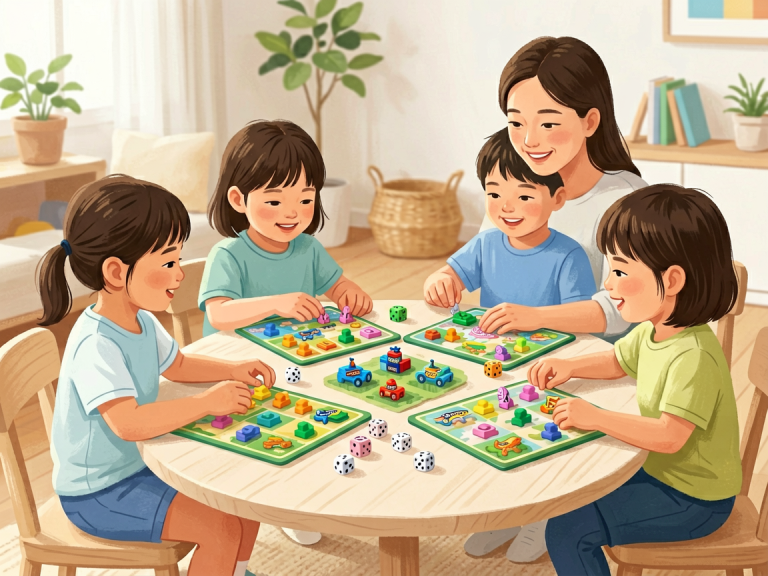
- Introduce Parallel Play with Peers: If possible, arrange playdates with babies of similar age. Provide duplicate educational toys (two identical stacking cups, two shakers) to reduce conflict and encourage imitation. Observe how babies watch each other and gradually begin to interact.
- Rotate Toys and Limit Choices: Too many toys can overwhelm a baby and encourage solitary, superficial play. Offer only three or four educational toys at a time, rotating them weekly. Fewer toys lead to deeper, more meaningful social interactions.
- Use Toys to Teach Emotional Regulation: When a baby becomes frustrated that a block tower falls, use the moment to name the feeling: “Uh-oh, the tower fell. You feel sad. Let’s build it again together.” The toy becomes a vehicle for emotional coaching.
Conclusion
Educational toys for babies are far more than colorful distractions. When chosen deliberately and used with intention, they become miniature social laboratories where infants practice the essential skills of connection: waiting, sharing, imitating, and recognizing emotions. From building blocks that teach cooperation to soft books that foster shared attention, each toy offers a unique opportunity for social growth. The most powerful ingredient, however, remains the loving adult who sits beside the baby, points to the picture, shakes the maraca in rhythm, and whispers, “Your turn.” In those simple moments, social skills are not taught—they are lived. And that is the true education that lasts a lifetime.