The Ultimate Buying Guide for Learning Through Play: Choosing Toys That Educate and Entertain
—
Introduction: Why Learning Through Play Matters
In an era of structured schedules and screen‑time debates, the concept of “learning through play” has never been more relevant. Play is not merely a break from learning; it is learning in its most natural, joyful form. When children build with blocks, pretend to run a grocery store, or experiment with magnets, they are developing cognitive flexibility, problem‑solving abilities, social skills, and emotional resilience. Research from developmental psychologists such as Jean Piaget and Lev Vygotsky has long affirmed that play is the engine of intellectual growth. However, not all toys are created equal. A well‑intentioned purchase can either spark weeks of creative exploration or gather dust after a single afternoon. This buying guide will walk you through the essential considerations for choosing toys that genuinely support learning through play—whether you are a parent, educator, or gift‑giver.
—
The Philosophy Behind Play‑Based Learning
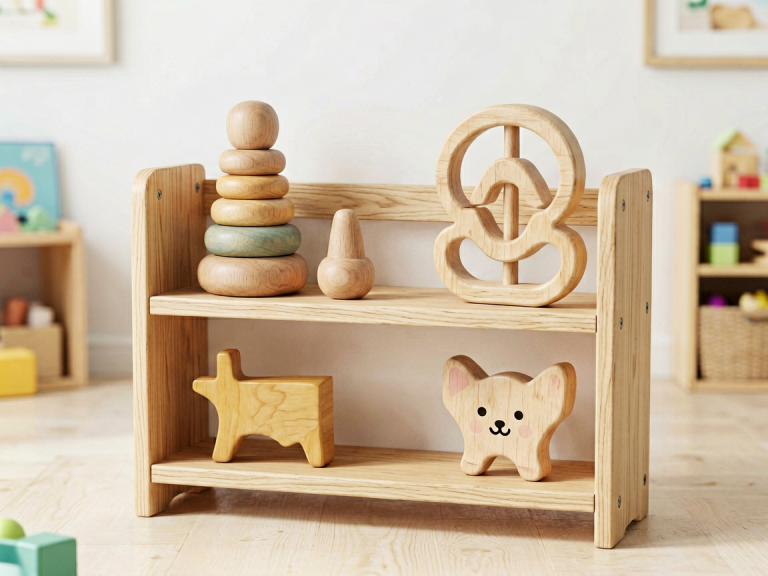
Before diving into product features, it helps to understand what makes a toy “educational” in the play‑based sense. Traditional educational toys often focus on rote memorization—flashcards, spelling drills, or math worksheets disguised as games. True learning through play, however, emphasizes process over product. It encourages open‑ended exploration, trial‑and‑error, and intrinsic motivation. A set of wooden blocks can teach physics, geometry, and creativity simultaneously, while a battery‑operated talking robot that only repeats preset phrases may offer limited cognitive engagement. The best toys are those that act as “loose parts”—materials that can be manipulated, combined, and reimagined by the child. This philosophy aligns with the Montessori method, which values self‑directed activity, and with the Reggio Emilia approach, which views the environment as a third teacher. Keep this mindset as you evaluate every potential purchase.
—
Key Factors to Consider When Buying Educational Toys
1. Age Appropriateness and Developmental Stage
The most brilliant toy is useless if it is too advanced or too simple. Manufacturers often list a recommended age range, but these labels should be your starting point, not the final word. A three‑year‑old may be ready for simple puzzles with large knobs, while a six‑year‑old might thrive with a 100‑piece jigsaw. Consider not only the child’s chronological age but also their fine‑motor skills, attention span, and interests. For infants, sensory toys with contrasting colors, different textures, and safe‑to‑chew materials support early brain development. For preschoolers, open‑ended construction sets, pretend‑play kits, and sequencing games build executive function. School‑age children benefit from strategy‑based board games, coding robots, and science kits that require patience and logic. Always check for small parts that could pose choking hazards for younger siblings.
2. Safety and Material Quality
Play should be safe, and that starts with the materials. Look for non‑toxic paints, BPA‑free plastics, and sustainably sourced wood. Avoid toys with sharp edges, loose magnets (which can be ingested), or cords longer than 12 inches that pose strangulation risks. Reputable brands often exceed safety standards, so check for certifications such as ASTM (American Society for Testing and Materials) or CE (Conformité Européenne). Consider also the toy’s durability. A flimsy plastic toy may break within days, leaving sharp shards and a disappointed child. Well‑constructed wooden toys, dense cardboard puzzles, and sturdy metal components can withstand years of enthusiastic play. Hand‑me‑down toys can be wonderful, but always inspect them for wear and tear, especially on vintage items that may not meet modern safety regulations.
3. Open‑Endedness vs. Single‑Purpose Design
This factor is perhaps the most crucial in a learning‑through‑play buying guide. Open‑ended toys can be used in multiple ways, adapting to the child’s evolving imagination. A set of magnetic tiles can become a castle, a spaceship, a geometric study, or a marble run. In contrast, a toy that only makes one sound when a button is pressed offers a narrow window of engagement. Open‑ended play encourages divergent thinking—the ability to generate many solutions to a problem—which is a cornerstone of creativity and innovation. When shopping, ask yourself: Can this toy be used in five different ways? Will the child still play with it a year from now? If the answer is no, reconsider.
4. Alignment with the Child’s Interests
A toy that teaches coding concepts may be perfect for a tech‑curious child but might overwhelm a child who prefers art. The most powerful learning happens when a child is intrinsically motivated. Observe what already fascinates them: dinosaurs, cooking, music, building, storytelling. Then look for toys that deepen that interest while introducing new skills. For a budding naturalist, a bug‑catching kit with a magnifying glass and identification cards blends science with outdoor exploration. For a dramatic storyteller, a set of felt figures and a felt board can spark narrative creation. When a toy connects to something the child already loves, learning feels effortless.
5. Multi‑Sensory and Cross‑Curricular Appeal
The brain learns best when multiple senses are engaged simultaneously. Toys that combine sight, sound, touch, and even smell create richer neural connections. A sensory bin filled with rice, scoops, and hidden letters invites tactile exploration while subtly reinforcing letter recognition. Board games that require moving tokens (kinesthetic), reading cards (visual), and discussing strategies (auditory) hit several learning domains at once. Cross‑curricular toys blend subject areas—for example, a gardening set that introduces biology (life cycles), math (measuring soil depth), and literacy (reading seed packets). When evaluating a toy, think about which senses and subjects it activates.
—
Toy Categories That Promote Learning Through Play
STEM and Construction Toys
STEM (Science, Technology, Engineering, Math) toys are popular for good reason. They build spatial reasoning, logical thinking, and persistence. Classic building sets like LEGO, Magna‑Tiles, and K’NEX allow children to design and test structures. For older children, coding toys such as Sphero robots or the Osmo Coding Kit combine tangible play with digital logic. Science experiment kits can be excellent, but choose ones that emphasize open investigation over pre‑packaged results. For instance, a telescope or a microscope invites ongoing discovery, while a slime‑making kit may be a one‑time activity.
Creative and Artistic Toys
Creativity is not separate from academic learning; it enhances it. Art supplies—good‑quality paints, clay, markers, and paper—are some of the most educational tools you can provide. They foster fine‑motor control, color theory, and emotional expression. More structured creative toys, such as loom‑band sets or knitting looms, teach pattern‑recognition and patience. For music, simple percussion instruments (shakers, drums, xylophones) let children explore rhythm and cause‑and‑effect. Avoid digital “art” apps that mimic drawing; the physical act of creating with real materials is more beneficial for young hands and brains.
Pretend‑Play and Socio‑Emotional Toys
Dress‑up costumes, play kitchens, doctor kits, and dollhouses are not just fun—they are laboratories for social and emotional learning. Through role‑playing, children practice empathy, negotiation, and language. They experiment with different identities and social scripts. When choosing pretend‑play toys, look for realistic but simple props. A wooden cash register with play money teaches basic math (counting, adding) while also encouraging turn‑taking. Puppets and story‑telling sets promote narrative skills and perspective‑taking. The best socio‑emotional toys come with few preset rules, allowing children to invent their own scenarios.
Language and Literacy Toys
Toys that support language development should focus on interaction, not passive listening. Alphabet puzzles, magnetic letters, and word‑building games like Bananagrams or Scrabble Junior are hands‑on. Memory‑matching games with pictures and words strengthen vocabulary and recall. For younger children, simple storybooks with textures or flaps engage pre‑reading skills. Avoid electronic toys that “say” words for the child; research shows that children learn vocabulary best through live, responsive conversation with adults. A great language toy is one that sparks dialogue—for example, a set of conversation‑starter cards for family dinners.
Outdoor and Gross‑Motor Toys
Physical play is essential for brain development. Balance bikes, jump ropes, balls, and climbing structures build coordination, strength, and risk‑assessment skills. Outdoor exploration tools—binoculars, a compass, a nature journal—turn a walk in the park into a science lesson. Some of the most valuable learning toys are the simplest: a shovel and bucket at the beach teach physics (digging, water flow) and creativity (sandcastles). When shopping for outdoor toys, prioritize those that require active movement and problem‑solving, not passive riding.
—
How to Evaluate Quality and Durability
You do not need to buy the most expensive toy to get quality, but you should look for signs of thoughtful design. Examine joints, seams, and moving parts. Are wheels attached with screws or cheap plastic pins? Will the paint chip off after a month? Read customer reviews that mention durability—especially from families with multiple children. Consider whether the toy can be repaired. Some brands, like Melissa & Doug and Hape, offer replacement parts. For electronic toys, check that batteries are easily replaceable and that the device does not rely on a proprietary charging cable that might be discontinued. Remember, a toy that lasts through three children is not only a better value but also a more sustainable choice.
—
Budget Considerations and Where to Shop
Learning‑through‑play toys range from a few dollars to hundreds. You do not need to break the bank. Many of the best toys are everyday items: cardboard boxes, kitchen utensils, and fabric scraps. When buying new, consider second‑hand options. Thrift stores, online marketplaces like Facebook Marketplace, and toy‑swap events can yield high‑quality wooden toys at a fraction of the cost. If you prefer new, look for sales around holidays, or invest in a few “cornerstone” toys (a set of blocks, a good art easel, a board game collection) rather than many cheap, short‑lived items. Many public libraries also lend toys and puzzles—an excellent way to test before you buy.
—
Common Mistakes to Avoid
- Over‑emphasizing “educational” labels. A toy marketed as “STEM” may be nothing more than a worksheet in plastic form. Ignore buzzwords and assess the toy’s actual play value.
- Choosing based on gender stereotypes. Blocks and trucks are for all children; dolls and art sets are for all children. Restricting toys by gender limits learning opportunities.
- Buying for the child you wish you had. If your child hates puzzles, do not force them. Follow their lead.
- Ignoring the role of the adult. Even the best toy needs an engaged adult sometimes. Your interaction—asking questions, modeling, or simply sitting nearby—multiplies the learning potential.
- Over‑schedule play. Too many toys can overwhelm a child and reduce deep engagement. A rotating selection of 10–15 high‑quality toys often works better than a cluttered toy box.
—
Conclusion: Play Is the Work of Childhood
Choosing toys for learning through play is not about finding a magic product that will make your child smarter. It is about recognizing that play itself is the learning. The right toy is a tool that supports curiosity, resilience, collaboration, and joy. As you browse aisles or scroll through online listings, remember the child who will hold that toy. Will it invite them to imagine? Will it challenge them just enough without frustrating them? Will it bring them into a state of flow—that absorbing, timeless concentration that is the hallmark of true play? If you can answer yes, you have found a winner. Happy playing, and happy learning.
*(Word count: approximately 1,480 words)*