Indoor Play Activities for Babies: Nurturing Development Through Creative and Safe Play
Introduction
The first year of a baby’s life is a whirlwind of growth, discovery, and wonder. Every rattle, every smile, every tiny grab at a dangling toy is a building block for cognitive, motor, and emotional development. Yet, for parents and caregivers, especially those living in climates with extreme weather, limited outdoor space, or busy schedules, providing engaging indoor play activities for babies can feel like a challenge. The good news is that the home environment is already a treasure trove of opportunities for play. With a little creativity and intention, you can transform a living room, nursery, or even a corner of the kitchen into a stimulating, safe, and joyful play zone. This article explores a wide range of indoor play activities tailored for babies from birth to twelve months, focusing on sensory exploration, motor skill development, cognitive stimulation, and social bonding. Each activity is designed with safety in mind and emphasizes the role of the caregiver as a playful partner. Whether you have a newborn who is just beginning to notice the world or a nearly-toddler who is ready to crawl and cruise, these activities will support your baby’s natural curiosity and growing abilities.
Sensory Play: Engaging the Senses from Day One
From the moment they are born, babies use their senses to understand the world. Sensory play is not only enjoyable but also crucial for brain development. Indoor activities that stimulate sight, sound, touch, smell, and even taste (within safe boundaries) help build neural connections and lay the foundation for later learning.
Visual Stimulation with High-Contrast Cards and Mobiles
Newborns have limited color vision and are most attracted to high-contrast patterns such as black, white, and red. You can create simple homemade cards by drawing bold shapes—circles, stripes, checkerboards—on white paper and placing them near the baby’s changing table or crib. As the baby grows, hang a mobile with contrasting colors and gentle movement. For older babies, introduce a “light and shadow” game: use a flashlight in a dim room to cast moving shadows on the wall, letting your baby track the light with their eyes. Always avoid direct light in their eyes and keep sessions short.
Tactile Exploration with Safe Textures
Babies love to touch everything. Fill a shallow plastic tub (with supervision) with safe, non-toxic materials: a few soft scarves, a clean sponge, a piece of velvet fabric, a smooth wooden block, or a crinkly paper bag taped shut. Let your baby sit or lie on a play mat and reach for these objects. For babies who are mouthing everything—which is developmentally normal—ensure all items are too large to swallow, free of small parts, and washable. Another easy activity: fill a sealed plastic bag with hair gel and a few drops of food coloring, tape the bag to the floor or high chair tray, and let the baby squish and push the gel around. This is a great mess-free sensory experience.
Sound Play with Homemade Instruments
Hearing is fully developed even before birth. Create a set of safe shakers: fill small, empty plastic bottles (with screw-on lids) with rice, dry beans, or bells. Super-glue the lids shut to prevent spills. Let your baby shake, bang, and explore the different sounds. For tummy time, place a rattle just out of reach to encourage reaching and grasping. You can also sing simple songs with actions, like “The Wheels on the Bus,” and gently tap your baby’s hands or feet in rhythm. The combination of sound, movement, and your voice is powerful for bonding and auditory discrimination.
Gross Motor Skills: Building Strength and Coordination
Indoor play provides ample opportunities to develop large muscle groups. From lifting the head to rolling over, sitting, crawling, and eventually standing, each milestone is a victory that indoor activities can support.
Tummy Time with a Twist
Tummy time is essential for strengthening neck, shoulder, and back muscles. But many babies resist it. Make it more engaging by placing a mirror in front of them—babies love looking at their own reflection. Lay a soft, safe mat on the floor and scatter a few interesting toys around. For a change of scenery, try tummy time on your own chest while you lie on your back; your baby will lift their head to see your face. Another trick: blow bubbles just above the baby’s line of sight—they will enjoy watching them pop and may try to lift themselves higher.
Rolling and Reaching Games
Once your baby starts to roll, encourage more of it by placing a favorite toy just to the side. Gently guide their hips if needed but let them do the work. For pre-crawling babies, place them on a soft, clean surface with interesting items a short distance away. You can also use a “nursing pillow” roll: position a rolled-up blanket or nursing pillow under your baby’s chest to give them a slight incline, making it easier to look around and reach forward. Always supervise to ensure they don’t roll off any elevated surface.
Crawling Obstacle Course
When your baby begins to crawl or scoot, create a simple indoor obstacle course using cushions, pillows, and soft blocks. Arrange them in a low, safe maze. Place a toy at the end to motivate movement. For babies who are pulling up to stand, provide sturdy furniture (like a low, stable coffee table or a sofa) to cruise around. Add a few pots and wooden spoons nearby for them to bang—they love the cause-and-effect. Always ensure furniture is anchored to the wall to prevent tipping, and remove any sharp edges or heavy items that could fall.
Fine Motor Skills: Little Hands, Big Discoveries
Fine motor development involves the small muscles in the hands and fingers, crucial for later tasks like feeding, writing, and self-care. Indoor play can target these skills with simple, everyday objects.
Grasping and Transferring
Newborns have a reflexive grasp, but by three to four months they start to intentionally reach. Offer lightweight rattles, fabric balls, or rings that are easy to hold. As your baby grows, introduce toys that promote transferring from one hand to the other, such as a pair of small wooden blocks. Activity gyms with dangling toys encourage reaching and batting. For older babies (around 8–12 months), try a “container and objects” game: give them a small box (like a clean tissue box) and a few large, safe objects (like a soft ball and a wooden egg). Show them how to drop the objects in and dump them out. This simple game is endlessly fascinating and builds hand-eye coordination.
Finger Feeding and Pincer Grasp
Around 8–10 months, babies develop the pincer grasp—using the thumb and forefinger to pick up small items. The best indoor activity for this is structured finger feeding with foods like soft cooked peas, small pieces of banana, or O-shaped cereal (if baby is ready). Always supervise to prevent choking. You can also use non-food items like large pom-poms or plastic bottle caps (too big to swallow) and let your baby pick them up from a flat surface. Place the items in a muffin tin to add an extra challenge of retrieval.
Tearing and Scrunching
Babies love the tactile feedback of paper. Give your baby a piece of crinkly paper or a soft magazine (supervised, as paper can be mouthable). Show them how to scrunch it, tear it, or simply pat it. This strengthens hand muscles and provides sensory input. For a cleaner alternative, use fabric scraps or the crinkly pages of a cloth book.
Cognitive Development: Cause, Effect, and Early Problem-Solving
Play is the primary way babies learn about how the world works. Indoor activities can foster early cognitive skills like object permanence, memory, and simple problem-solving.
Peek-a-Boo Variations
Peek-a-boo is a classic for a reason: it teaches object permanence—the understanding that things still exist even when out of sight. Play it with your hands, a blanket, or a toy. For babies who can sit, hide a small toy under a cup and ask “Where did it go?” then lift the cup to reveal it. Gradually increase the delay before revealing. You can also play hide-and-seek with favorite stuffed animals underneath a scarf.
Cause-and-Effect Toys
Provide toys that respond to a baby’s actions—a rattle that shakes when moved, a pop-up toy that appears when a button is pushed, or a wind-up music box. Even a simple kitchen set of plastic bowls and a wooden spoon is a cause-and-effect lesson: hitting the bowl makes a loud sound. Narrate what happens: “You hit the bowl, and it made a boom sound!” This builds vocabulary and understanding.
Simple Puzzles and Shape Sorters
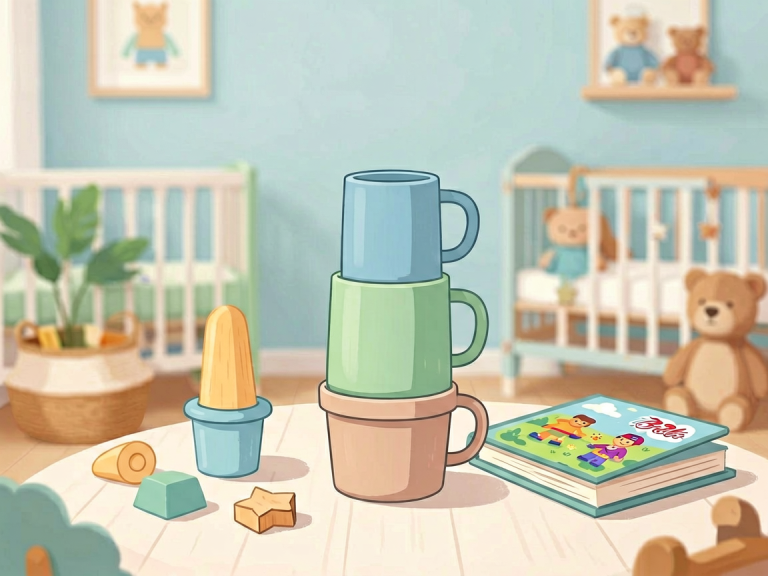
From about 9 months onward, babies can begin to work with simple shape sorters or nesting cups. Choose a set with large, chunky pieces. At first, they may only be able to take pieces out, which is fine—that’s part of the learning. Model how to put a shape in the hole, then let them try. Celebrate every attempt, even if they just bang the pieces together. The goal is not perfection but exploration.
Social-Emotional Play: Building Bonds and Emotional Skills
Even the youngest babies thrive on social interaction. Indoor play is a perfect time for one-on-one connection that builds trust, security, and emotional intelligence.
Mirror Play
Hold your baby in front of an unbreakable mirror. Make faces—smile, frown, open your mouth wide. Point to your baby’s nose, then your own. This activity helps with self-recognition and emotional expression. As they grow, they will start to mimic your expressions. Keep the mood light and laugh together.
Gentle Movement and Rhythm Games
Rock your baby in your arms while singing a lullaby. Bounce gently on an exercise ball (with the baby securely held) to a rhythmic song. These activities provide vestibular stimulation and a sense of safety. You can also do a simple “row, row, row your boat” while sitting on the floor, holding your baby’s hands and gently swaying back and forth.
Emotional Regulation Through Calming Play
Not all play needs to be high-energy. After active play, transition to a calm activity like a gentle massage with baby-safe lotion, or reading a soft cloth book with simple pictures. The key is to follow your baby’s cues. If they seem overstimulated, reduce noise and movement. Offer a favorite lovey or a pacifier. Remember that a baby’s ability to process stimuli is limited; indoor play should be broken into short sessions of 10–20 minutes, with plenty of rest in between.
Safety Tips for Indoor Baby Play
While the benefits of indoor play are immense, safety must always come first. Here are essential guidelines:
- Supervision is non-negotiable. Never leave a baby unattended during play, especially with objects that could pose a choking risk or when they are on an elevated surface.
- Choose age-appropriate toys. Follow the manufacturer’s age recommendations, and regularly inspect toys for broken parts, loose buttons, or sharp edges.
- Beware of small parts. Anything that can fit through a toilet paper tube is a choking hazard for babies under three years old.
- Secure furniture. Anchor heavy furniture like bookshelves and dressers to the wall to prevent tipping.
- Keep the play area clean. Wipe down mats, toys, and surfaces regularly to prevent germs.
- Avoid strings and cords. Remove blinds cords, electrical cords, and any hanging strings longer than 12 inches to prevent strangulation.
- Check for floor hazards. Keep the play area free of small trinkets, pet food, and sharp objects.
- Respect your baby’s limits. If they are fussy, tired, or turning away, they have had enough. Pushing play can lead to overstimulation and crankiness.
Conclusion
Indoor play activities for babies are far more than a way to pass the time—they are the foundation of a lifetime of learning, curiosity, and emotional well-being. From the simplest game of peek-a-boo to a carefully arranged sensory bin, each moment of play is an opportunity for connection and development. The beauty of indoor play is that it requires no expensive equipment or elaborate planning. A cardboard box, a set of measuring cups, your own face, and your loving voice are more than enough. As you engage with your baby in these activities, remember that the most important ingredient is your presence. Watching, responding, and delighting in their discoveries will not only boost their development but also deepen the bond between you. So spread a blanket on the floor, turn off the screens, and let the playful learning begin. Your baby’s brain is ready, their eyes are bright, and their little hands are eager to explore the world—right inside your home.