Nurturing Curiosity: A Parent’s Guide to Supporting Learning at Home for 2‑Year‑Olds
Introduction
The second year of life is a whirlwind of discovery. Your two‑year‑old is no longer a passive infant but an active explorer who touches, climbs, asks endless “why” questions, and absorbs everything around them. As a parent, you may wonder: *Should I be teaching letters? Does my child need flashcards?* The answer is a gentle “no.” At this age, the most powerful learning happens through everyday interactions, play, and loving routines. This guide will show you how to transform your home into a rich, supportive environment where your toddler’s natural curiosity can flourish—without worksheets or pressure. Every cuddle, snack time, and walk in the park becomes a lesson in language, motor skills, and emotional understanding. Let’s explore how you can be your child’s best first teacher.
—
Understanding the 2‑Year‑Old Mind: Key Developmental Milestones
Before diving into activities, it helps to know what is happening inside that busy little brain. Two‑year‑olds are in what developmental psychologist Jean Piaget called the “preoperational stage”—they are learning to use symbols (words, pretend play) but still think very concretely. Their attention span is short (often just 2–5 minutes), and they are driven by a powerful urge to be independent, which sometimes shows up as frustration or tantrums.
Key milestones to expect include:
- Language explosion: Vocabulary grows from about 50 words at 18 months to 200–300 words by age two and a half. They begin combining two words (“more milk,” “daddy go”).
- Gross motor skills: Running, climbing, kicking a ball, and walking up stairs with help.
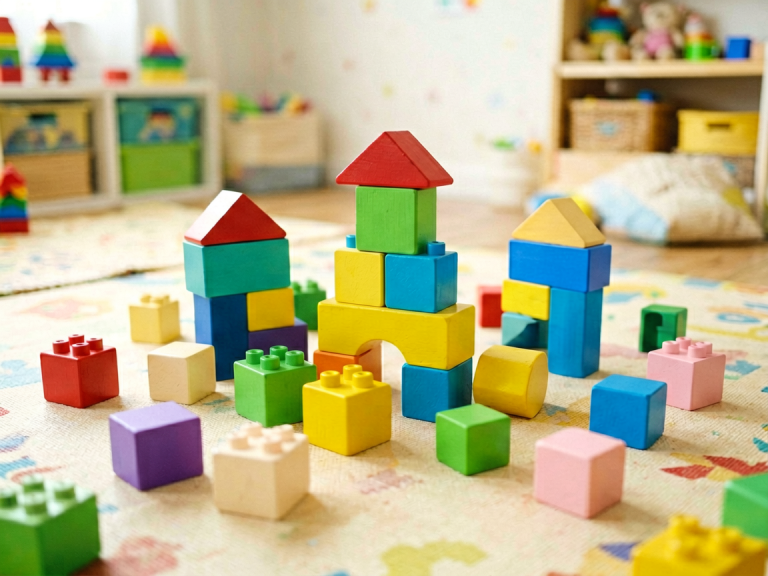
- Fine motor skills: Stacking blocks, turning pages, scribbling with crayons, and feeding themselves with a spoon.
- Cognitive skills: Sorting objects by colour or shape, following simple two‑step instructions, and engaging in simple pretend play (e.g., pretending to feed a doll).
- Social‑emotional growth: Showing empathy (offering a toy when someone is sad), developing a sense of self (“me do it”), and experiencing intense emotions.
Remember: every child develops at their own pace. These milestones are a guide, not a checklist. Your role is to observe and celebrate your child’s unique journey, offering gentle encouragement without comparison.
—
Creating a Learning‑Friendly Home Environment
Your home’s physical setup can either invite curiosity or overwhelm. A 2‑year‑old learns best in a space that is safe, organised, and accessible. Here are practical steps:
- Low shelves, open bins: Place a few carefully chosen toys on low shelves where your child can reach them independently. Rotate toys weekly to maintain interest. Store items in clear bins so your toddler can see and choose.
- Safe exploration zones: Use baby gates to block off dangerous areas (stairs, kitchen appliances) but allow free movement in the living room, playroom, or a child‑proofed bedroom. A soft rug or play mat defines “the play area.”
- A mini art station: Set up a small table with washable crayons, thick paper, and non‑toxic play dough. Keep a smock or old T‑shirt handy. Let your toddler scribble, smash, and create without expecting a “finished product.”
- Books everywhere: Place board books in baskets near the couch, in the bedroom, and even in the bathroom. A 2‑year‑old who sees books as part of daily life is more likely to develop a love of reading.
- Nature touch: A low windowsill with a few smooth stones, a pinecone, or a small potted plant invites sensory exploration. Change the objects with the seasons.
The environment itself is the “third teacher.” By making your home safe and stimulating, you free your child to learn through self‑directed play, building concentration and decision‑making skills.
—
Daily Routines as Learning Opportunities
A predictable daily rhythm gives two‑year‑olds a sense of security, which is the foundation for confident exploration. Each routine can become a mini‑lesson:
- Mealtime: Let your child help set the table (plastic cups, napkins). Talk about colours of food (“This apple is red”), textures (“smooth yogurt”), and counting (“One spoon for you, one for me”). Offer two choices (“Do you want the blue cup or the green cup?”) to build decision‑making.
- Dressing: Sing a simple song while putting on socks (“First the sock, then the shoe, now what do we do?”). Let your toddler try to zip a jacket or pull up pants—even if it takes three minutes. The struggle builds fine motor skills and persistence.
- Bath time: Provide cups, funnels, and waterproof toys. Pouring and measuring water teaches basic physics. Name body parts while washing (“Now I wash your elbow – can you find your elbow?”).
- Bedtime: A consistent sequence (bath, book, lullaby, cuddle) helps regulate emotions. The bedtime story is a golden opportunity for vocabulary and bonding. After reading, ask simple questions: “Where is the dog? What colour is the ball?”
View routines not as chores but as the curriculum of everyday life. Your calm, patient presence during these moments teaches your child more than any structured lesson ever could.
—
Play‑Based Learning Activities for Language, Motor, and Cognitive Skills
Play is the work of childhood. For two‑year‑olds, learning happens when they are actively engaged, not passively watching. Here are activity ideas organised by skill area:
Language Development
- Picture books with repetition: Books like *Brown Bear, Brown Bear, What Do You See?* encourage your child to “read along” as they remember the pattern.
- Nursery rhymes and finger plays: “Itsy Bitsy Spider,” “Twinkle Twinkle,” and “Pat‑a‑Cake” build rhythm, rhyme, and coordination. Use hand motions to reinforce vocabulary.
- I‑spy around the house: “I spy with my little eye… something red!” Start with one attribute (colour) and later add shape or size. This teaches categorisation and attention.
Fine Motor Skills
- Pom‑pom transfer: Use tongs or fingers to move pom‑poms from a bowl to an ice‑cube tray. This strengthens the pincer grip needed for later writing.
- Play dough exploration: Roll snakes, make “cookies” with a plastic knife, or hide small objects inside for your child to find. The squeezing and pinching build hand muscles.
- Sticker fun: Let your child peel stickers and place them on paper or a window. Peeling and repositioning requires fine motor control and planning.
Gross Motor Skills
- Obstacle course: Use couch cushions, pillows, and a low table to create a crawling‑under, climbing‑over path. This develops balance and body awareness.
- Ball games: Roll a large ball back and forth while sitting. Then try kicking, tossing into a box, or chasing a rolling ball. These activities teach spatial awareness and coordination.
- Dance party: Put on music and move together—stomp like elephants, flutter like butterflies, or freeze when the music stops. This combines gross motor skills with listening and self‑regulation.
Cognitive & Problem‑Solving
- Simple puzzles: Start with wooden puzzles that have a single piece per shape (circle, square, triangle). Talk about the shape names and how the piece fits.
- Sorting game: Provide a tray with two bowls and a mix of large pasta shapes (e.g., penne vs. farfalle). Let your child sort them by hand. This builds classification skills.
- Peek‑a‑boo with objects: Hide a toy under a cup while your child watches, then ask, “Where did it go?” Gradually increase the number of cups. This strengthens object permanence and memory.
—
The Power of Conversation and Reading Aloud
The single most impactful thing you can do for your 2‑year‑old’s future literacy and cognitive development is to talk with them—not at them. Research shows that the number and quality of words a child hears in early years directly predicts later vocabulary and reading comprehension.
How to talk like a guide:
- Narrate your day: “I’m putting the blue towel away. Now I’m pouring water into the pot. Can you hear the water splash?” This exposes your child to rich vocabulary in context.
- Expand on their words: If your child says “dog go,” you can say, “Yes, the dog ran to the park. He ran very fast!” This models more complex grammar without correcting.
- Ask open‑ended questions: Instead of “Is the car red?” (yes/no), try “What do you think the car is doing?” or “How does it feel?” Even if the answer is a single word or a gesture, you are teaching thinking skills.
- Read every day – with expression: Point to pictures, make animal sounds, and let your child turn the pages. Pause and let them “finish” a sentence they know. Use books about real life (animals, vehicles, family) as well as simple stories.
Reading aloud is not just for bedtime. Keep books in the car, by the changing table, and in the playroom. A 2‑year‑old may only sit for 30 seconds—that’s fine! Even a few seconds of shared attention builds neural connections.
—
Encouraging Independence and Social‑Emotional Growth
Learning is not only cognitive; a two‑year‑old is also developing a sense of self and learning to manage big feelings. You can support this by respecting their budding autonomy while providing firm, loving limits.
- Offer choices within boundaries: Instead of “Do you want to put on your jacket?” (possible no), ask “Do you want to put your arm in first or your head first?” Or “Blue shirt or red shirt?” This gives control without overwhelming.
- Acknowledge feelings: When a tantrum erupts, kneel down, use a calm voice, and name the emotion: “You are angry because the tower fell. It’s hard when that happens. I will help you build it again.” This validates the emotion and teaches self‑regulation over time.
- Model empathy: When your child accidentally hurts you, say “Ouch, that hurt. I need a gentle touch.” Then show gentle touch. Over time, your child will learn to recognise that others have feelings too.
- Let them help: Two‑year‑olds love being “helpers.” Let them carry a light grocery bag, wipe the table with a cloth, or water a plant with a small cup. These chores foster pride, responsibility, and fine motor skills.
Social‑emotional learning is gradual. Your patient presence, even when your child is testing boundaries, teaches them that the world is safe and that they are loved unconditionally.
—
Screen Time and Technology: A Balanced Approach
In today’s digital world, many parents wonder about screens. The American Academy of Pediatrics recommends no more than 1 hour per day of high‑quality programming for children ages 2 and older, and it should be co‑viewed with a parent. For two‑year‑olds, even less is better.
- Choose wisely: Look for slow‑paced, interactive shows (e.g., *Sesame Street*, *Bluey*) that model real‑world situations and language. Avoid fast‑paced, flashy cartoons that overstimulate.
- Watch together: Sit next to your child and talk about what you see. “Look, Bluey is sharing her toy! That was kind.” This turns passive viewing into an interactive learning moment.
- Set clear limits: Use a timer or say “one more episode, then we go play.” Consistency helps avoid power struggles.
- Prioritise real‑world interaction: No screen can replace the rich learning that happens when you roll a ball, build with blocks, or simply cuddle and talk. Use screens as a supplement, not a babysitter.
Remember: the best “screen” is the window to the outside world—watching birds, clouds, or people walking by. Real‑world experiences are irreplaceable.
—
When to Seek Guidance: Red Flags and Support
Every child develops differently, but some signs may warrant a conversation with your paediatrician or an early intervention specialist. Trust your parental instinct—if something feels off, it’s always okay to ask.
Potential concerns at age two:
- Not speaking any words by 18–24 months, or losing words they once had.
- No attempt to communicate through gestures (pointing, waving, shaking head).
- Extreme difficulty with transitions or very limited range of play (e.g., only lining up toys; no pretend play).
- No interest in playing with others or responding to their name.
- Regression in skills (e.g., walking becomes unsteady, or they stop using words they knew).
Early intervention is incredibly effective. If you have concerns, contact your local early childhood development centre or ask your paediatrician for a developmental screening. There is no shame in seeking support—it is an act of love for your child.
—
Conclusion
Supporting learning at home for a two‑year‑old is not about creating a “genius” or rushing milestones. It is about building a relationship of trust, wonder, and joy. Your lap is the best classroom; your voice, the most engaging teacher. By creating a safe, rich environment, respecting your child’s pace, and pouring love into each ordinary moment, you are laying the strongest foundation for a lifetime of learning.
So take a deep breath. Put away the flash cards. Pick up a board book, blow some bubbles, or kneel beside your toddler as they examine a ladybug. In these simple acts, you are doing exactly what your child needs: showing them that the world is full of things to discover—and that you are right there beside them, cheering them on.