The Ultimate Parent Guide to Choosing Age-Appropriate Toys: Nurturing Development Through Play
Introduction: Why Age Matters in Toy Selection
Every parent has faced the overwhelming aisles of a toy store, bombarded by bright colors, flashing lights, and promises of “educational fun.” The truth is, not every toy is right for every child. Choosing age-appropriate toys is not merely a matter of safety—though that is paramount—it is also a powerful tool for supporting cognitive, physical, social, and emotional development. A toy that challenges a toddler’s fine motor skills might frustrate an infant; a complex board game designed for an eight-year-old may bewilder a preschooler. This guide will help parents navigate the developmental milestones at each stage, offering practical advice on selecting toys that are safe, engaging, and perfectly suited to a child’s growing mind and body. By understanding what children need at different ages, you can transform playtime into a rich learning experience while avoiding common pitfalls like overstimulation or choking hazards.
Understanding Developmental Stages: The Foundation of Smart Choices
Before diving into specific age groups, it is essential to recognize that every child develops at their own pace. The age labels on toy packaging—often 0–6 months, 6–12 months, 1–3 years, etc.—are guidelines based on average developmental milestones, not rigid rules. A child who is advanced in language may still struggle with fine motor control; a child who excels physically may need extra support in social skills. Therefore, the best parent guide to choose age-appropriate toys emphasizes observation. Watch how your child plays: do they mouth objects? Stack blocks? Pretend to be a superhero? Answer simple questions? These clues reveal their current zone of proximal development—the sweet spot where a toy is neither too easy (boring) nor too hard (frustrating). Always prioritize safety first (no small parts for children under three, non-toxic materials for all), then consider the toy’s ability to stimulate curiosity, creativity, and problem-solving within that zone.
Infants (0–12 Months): Sensory Exploration and Bonding
For the first year of life, play is all about sensory input and bonding. Newborns see best in high-contrast patterns; by three to six months, they reach for objects and bring everything to their mouths. At six to nine months, sitting up and transferring objects between hands emerge. By twelve months, many infants pull themselves to stand and take their first steps.
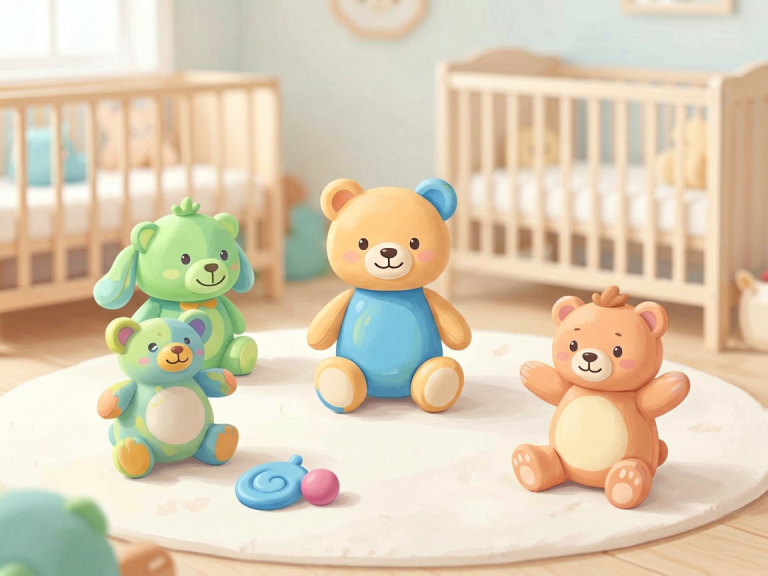
- Recommended Toy Types: Soft rattles, fabric crinkle books, teething rings, activity gyms with hanging toys, unbreakable mirrors, and cause-and-effect toys like a simple ball drop.
- What to Avoid: Anything with small detachable parts that could be swallowed, long cords or strings (strangulation risk), toys with loud or harsh sounds that may overstimulate, and breakable plastic that can shatter.
- Parent Tips: Choose toys that appeal to multiple senses—different textures, gentle sounds, and bright colors. During tummy time, place a mirror or a rattle just out of reach to encourage lifting the head. Rotate toys weekly to maintain novelty. Most importantly, remember that your face and voice are the most engaging “toy” of all. Peek-a-boo and simple songs build the foundation for language and social connection.
Toddlers (1–3 Years): Mobility, Imitation, and Independence
Toddlers are on the move, eager to explore their environment and imitate the adult world. They experience rapid language growth, develop fine motor skills like scribbling and stacking, and begin to engage in simple pretend play. However, their attention span is short, and they still put objects in their mouths occasionally.
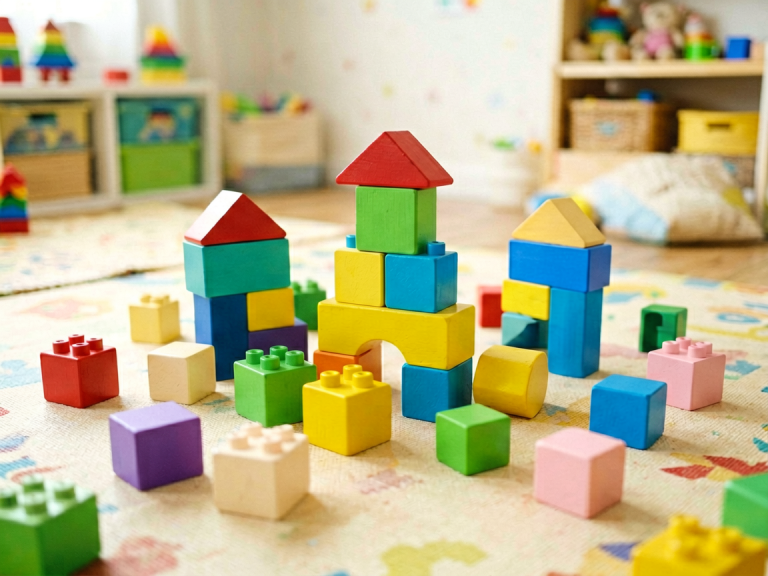
- Recommended Toy Types: Large wooden blocks, shape sorters, push-and-pull toys, chunky crayons and washable markers, simple puzzles with knobs, toy telephones, play kitchens or tool sets, ride-on toys without pedals, and musical instruments like tambourines or xylophones.
- What to Avoid: Toys with small parts (diameter less than 1.75 inches to avoid choking), electric toys with batteries that require screwdriver access (potential for battery ingestion), projectiles or dart-like toys, and overly complex toys that demand advanced logic.
- Parent Tips: Encourage parallel play (playing alongside others) rather than forcing sharing, which is a later skill. Provide toys that allow toddlers to imitate daily routines—pushing a toy stroller, stirring a pot, “talking” on a phone. This builds cognitive understanding of cause and effect, sequencing, and role-play. Also, consider open-ended toys like blocks that can become a tower, a road, or a house—they grow with the child’s imagination. Always supervise play with any ride-on toy to prevent falls.
Preschoolers (3–5 Years): Imagination, Social Play, and Early Problem-Solving
Preschoolers enter a magical phase of creativity. They engage in elaborate pretend play, often with friends, negotiate roles, and begin to understand rules. Their fine motor skills improve enough to handle scissors, manipulate small objects, and draw recognisable shapes. They ask endless “why” questions and can follow two- or three-step instructions.
- Recommended Toy Types: Dress-up costumes and props, building sets (e.g., Duplo or magnetic tiles), simple board games (e.g., memory matching, Candy Land), art supplies (playdough, safety scissors, glue sticks, finger paints), interactive storybooks, puppets, tricycles, and beginner puzzles with 12–24 pieces.
- What to Avoid: Board games with complex rules that require reading, toys with tiny magnets (swallowing multiple magnets can cause serious internal injuries), sharp-edged playing pieces, and any toy that promotes aggressive or violent themes excessively.
- Parent Tips: Encourage cooperative play by joining in their imaginary scenarios—ask “Who am I today?” Model turn-taking during games without forcing a winner. Use toys to teach everyday concepts: counting money in a play store, recognizing colors in a memory game, or sequencing a story with puppets. Provide open-ended art materials that allow self-expression without a right or wrong outcome. Also, be mindful of screen-based toys; for preschoolers, hands-on manipulation is far more beneficial for brain development than passive screen time.
School-Age Children (6–9 Years): Mastery, Rules, and Collaboration
As children enter elementary school, they become fascinated by rules, logic, and mastering specific skills. They can read, understand complex instructions, and engage in strategy. Peer relationships grow increasingly important, and team activities become popular. Physical coordination improves dramatically, allowing for more athletic play.
- Recommended Toy Types: Advanced building sets (LEGO Technic, K’NEX), science kits (simple circuits, crystal growing, volcano models), board games with strategy (checkers, chess, Settlers of Catan Junior), sports equipment (kickball, basketball, jump ropes, bicycle with training wheels/without), crafting kits (loom bands, needlepoint, model cars), beginner musical instruments (ukulele, recorder), and card games (Uno, Go Fish).
- What to Avoid: Toys that are too babyish (may cause social embarrassment), electronics that replace active play entirely (e.g., tablets used exclusively for games), toys with small, easily lost parts that frustrate, and any equipment without proper safety gear (helmets for biking, pads for skateboarding).
- Parent Tips: Encourage goal-setting by choosing toys that allow incremental progress—building a more complex model each time, learning a new song, or improving a game strategy. Board games teach valuable social skills: winning gracefully, losing with dignity, and following agreed-upon rules. Provide opportunities both for solo mastery (puzzles, reading) and group play (sports, cooperative board games). At this age, children also appreciate toys that reflect their special interests, such as space, dinosaurs, or a favorite book series. Always check for recalls and ensure sports equipment fits properly.
Tweens and Teens (10+ Years): Identity, Independence, and Complex Logic
Adolescence brings advanced cognitive abilities, a desire for independence, and a deepening sense of identity. Play becomes more about social connection, self-expression, and challenging intellectual pursuits. Many tweens and teens enjoy collecting, debating, creating, and collaborating on long-term projects.
- Recommended Toy Types: Strategy games (Risk, Catan, Dungeons & Dragons), model kits (plastic model airplanes, 3D puzzles, robotics kits), coding toys (Sphero, Arduino starter kits), art and craft supplies for self-expression (calligraphy, pottery, watercolor sets), musical instruments (guitar, keyboard), photography equipment (point-and-shoot camera), and board games that require negotiation and critical thinking (Codenames, Ticket to Ride).
- What to Avoid: Toys that are obviously “for little kids” (may be rejected quickly), anything that promotes toxic competition (e.g., gambling-like prizes), and toys that reinforce gender stereotypes against their wishes. Also be cautious with online-only toys that require constant digital interaction without physical activity.
- Parent Tips: Respect their growing autonomy—let them choose their own toys (within budget and safety limits) and allow time for solitary hobbies. Collaborative games like tabletop role-playing or escape-room-in-a-box encourage teamwork and creativity. Encourage “maker” activities where they design, build, and refine: a DIY birdhouse, a coded video game, a recycled sculpture. This age group also benefits from toys that bridge the physical and digital worlds, such as drones (with supervision) or camera kits for filming short movies. Most importantly, use these toys as conversation starters—play a board game together and discuss strategies, or ask about their latest Minecraft build.
Safety Considerations: The Non-Negotiable Foundation
No matter how educational or entertaining a toy appears, safety must always come first. The age label on a box is often based on choking hazard and complexity, but parents should also check for sharp edges, toxic paints, and stability. For children under three, avoid any toy with parts small enough to fit inside a toilet paper tube (the standard choke test). Be wary of button batteries, which can cause severe internal burns if swallowed. Check for loose magnets, especially in building sets. For older children, ensure sports equipment comes with appropriate protective gear. Regularly inspect toys for wear and tear—broken plastic, frayed strings, exposed screws. Also, stay informed about recalls through the Consumer Product Safety Commission (CPSC) or equivalent in your country. When in doubt, apply the “golden rule of toy safety”: if you wouldn’t let a child of that age handle a random household object of similar size and material, don’t give them the toy.
Conclusion: Play Is the Work of Childhood
Choosing age-appropriate toys is not about buying the most expensive or the most “educational” labeled product. It is about matching the toy’s challenges and pleasures to your child’s current developmental needs. The right toy can spark a lifelong love of learning, strengthen family bonds, and teach resilience through trial and error. As you navigate the shelves, remember that a cardboard box and a blanket can become a castle—and that the simplest toys often offer the richest play. By staying engaged, observing your child’s unique pace, and prioritizing safety, you become the greatest guide of all. So go ahead: pick up that rattle for your baby, that set of building bricks for your toddler, that chess board for your third-grader, and that science kit for your teen. Then sit down, play alongside them, and watch their world expand—one joyful, age-appropriate toy at a time.