The Power of Possibility: Open-Ended Play Activities for 4-Year-Olds
Introduction: What Is Open-Ended Play?
At four years old, a child stands at a unique crossroads of development. They have mastered basic motor skills, their language is blossoming, and their imagination is beginning to take flight. Yet they are still deeply rooted in the concrete world, learning through touching, moving, and experimenting. This is precisely the age when the quality of play matters most, and open-ended play—activities with no single correct outcome, no fixed instructions, and no predetermined end—becomes an essential tool for growth.
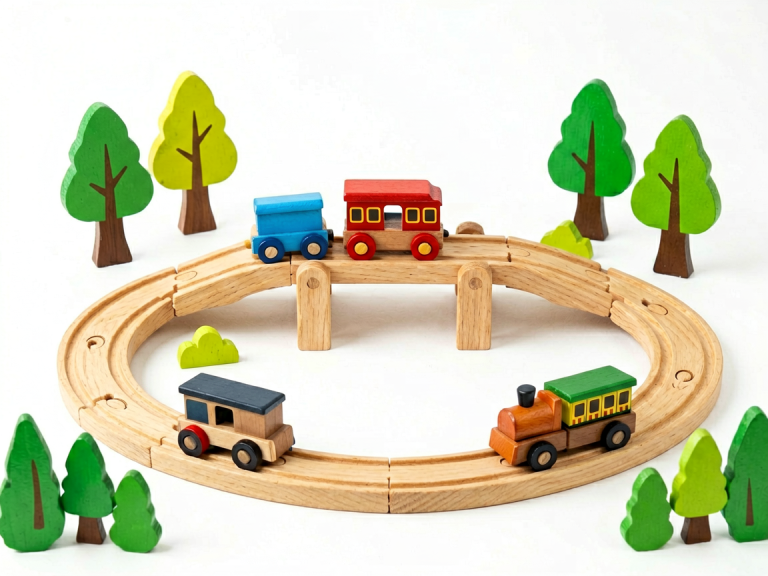
Open-ended play is, at its core, a celebration of possibility. A cardboard box is not just a box; it is a spaceship, a castle, a car, a cave. A handful of wooden blocks can become a skyscraper, a farm, a bridge, or a labyrinth. Unlike closed-ended toys that beep, flash, or instruct a child to complete a specific task, open-ended materials invite the child to be the director of their own experience. For a 4-year-old, this freedom is not merely enjoyable—it is developmentally crucial. Research in early childhood education consistently demonstrates that open-ended play fosters creativity, problem-solving, social skills, language development, and emotional regulation. In an era of screen-based entertainment and structured extracurriculars, returning to the simplicity of open-ended materials can feel counterintuitive, but it is one of the most powerful gifts we can offer young children.
This article will explore why open-ended play is particularly suited to 4-year-olds, offer concrete activity ideas that parents and educators can implement immediately, and provide guidance on how to create an environment that supports this kind of deep, meaningful play.
—
Why 4-Year-Olds Thrive in Open-Ended Play
The developmental profile of a typical 4-year-old makes them ideal candidates for open-ended play. At this age, children are entering what psychologist Jean Piaget called the preoperational stage, characterized by symbolic thinking. They can now use one object to represent another—a stick becomes a sword, a blanket becomes a cape. This symbolic capacity is the bedrock of imaginative play, and open-ended activities provide endless raw material for that imagination.
Additionally, 4-year-olds are developing executive function skills: the ability to plan, focus attention, remember rules, and inhibit impulses. Open-ended play naturally exercises these skills. When a child decides to build a tower with blocks, they must plan how to make it stable, hold the goal in mind, and adjust their strategy when a block falls. There is no external pressure to “get it right,” so frustration is manageable and learning is intrinsic.
Socially, 4-year-olds are beginning to engage in cooperative play. Open-ended activities often invite collaboration. A group of children with a pile of loose parts—stones, fabric scraps, sticks, bottle caps—must negotiate, share ideas, and resolve conflicts. “I want the blue scarf to be the river.” “No, let’s make it a volcano.” Through these interactions, children practice perspective-taking, compromise, and language.
Emotionally, open-ended play offers a safe container for exploring big feelings. A child who is feeling anxious about a new sibling might enact a family drama with dolls. A child who is angry might build a fortress and knock it down. Because there are no right or wrong outcomes, children can express emotions freely without fear of failure. This cathartic quality is one of the most profound benefits of open-ended play, and it is especially valuable at age four, when emotions are intense but verbal expression is still limited.
—
A Rich Tapestry of Open-Ended Play Activities
The following categories provide a starting point for parents, teachers, and caregivers. Each activity can be adapted based on available materials and the child’s interests. The key is to resist the urge to direct, correct, or suggest “better” ways to play. Trust the child’s process.
1. Loose Parts Play: The Ultimate Open-Ended Resource
Loose parts are possibly the most versatile category of open-ended play materials. Inspired by architect Simon Nicholson’s theory that children learn best when they can manipulate variables, loose parts are objects that can be moved, combined, redesigned, and used in countless ways. For a 4-year-old, a collection of loose parts is a treasure chest of possibilities.
Examples of loose parts include: wooden spools, pinecones, pebbles, corks, fabric swatches, ribbons, bottle caps, keys (with sharp edges removed), shells, acorns, small cardboard tubes, and buttons. These can be stored in a few bins or trays and offered without instructions.
A child might sort the items by color, size, or texture—a spontaneous math and sensory lesson. They might line them up to create a path for toy cars, or arrange them into patterns on a flat surface. They might build a “nest” for a stuffed animal. The act of choosing, arranging, and re-arranging is deeply satisfying and builds fine motor control, spatial reasoning, and creative thinking. For a 4-year-old, the value lies not in the final product but in the process of exploration.
2. Nature-Based Play: Mud, Water, Sand, and Sticks
Nature provides the richest open-ended play materials. A 4-year-old with access to mud, water, sand, and sticks will engage in hours of self-directed learning. Mud kitchens, for instance, are a staple of progressive early childhood settings. A simple outdoor setup with old pots, spoons, bowls, and a patch of dirt and water allows children to mix, pour, stir, and pretend to cook. They learn about volume, consistency, and cause-and-effect (too much water makes soup; not enough makes dry mud). There is no recipe to follow, only experimentation.
Similarly, a sandbox with buckets, shovels, funnels, and sieves invites endless variations: building castles, digging tunnels, creating rivers, burying treasures. Water play with cups, tubes, and spray bottles teaches physics concepts like flow and displacement. Stick play—simple branches—can become fishing poles, magic wands, building materials for a fort, or drawing tools in the sand. The unstructured nature of these activities means that children are constantly forming and testing hypotheses about the world.
3. Construction and Building: From Blocks to Recycled Materials
Building activities are classic open-ended play. While commercial building sets like LEGO Duplo or wooden unit blocks are excellent, even more open-ended are everyday recycled materials: egg cartons, toilet paper rolls, shoeboxes, yogurt cups, and lids. Offer these along with child-safe tape, glue sticks, and string, and watch a 4-year-old transform them into robots, castles, vehicles, or animals.
The process of construction requires problem-solving. How do I make this box stand upright? How can I attach this tube to that cup? What works better: tape or glue? Children learn through trial and error. They also learn to persist when their creation collapses—a lesson in resilience that no worksheet can teach. Importantly, the final creation is the child’s own idea. An adult might see a wobbly mess, but the child sees a spaceship destined for Mars. Celebrating that vision, rather than critiquing the craft, builds confidence.
4. Dramatic and Pretend Play: Costumes, Props, and Storytelling
At age four, a child’s imagination is vivid and detailed. Open-ended pretend play can be sparked with simple props: a basket of scarves, hats, masks, and fabric pieces. A long piece of blue fabric becomes a river, a cape, a picnic blanket, or a veil. A cardboard box becomes a store counter, a boat, a stage.
Children will invent entire narratives—they might pretend to be animals, superheroes, doctors, or parents. Often, these scenarios reflect real-life experiences: a trip to the grocery store, a visit to the doctor, or a family argument. By reenacting these events, children process emotions and make sense of their world. Parents can support this by providing a quiet space and a few well-chosen props, but then stepping back. Resist asking leading questions like “What are you making?” Instead, if you want to engage, make a neutral observation: “I see you are wearing the red cape. You look very busy.” This validates the child’s play without directing it.
—
Creating an Environment That Invites Open-Ended Play
While the activities themselves are simple, the environment matters tremendously. A cluttered, overstimulating room can overwhelm a 4-year-old, while a barren space offers no invitation. The ideal environment strikes a balance: enough materials to inspire but not so many that the child cannot focus.
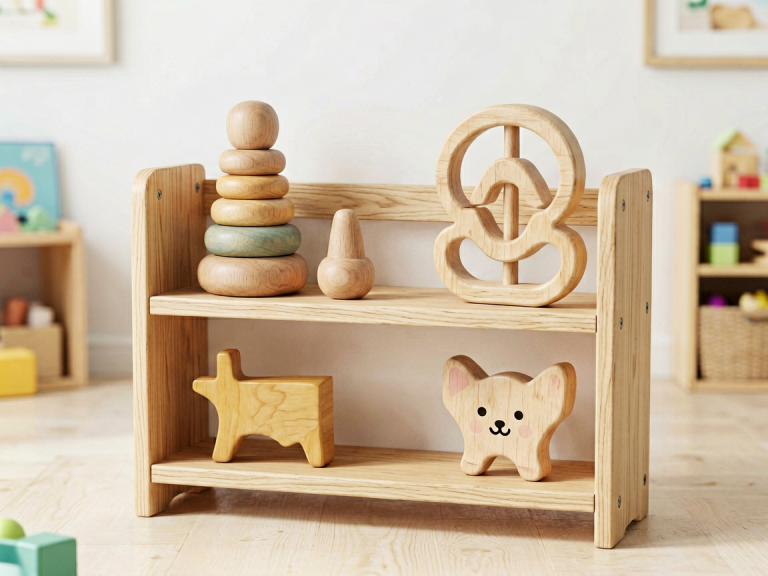
Organize materials in low, accessible shelves or baskets. Rotate items occasionally to renew interest. For example, one week offer a basket of natural objects (pinecones, feathers, acorns); the next week, offer a basket of fabric scraps and ribbon. This prevents boredom while maintaining the open-ended nature.
Time is another critical factor. Open-ended play requires unhurried, uninterrupted blocks of time—at least 45 minutes to an hour for a 4-year-old to fully engage. Avoid scheduling back-to-back activities. Let the child linger in their play world, even if the “mess” spreads across the floor. The cognitive and emotional benefits far outweigh the inconvenience of cleanup.
Finally, the adult’s role is one of observer and facilitator, not director. Ask open-ended questions sparingly: “I wonder what would happen if…?” or “How did you decide to do that?” Avoid praise that focuses on the product (“That’s a beautiful painting”) and instead comment on effort or process (“You worked really hard mixing those colors”). This keeps the child’s focus on the intrinsic joy of playing, not on pleasing an adult.
—
Conclusion: Trusting the Child’s Capacity for Wonder
In a world that often prizes measurable outcomes, open-ended play can feel like a radical act. It produces no worksheet, no trophy, no quantifiable skill. Yet for a 4-year-old, it is the most powerful classroom of all. Through open-ended play, children learn to think flexibly, to persist through frustration, to collaborate with others, and to express the full range of their humanity. They learn that they are capable of creating, imagining, and solving problems on their own terms.
The activities described here—loose parts, nature play, construction, dramatic play—are not complicated or expensive. They require only a shift in mindset: from seeing play as entertainment to seeing play as the child’s natural, essential work. When we provide the materials and the space, and then step back, we give our 4-year-olds the greatest gift we can: the trust that they are competent, creative, and wonderfully able to make meaning of their world. And in that trust, they flourish.