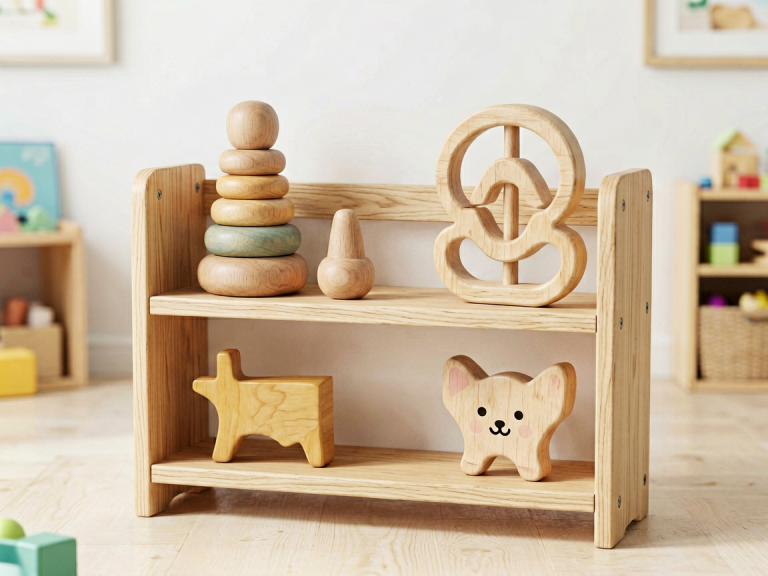
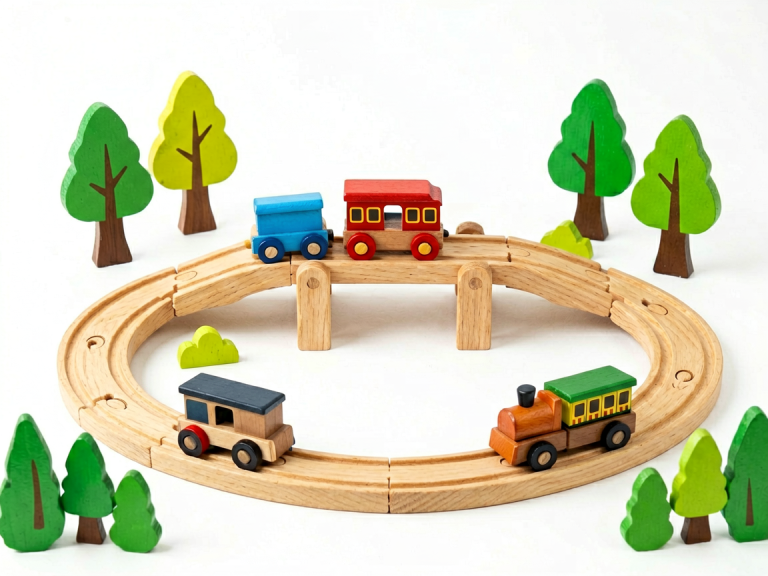
The Unscripted Magic: How Open-Ended Play Activities Shape the World of a Three-Year-Old
—
Introduction: Beyond the Battery-Operated Toy
Walk into any modern playroom and you will likely be greeted by blinking lights, electronic sound effects, and toys designed to perform a single, pre-programmed function. While these gadgets can be momentarily captivating, they often leave little room for a three-year-old’s most powerful tool: imagination. As parents and educators, we are constantly searching for ways to nurture creativity, problem-solving skills, and emotional resilience in our children. One of the most effective—and most misunderstood—approaches is the use of open-ended play activities.
For a three-year-old, the world is still a vast, unlabeled territory. Their brains are forging new neural connections at an astonishing rate, and the way they play directly influences how they learn to think, relate to others, and understand their own emotions. Open-ended play, unlike its closed-ended counterpart, has no fixed outcome, no “right” answer, and no instructions. It is precisely this freedom that makes it so essential.
In this article, we will explore why open-ended play is critical for three-year-olds, and then provide a rich collection of practical, low-cost activities that you can introduce at home or in a classroom. By the end, you will see that a cardboard box is not just a box—it is a spaceship, a castle, a cave, and a canvas for a child’s unfolding story.
—
The Science of Open-Ended Play: Why It Matters at Age Three
Before diving into specific activities, it is worth pausing to understand the developmental significance of this playful approach. At age three, children are in what developmental psychologists call the preoperational stage, characterized by symbolic thinking, rapid language acquisition, and the beginning of pretend play.
Nurturing Cognitive Flexibility
An open-ended activity—such as building with wooden blocks or molding clay—does not prescribe a single correct use. When a three-year-old decides that a block is a telephone, then a bridge, then a piece of cake, their brain is constantly reorganizing categories and testing new associations. This process builds cognitive flexibility, the ability to shift perspectives and adapt to new information. Studies in early childhood education have shown that children who engage in more unstructured play score higher on measures of divergent thinking, a key component of creativity.
Building Emotional Regulation and Social Skills
Open-ended play also offers a safe stage for emotional expression. A child who feels frustrated or angry may smash a play-dough “monster” or knock down a tower of blocks. Through this physical release, they learn to process strong feelings without harming others. When playing alongside a peer, negotiations become inevitable: “I want to be the dragon, you be the knight.” These small moments teach turn-taking, compromise, and empathy—skills that no worksheet can instill.
Strengthening Fine and Gross Motor Development
Three-year-olds are still refining their muscle control. Pouring sand, threading large beads, or scooping water strengthens the small muscles in their hands, which later support writing. Climbing a pillow fort or dragging a heavy blanket across the room builds large-muscle coordination. Because open-ended activities are self-directed, children naturally choose movements that challenge their current abilities without causing undue frustration.
—
A Treasure Trove of Open-Ended Play Activities for Three-Year-Olds
The following activities are designed to be simple, using materials you likely already have at home. The key is to offer the materials without a specific goal, and then step back. Let the child lead.
1. The Sensory Bin: A World in a Box
Materials: A shallow plastic bin, dry rice or oats, scoops, small cups, funnels, and a few safe “treasures” (e.g., large wooden beads, corks, or plastic animals).
Why it works: Sensory bins are the quintessential open-ended activity. At three, children are still exploring the world through their senses. The tactile feeling of rice trickling through their fingers, the sound of oats being poured, and the visual discovery of hidden objects engage multiple brain areas simultaneously.
How to play: Fill the bin about two inches deep with dry rice. Add scoops, spoons, and containers. Do not suggest a particular game. Let your child decide whether they want to fill and dump, bury and find, or simply run their hands through the grains. Over time, you might notice emerging narratives: “This cup is a boat, and the rice is the ocean.” Resist the urge to correct or instruct. Instead, join in by following their lead: “Oh, you found a blue bead! What shall we do with it?”
2. Loose Parts: The Magic of Unstructured Pieces
Materials: A collection of safe, varied objects—wooden blocks, fabric scraps, pinecones, bottle caps, pieces of yarn, large buttons (supervised), cardboard tubes, and small stones.
Why it works: The theory of “loose parts,” coined by architect Simon Nicholson, suggests that in any environment, the degree of creativity and inventiveness is directly proportional to the number and variety of available variables. For a three-year-old, loose parts offer infinite combinations. There is no wrong way to arrange them.
How to play: Spread the loose parts on a mat or low table. Sit nearby and observe. Your child might stack blocks to create a tower, then drape a piece of fabric over it to make a “roof.” They might line up bottle caps in a row and call it a “train.” They may become completely absorbed in sorting stones by color. All of these activities strengthen categorization, spatial reasoning, and fine motor control. As an adult, you can support the play by offering gentle questions: “I wonder if that tall block will stay if we put the rock on top?” This invites prediction without imposing a designated outcome.
3. Water Play (With a Twist)
Materials: A small tub or basin, water (warm or cool), plastic cups, a basting turkey baster, large sponges, and a few floating toys or leaves. For added dimension, add a drop of natural food coloring or a dash of dish soap for bubbles.
Why it works: Water play is deeply satisfying for three-year-olds because water is unpredictable. It flows, splashes, soaks, and drips. Children learn cause and effect intuitively: squeezing a sponge makes water run; tilting a cup changes the direction of the stream.
How to play: Fill the basin with a few inches of water and set it on a low table or on the floor with a towel underneath. Let your child explore. They may try to fill a cup and pour it into another. They may try to sink a floating leaf. They may use the turkey baster to move water from one container to another—a fantastic activity for hand strength and eye-hand coordination. Resist the urge to teach “how to use” the baster correctly. If your child uses it backwards, that’s fine. Discovery is the goal.
4. The Cardboard Box Studio
Materials: Cardboard boxes of various sizes (grocery boxes, shoe boxes, appliance boxes), child-safe scissors (for you, not the child), tape, markers, and non-toxic paint or crayons.
Why it works: A cardboard box is the ultimate open-ended toy. It can be transformed into anything. For a three-year-old, the process of decorating and repurposing a box is a journey in planning and self-expression.
How to play: Offer one large box and a few smaller ones. Let your child decide what they want to do. Perhaps they will color all over the box. Perhaps they will ask you to cut a “door” so they can sit inside. Perhaps they will use several boxes to create a maze or a “house” for stuffed animals. The act of deciding, of making a choice, is itself a cognitive exercise. Offer tools like tape and markers, but let your child dictate how they are used. If they try to tape a marker to the box “because it’s a rocket,” celebrate the innovation. This activity builds perseverance, because converting a box into a pretend object often requires multiple attempts and adjustments.
5. Nature’s Invitation: Outdoor Loose Parts
Materials: A basket or bucket, and a safe outdoor space—a backyard, a park, or even a balcony with potted plants. Collect natural items such as twigs, leaves, pebbles, pinecones, acorns, and flower petals.
Why it works: Nature is the richest source of open-ended materials. The irregular shapes and textures of natural objects invite different kinds of play than manufactured blocks. Moreover, outdoor play supports gross motor development and a connection to the natural world.
How to play: Take your three-year-old on a “treasure hunt.” Challenge them to find something “soft,” “rough,” “small,” or “brown.” Once you have a collection, spread it out on a blanket. The child may arrange the pebbles in a line, pile leaves into a “nest,” or balance twigs to make a tiny “bridge.” There is no prescribed end product. You can extend the play by offering a piece of string or a small tray. Watch as your child invents a new game: maybe the pinecone is a “baby” and the leaves are a “bed.” This kind of play fosters patience, observation skills, and a sense of wonder.
—
The Role of the Adult: Being Present Without Directing
It is natural to feel that you need to “teach” during playtime. However, in open-ended play, the adult’s most important job is to create a supportive environment and observe. Here are five practical guidelines:
- Prepare the space. Make materials accessible within reach. Keep the play area clutter-free but inviting. Rotate toys and materials weekly to sustain curiosity.
- Set minimal limits. One or two clear safety rules—“We do not throw sand at each other”—are enough. Avoid adding unnecessary constraints like “You must play nicely” or “Do not make a mess.”
- Use reflective language. Instead of saying “That’s a pretty tower,” say “You stacked three blocks and then added a fourth on top.” This helps children build vocabulary and understand their own actions.
- Wait before intervening. If a child is struggling to fit a block inside a cup, give them at least ten seconds of silence before stepping in. Frustration, when manageable, is a powerful teacher.
- Follow their narrative. If your child announces that the cushion is a pizza, enter their world. Ask “What topping should we put on it?” Play along. You are not giving up your authority; you are building trust and imagination.
—
Common Concerns and Myths About Open-Ended Play
Myth: “My child gets bored with open-ended toys.”
Boredom is often a sign that the child needs more exposure or a slightly different invitation. Try adding one new loose part, or moving the play outdoors. Sometimes a child who is used to structured activities needs time to learn self-direction. Be patient.
Myth: “These activities are too messy.”
Mess is manageable. Use a plastic tablecloth, set boundaries (e.g., “rice stays in the bin”), and involve the child in clean-up. The learning gained far outweighs the five minutes of sweeping.
Myth: “My child will not learn anything.”
On the contrary, every moment of self-directed play is a lesson in physics (balance, gravity), social studies (negotiating roles), emotional intelligence (regulating excitement or disappointment), and language (narrating their actions). The learning is simply not measurable by a checklist.
—
Conclusion: Planting Seeds, Not Instructions
A three-year-old’s mind is not a bucket to be filled with facts; it is a garden that needs rich soil, sunlight, and room to grow. Open-ended play activities are the compost—the diverse, nutrient-dense material that allows a child’s own ideas to sprout and take root. By offering a collection of loose parts, a sensory bin, or a cardboard box, you are not just providing entertainment. You are saying, “I trust you to explore, to wonder, and to discover your own solutions.”
As you watch your child build a crooked tower with wooden blocks, or gently pat sand into an invisible shape, remember that you are witnessing the foundations of a creative, resilient, and curious human being. The toys will break, the paint will wash off, but the neural pathways forged through open-ended play will last a lifetime. So put down the instruction manual. Pick up a cardboard box. And let the magic begin.