The Ultimate Screen-Free Play Buying Guide: Nurturing Imagination and Development
Introduction: The Case for Screen-Free Play
In an era dominated by glowing screens, tablets, and endless digital distractions, the concept of screen-free play has become both a nostalgic longing and a critical parenting strategy. Pediatricians, educators, and child development experts increasingly emphasize the profound benefits of unstructured, tactile, and imaginative play that does not involve a display. Screen-free play encourages problem-solving, social interaction, fine and gross motor skills, emotional regulation, and above all, creativity. Yet for many parents and caregivers, navigating the vast marketplace of traditional toys, outdoor equipment, and hands-on activities can be overwhelming. How do you choose items that will genuinely engage a child without becoming clutter? What materials are safe, durable, and developmentally appropriate? This comprehensive buying guide answers those questions, offering a roadmap for selecting high-quality, screen-free playthings that spark joy, curiosity, and growth. Whether you are a first-time parent, a grandparent looking for meaningful gifts, or an educator building a classroom environment, this guide will equip you with the knowledge to make intentional, impactful purchases.
Understanding Age-Appropriate Choices
Infants and Toddlers (0–2 Years)
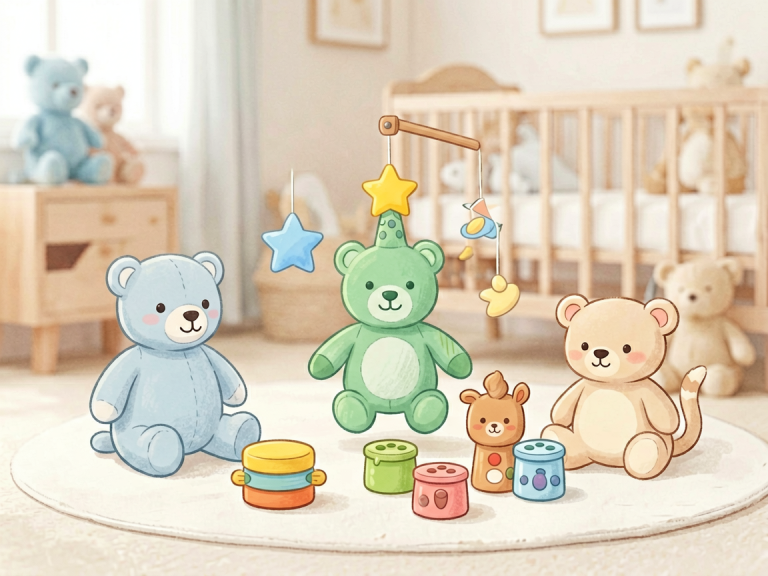
For the youngest children, play is synonymous with sensory exploration and motor development. At this stage, screen-free toys should prioritize safety (no small parts, non-toxic materials) and stimulate the senses. Look for high-contrast black-and-white mobiles, soft fabric blocks with different textures, rattles that make gentle sounds, and teething rings made from natural rubber or silicone. Wooden rings, stacking cups, and simple puzzles with large knobs help develop hand-eye coordination. Avoid anything with batteries or flashing lights—these can overstimulate an infant’s developing nervous system. Instead, choose open-ended items like a set of colorful silk scarves for peek-a-boo or an unbreakable mirror for self-discovery. When shopping, check for certifications such as ASTM (American Society for Testing and Materials) or EN71 (European safety standard for toys). Brands like Lovevery, Grimms, and PlanToys offer age-specific play kits that are thoughtfully designed.
Preschoolers (3–5 Years)
This is the golden age of imaginative play. Children in this bracket begin to create narratives, engage in pretend scenarios, and build complex structures. Top screen-free purchases include wooden train sets, dollhouses, magnetic tiles (such as Magna-Tiles or Picasso Tiles), dress-up costumes, and simple board games like Hoot Owl Hoot! or The Sneaky, Snacky Squirrel Game. Art supplies are also essential: washable markers, finger paints, modeling clay, and safety scissors. When selecting toys, prioritize those that encourage multiple uses—a set of wooden blocks can become a castle, a spaceship, or a farm depending on the child’s mood. Avoid toys with a single function or those that “do” the playing for the child (e.g., electronic talking toys that command attention). Instead, look for items that require the child’s active participation. Additionally, consider outdoor play: a small sand and water table, a tricycle, or a set of child-sized gardening tools can keep them engaged for hours.
School-Age Children (6–12 Years)
Older children have longer attention spans and more sophisticated cognitive abilities. Board games that involve strategy (Catan Junior, Ticket to Ride First Journey), building sets (LEGO classic bricks, K’NEX, or marble runs), science kits (crystal growing, simple circuits), and craft kits (weaving, jewelry making, origami) are excellent choices. This is also the age when hobbies emerge—consider purchasing a real camera (not a smartphone) for photography, a beginner’s ukulele or recorder, or a bird-watching starter kit with binoculars and a field guide. Sports equipment such as a soccer ball, jump rope, or a badminton set promotes physical activity that counterbalances school work. For avid readers, a high-quality graphic novel series or a subscription to a children’s magazine like *Ranger Rick* or *Highlights* can be a wonderful screen-free alternative. When buying for this age group, involve the child in the selection process—their interests will guide your choices, and they will be more likely to engage deeply with items they helped choose.
Categories of Screen-Free Toys and Activities
Construction and Building
From classic wooden unit blocks to advanced engineering sets, construction toys are foundational for spatial reasoning, patience, and problem-solving. When buying, consider the material: solid hardwoods (maple, beech) last for generations, while high-quality plastics (like those used in LEGO) offer compatibility and precision. Look for sets that grow with the child—simple blocks for toddlers, magnetic tiles for preschoolers, and gear-based or motorized sets for older kids. Avoid cheap plastic sets that snap or warp easily. Brands like Tegu, Kapla, and Makedo offer unique takes on construction.
Creative Arts and Crafts
Art supplies should be non-toxic, washable, and age-appropriate. Stock up on quality paper (thick enough for watercolors), crayons and pastels, watercolor sets, and modeling compounds like Crayola Model Magic or Play-Doh. For older children, consider polymer clay, embroidery kits, or knitting looms. A well-stocked art caddy encourages spontaneous creativity. Bonus tip: Look for consumable art supplies instead of “activity packs” that limit creativity to a pre-designed outcome. A blank canvas or a pad of paper is far more valuable than a paint-by-number set.
Outdoor and Active Play
Nature is perhaps the richest screen-free playground. Essential purchases include a durable scooter or balance bike, a basketball hoop, a hula hoop, a kite, and a jump rope. For backyard exploration, a bug-catching kit, a magnifying glass, and a simple tent or teepee can foster a love for the outdoors. Consider investing in a slackline or a climbing dome for more adventurous play. Always check for safety certifications and appropriate weight limits. For winter or rainy days, indoor active toys like a mini trampoline with a safety net, a balance board, or an indoor obstacle course kit (using foam blocks and tunnels) keep energy levels healthy.
Pretend Play and Role-Playing
Dress-up clothes, play kitchens, tool benches, doctor kits, and puppet theaters remain evergreen. The key is realism and quality: a wooden play kitchen with turning knobs and a sink is more engaging than a plastic one that makes electronic sounds. Look for play food made from wood or fabric, not cheap plastic that cracks. For older children, consider more elaborate role-playing sets like a 1950s diner kit or a medieval castle playset. The best pretend play toys are those that leave room for the child’s own narrative—a simple fabric cape and a cardboard crown can be more powerful than a licensed superhero costume with molded plastic.
Puzzles and Games
Jigsaw puzzles sharpen visual-spatial skills and patience. Choose puzzles with sturdy cardboard or wooden pieces, and gradually increase piece count. For board games, focus on cooperative games (where players work together) for younger children, and strategic games for older ones. Card games like Spot It! or Uno are portable and family-friendly. When buying, read reviews for game longevity—a great game will be played dozens of times. Also consider storage; a game with a broken box is frustrating. Brands like Ravensburger, Haba, and Peaceable Kingdom are known for quality.
Key Factors: Safety, Quality, and Durability
Material Safety
Always check for toxic substances. Avoid toys with phthalates, lead, BPA, or formaldehyde. Look for labels such as “non-toxic,” “food-grade silicone,” “FSC-certified wood,” or “water-based paints.” Natural materials like untreated wood, organic cotton, and wool are excellent choices. Be cautious with painted toys from unknown brands—many cheaper imports use lead-based paint. For plastic toys, choose those marked as “phthalate-free” and “BPA-free.” A good rule of thumb: if it smells strongly of chemicals, do not buy it.
Construction and Durability
A toy that breaks after a week is not just a waste of money—it can be a safety hazard with sharp edges or small pieces. Inspect seams, joints, and connections. Wooden toys should be sanded smooth with no splinters. Plastic parts should have no sharp burrs. For outdoor toys, ensure weather resistance (rust-proof hardware, UV-stable plastics). Read customer reviews about longevity before purchasing. Often, spending a little more on a well-known brand saves money in the long run, as the toy can be handed down or resold.
Age Labels and Choking Hazards
Age recommendations are not arbitrary—they reflect safety standards and developmental readiness. Toys for children under three must be free of small parts that could cause choking. Even if your two-year-old is “advanced,” follow the choking hazard warnings. For older children, be mindful of magnets (which can be dangerous if swallowed), long cords, and batteries. Always supervise play with small pieces. When in doubt, consider the “toilet paper tube test”: if a toy or part fits inside a standard cardboard tube, it’s too small for a child under three.
Fostering Creativity and Learning Through Play
Open-Ended vs. Closed-Ended Toys
The most powerful screen-free toys are open-ended—they have no single “correct” use. A set of wooden blocks can be stacked, sorted, counted, balanced, or used as pretend food. A pile of colorful scarves can become water, a blanket, a costume, or a flag. Closed-ended toys (like a puzzle with a fixed solution, or a toy that plays a single song) have their place, but they should be balanced with open-ended options. When building a collection, aim for roughly two-thirds open-ended toys. This encourages divergent thinking, the foundation of creativity.
Incorporating Education Without Pressure
Screen-free play naturally teaches skills. Building a tower teaches physics—gravity, balance, stability. Playing “restaurant” teaches social scripts, math (pricing, money), and literacy (writing a menu). A nature scavenger hunt teaches classification and observation. As a buyer, choose toys that subtly embed learning: a shape-sorter teaches geometry, a set of counting bears teaches number sense, a globe teaches geography. Avoid “educational” toys that claim to make a child smarter through passive activities (e.g., flashcards with lights). True learning comes from hands-on engagement.
The Role of Imagination
Perhaps the greatest gift of screen-free play is the space it gives for the imagination to stretch. A cardboard box can be a rocket ship; a stick can be a magic wand. When selecting toys, avoid those that come with elaborate backstories or branded characters (Disney princesses, superheroes) that dictate how the child should play. Generic, neutral toys allow the child to write their own stories. For example, a set of plain wooden animals is more versatile than a fully painted farm set with specific characters. Similarly, a set of plain wooden human figures (often called “people pegs”) encourages diverse role-play.
Tips for Building a Screen-Free Play Collection
Start Small and Observe
You do not need to buy everything at once. Begin with a few high-quality basics and observe your child’s natural interests. Do they gravitate toward building? Art? Movement? Follow their lead. Resist the urge to buy a mountain of toys before a holiday—less is often more, as children play more deeply with fewer items. Rotate toys every few weeks to keep them fresh, storing some out of sight.
Quality Over Quantity
One well-made wooden train set will be played with for years, while ten cheap plastic toy cars may gather dust. Invest in toys that are heirloom-quality—those made by companies like Grimms, Melissa & Doug (the wood line), Brio, and Haba. These brands prioritize craftsmanship, safety, and timeless design. While the upfront cost is higher, the cost per play hour is extremely low.
Consider Secondhand and DIY
Many excellent screen-free toys can be found at thrift stores, garage sales, or online marketplaces. Wooden blocks, train tracks, and classic board games often have decades of life left. With a little sanding and a fresh coat of non-toxic paint, a used toy can be like new. Additionally, DIY toys can be wonderfully rewarding: a sensory bin filled with rice and scoops, a set of homemade play dough, a fort built from blankets and furniture. These require no purchase at all and often become favorites.
Create a Toy Library System
Once you have a collection, organize it. Use low, open shelves where children can see and access toys independently. Categorize by type (building, art, pretend) or by loose parts (blocks, animals, vehicles). Avoid bins that become “black holes” where small pieces are lost. A well-organized play space invites exploration and makes cleanup easier. Periodically reassess what is being used—if a toy has not been touched in months, donate it to make room for new interests.
Conclusion: Investing in Play that Lasts
Screen-free play is not about deprivation—it is about abundance of a different kind: an abundance of imagination, physical activity, social interaction, and deep concentration. By choosing toys wisely, you are investing in your child’s cognitive, emotional, and physical development. The best purchases are those that spark curiosity rather than demand attention, that allow for mistakes and experimentation, and that connect children to the real world—whether through the texture of wood, the weight of a stone, or the laughter of a shared game. As you navigate this guide, remember that the most powerful “toy” of all is your presence: the parent who sits on the floor and builds a tower, the grandparent who plays a hand of cards, the caregiver who goes on a nature walk. The screen-free play buying guide is ultimately about creating an environment where such moments can flourish. Choose wisely, play wholeheartedly, and watch your child’s world expand beyond any screen.