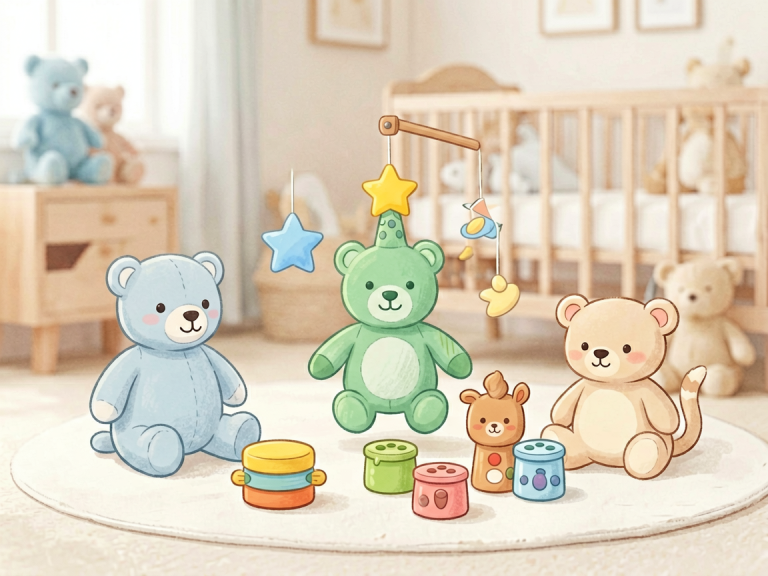
Why Screen-Free Play is Essential for 9-Month-Olds: A Complete Guide to Replacing Tablet Time
Introduction: The Digital Dilemma in Early Infancy
In an era where digital devices have become ubiquitous, many parents find themselves turning to tablets as a quick tool to engage their infants. The allure is understandable: a glowing screen can capture a baby’s attention instantly, offering a few precious moments of calm for a tired caregiver. However, when it comes to a 9-month-old, this seemingly harmless habit carries profound implications for development. At nine months, a baby’s brain is undergoing a remarkable explosion of growth—synapses are forming at a rate of over one million per second, and every sensory experience shapes the architecture of the developing mind. Replacing tablet time with intentional, screen-free play is not merely a preference; it is a developmental necessity. This article explores why screen-free play is critical for 9-month-olds, the hidden risks of early screen exposure, and provides a detailed, research-backed guide to creating a rich, engaging play environment that outshines any digital alternative.
The Critical Developmental Milestones at Nine Months
Physical and Motor Achievements
At nine months, most babies are on the cusp of major motor milestones. They can typically sit unsupported for extended periods, pivot while sitting to reach toys, and many are beginning to crawl—whether on hands and knees, in a commando style, or even scooting on their bottoms. Some may pull to stand at furniture, displaying incredible leg strength and balance. These physical achievements are not just random acts of movement; they are the foundation for spatial awareness, muscle coordination, and later skills like walking and running. Screen time, by its very nature, is a passive activity. A tablet held in front of a baby encourages stillness, discourages the weight-shifting, reaching, and twisting that are essential for motor development. When a child is engrossed in a screen, their hands are occupied with holding the device or passively watching, rather than grasping, shaking, transferring objects from one hand to another, or practicing the pincer grasp—all critical fine-motor tasks at this age.
Cognitive and Sensory Exploration
Cognitively, a 9-month-old is a little scientist. They are beginning to understand object permanence—the concept that objects continue to exist even when out of sight. This is why peek-a-boo elicits such joy. They are also exploring cause-and-effect relationships: if I drop my spoon, it makes a noise; if I shake this rattle, it produces a sound. Their sensory systems are primed to integrate information from touch, taste, smell, sight, and hearing to make sense of the world. A tablet screen, however, offers only two-dimensional, often strobe-like visual and auditory input. It bypasses the tactile, proprioceptive, and vestibular systems that are so vital for building a coherent body map and understanding physical reality. For example, a baby who watches a virtual ball roll across a screen gains no understanding of weight, texture, or gravity. In contrast, when they roll a real wooden ball across a floor, they feel its heft, hear its wooden clatter, and see how it interacts with the carpet or tile. That multisensory experience is irreplaceable.
Social-Emotional Development and Bonding
At nine months, babies are becoming increasingly attuned to social cues. They engage in back-and-forth interactions—making a sound, waiting for a parent to respond, then vocalizing again. They delight in mutual gaze, facial expressions, and simple games like “I’m going to get you!” This reciprocal engagement is the bedrock of secure attachment and emotional regulation. When a tablet is introduced, it becomes a third party in the dyad. The parent’s attention often splits between the device and the baby, reducing the quality of interaction. Moreover, the baby may become so absorbed in the screen that they stop seeking the parent’s gaze or vocalization, effectively interrupting the social feedback loop that is essential for language development and emotional bonding. Pediatric research consistently shows that the amount and quality of parent-child verbal interaction in the first year is a strong predictor of later language abilities, vocabulary size, and even school readiness. Screen time, even with “educational” apps, does not provide the contingent, responsive communication that a human caregiver does.
The Hidden Dangers of Early Tablet Exposure
Impacts on Attention and Executive Function
One of the most alarming findings in recent developmental neuroscience is the effect of fast-paced, highly stimulating screen content on infant attention systems. A 9-month-old’s brain is not wired to process the rapid scene changes, flashing colors, and constant auditory pings typical of even the most “gentle” baby apps. This puts the developing attention network under chronic stress, potentially leading to a need for ever-higher levels of stimulation to maintain focus. Later, these children may struggle with sustained attention in less stimulating environments, such as a quiet classroom. Research from the University of Washington and other institutions has linked early screen exposure with lower scores on measures of executive function—a set of skills including impulse control, working memory, and cognitive flexibility—as early as preschool age. For a 9-month-old, every minute in front of a screen is a minute not spent practicing self-regulation through real-world exploration and frustration.
Delays in Language Acquisition
Language development at nine months is a sensitive period. Babies are babbling with increasing complexity, particularly with consonant-vowel combinations like “ba-ba” and “da-da.” They are also beginning to understand simple words and gestures, such as “wave bye-bye.” The most powerful language-learning tool is interactive, responsive conversation with a caring adult. When a baby babbles “ba-ba” and the parent replies, “Yes, that’s a ball! You see the ball?” the baby hears the word repeated in context and begins to associate sounds with meanings. Screens cannot replicate this. Even the best “educational” video is not responsive to the baby’s specific vocalization or gaze. Studies have shown that infants learn new sounds and words more effectively from live human interaction than from the identical content presented on a screen—a phenomenon known as the “video deficit effect.” Replacing tablet time with live, face-to-face play provides far richer language input.
Sleep, Vision, and Physical Health Concerns
Screen use before naps or bedtime can disrupt an infant’s sleep-wake cycle. The blue light emitted by tablets suppresses melatonin production, making it harder for babies to fall asleep and stay asleep. Poor sleep, in turn, affects everything from cognitive processing to immune function. Additionally, the fixed distance of a screen (typically held between 20 and 30 centimeters from the eyes) does not allow for the natural, dynamic focusing and convergence that occurs when a baby explores a three-dimensional environment. This may contribute to early strain on developing visual systems. Finally, the sedentary posture encouraged by screen time can lead to decreased muscle tone and delayed gross motor milestones. A baby who spends 30 minutes daily on a tablet is missing 30 minutes of active, full-body movement that builds strength and coordination.
The Science of Sensory and Motor Play: Why Real Beats Digital
The Role of Proprioceptive and Vestibular Input
Proprioception—the sense of body position and movement—develops through active, physical play. When a 9-month-old crawls over a pillow, they learn where their limbs are in space. When they reach for a toy while maintaining a seated position, they strengthen core muscles and practice balance. The vestibular system, located in the inner ear, responds to movement and gravity; it is stimulated by rocking, swaying, spinning, and rolling. These experiences contribute to a child’s sense of security in their own body and are foundational for later skills like riding a bike or writing. A tablet provides none of this input. In fact, it often induces a hypnotic stillness that is the opposite of the dynamic movement that a baby’s body craves.
Tactile Exploration and Oral-Motor Development
Nine-month-olds explore the world by putting everything in their mouths. This oral exploration is not just a phase; it serves critical sensory and immune functions. Different textures—smooth, rough, bumpy, soft, cool, warm—provide rich input to the trigeminal nerve in the mouth, which also supports speech motor planning. A baby who feels a silicone teether, a crinkly fabric book, or a cold metal spoon is mapping their oral cavity. A tablet, however, is a single, smooth, static surface. Moreover, the act of chewing and mouthing helps soothe gums during teething and develops the jaw strength needed for chewing solid foods and eventually for speech articulation. Screen time often excludes these essential tactile and oral experiences completely.
Cause and Effect in the Real World
One of the most profound lessons a 9-month-old can learn is that their actions have real consequences. If they push a toy car, it moves. If they drop a block, it falls and makes a sound. If they bang a drum, they hear a boom. These cause-and-effect experiments are the basis of logical thinking and problem-solving. On a tablet, the connection between action and reaction is often arbitrary or delayed. A tap might produce a cartoon character popping, but the baby cannot understand the physics behind it. Worse, digital cause-and-effect often lacks the consistency of the physical world. A digital bubble might pop with a different sound each time it is tapped. This inconsistency can confuse a developing brain that is building predictive models of how things work. Real-world play with simple toys—shakers, nesting cups, pop-up toys—provides reliable, immediate, and multisensory feedback that is far more developmentally appropriate.
A Comprehensive Screen-Free Play Routine for 9-Month-Olds
Sensory Play: Engaging All the Senses
Create a safe sensory bin using a shallow plastic container. Fill it with materials appropriate for a 9-month-old who mouths everything: cooked and cooled pasta (spaghetti or penne), large, smooth river stones (supervised), or a bowl of warmed, plain yogurt with a few drops of food coloring. Let the baby squish, smear, and taste (if the materials are edible). Alternatively, make a “sensory bag” by sealing hair gel or a mixture of water and glitter in a strong zip-top bag, double-bagging it for safety, and taping it to the floor or highchair tray. Babies love to press and push the gel, watching the glitter swirl. This provides visual stimulation without a screen, while also offering tactile input and encouraging fine-motor movements like poking and patting.
Gross Motor Play: Crawling, Cruising, and Climbing
Design a mini obstacle course in your living room. Use pillows, soft cushions, a cardboard box (cut open and laid flat as a ramp), and a tunnel made from a large blanket draped over chairs. Encourage crawling by placing enticing toys just out of reach at the end of the tunnel or behind a cushion. If your baby is pulling to stand, set up a low coffee table (with rounded edges) stocked with a few unbreakable, interesting objects—a wooden spoon, a metal bowl, a crinkly piece of fabric. The baby will practice standing and squatting while exploring these safe items. Also, provide a push toy that is stable and cannot tip over easily, such as a wooden walker or a small laundry basket filled with books. These activities build core strength, balance, and coordination far better than any app.
Object Permanence Games
Because 9-month-olds are fascinated by object permanence, play classic games like peek-a-boo with a scarf or blanket. Hide a favorite toy under a cup or a cloth and let the baby find it. You can also make a simple DIY object permanence box: cut a hole in the lid of a shoebox, large enough for a small ball to drop through, and place a tray or shallow bowl inside to catch the ball. Show the baby how to drop the ball in the hole, and watch them delight as it disappears and reappears. This is a powerful cognitive activity that teaches cause, effect, and memory—all without a single pixel.
Language and Music Time
Create a “story basket” with three or four books made of fabric, board, or crinkly material. Sit on the floor with your baby on your lap, and “read” together without following the text exactly. Point to pictures, name objects, make animal sounds, and let the baby grasp the pages and turn them (even roughly). Sing simple songs with hand motions, such as “Itsy Bitsy Spider” or “Pat-a-Cake.” Use rhythm instruments like a small shaker egg, a wooden clacker, or a baby-sized tambourine. Singing and moving together supports language rhythm, auditory processing, and bonding. The key is that you are present, responsive, and engaged.
Water Play and Bath Time
Water play is a rich sensory experience that can be done outside of bath time. Fill a shallow plastic tub with a few inches of lukewarm water and place it on a towel on the floor (supervised at all times). Add floating toys, a small sieve, a cup with holes, and a sponge. Let the baby splash, pour, and squeeze. Water play strengthens hand muscles, introduces concepts of volume and displacement, and is deeply calming. Alternatively, bath time can be extended by 10 minutes to allow for similar exploration with waterproof toys. The soothing properties of water also help regulate a baby’s nervous system, offering a natural alternative to the hyperarousal caused by screen stimulation.
How to Transition from Tablet to Play: Practical Strategies for Parents
Gradual Reduction and Replacement
If your baby is already accustomed to tablet time, do not go cold turkey overnight. This can cause distress and tantrums. Instead, start by reducing screen time by five minutes per day over the course of a week. Simultaneously, introduce the new screen-free activities with enthusiasm. For example, if your baby usually watches a tablet during the morning diaper change, replace that ritual with a simple sensory card or a small toy that the baby can hold while you change them. If tablet time is used during a meal, try playing soft music or singing instead, and keep a set of safe, food-grade silicone toys on the highchair tray.
Creating a “Yes” Environment
Make screen-free play easier by designing an environment where your baby can explore safely and independently. Baby-proof a low shelf or a drawer in the living room and fill it with carefully chosen toys that rotate weekly. This keeps novelty high without requiring adult intervention. Remove the tablet from general view—out of sight, out of mind. When your baby fusses, resist the urge to pull out the tablet automatically. Instead, take a deep breath, scan the environment, and offer a simple, engaging alternative. Many parents find that a basket of wooden blocks, a mirror placed on the floor, or a set of nesting cups can captivate a baby just as effectively as a screen, once the initial withdrawal period passes.
The Role of Parental Presence
One of the most challenging aspects of replacing tablet time is that it demands more of the parent. Screens are easy; screen-free play requires active involvement, patience, and creativity. But the payoff is immense. When you sit on the floor and roll a ball back and forth with your 9-month-old, you are not just playing—you are building neural pathways of trust, communication, and joy. You are demonstrating that the real world is full of wonder, and that you are the most interesting and responsive “toy” of all. Over time, your baby will learn to self-soothe and explore without needing a device, and your bond will deepen.
Encouraging Independent Exploration: The Ultimate Goal
While parental interaction is essential, an equally important goal is to foster the baby’s capacity for independent play. At nine months, this means gradually allowing the baby to entertain themselves for short periods while you remain nearby. Start with five minutes. Place a few interesting objects within reach—a set of plastic measuring spoons, a small cardboard box, a fabric ball—and step back, observing without interfering. When the baby becomes frustrated, resist the urge to jump in immediately. A little frustration is the engine of problem-solving. They may try to grab a toy that rolled away, learn to pivot, figure out how to use a cup as a drum. These moments of self-directed discovery are priceless. Screen-free play not only replaces tablet time but builds resilience, curiosity, and a lifelong love of learning.
Conclusion: A Choice for Whole-Child Development
The decision to replace tablet time with screen-free play for a 9-month-old is not about being a perfect parent or rejecting technology entirely. It is about recognizing that the first year of life is a unique window of opportunity—one that cannot be replicated by any app. The rich, messy, tactile, interactive world of crawling, babbling, banging, and snuggling is precisely what the developing brain needs. By choosing a wooden block over a pixel, a song over a soundtrack, and a warm lap over a cold screen, parents are investing in their child’s motor skills, cognitive flexibility, language acquisition, emotional security, and physical health. Every moment of screen-free play is a small but powerful act of love. And as the months pass and the baby grows into a toddler, the foundation laid in these early, screen-free months will pay dividends that no digital device can ever match. So put the tablet away, get down on the floor, and discover the wonders of the real world together. Your 9-month-old is waiting.