Top 10 Best Early Learning Toys for 6-Year-Olds: Ignite Curiosity and Foster Development
The age of six marks a pivotal transition in a child’s life. They have left behind the toddler years, possess more refined motor skills, and are beginning to grasp complex concepts like cause-and-effect, sequencing, and social cooperation. At the same time, their imagination is at a peak, and their hunger for understanding the world is insatiable. Choosing the best early learning toys for 6-year-olds is not merely about keeping them occupied—it is about nurturing their cognitive, emotional, physical, and social growth in a playful, engaging way. The right toys can transform everyday play into a rich educational experience, building a foundation for lifelong learning. In this article, we explore ten categories of toys that deliver maximum developmental value for six-year-old children, each carefully selected to align with their natural curiosities and emerging abilities.
The Power of STEM Toys: Building Foundations for Science and Math
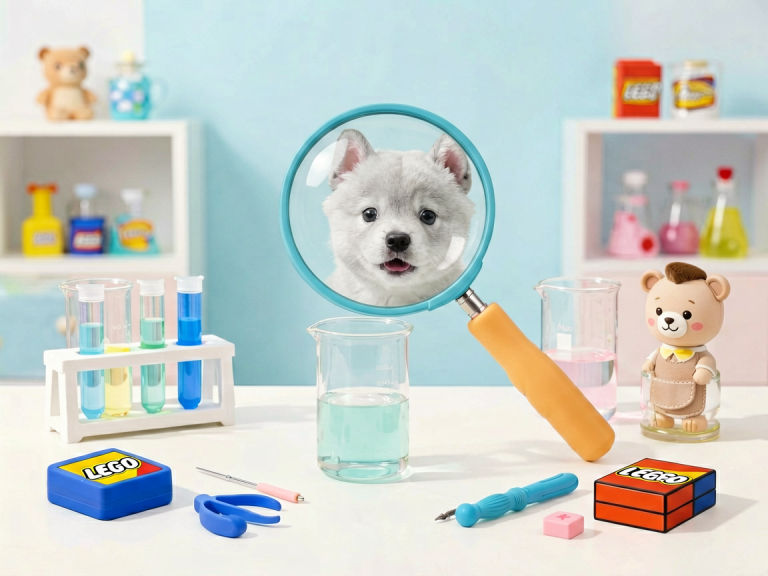
STEM (Science, Technology, Engineering, and Mathematics) toys are among the most impactful tools for a six-year-old’s intellectual development. At this age, children are naturally curious about how things work. They ask endless “why” questions, love to take things apart, and enjoy building structures. A high-quality STEM toy channels that curiosity into structured learning. For example, magnetic building sets, such as those with colorful magnetic tiles, allow children to create 2D and 3D shapes while learning about geometry, symmetry, and balance. Unlike simple blocks, magnetic sets introduce concepts of polarity and structural integrity. Another excellent choice is a beginner’s robotics kit, like a simple coding caterpillar or a drag-and-drop programming robot. These toys teach sequencing, logical thinking, and problem-solving as children figure out how to make the robot move along a specific path. Science experiment kits designed for early learners—such as those for growing crystals, mixing safe chemicals, or observing plant growth—provide hands-on experience with the scientific method. They encourage prediction, observation, and recording results. When a six-year-old sees a volcano erupt with baking soda and vinegar, they internalize chemical reactions in a way no textbook can match. The best STEM toys for this age group are those that offer open-ended possibilities, allowing children to experiment, fail, and try again, thereby building resilience and a growth mindset.
Creative Arts and Crafts: Unleashing Imagination and Fine Motor Skills
Creativity is not a luxury; it is an essential part of early learning. Six-year-olds are developing fine motor skills that require precision and coordination. Arts and crafts toys provide the perfect medium for strengthening those small hand muscles while simultaneously encouraging self-expression. Modeling clay, polymer dough, or air-dry clay sets allow children to sculpt figures, animals, and imaginary creatures. This tactile experience enhances hand-eye coordination and spatial awareness. Watercolor sets, finger paints, and even simple stamp kits let children explore color theory, blending, and texture. More structured craft kits, such as those for making friendship bracelets, sewing simple patterns, or creating mosaic pictures, teach patience and following step-by-step instructions. There is also great value in “loose parts” art supplies—buttons, beads, yarn, feathers, and sequins—that children can use to create collages or decorate cards. These open-ended materials stimulate divergent thinking because there are no right or wrong outcomes. The process itself is the learning. Moreover, when children describe their artwork to others, they practice narrative skills and vocabulary. The emotional benefit is equally important: completing a craft project gives a six-year-old a tangible sense of accomplishment, boosting self-esteem and motivation.
Language and Literacy Games: Developing Reading and Communication
By age six, most children are either beginning to read or are building fluency. The best early learning toys for language development turn the often-daunting task of literacy into a game. Phonics-based board games, where players move pieces by identifying sounds or matching words to pictures, make decoding fun. Word-building tiles or magnetic letters that children can arrange to form new words encourage experimentation with spelling. Storytelling cards—sets of illustrated cards that children arrange in a sequence to create a narrative—promote logical story structure, cause-and-effect thinking, and oral language skills. Interactive electronic books or reading pens that read aloud when pointed at words can support independent reading while also teaching pronunciation and comprehension. Another powerful tool is a set of simple “question cubes” or dice with prompts like “Who?” “What?” “Where?” “When?” and “Why?” that children roll to generate interesting sentences or stories. For bilingual families or those wanting to introduce a second language, matching games that pair foreign words with pictures are highly effective. The key is to ensure that the toys are not overly academic—they should feel like play, not homework. When literacy is embedded in play, children absorb vocabulary, syntax, and narrative skills effortlessly. Additionally, toys that involve writing, such as whiteboards with tracing lines or slate boards with chalk, help children practice letter formation without the pressure of a lined paper.
Strategic Board Games: Enhancing Critical Thinking and Social Skills
Board games are often underestimated as learning tools, but for six-year-olds, they are gold mines for social and cognitive development. At this age, children are learning to take turns, follow rules, handle winning and losing gracefully, and think ahead. Simple strategy games like “Connect Four,” “Checkers,” or “Sequence for Kids” teach planning and spatial reasoning. Cooperative board games, where players work together against the game rather than against each other, foster teamwork and communication. For example, in games where children must collaborate to rescue an animal or build a bridge, they learn to share ideas, negotiate, and support one another. Memory-matching games strengthen working memory and concentration. Dice-based games that require simple addition or number recognition reinforce math skills in a low-pressure context. The social-emotional learning that occurs during board game play is invaluable: children practice empathy when a friend takes a move they didn’t expect, and they learn emotional regulation when they lose. Parents and educators can also use board games as a springboard for discussion—asking “What was your strategy?” or “How did you feel when you got that card?” Deepens reflective thinking. When choosing board games for a six-year-old, look for those with minimal reading requirements, clear visual cues, and a playtime of 15–20 minutes to match their attention span.
Physical Play and Outdoor Toys: Encouraging Active Learning
Physical development is just as crucial as cognitive growth, and early learning toys that get six-year-olds moving support gross motor skills, coordination, and overall health. At age six, children have better balance and control, making them ready for more advanced physical challenges. A balance bike or a small two-wheeled bike with training wheels helps develop leg strength and proprioception. Jump ropes, hula hoops, and bouncing balls improve rhythm and cardiovascular fitness. Obstacle course sets, such as stepping stones, tunnels, and balance beams, can be set up in the backyard or a park, encouraging children to plan their movements and test their limits. Even simple toys like a flying disc or a kite teach cause-and-effect relationships with wind and trajectory. Importantly, outdoor play often involves unstructured time, which is critical for creativity and problem-solving. When given a set of wooden planks and buckets, a six-year-old might spontaneously build a fort or a ramp for balls. Nature-based toys—such as bug catchers with magnifying lenses, binoculars, or gardening sets—bridge physical activity with scientific observation. These toys not only promote a healthy lifestyle but also reduce screen time and improve mood and attention span. The best physical play toys are those that allow for both solo and social play, because six-year-olds often enjoy practicing a skill alone before demonstrating it to friends.
Pretend Play and Role-Playing: Nurturing Empathy and Creativity
The imagination of a six-year-old knows no bounds, and pretend play toys are the vehicles through which they explore adult roles, social relationships, and complex emotions. Role-playing sets like a doctor’s kit, a kitchen, a workbench, or a cash register allow children to act out scenarios they observe in daily life. Through these plays, they practice empathy—taking the perspective of a patient, a chef, or a customer. They also develop language skills by using new vocabulary (“stethoscope,” “recipe,” “checkout”). More elaborate pretend play props, such as costumes (firefighter, astronaut, teacher), encourage identity exploration and narrative building. A six-year-old might spend an entire afternoon creating a “space mission” with cardboard boxes, tin foil, and a helmet. This type of deep, immersive play develops executive functions like planning, memory, and self-regulation. Additionally, pretend play often involves negotiation and conflict resolution when children play together—who gets to be the pilot? What happens if two people want the same role? These moments teach compromise and cooperation. The best pretend play toys are open-ended, meaning they have no fixed outcome. A simple set of wooden food items can become a grocery store, a restaurant, or a picnic. A dollhouse with movable furniture allows children to create family dynamics and stories. Investing in high-quality, durable pretend play items pays off as children return to them again and again, each time with a new scenario.
Conclusion: Choosing Toys That Grow with Your Child
Selecting the best early learning toys for a six-year-old is not about buying the most expensive or technologically advanced items. Instead, it is about understanding the child’s current developmental stage and providing toys that challenge them just enough to keep them engaged but not frustrated. The most effective toys are those that can be used in multiple ways, adapt to the child’s growing skills, and encourage interaction with others. A simple set of building bricks can be used for engineering at age six and for complex architectural designs at age eight. A board game can teach basic strategy now and advanced tactics later. Furthermore, the best toys do not replace the adult’s role; rather, they facilitate meaningful moments of connection—a parent building a tower alongside a child, a teacher guiding a science experiment, or friends laughing over a cooperative board game. By choosing toys that target STEM, creativity, literacy, strategy, physicality, and imagination, we provide a holistic learning environment that respects the joy of childhood while preparing the child for future academic and social success. Ultimately, the goal of early learning toys is not to rush adulthood but to deepen the richness of childhood play, turning every moment into an opportunity to discover, create, and grow.