Unlocking Bilingual Futures: The Ultimate Guide to Language Toys as Gift Ideas
Introduction
In an increasingly interconnected world, the ability to speak more than one language has shifted from a desirable skill to a near-essential asset. Parents, educators, and gift-givers alike are constantly on the lookout for effective, engaging tools that can help children—and even adults—acquire new languages naturally. Enter the world of language toys: specially designed playthings that seamlessly blend entertainment with linguistic development. Unlike traditional flashcards or grammar drills, language toys leverage curiosity, repetition, and multisensory interaction to make learning a second or third language feel like pure fun. Whether you are shopping for a toddler’s first exposure to Spanish, a school-aged child’s French immersion, or an adult’s self-directed Mandarin journey, choosing the right language toy can be a transformative gift. This article explores the best categories of language toys, offers creative gift ideas for various age groups, and explains how to evaluate quality and effectiveness, ensuring your present will inspire a lifelong love of words.
Why Language Toys Matter More Than Ever
The science of early childhood development consistently underscores the critical period for language acquisition—from birth to around age seven, the brain is exceptionally plastic and receptive to new sounds, phonemes, and grammatical structures. Language toys designed for this window can capitalize on a child’s innate play drive. When a child manipulates a puzzle piece while hearing the word “elephant” in English, then flips it over to hear “elefante” in Spanish, their mind forms neural connections that last a lifetime. Moreover, interactive toys that require vocal responses, such as talking plush animals or voice-activated games, reduce the anxiety often associated with speaking a new language. For older children and adults, board games and card games that involve vocabulary recall, storytelling, or code-switching provide low-pressure social contexts where mistakes are part of the fun. In an era of screen saturation, high-quality physical language toys also offer a tactile, screen-free alternative that encourages hands-on exploration, fine motor skill development, and imaginative play. Thus, gifting a language toy is not just a present—it is an investment in cognitive flexibility, cultural empathy, and future opportunities.
Top Categories of Language Toys for Every Age
1. Interactive Talking Books and Audio Pens
For infants and toddlers aged 0–3, the most effective language toys are those that pair visual stimuli with clear, native-speaker audio. Interactive talking books, such as the *LeapFrog LeapStart* series or *VTech’s Touch & Learn* range, allow children to touch images on the page and hear corresponding words in multiple languages. A particularly thoughtful gift idea is a set of bilingual board books with a compatible audio pen that reads aloud in both English and a chosen second language (e.g., Mandarin, Spanish, French). The repetition of hearing the same word while seeing the illustration helps cement vocabulary without rote memorization. For older preschoolers, audio pens that can record a parent’s or teacher’s voice add a personalized touch—imagine a grandmother labeling household objects in Italian and the child tapping each item to hear her voice. These toys build the foundational skill of phonemic awareness, which predicts later reading success.
2. Language-Based Board Games and Card Games
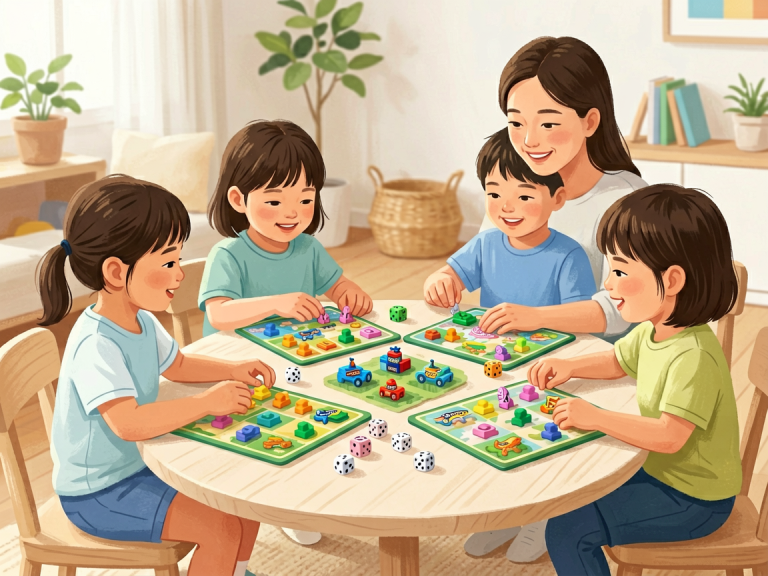
Children aged 4–8 thrive on structured but playful competition. Board games designed specifically for language learners transform mundane vocabulary drills into exciting challenges. *Zingo! Word Builder* and *Spot It!* in a bilingual edition are excellent choices. For a gift that grows with the child, consider *Story Cubes* by Rory’s Story Cubes, which come in themed sets (e.g., *Actions*, *Voyages*). Players roll dice with pictures and must construct a story using target language vocabulary. Another innovative option is *The Language Game* by Gameloft, where players earn points by correctly translating phrases, identifying objects from verbal clues, or acting out words in a second language. These games naturally encourage turn-taking and cooperative learning, making them ideal for family game nights. For slightly older children (ages 8–12), *Codenames: Pictures* can be adapted to language learning by requiring the clue-giver to use only the target language. Such gifts promote critical thinking and expand contextual understanding.
3. Electronic Learning Toys with Voice Recognition
The sweet spot for language toys lies in devices that can “talk back” and correct pronunciation. Smart toys like the *Lingokids* interactive plush or *Osmo’s Language Kits* for iPad combine physical play with digital feedback. For instance, the *Fuhu Nabi* line (no longer mainstream, but similar products exist today) allowed children to speak into a tablet and receive real-time corrections. A newer star is the *Paw Patrol: My First 100 Words* bilingual learning toy that lets kids touch objects on the screen or physical cards to hear words in both English and Spanish. Voice-activated dolls like *Hello Barbie* or *Coding Critters* that respond to specific commands in another language also exist, though careful parental selection is needed to ensure they offer true bilingual interaction. These electronic toys work well for children who are motivated by technology but still benefit from dialogue and repetition.
4. Multilingual Puzzle Sets and Sorting Toys
Simple yet powerful, puzzles and sorting toys can introduce language without relying on a screen. A wooden alphabet puzzle that has English on one side and, say, Russian on the reverse is a classic gift. More creative are the *My Big World* floor puzzles from Mudpuppy, which include labelled animals and landmarks in multiple languages. For toddlers, shape sorters with corresponding word cards—the child must match the triangle block to the card that says “triangle / triángulo”—are fantastic. Similarly, *Melissa & Doug* offers a *See & Spell* set with a bilingual activity guide. These toys encourage independent exploration and develop fine motor skills simultaneously.
5. Role-Play Kits and Dollhouses with Language Props
Imaginative play is a powerful vehicle for language acquisition. Gifting a play kitchen, doctor’s kit, or dollhouse with bilingual flashcards or magnetic labels can transform everyday scenarios into language lessons. For example, a pretend grocery store set with price tags in English and German, or a train set with bilingual station signs, invites children to “shop” or “travel” while speaking the target language. *Magnetic Poetry’s Foreign Language Kits* can be placed on a refrigerator or whiteboard, allowing children (and adults) to compose sentences each morning. For a more structured experience, consider *Learning Resources’ Bilingual Talking Cash Register*, which vocalizes numbers and items in two languages. Role-play reduces the fear of failure because the child is “just pretending”—yet the linguistic patterns become internalized.
6. Subscription Boxes and Kits for Continuous Learning
For a gift that keeps on giving, a monthly subscription box focused on a specific language can be an extraordinary present. Companies like *Little Pim*, *MoniQi* (now part of Bilingual Birdies), and *Raddish Kids* sometimes offer language-themed editions. Each box contains a book, a toy, a recipe card with vocabulary, and an audio guide. This format provides variety and builds anticipation month after month. Another option is *Duolingo ABC* workbooks combined with a plush character from the app’s mascot—a physical supplement to digital learning. Subscriptions work especially well for children aged 5–10 who are already using a language app and need tangible reinforcement.
How to Choose the Perfect Language Toy Gift
With so many options, selecting the right gift can feel overwhelming. Begin by considering the recipient’s age and current language proficiency. A complete beginner needs toys that focus on single-word vocabulary and clear articulation, while an intermediate learner will benefit from games that require sentence formation and storytelling. Next, evaluate authenticity of pronunciation: toys that feature native speakers are far superior to those with synthetic or robotic voices. Read reviews to ensure the toy’s audio is clear and accurate. Additionally, think about the child’s interests—a dinosaur-loving five-year-old will engage more with a dinosaur-themed bilingual puzzle than a generic animal set. Durability is also key, as language toys are often handled repeatedly. Finally, consider the social context: group games work well for families or playdates, while solo toys are better for quiet time.
Conclusion
A language toy is far more than just another item under the Christmas tree or birthday wrapping paper. It is a key that unlocks doors to different cultures, sharper cognitive abilities, and deeper human connections. From talking books that whisper new words to board games that spark laughter and debate, the gift of a thoughtfully chosen language toy can ignite a passion that lasts a lifetime. As you browse shelves or scroll through online marketplaces, remember that the best gifts are those that respect the learner’s natural curiosity and turn the challenge of language acquisition into an adventure. Whether you are introducing a toddler to the sounds of Mandarin, helping a schoolchild master English sentence structure, or encouraging an adult to practice Spanish conversation, the right language toy will make every moment of play a step toward fluency. Give the gift of words—and watch the world grow bigger.