Unlocking Early Numeracy: The Power of Math Toys for Preschoolers
Introduction: Why Math Matters in the Preschool Years
The preschool years—typically ages three to five—are a period of extraordinary cognitive growth. During this time, children develop foundational skills in language, social interaction, and reasoning. Yet one area that often gets overlooked in early childhood play is mathematics. Many parents assume that math learning begins with formal instruction in elementary school, but research in developmental psychology and early childhood education has shown that children as young as two can begin to grasp concepts like counting, shape recognition, patterning, and comparison. This is where math toys for preschoolers come into play. These specially designed toys transform abstract mathematical ideas into tangible, hands-on experiences, making learning not only effective but also joyful. By engaging preschoolers with thoughtfully crafted math toys, we can ignite a lifelong curiosity about numbers, patterns, and problem-solving—all through the natural medium of play.
What Are Math Toys for Preschoolers?
Math toys for preschoolers are play materials that intentionally introduce or reinforce mathematical concepts in an age-appropriate, exploratory way. Unlike traditional flashcards or drill exercises, these toys invite open-ended manipulation, discovery, and trial-and-error learning. They range from simple wooden counting bears and shape sorters to more sophisticated stacking rings, magnetic number puzzles, and pattern blocks. The key characteristic is that they embed math learning within the context of fun, self-directed activity. For example, a set of colorful linking cubes allows a child to build towers while simultaneously practicing one-to-one correspondence, counting, and spatial reasoning. A balance scale with weighted animals introduces the concepts of heavier and lighter without requiring any formal vocabulary. In short, math toys for preschoolers are not just “toys that happen to have numbers on them”—they are carefully designed tools that nurture mathematical thinking through sensory, motor, and imaginative play.
Key Types of Math Toys and Their Benefits
To fully appreciate the value of math toys for preschoolers, it helps to categorize them by the specific mathematical domains they target. Each type offers unique benefits that build upon one another.
*Counting and Number Recognition Toys*
These are often the first math toys a child encounters. Examples include wooden number puzzles (where each number piece fits into a corresponding slot), counting beads on a string, and “frog counters” that can be placed in numbered cups. The benefit here is twofold: children learn to recognize the written symbol for a number while also associating it with a physical quantity. When a preschooler touches each bead and says “one, two, three,” they are building the crucial skill of one-to-one correspondence. This is the bedrock of all later arithmetic. Moreover, these toys often incorporate bright colors and interesting textures, which appeal to young children’s sensory preferences and keep them engaged. A well-made counting toy also encourages self-correction—if a child tries to put a number 4 piece into the 7 slot, it won’t fit, providing immediate feedback that promotes learning without adult intervention.
*Shape and Geometry Toys*
Shape sorters, tangrams, and magnetic geometric tiles fall into this category. These toys help preschoolers identify and distinguish between different shapes (circles, squares, triangles, hexagons) and understand their properties. More importantly, they foster spatial reasoning—the ability to visualize how shapes relate to each other in space. For instance, a child attempting to fit a star into a star-shaped hole must rotate and align it correctly. This builds problem-solving skills and hand-eye coordination. Geometry toys also introduce early concepts of symmetry, area, and angles in a completely intuitive way. When a child creates a picture using pattern blocks, they are unknowingly engaging in composition and decomposition, which are precursors to fraction learning. The beauty of shape toys is that they can be used alone or combined with other play, such as building a castle from geometric blocks, making math seamlessly integrate into imaginative scenarios.
*Pattern and Sorting Toys*
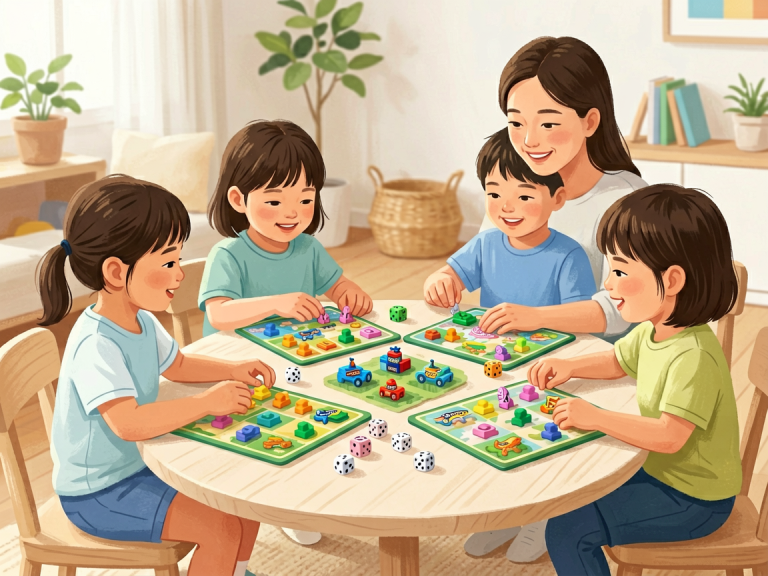
Pattern recognition is a fundamental mathematical ability that predicts later success in algebra and logic. Toys that support this skill include colored bear counters with sorting cups, bead-stringing kits with pattern cards, and nesting dolls. Preschoolers naturally love to create sequences—“red, blue, red, blue”—and toys that encourage this repetition allow them to practice predicting what comes next. Sorting toys, such as a set of buttons of different sizes, colors, and numbers of holes, teach classification and attribute recognition. A child might sort the buttons into piles of “all the red ones” and then further sort them by size. This process develops logical thinking and the ability to define categories, which is essential for data analysis and set theory later on. Moreover, sorting and patterning activities are calming and can be done independently, giving children a sense of control and accomplishment.
*Measurement and Comparison Toys*
Measurement toys introduce relative concepts like length, weight, volume, and height without needing numerical precision. Classic examples include a balance scale with animals, stacking cups of different sizes, measuring tapes with large numbers, and water play sets with graduated cylinders. When a preschooler uses a balance scale to find out which toy car is heavier, they are building an intuitive understanding of weight comparison. Pouring water from a wide container to a tall, narrow one helps them grasp the conservation of volume (even though the shape changes, the amount remains the same). These activities are rich in language development as well, as children learn words like “longer,” “shorter,” “more,” and “less.” Measurement toys also connect math to the real world—for instance, a child might measure their own height with a growth chart and compare it to a sibling’s, turning math into a personal, meaningful experience.
*Simple Arithmetic and Problem-Solving Toys*
For preschoolers who are ready for a gentle introduction to addition and subtraction, there are toys like number rods, counting boards with movable pieces, and simple board games that involve adding or removing tokens. The key is that these toys avoid abstract symbols and instead rely on concrete objects. For example, a “bug-counting” game might require a child to put five ladybugs on a leaf, then take two away, and see how many remain. This hands-on approach prevents the common anxiety that later emerges around math facts. Similarly, puzzle-based toys that require matching a certain number of items to a numeral help reinforce additive thinking. Problem-solving toys—such as a maze where a child must count steps or a treasure-hunt game with simple math clues—encourage perseverance and flexible thinking. At this stage, the goal is not speed or accuracy, but a positive mindset that mistakes are part of learning.
How to Choose the Right Math Toys for Your Preschooler
With so many options on the market, selecting math toys for preschoolers can feel overwhelming. The most important principle is to follow the child’s developmental stage and interests. A three-year-old who is still learning to count to five will benefit more from a simple counting tray than from a complex arithmetic game meant for a kindergartener. Look for toys that are open-ended, meaning they can be used in multiple ways over time. A set of magnetic number tiles, for instance, can be used for free exploration at age three and for simple addition by age five. Durability and safety are also crucial—preschoolers tend to put toys in their mouths, so avoid small parts and choose non-toxic materials. Additionally, consider whether the toy encourages independent play or cooperative play. Some children thrive on solo sorting activities, while others learn best through interaction with a parent or sibling. Finally, resist the temptation to oversimplify: a toy that is too easy will bore a child, while one that is too difficult will frustrate them. The best math toys for preschoolers strike a balance—they offer a “just right” challenge that keeps the child engaged and eager to try again.
The Role of Parents and Caregivers in Math Play
Even the best math toys for preschoolers reach their full potential only when an adult supports the learning process. Parents do not need to be math experts; they simply need to be present and curious. Instead of directing the play, try asking open-ended questions like, “How many blocks do you think we can stack before they fall?” or “Can you find another way to sort these bears?” This kind of scaffolding encourages children to verbalize their thinking, which strengthens neural connections. Modeling a positive attitude toward math is equally important. If a parent says, “I’m not good at math,” the child may internalize that belief. Instead, express genuine excitement when your child discovers something new: “Wow, you figured out that five plus two makes seven—that’s amazing!” Also, integrate math talk into everyday routines: count the stairs as you climb, compare the sizes of apples at the grocery store, or discuss the shapes of street signs during a walk. Math toys for preschoolers are powerful, but they are most effective when used as part of a broader environment rich with number talk and playful exploration.
Conclusion: Building a Foundation for Lifelong Math Skills
In a world that increasingly values quantitative reasoning, giving preschoolers a strong start in mathematics is one of the best gifts we can offer. Math toys for preschoolers are not a luxury or an educational fad; they are a research-backed, developmentally appropriate way to cultivate number sense, spatial reasoning, logical thinking, and problem-solving attitudes. From simple counting bears to intricate pattern blocks, these toys make abstract concepts concrete, turning potential frustration into delight. By choosing high-quality math toys and engaging with children as they play, parents and educators can lay a foundation that will support not only later math achievement but also a lifelong love of learning. The preschool years are fleeting, but the mathematical seeds we plant during this time can grow into towering trees of understanding. So the next time you see a child stacking rings or sorting colors, remember: they are not just playing—they are building the architecture of their future minds.