Unlocking Imagination: The Power of Open-Ended Play Activities for 5-Year-Olds
In a world increasingly driven by structured schedules, digital screens, and predetermined learning outcomes, the value of open-ended play for young children is more crucial than ever. For a five-year-old, who stands at the exciting crossroads between preschool wonder and early formal education, open-ended play activities are not merely a way to pass time. They are the very foundation upon which creativity, problem-solving, social skills, and emotional resilience are built. Unlike closed-ended toys or games that have a single correct answer or a fixed endpoint, open-ended play has no prescribed outcome. A pile of wooden blocks can become a castle, a spaceship, a zoo, or a bridge—limited only by the child’s current imagination. This article explores the profound importance of open-ended play for five-year-olds and offers a rich variety of practical, engaging activities that parents, educators, and caregivers can easily implement.
The Essence of Open-Ended Play: Why It Matters at Age Five
At five, children are developing rapidly in cognitive, linguistic, and social domains. They are beginning to understand cause and effect, to share ideas with peers, and to negotiate roles in pretend scenarios. Open-ended play perfectly supports these developmental leaps because it places the child in the driver’s seat. There is no “right” way to use a cardboard box, a set of colored scarves, or a collection of pinecones. This lack of predetermined outcome fosters a growth mindset: children learn that mistakes are not failures but opportunities to try a different approach. They practice persistence, flexible thinking, and self-regulation.
Moreover, five-year-olds are often eager to assert their independence, yet they still need gentle guidance. Open-ended activities allow them to make meaningful choices—how to combine materials, what story to act out, or how long to focus. This autonomy boosts their confidence and intrinsic motivation. Research in early childhood education consistently shows that children who engage regularly in open-ended play demonstrate stronger executive function skills, including working memory, inhibitory control, and cognitive flexibility. These are the very skills that predict later academic success and social competence. Beyond cognitive benefits, open-ended play also serves as an emotional outlet. A child who feels anxious about starting kindergarten can use dolls and blocks to reenact the experience, gaining a sense of mastery over their feelings. In short, open-ended play is not a luxury; it is a developmental necessity.
Creative Construction: Building Blocks and Loose Parts
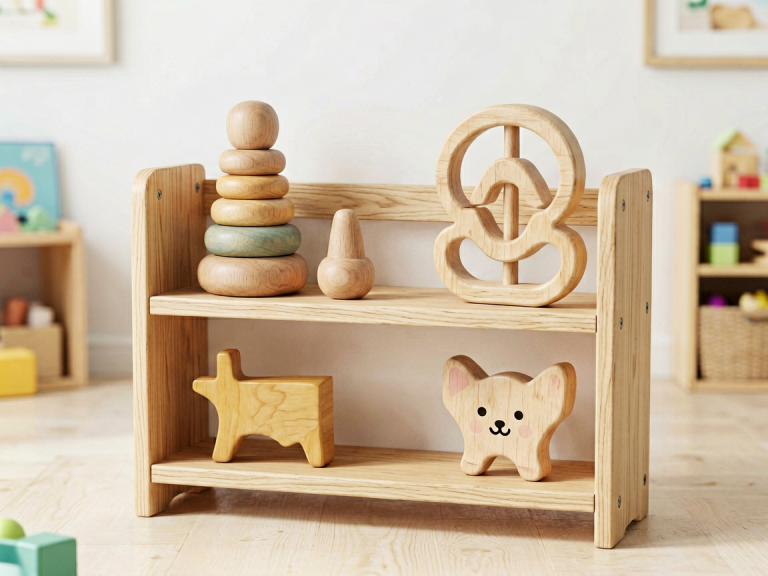
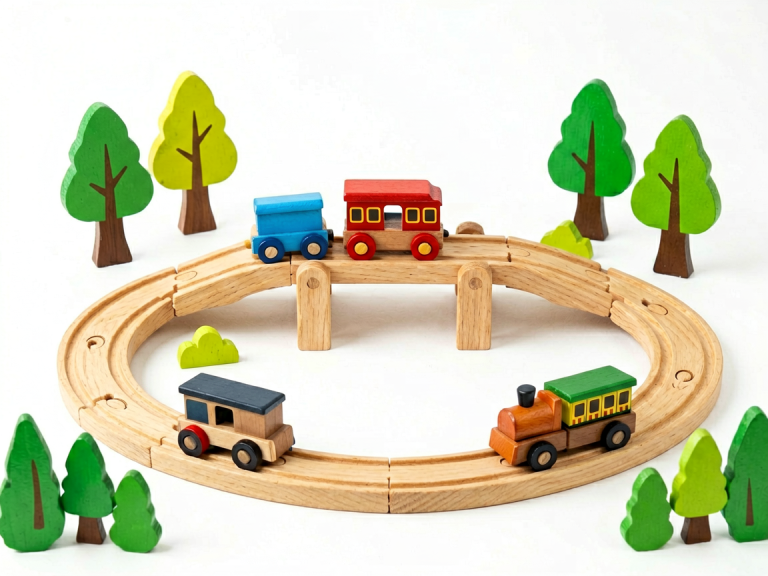
One of the most classic and effective forms of open-ended play involves constructive materials. For a five-year-old, unit blocks of various shapes and sizes are a treasure trove. Unlike interlocking bricks that click together in a fixed way, simple wooden blocks can be stacked, balanced, knocked over, and rearranged infinitely. Encourage the child to build a tower as tall as their own arm, a bridge for toy cars, or a maze for marbles. The process of trial and error—adjusting the base, distributing weight, and rethinking the design—teaches physics concepts and spatial reasoning without a single worksheet.
Equally powerful is the concept of loose parts. This term, coined by architect Simon Nicholson, refers to materials that can be moved, combined, and repurposed. Gather items such as bottle caps, fabric scraps, empty spools, corks, pebbles, and lengths of yarn. Present them in a low-sided box or tray and invite the child to create patterns, build sculptures, or design a “treasure map.” You can also add natural loose parts like acorns, leaves, and sticks. A five-year-old might spend an hour arranging pebbles in a spiral or using twigs to form letters. The key is that the child dictates the activity’s direction. As an adult, you can enrich the play by asking open-ended questions: “What happens if you put the big block on top of the little one?” or “Can you tell me a story about the creature you built?” This language encourages verbal expression and deeper thinking.
Imaginative Worlds: Dress-Up and Role-Play
At age five, pretend play reaches new heights of complexity. Children are capable of sustaining elaborate narratives, assigning roles to themselves and others, and negotiating plot twists. Open-ended dress-up and role-play activities nurture these abilities. A simple box of costumes—hats, scarves, old shirts, shoes, and bags—can spark an entire afternoon of adventure. Do not limit the collection to commercially available superhero or princess outfits. Include neutral items like a plain white sheet (which could be a ghost, a wedding veil, or a tent), a kitchen apron, or a pair of oversized sunglasses. The more open-ended the costume piece, the more creative its use.
To make role-play truly open-ended, provide a setting that can be transformed. For instance, drape a blanket over two chairs to create a cave or a spaceship. Place a few pillows and a cardboard box nearby. The child can decide whether the cave is home to a friendly bear, a lost astronaut, or a secret fort. If multiple children are playing, they will need to collaborate, compromise, and communicate—skills essential for kindergarten readiness and beyond. Adults can participate as gentle co-players, following the child’s lead rather than directing the plot. Saying, “I’m a customer at the bakery. What do you recommend today?” invites the child to extend their narrative. However, resist the urge to correct “wrong” ideas. If the child declares that the cardboard box is a magic oven that bakes cookies in two seconds, celebrate the invention. The goal is joyful exploration, not realism.
Nature’s Classroom: Outdoor Exploration and Loose Parts
The outdoor environment is perhaps the richest source of open-ended play for a five-year-old. Nature offers endless materials that are inherently unstructured: mud, water, sand, leaves, stones, and sticks. A child with a bucket and a small shovel at the edge of a garden can create elaborate mud pies, construct dams in a tiny stream, or dig for “fossils.” A pile of fallen leaves becomes a cooking ingredient, a hiding place for insects, or currency in a make-believe store. The sensory experiences of touching wet sand, smelling crushed grass, and hearing the crunch of dry leaves provide vital input for brain development.
To facilitate open-ended outdoor play, resist the temptation to direct the activity. Instead, provide simple tools: a kid-safe magnifying glass, a set of measuring cups, lengths of string, or a small watering can. Invite the child to collect natural treasures and then sort them by size, color, or texture. Ask questions like, “What do you notice about this leaf?” or “How many different kinds of rocks can you find?” This encourages scientific observation without formal instruction. You can also create a “mud kitchen” in your backyard—a designated spot with a low table, old pots and pans, and access to water and dirt. Five-year-olds love mixing, pouring, and stirring their “recipes.” Such activities develop fine motor skills, cause-effect understanding, and language as they describe their concoctions. Even in urban settings, a visit to a local park with a patch of dirt or a sand pit can yield hours of open-ended joy.
Artistic Expression: Process-Oriented Art Activities
Traditional art projects often emphasize the final product: a handprint turkey, a carefully colored inside-the-lines picture. While these have their place, open-ended art focuses on the process—the mixing, smearing, cutting, and gluing. For a five-year-old, process art is liberating. There is no model to copy and no expectation of a perfect result. Instead, the child explores materials and techniques purely for the sensory and emotional experience.
To set up an open-ended art invitation, spread a washable tablecloth and offer a variety of materials: finger paints in primary colors, a stack of scrap paper (different textures and sizes), child-safe glue, scissors, hole punches, yarn, and found objects like buttons or feathers. Avoid giving a specific instruction like “paint a flower.” Instead, say, “See what happens when you mix red and blue,” or “You can use these things however you like.” Observe how the child engages. Some will paint with their whole arms, some will painstakingly glue tiny bits of paper, and others will construct three-dimensional collages. Each approach is valid. During and after the activity, ask open-ended questions: “Tell me about your painting,” or “How did you decide to use those colors?” This validates the child’s choices and builds metacognitive awareness.
Another excellent open-ended art activity is clay or playdough sculpting. Provide a lump of non-drying clay or homemade playdough along with simple tools such as a plastic knife, a fork, and a rolling pin. Resist making anything for the child; let them discover the material’s properties. They may roll snakes, press coins into the clay for texture, or build a creature that changes shape over the session. The key is that the material itself invites exploration. Five-year-olds often become deeply absorbed in such activities, entering a state of flow that is both calming and intellectually stimulating.
The Role of the Adult: Facilitating Without Directing
One of the most common pitfalls adults face with open-ended play is the urge to correct, suggest, or interfere. At five, children are sensitive to adult expectations. If a parent says, “Why don’t you make a car instead of a blob?” the child may feel that their blob is not good enough. Therefore, the adult’s role in open-ended play is that of a facilitator and observer. Provide an environment rich in diverse, non-prescriptive materials. Set aside sufficient time—at least 30 to 45 minutes for deep engagement. Arrange the space so that children can access materials independently. Then step back.
When you do interact, use language that empowers the child. Instead of giving instructions, offer descriptive observations: “I see you are stacking the blocks in a very tall tower. It wobbles a little when you put a block on that side.” This validates their process without directing. You can also mirror their emotions: “You look really proud of that sandcastle.” When the child encounters a challenge, resist the urge to provide a solution. Instead, ask, “I wonder what would happen if you tried something different?” This teaches problem-solving. Finally, celebrate the play itself—not the outcome. Acknowledge effort, creativity, and persistence. By doing so, you build a child’s identity as a capable, creative thinker who is not afraid to explore the unknown.
Conclusion: Embracing the Unstructured
Open-ended play activities for five-year-olds are not just about having fun—though that alone is a worthy goal. They are about nurturing the whole child: the thinker who experiments, the dreamer who imagines, the social being who negotiates, and the resilient problem-solver who learns from failure. In the rush to prepare children for formal schooling, we sometimes underestimate the profound learning that happens when a child manipulates loose parts, constructs a world from blocks, or spends an hour mixing mud and leaves. These experiences build neural connections that no worksheet can replicate.
As parents and educators, we can embrace the beautifully messy, unpredictable nature of open-ended play. We can resist the temptation to fill every moment with structured activities and instead leave generous time for the child to direct their own play. Provide the materials, the space, the time, and the trust. Then step back and marvel at what a five-year-old can create out of almost nothing. For in that empty space, imagination blossoms, and the seeds of lifelong curiosity are sown.