Unlocking Potential: The Best Play-Based Learning Toys for 7-Year-Olds
At the age of seven, children stand at a remarkable crossroads. They have outgrown the simple cause-and-effect toys of toddlerhood, yet they still inhabit a world where imagination, movement, and hands-on discovery are the primary drivers of learning. This is the sweet spot where play-based learning toys can truly shine—not by mimicking formal education, but by embedding complex cognitive, social, and emotional skills into joyful, self-directed play. Choosing the right toys for a 7-year-old means understanding that their brains are wiring for logical thinking, problem-solving, collaboration, and creativity. Below, we explore the best categories of play-based learning toys, each backed by developmental science and real-world engagement, to help parents and educators foster a love of learning that lasts a lifetime.
The Cognitive Boost: STEM Toys That Build Logical Thinking
Seven-year-olds are natural engineers. They love to take things apart, see how they work, and build something new. STEM (Science, Technology, Engineering, and Mathematics) toys are ideal because they turn abstract concepts into tangible, satisfying experiences. The best options go beyond simple assembly and encourage experimentation, failure, and redesign.
Building Sets with a Twist
Classic building blocks have evolved. Consider magnetic tile sets like Magna-Tiles or PicassoTiles, which allow children to construct 3D structures using geometric shapes. At age seven, kids can follow complex patterns or invent their own, learning about symmetry, balance, and structural integrity. More advanced kits, such as LEGO Technic or K’NEX, introduce gears, pulleys, and levers. When a child builds a working crane that actually lifts a load, they internalize principles of physics without ever opening a textbook. The key is to choose sets that offer open-ended possibilities rather than rigid, single-purpose models.
Science Kits That Spark Curiosity
Science kits specifically designed for ages 6–8 are powerful tools. Look for kits that involve real experiments with non-toxic materials—growing crystals, creating chemical reactions with baking soda and vinegar, or building simple circuits with snap-together components. The National Geographic Earth Science Kit, for example, lets children dig for fossils or create a volcano. These toys teach the scientific method: hypothesis, observation, and conclusion. More importantly, they normalize "messy" learning. When a predicted reaction fails, the child learns that failure is just data, not a personal defeat.
Coding and Robotics Without Screens
Screen-free coding toys are a rising star in this category. Products like Code-a-pillar, Botley the Coding Robot, or the Learning Resources Coding Critters introduce sequencing, loops, and conditional logic through physical play. A child program’s a robot to navigate a maze by pressing buttons or arranging coding cards. The tactile nature of these activities helps solidify abstract computational thinking. Because the feedback is immediate and physical—the robot moves or stops—the child develops a strong intuition for cause and effect.
Creative Expression: Toys That Nurture Imagination and Fine Motor Skills
At seven, children’s artistic and narrative capabilities explode. They can hold a pencil with control, follow multi-step instructions, and invent elaborate stories. Toys that support creative expression are not just about making something pretty; they build executive function, perseverance, and emotional regulation.
Art and Craft Kits with Purpose
Instead of a generic coloring book, seek out art kits that teach techniques or allow independent design. Watercolor paint sets with quality paper, origami kits with pre-scored folds, or modeling clay sets with sculpting tools all engage fine motor skills and patience. A child who spends an hour sculpting a dragon learns to manage frustration when a tail breaks, and then problem-solves to reattach it. Subscription boxes like KiwiCo’s “Crate” for ages 5–8 deliver monthly projects that combine art with science—for instance, creating a working camera obscura or a cardboard marble run. The sense of ownership over a finished project boosts self-esteem far more than a passive screen experience.
Construction Toys for Storytelling
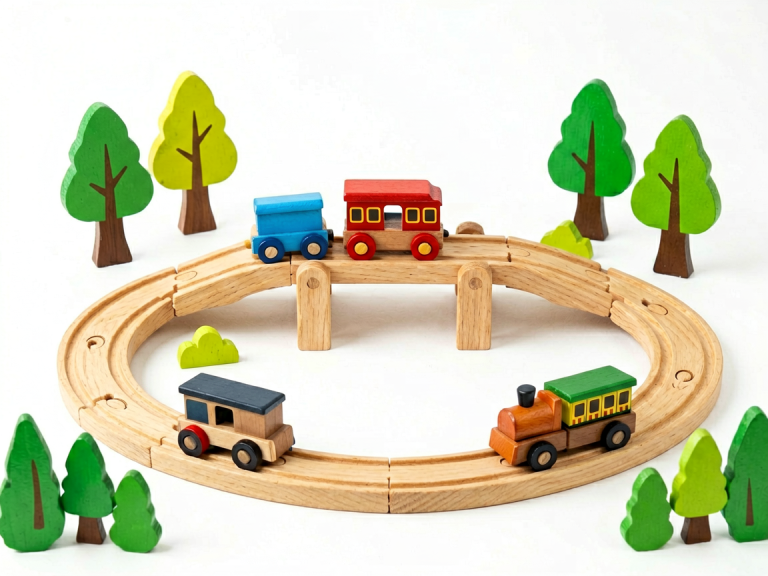
Construction toys like wooden train sets, marble runs, or foam-building blocks are excellent for narrative play. A 7-year-old will design a “city” with roads, tunnels, and bridges, then invent a story about why the marbles need to travel from the mountain to the lake. This type of play integrates planning, spatial reasoning, and language development as the child narrates their actions. Similarly, open-ended playsets like magnetic dress-up dolls or wooden dollhouses allow children to create social scenarios, practicing empathy and conversation skills.
Musical Instruments That Reward Practice
Music is a powerful cognitive tool. A simple keyboard, a ukulele, or a set of hand percussion instruments like a djembe drum can engage a 7-year-old in patterns, rhythm, and auditory discrimination. Look for instruments that are well-made and pitched correctly (to avoid frustration). Many children’s keyboards have built-in lessons and light-up keys that teach note reading. Learning an instrument at this age strengthens the connection between the brain’s hemispheres and improves working memory. The play aspect comes from improvisation and making up melodies rather than formal practice, though a structured approach can be introduced gently.
Social and Emotional Learning: Games That Teach Collaboration and Resilience
Peer relationships become increasingly important at age seven. Children are learning to negotiate, share, lose gracefully, and work as a team. Board games and cooperative play-based toys are the perfect vehicle for developing these soft skills in a low-stakes, fun environment.
Cooperative Board Games Over Competitive Ones
While competitive games have their place, cooperative games—where players work together against a common challenge—are especially valuable. Games like “Outfoxed!” (a cooperative whodunit) or “Race to the Treasure!” require players to communicate, share information, and make joint decisions. If a player makes a mistake, the whole group problem-solves rather than blaming the individual. This builds emotional resilience and teaches that collective effort often outperforms individual brilliance. For 7-year-olds, choose games with simple rules but meaningful choices, typically lasting 15–30 minutes to match attention spans.
Strategy Games for Critical Thinking
Classic abstract strategy games like Checkers, Connect Four, or Qwirkle are excellent for developing forward planning. At seven, children can hold multiple possibilities in their heads and anticipate an opponent’s moves. These games teach patience, turn-taking, and how to handle defeat. More modern games like “Dragon’s Breath” or “The Magic Labyrinth” add a physical and imaginative layer, making strategy feel like an adventure rather than work.
Role-Playing and Pretend Play Kits
Costume sets, cash registers, play food, and doctor’s kits remain relevant at seven when they are paired with more sophisticated scenarios. A child playing “restaurant” must create a menu, take orders, calculate pretend money, and manage timing—all rich mathematical and social exercises. Props like walkie-talkies, a simple detective kit with clues, or a “science lab” with safety goggles and beakers encourage extended dramatic play that stretches for hours. The key is to provide enough material to spark the story without dictating every detail.
Physical and Sensory Play: Toys That Promote Movement and Focus
Seven-year-olds still need plenty of gross motor activity, and learning happens through the body as much as the mind. Toys that combine physical challenges with cognitive demands are ideal for channeling energy productively.
Active Learning Games
Look for games that require whole-body movements. “Twister” is a classic that teaches body awareness and balance. More modern options include “Beat the Blob” (an active video game that uses a motion sensor) or floor puzzles that involve crawling and stretching. Balance boards, jump ropes with built-in counters, and agility ladder sets help children build coordination while engaging in self-directed challenges. When a child sets a personal record for skipping rope, they learn goal-setting and the connection between effort and improvement.
Sensory Dough and Kinetic Play
Kinetic sand, slime-making kits, and Play-Doh with tools remain popular at age seven, especially when used for structured tasks. A child can build a landform model, create a dinosaur habitat, or practice writing letters in sand. These materials provide calming sensory input that helps regulate emotions and improve focus. For children who struggle with handwriting, rolling clay into letters or using a stylus in sand can be a playful way to build fine motor control without the pressure of a pencil.
Puzzles and Tangrams
Jigsaw puzzles of 100 to 200 pieces are perfect for 7-year-olds. They require pattern recognition, spatial reasoning, and sustained attention. Tangram sets (wooden geometric shapes that must form specific silhouettes) challenge the brain to visualize rotations and combinations. Doing a puzzle together as a family also teaches collaboration and the satisfaction of completing a goal. Perhaps best of all, puzzles have a clear end point, which helps children feel a sense of accomplishment.
How to Choose the Right Toy for Your 7-Year-Old
The best play-based learning toys share several key characteristics. First, they are open-ended—the child can use them in multiple ways, adapting the play as their interests evolve. Second, they provide immediate feedback without external judgment. A tower falls, a robot stops, a clay sculpture dries; the toy itself tells the child whether their idea worked. Third, they encourage active participation rather than passive consumption. Finally, they should be appropriately challenging—just hard enough to require effort but not so hard that frustration kills the fun.
Avoid toys that promise to “teach” a specific academic skill in a dry, worksheet-like manner. True learning through play is messy, nonlinear, and joyful. A child who spends an afternoon building a wildly asymmetrical cardboard castle is learning geometry, engineering, and art—far more deeply than if they had completed a workbook page about shapes.
Balancing Screen Time with Hands-On Play
In today’s digital world, it’s tempting to turn to apps or tablets. While some educational apps have merit, they cannot replace the tactile, three-dimensional, socially rich experience of physical toys. The best approach is to use screens sparingly and to choose technology that complements hands-on play. For example, a coding app that programs a physical robot bridges both worlds. But the core of a 7-year-old’s learning environment should be filled with materials they can touch, manipulate, and change.
Encouraging Independent and Social Play
Finally, remember that 7-year-olds need opportunities for both solo and group play. Provide toys that work well alone (puzzles, art supplies, building sets) and others that require friends or family (board games, cooperative missions, construction that is too big for one person). Rotate toys regularly to maintain novelty—three bins of toys out at a time is plenty, and the rest can be stored away to rediscover later.
Conclusion: Play Is the Work of Childhood
The best play-based learning toys for 7-year-olds are not the flashiest or most expensive. They are the ones that invite children to ask questions, test ideas, collaborate with others, and persist through challenges. A set of magnetic tiles can teach geometry; a cooperative board game can teach empathy; a simple craft kit can teach patience. When a child is deeply engaged in play, they are not just passing time—they are building the neural pathways that will support academic success, emotional intelligence, and lifelong curiosity.
As you browse the aisles or scroll online, ask yourself: Does this toy invite my child to be the creator, the problem-solver, the storyteller? If the answer is yes, then you have found a true partner in learning. Invest in toys that respect the child’s natural drive to play, and you will watch them grow not only in knowledge but in confidence, kindness, and joy. After all, the best learning toys don’t teach children what to think—they teach them how to think. And that gift, born from play, lasts a lifetime.