Nurturing Little Linguists: Creative Activities to Enhance Language Development in 5-Year-Olds
Language development in early childhood is nothing short of magical. By the age of five, children typically possess a vocabulary of several thousand words and can construct complex sentences, yet their linguistic growth is far from complete. This period—often called the “language explosion”—is a golden window for expanding vocabulary, refining grammar, and building narrative skills. The right activities, woven into daily play and routines, can turn every moment into a learning opportunity. Below are five practical, research-backed categories of activities that parents, caregivers, and educators can use to boost language development in five-year-olds. Each section offers concrete examples and explains why these exercises work so effectively.
Storytelling and Retelling: Building Narrative Bridges
One of the most powerful ways to improve language is through stories. At age five, children are developmentally ready to move beyond simply listening to stories and begin actively constructing them. A simple but highly effective activity is guided retelling. After reading a short picture book together—such as *The Very Hungry Caterpillar* or *Brown Bear, Brown Bear, What Do You See?*—ask your child to tell the story back to you in their own words. Prompt them with questions: “What happened first? What did the caterpillar eat on Tuesday? How did the story end?” This not only reinforces sequencing and memory but also forces children to retrieve and organize vocabulary, practice past-tense verbs, and experiment with connecting words like *then*, *after*, and *because*.
To make it more playful, use story stones—painted pebbles with simple images (a tree, a house, a cat, a child). Have your child choose three stones and invent a story that links them. This open-ended activity encourages creative language use and problem-solving. For children who are shy, try story cubes with dice-like pictures. Roll the dice and have the child describe the scene they see, then add a sentence. The key is to let them lead; resist correcting every grammatical mistake. Instead, model correct language by repeating their sentence back in a fuller form. For example, if they say “Cat go tree,” you can say, “Yes, the cat went up the tree because it saw a bird.” This gentle expansion teaches grammar without creating pressure.
Another variation is story puppetry. Use simple sock puppets or paper-bag characters to act out a well-known tale or an original one. As the child manipulates the puppets and speaks for them, they naturally practice dialogue, tone, and turn-taking. This multi-sensory approach engages both the language centers of the brain and the motor cortex, making the learning more memorable. Research shows that retelling stories improves both comprehension and expressive language, and it also builds confidence in speaking before an audience—a skill that will serve them well in kindergarten and beyond.
Interactive Word Games: Turning Play into Phonological Awareness
Language is built on sounds as much as on meaning. Phonological awareness—the ability to hear and manipulate the sounds in words—is a strong predictor of later reading success. Games that focus on sounds are both fun and essential. A classic is “I Spy” with sounds. Instead of saying “I spy something red,” say “I spy something that starts with the /b/ sound.” The child must scan the environment and guess “ball,” “book,” or “basket.” This sharpens their ability to isolate initial sounds, a key pre-reading skill.
Rhyme time is another staple. Sing or chant nursery rhymes, then pause before the rhyming word and let the child fill it in: “Humpty Dumpty sat on a wall, Humpty Dumpty had a great ______.” You can also play a matching game with rhyming picture cards: cat/hat, dog/log, bear/chair. For an energetic twist, play Rhyming Hopscotch: draw a hopscotch grid, and in each square place a picture. The child hops on a square and must name a word that rhymes with the picture before moving on.
Alliteration games add another layer. Try “Let’s find all the things in this room that start with the letter M: mirror, mug, mat. Now can you say a sentence with three M words?” Silliness is allowed—“My monkey made muffins.” This encourages word play and flexibility with language. Even simple “What’s missing?” games are effective: place three objects on a tray (e.g., a toy car, a pencil, a spoon). Have the child name them, then cover the tray and remove one. The child must say which one is missing, using a complete sentence like “The car is gone.” This activity builds vocabulary recall and sentence structure simultaneously.
Dramatic Play and Role-Playing: Language in Context
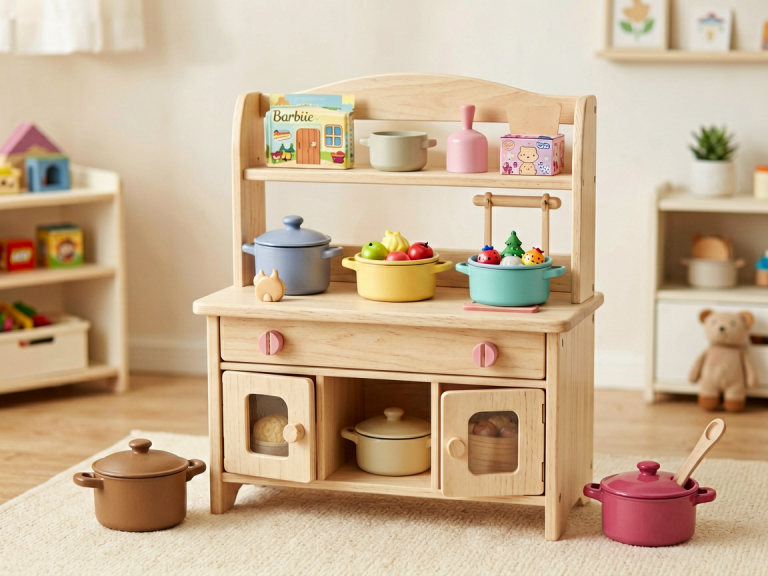
Five-year-olds learn best when language is purposeful and embedded in real-life scenarios. Dramatic play, also called pretend play, provides a rich context for practicing social language, negotiating roles, and using new vocabulary naturally. Set up a mini “grocery store” at home with empty boxes, a toy cash register, and play money. As the child takes on the role of shopper or cashier, they will naturally use phrases like “How much does this cost?” “May I have a bag, please?” “That’s five dollars.” This is authentic language practice that cannot be replicated by flashcards.
Similarly, a doctor’s office corner with a toy stethoscope, bandages, and a stuffed animal patient encourages a different set of vocabulary: “Open your mouth, say ‘ah’,” “Your teddy bear has a fever,” “I need to take your temperature.” The child learns to use procedural language and empathy-driven questions. To expand language further, introduce “scripted” scenarios that challenge them. For example, in the restaurant play area, you can be a grumpy customer who orders a complicated meal: “I’d like a cheese sandwich with no cheese, and a drink that is purple and fizzy.” The child must listen carefully and respond with clarifying questions (“So you want a plain bread sandwich? And what kind of purple drink?”). This builds comprehension, problem-solving, and conversational turn-taking.
Puppet shows also fall under dramatic play but deserve a special mention. Using hands puppets, children can create different voices and personalities for each character. This encourages prosody—the rhythm and intonation of speech—as well as emotional expression. A shy child might find it easier to speak through a puppet, thereby reducing anxiety and increasing verbal output. Adult participation is crucial: ask open-ended questions (“What does your puppet think about the rain today?”) and model longer responses. Over time, the child’s puppet conversations become more elaborate, incorporating past-tense narration and future planning (“Yesterday my puppet went to the park, and tomorrow he might fly to the moon.”).
Songs, Rhymes, and Chants: The Musician’s Path to Fluency
Music and language share neural pathways. Singing songs and chanting rhymes activates the brain’s auditory processing and memory centers, making words stick. For five-year-olds, songs with repetitive structures and clear rhymes are ideal. Start with old favorites like “Old MacDonald Had a Farm” or “The Wheels on the Bus.” After the child knows the song well, introduce lyric substitution: change “Old MacDonald had a farm” to “Old MacDonald had a zoo” and then invent new animals and sounds. This forces the child to generate novel vocabulary while maintaining the song’s rhythm—a perfect combination for language flexibility.
A more structured activity is call-and-response chants. Stand facing the child and say a short phrase with a beat, then have them echo it back. For example: “I see a cat (clap clap) / I see a cat (clap clap).” Gradually increase complexity: “The big brown dog ran fast (clap clap) / The big brown dog ran fast (clap clap).” This improves listening skills, memory, and sentence repetition—a direct boost to syntax.
Song-based storytelling is another favorite. Choose a familiar tune like “Twinkle Twinkle Little Star” and help the child write new verses about their day: “Twinkle twinkle, what a day, I went out to find a play, Saw a squirrel up a tree, Squirrel looked right back at me.” The simple melody provides a scaffold, allowing the child to focus on word choice and narrative. You can also create a soundscape song: “We’re going on a bear hunt” style, but you make up the sounds and actions together. As the child chants “We’re going on a bear hunt, we’re going to catch a big one,” with accompanying hand gestures, they internalize the rhythm of language and learn to match tone with meaning.
Daily Conversations and Descriptive Language: The Everyday Classroom
Structured activities are wonderful, but the most language-rich environment is ordinary daily life. Five-year-olds are natural observers; they notice the shape of clouds, the feel of sand, the smell of toast. Capitalize on this by modeling descriptive language throughout the day. While walking to the park, pause and ask, “What do you notice about the leaves today? Are they crunchy? Are they wet? Can you describe the color—are they golden or brown?” Encourage the child to use sensory words: rough, smooth, sticky, fragrant. This builds a sophisticated vocabulary without any flashcards.
Part of daily routine can be a “Weekend Talk” or “Today’s Highlights” where the child reports one thing they did, one thing they saw, and one thing they felt. Turn it into a game by saying, “Tell me three things about your snack: one about how it looked, one about how it tasted, and one about how it felt.” This pushes the child to use adjectives and adverbs actively. Another powerful tool is the “I notice… I wonder…” framework. During car rides or bath time, point to something and say, “I notice that the streetlight is reflecting in the puddle. I wonder why those ripples are moving.” Then ask for the child’s thoughts. This trains them to observe, hypothesize, and articulate, all in complete sentences.
Mealtime conversations also offer opportunities. Ask open-ended questions that require more than a yes/no: “If you could have any animal as a pet, what would it be and why? Tell me three reasons.” Listen patiently; avoid jumping in to correct grammar. Instead, build on what they say. For example, if they say “I want a elephant because big,” you can reply, “Ah, you want an elephant because it is very big and strong. What else would you do with an elephant?” This modeling expands their utterance. Over time, children internalize these structures and use them independently. The key is to make language a natural, joyful part of every interaction.
Conclusion
Language development in five-year-olds is not a subject to be taught in a classroom corner—it is woven into the fabric of play, song, conversation, and imagination. The activities described here—storytelling, word games, dramatic play, music, and daily dialogue—all share a common thread: they are child-led, engaging, and grounded in real communication. They honor the fact that five-year-olds learn best when they are moving, pretending, laughing, and connecting with a caring adult. By incorporating even a few of these practices into your daily routine, you will give your child the tools to not only say more words but to use language to think, to relate, and to create. In the end, the most important activity is simply to talk, listen, and play together—because every word shared is a seed planted in the garden of lifelong learning.