Building Little Thinkers: Problem-Solving Play Activities for Babies
Introduction
From the moment a baby discovers their own tiny hands, they begin a lifelong journey of problem solving. That first clumsy attempt to grasp a dangling toy, the triumphant shriek when a block finally stacks, or the focused determination to pull a hidden cloth off a favorite rattle—each of these moments is a miniaturized example of cognitive development in action. For parents and caregivers, understanding how to nurture these budding problem-solving skills through play is not just beneficial; it is essential. Research in early childhood development consistently shows that the first year of life is a critical window for building neural pathways associated with reasoning, memory, and cause-effect understanding. This article explores a range of problem-solving play activities specifically designed for babies, from newborns to toddlers, and explains the science behind why these simple games matter so much.
—
Why Problem-Solving Play Matters for Babies
Before diving into specific activities, it is helpful to understand what “problem solving” means in the context of infancy. A baby’s brain is not yet capable of abstract reasoning or logical deduction. Instead, problem solving for a baby involves sensorimotor exploration—touching, tasting, shaking, dropping, and watching. Through these actions, infants learn that their movements have consequences, that objects exist even when out of sight, and that persistence often leads to reward.
The developmental psychologist Jean Piaget famously described the first two years of life as the sensorimotor stage. During this period, babies learn about the world primarily through their senses and actions. Problem-solving activities help them practice key cognitive milestones such as object permanence, means-end reasoning (e.g., pulling a string to get a toy), and trial-and-error learning. Moreover, these activities support the development of executive functions like attention, working memory, and self-control. A baby who learns to solve a simple puzzle, for instance, is also learning to focus, remember a goal, and manage frustration when the first attempt fails.
Beyond cognitive gains, problem-solving play fosters emotional resilience. When a baby repeatedly tries to fit a ring onto a peg and eventually succeeds, they experience a boost of confidence. That feeling of mastery— “I did it!”—lays the foundation for a growth mindset. Additionally, these shared moments between caregiver and baby strengthen attachment and communication. The caregiver’s encouraging words, eye contact, and gentle guidance teach the baby that challenges are safe and that help is available when needed.
—
Types of Problem-Solving Play Activities by Age
Babies develop rapidly, and what works for a two-month-old will bore a ten-month-old. Therefore, it is useful to categorize activities by approximate age ranges, always remembering that each child is unique and will progress at their own pace.
A. Newborn to 3 Months: Discovering the World
At this stage, problem solving is extremely simple and involves primarily sensory exploration. A newborn cannot yet grasp objects voluntarily, but they can track movement and turn their head toward sounds.
- High-Contrast Visual Tracking. Place a black-and-white pattern card (or a face) about 8–10 inches from the baby’s eyes. Slowly move it left to right. The baby’s “problem” is to follow the object with their eyes. This strengthens visual tracking and attention—early building blocks for later problem solving.
- Rattle Shake and Pause. Shake a soft rattle near the baby, then stop. Watch as the baby becomes still, listening. They may wave their arms or make a sound, trying to make the noise return. This is their first experience with cause and effect.
B. 4 to 6 Months: Reaching and Grasping
Around four months, babies begin to intentionally reach for objects. Their problem-solving emerges as they figure out how to make a desired object come closer.
- The Tummy Time Toy Drag. Place a favorite toy just out of reach during tummy time. The baby will stretch, wiggle, and perhaps roll or scoot. The “problem” is getting the toy. Celebrate every small success.
- Cloth-Peek-a-Boo. Place a thin scarf or cloth over a toy that makes noise. Show the baby how to pull the cloth off to reveal the toy. Then let them try. This teaches object permanence and the means-end relationship of pulling to uncover.
C. 7 to 9 Months: Object Manipulation and Cause-Effect
This is a golden age for problem solving. Babies can sit unsupported, use both hands, and are fascinated by how things work.
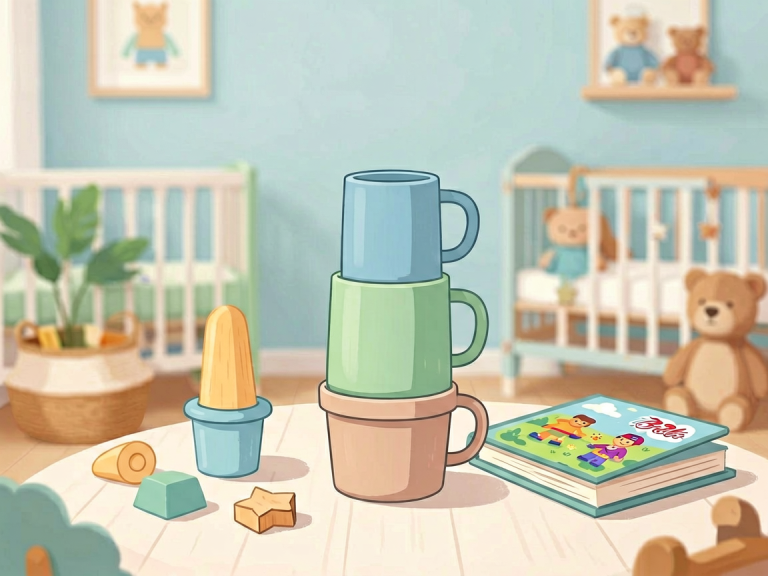
- Drop-and-Retrieve. Give the baby a set of lightweight cups or nesting bowls. Show them how to drop a small ball into a cup, then tip it out. They will repeat this hundreds of times, each time learning about gravity, volume, and cause-effect.
- The Simple Puzzle Board. Use a board with one or two large, easy-to-grasp wooden shapes (circle, square) that fit into corresponding holes. Initially, you may need to guide the baby’s hand. Eventually, they will figure out that the round peg does not fit into the square hole—a classic problem-solving challenge.
- Activity Boxes. An activity box with buttons, levers, and doors that open when pressed is ideal. Show the baby how to push a button to make a character pop up. They will experiment with different pressures and positions to make it work.
D. 10 to 12 Months: Means-End Reasoning and Early Planning
As babies approach their first birthday, they can coordinate multiple steps to achieve a goal. They may even anticipate the outcome before acting.
- The Towel Pull Challenge. Place a desired toy on a towel or small blanket that is just out of arm’s reach. The baby’s natural reaction at first may be to reach directly. Show them how pulling the towel brings the toy closer. This is a classic means-end problem: using a tool (the towel) to achieve a goal.
- Container Play. Provide a set of cups that nest inside each other. The baby must figure out which size goes into which—a spatial problem. Also, provide a container with a lid that requires twisting or popping off. Let them struggle a little before offering help.
- Simple Shape Sorter. A shape sorter with three to four different shapes is excellent. Babies at this age often try to force a square into a round hole. The “problem” is to match shapes. It may take weeks, but the moment of success is a huge cognitive leap.
E. 12 to 18 Months: Advanced Problem Solving and Tinkering
Now babies are walking or cruising, and their problem solving becomes more sophisticated. They begin to use objects as tools in creative ways.
- The Ramp and Car. Build a simple ramp from a cardboard tube or a piece of wood. Show the baby how to place a toy car at the top and watch it roll down. Then let them experiment: What happens if the ramp is steeper? What if you put a ball instead of a car? They are learning physics through play.
- Obstacle Course. Use pillows, boxes, and soft furniture to create a small obstacle course. The baby must figure out how to climb over a cushion or go around a box to reach a prize. This combines gross motor skills with spatial problem solving.
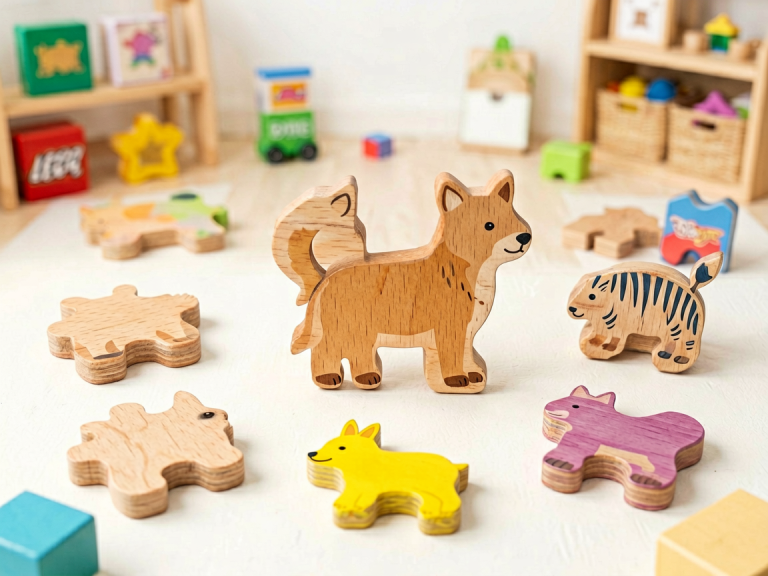
- Puzzle with Knobs. Introduce wooden puzzles with large knobs (e.g., animals or fruits). The baby must grasp the knob, lift the piece, and orient it correctly to fit the slot. This requires fine motor precision and visual recognition.
—
How to Facilitate Problem-Solving Play Effectively
Simply offering toys is not enough. The way a caregiver interacts during play greatly influences the baby’s learning. Here are some evidence-based strategies:
- Follow the baby’s lead. If the baby is fascinated by dropping a spoon from the high chair, let them explore that “problem” for a while. Offer different objects to drop—a wooden block, a soft ball—and observe how they adjust their grip.
- Use the “wait and watch” technique. When a baby encounters a challenge (e.g., a toy stuck under a cushion), resist the urge to immediately solve it. Give them at least 10–15 seconds to attempt a solution. Your patience communicates that they are capable.
- Model, don’t fix. If the baby is frustrated, demonstrate a step slowly, then hand the object back for them to try. For example, if they cannot fit a shape into the sorter, show them turning it the right way, then let them do the final push.
- Praise effort, not outcome. Instead of saying “Smart baby!” say “You tried so hard to get that block in!” This encourages persistence and reduces fear of failure.
- Create a safe, exploratory environment. Babies need freedom to move and touch. Ensure the play area is free of hazards, and provide a variety of textures, sounds, and materials (e.g., fabric, cardboard, plastic, wood) to stimulate different problem-solving challenges.
—
Conclusion
Problem-solving play is not about forcing babies to be “geniuses” or pushing academic skills before they are ready. It is about honoring their natural curiosity and giving them the tools—literally and figuratively—to make sense of their world. Every time a baby figures out how to open a container, stack a block, or retrieve a fallen toy, they are wiring their brain for future learning. And the beauty of these activities is that they require no expensive gadgets or complex instructions. A cardboard box, a set of plastic bowls, a scarf, and a loving caregiver are all that is needed to turn everyday moments into rich problem-solving opportunities.
As you engage your baby in these playful challenges, remember: the goal is not perfection but process. The furrowed brow, the determined grunt, the sudden smile of discovery—these are the true signs of a little thinker at work. By providing the right kinds of activities and the right kind of support, you are giving your baby a priceless gift: the confidence to tackle problems, one playful step at a time.