The Ultimate Parent Guide to Choosing Age-Appropriate Toys for Kindergarteners
As your child steps into kindergarten, a world of wonder and rapid development unfolds. Between the ages of five and six, children are no longer toddlers but emerging learners who crave challenges, social interaction, and creative expression. The toys you choose during this critical period can profoundly influence their cognitive growth, physical coordination, emotional resilience, and social skills. However, with aisles of colorful packaging and endless marketing claims, selecting the right playthings can feel overwhelming. This guide will empower you with evidence-based strategies, practical tips, and a clear framework to make confident, age-appropriate choices that spark joy and nurture your kindergartener’s whole development.
Understanding the Developmental Milestones of Kindergarteners
Before you step into a toy store or click “add to cart,” it helps to appreciate what is happening inside your child’s mind and body. Kindergarteners are in a phase of remarkable transformation. Cognitively, they begin to understand symbolic thinking, follow multi-step instructions, and solve simple problems. Their attention span stretches to about 15–20 minutes for focused activities, and they start grasping concepts like counting, pattern recognition, and cause and effect. Physically, fine motor skills improve rapidly—they can cut with scissors, hold a pencil correctly, and manipulate small objects—while gross motor skills allow them to run, jump, hop, and balance with increasing confidence. Socially and emotionally, kindergarteners are learning to take turns, share, negotiate with peers, and manage big feelings like frustration and disappointment. Toys that align with these milestones not only entertain but also gently stretch their abilities without causing frustration. For instance, a simple board game with rules teaches turn-taking and patience, while a complex construction set may overwhelm a child who still struggles with finger dexterity. Knowing your child’s unique pace is just as important as knowing the general developmental norms.
Key Categories of Age-Appropriate Toys
Cognitive Boosters: Puzzles, Board Games, and Building Sets
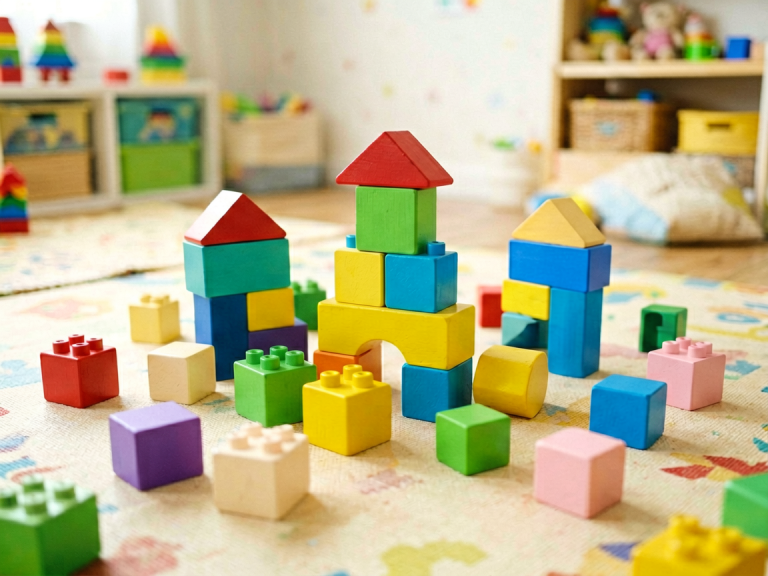
The kindergarten brain is a sponge for logical thinking and problem-solving. Puzzles with 24 to 48 pieces are ideal—they challenge visual-spatial skills and teach persistence when a piece doesn’t fit. Look for puzzles based on themes your child loves, such as animals, dinosaurs, or fairy tales, to sustain interest. Classic board games like *Candy Land*, *Chutes and Ladders*, or *Memory* go beyond fun; they reinforce counting, color recognition, and the ability to follow sequential rules. For a more hands-on cognitive workout, building sets like LEGO Classic bricks or magnetic tiles encourage creativity while inadvertently teaching geometry, balance, and planning. When your child builds a tower and it collapses, they learn resilience and the scientific method of trial and error. Avoid sets with hundreds of tiny pieces that could scatter and frustrate; instead, choose sets with larger blocks or themed kits that offer a clear goal without being overly prescriptive.
Creative Play: Art Supplies, Dress-Up, and Musical Instruments
Imagination peaks in kindergarten, and creative play is not just fun—it is how children make sense of the world. Art supplies such as washable markers, crayons, watercolor sets, child-safe scissors, and modeling clay allow self-expression and fine motor practice. Encourage open-ended projects rather than coloring books with rigid outlines; a blank sheet of paper invites a story. Dress-up costumes (simple capes, hats, pretend doctor kits, or chef aprons) fuel role-playing, which is vital for empathy, language development, and social understanding. When your child pretends to be a firefighter or a teacher, they rehearse real-world roles and negotiate with playmates. Musical instruments like a xylophone, maracas, or a simple drum set introduce rhythm, auditory discrimination, and emotional release. Beware of noisy electronic toys that leave little room for the child’s own creativity; a plain cardboard box can become a spaceship, while a fixed-sound piano restricts exploration. The best creative toys are those that respond to the child’s actions, not the other way around.
Physical Activity: Riding Toys, Balls, and Climbing Structures
Kindergarteners have energy to burn, and active play is essential for developing balance, coordination, and strength. A tricycle or a balance bike (without pedals) helps with leg muscle development and spatial awareness. Balls of various sizes—soft soccer balls, playground balls, or foam baseballs—encourage throwing, catching, and kicking, which improve hand-eye coordination and gross motor skills. Jump ropes, hula hoops, and small trampolines (with proper safety nets) provide vigorous exercise that supports cardiovascular health and releases endorphins. Outdoor climbing structures, whether a small jungle gym at home or a trip to the park, challenge the vestibular system and build confidence. Safety is paramount: check that riding toys have stable bases and hand brakes, and avoid trampolines for children under six unless supervised. Also, consider toys that encourage family participation, such as a simple badminton set or a frisbee, because physical play with parents strengthens bonds and models active lifestyles.
Social and Emotional Development: Cooperative Games and Role-Play Sets
While competition has its place, kindergarteners benefit enormously from cooperative games where everyone works toward a common goal. Games like *Hoot Owl Hoot!* or *Race to the Treasure* teach teamwork and reduce the sting of losing. Emotional regulation can be practiced with toys like “calm-down jars” (glitter in a bottle) or feeling charts paired with puppets—children learn to name and express emotions through storytelling. Role-play sets such as a play kitchen, a tool bench, or a cash register allow children to imitate adult behaviors and process daily experiences. When two children pretend to run a restaurant, they practice sharing roles, negotiating menus, and resolving conflicts. Avoid toys that promote aggressive themes or overly complex social scenarios; instead, look for items that invite inclusive play and can be used in multiple ways. A simple set of wooden blocks, for instance, can be a castle one day and a schoolhouse the next.
Safety First: What to Look For
No toy, no matter how educational, is worth a trip to the emergency room. The golden rule for kindergarteners is to check for small parts that could be choking hazards, even though your child is older. Many toys designed for ages three and up still contain detachable pieces smaller than the standard choke-tube test. Always inspect brand-new toys for sharp edges, toxic paints (look for ASTM or CE safety certifications), and long cords or strings that could pose strangulation risks. Batteries should be securely enclosed. Riding toys should have brakes within easy reach. Also, consider noise levels: some electronic toys can exceed 85 decibels, potentially damaging hearing over time. Choose soft, low-volume options or remove batteries if the sound is too loud. Finally, remember that packaging is part of the safety equation—plastic wrap, zip ties, and Styrofoam should be discarded immediately. Read age labels carefully, but use your judgment: a toy labeled “5+” may still frustrate a child who is developmentally younger, while a toy marked “6+” might be perfect for your advanced kindergartener if they show interest and skill.
How to Involve Your Child in the Selection Process
One of the most effective ways to ensure a toy is age-appropriate is to let your kindergartener have a voice in the choice—within boundaries. Take them to a store and observe which sections they naturally gravitate toward. Ask open-ended questions: “What would you do with this?” or “How would you play with a friend using this?” Their answers reveal their current interests and problem-solving level. You can also create a short list of two or three pre-approved options and let them decide. This not only builds decision-making skills but also increases the likelihood that the toy will be played with repeatedly. Be wary of television or YouTube advertisements that manipulate young desires; instead, focus on toys that require active participation rather than passive watching. Involve your child in reading the instructions or sorting pieces, turning the unboxing into a collaborative activity. When a toy breaks, invite them to help fix it (if safe) or discuss why it happened—this teaches responsibility and a growth mindset about materials.
Avoiding Common Pitfalls: Gender Stereotypes, Overstimulation, and Screen Time
The toy industry often boxes children into pink and blue aisles, but kindergarteners are naturally curious about everything. Do not shy away from offering dolls to boys or trucks to girls—these stereotypes limit cognitive and emotional development. Research shows that all children benefit from nurturing role-play (dolls) and construction (trucks). Another pitfall is overstimulation: toys with flashing lights, loud noises, and multiple buttons can overwhelm a five-year-old’s sensory system and reduce imaginative play. Opt for simpler, open-ended toys that require the child to create the action rather than react to it. Finally, screen-based toys—tablets, electronic learning pads, or app-connected devices—should be used sparingly. The American Academy of Pediatrics recommends no more than one hour of high-quality screen time per day for children aged 2 to 5, and even less for kindergarteners who need real-world interactions. When you do choose a screen-based toy, ensure it encourages active engagement (e.g., a coding toy that involves moving physical pieces) rather than passive swiping.
Conclusion: Balancing Fun and Learning
Choosing age-appropriate toys for your kindergartener is not about buying the most expensive or the most educational items on the shelf. It is about understanding your child’s unique developmental stage, honoring their natural curiosity, and providing tools that invite exploration, creativity, and connection. A simple set of blocks can teach physics; a shared board game can build patience; a dress-up trunk can unlock empathy. Trust your instincts, observe your child at play, and remember that the best toy is often the one that makes them laugh, ask questions, and say, “Let’s do it again!” By following this guide, you will not only fill your home with purposeful playthings but also create a foundation of joyful learning that will support your child’s growth for years to come. Happy playing!