The Power of Play: A Parent’s Guide to Supporting Learning at Home Through Playful Engagement
Introduction: Why Play Matters More Than You Think
In the hustle of modern parenting, it is easy to fall into the trap of equating learning with worksheets, flashcards, and screen-based drills. Yet decades of developmental psychology and neuroscience tell us a different story: play is not the opposite of learning—it is the engine of it. When children build with blocks, pretend to run a grocery store, or chase bubbles in the backyard, they are not merely “passing time.” They are constructing neural pathways, developing problem-solving skills, practicing social negotiation, and building the cognitive flexibility that underpins academic success.
This guide is designed for parents who want to harness the natural joy of play to create a rich, supportive learning environment at home—without turning your living room into a classroom. You do not need a degree in education or a shelf full of expensive materials. What you need is a shift in mindset: see every moment of play as an opportunity for growth, and yourself as a facilitator, not a drill sergeant.
—
1. Understanding the Science of Play-Based Learning
Before diving into activities, it helps to know why play works. Research from the National Association for the Education of Young Children (NAEYC) and organizations like the LEGO Foundation shows that play supports learning in three critical ways:
- Intrinsic motivation: When children choose an activity because it is fun, they engage deeply and persist longer. This self-directed effort builds grit and a love of learning.
- Contextual understanding: Play allows children to experiment with abstract concepts (e.g., volume by pouring water, gravity by rolling cars) in a concrete, low-stakes setting. This creates “aha!” moments that stick.
- Social-emotional growth: Through pretend play, children practice empathy, negotiation, and emotional regulation. These skills are foundational for classroom collaboration and future workplace success.
What does this mean for your home? You do not need to separate “play time” from “learning time.” Instead, you can weave learning goals into the activities your child already loves. A child building a castle with blocks is learning geometry and spatial reasoning. A child “cooking” in a toy kitchen is learning sequencing, measurement, and even chemistry (mixing “ingredients”). The key is to observe, ask open-ended questions, and occasionally introduce subtle challenges.
—
2. Creating a Play-Friendly Home Environment
Your home is the first classroom, and the best teacher you can offer is a space that invites exploration. You do not need a dedicated playroom—a corner of the living room, a small shelf, or even a cardboard box can become a launchpad for learning. Here is how to optimize your environment:
A. Declutter and rotate toys
Too many options overwhelm children and reduce the quality of play. Keep out only a few open-ended materials (blocks, art supplies, dress-up clothes, puzzles) and rotate them every week or two. This novelty sparks curiosity and forces children to think creatively with limited resources.
B. Embrace mess (within reason)
Mess is a sign of active learning. A puddle of water on the kitchen floor might mean your child is testing sink-and-float. A pile of shredded paper could be a volcano eruption in progress. Set clear boundaries (e.g., “We keep paint in the tray, not on the walls”) but allow freedom to experiment. A plastic tablecloth or a washable mat can contain chaos.
C. Stock low-cost, high-impact materials
You do not need to buy “educational toys.” Household items are often better:
- Empty cardboard boxes (for building, painting, or turning into a spaceship)
- Measuring cups and spoons (for math and sensory play)
- Old magazines and scissors (for cutting, collage, and literacy)
- Pillows and blankets (for forts that become reading nooks or imaginary caves)
D. Create zones for different types of play
Even in a small space, you can define areas:
- A quiet corner with books and puzzles for calm, focused play
- A floor area with blocks and vehicles for gross motor and constructive play
- A small table for art, writing, or sensory bins (rice, sand, water)
—
3. Play Activities That Build Core Academic Skills
The following activities are designed to target key learning domains—literacy, numeracy, science, and social studies—while feeling like pure fun. Adjust the difficulty based on your child’s age and interests.
A. Literacy Through Storytelling and Pretend Play
- Activity: “Post Office” – Set up a small box as a mailbox. Write short notes or simple words on slips of paper (e.g., “cat,” “ball”). Your child “delivers” the mail, reading each word aloud. For older children, they can write replies. This builds letter recognition, phonemic awareness, and writing skills.
- Activity: Story Stones – Collect smooth stones and paint (or glue pictures) of characters, settings, and objects on them. Your child picks three stones and tells a story connecting them. This develops narrative structure, vocabulary, and creativity.
B. Numeracy Through Games and Construction
- Activity: Board Game Math – Classic games like Candy Land, Chutes and Ladders, or even a homemade dice game reinforce counting, one-to-one correspondence, and number recognition. Add a twist: “If you land on a blue space, add 2 to your score.”
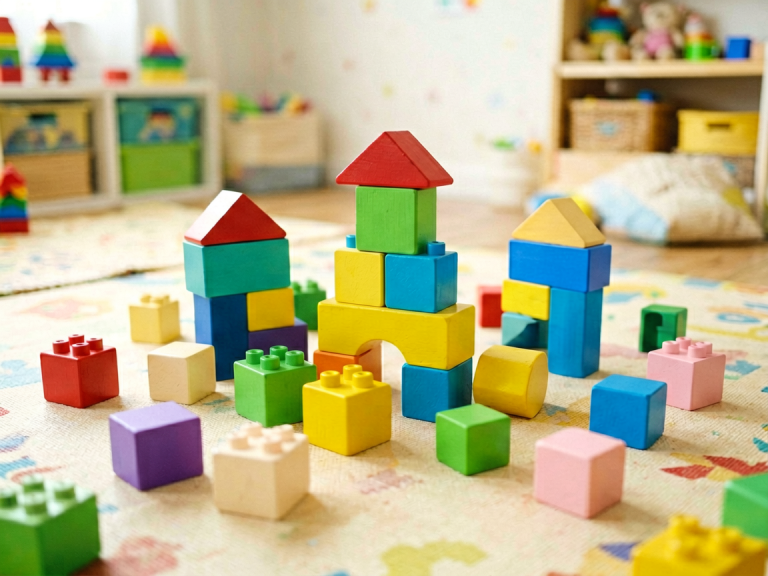
- Activity: Block City Geometry – Use building blocks to create a city. Ask: “How many blocks tall is your tower?” “Can you make a square building?” “If we add 4 more blocks, how many will we have?” This teaches measurement, shape identification, and early addition.
C. Science and Exploration Through Sensory Play
- Activity: Sink or Float – Fill a basin with water. Gather household items (a cork, a spoon, a plastic toy, a rock). Predict, then test. Discuss why some objects float and others sink. This introduces buoyancy, density, and the scientific method (hypothesis, experiment, conclusion).
- Activity: Nature Scavenger Hunt – Create a list with pictures or words: “Find something rough, something smooth, a leaf, a stick longer than your hand.” Walk around the yard or park. This sharpens observation skills and vocabulary.
D. Social Studies and Emotional Intelligence Through Role Play
- Activity: Restaurant – Take turns being the customer, chef, and server. Set up a table with menus (drawings or written words). Practice ordering food, taking orders, and “paying” with play money. This teaches turn-taking, polite conversation, and basic economics.
- Activity: Feelings Charades – Act out emotions (happy, sad, frustrated, excited) and guess. Talk about what makes you feel that way. This builds emotional vocabulary and empathy.
—
4. The Parent’s Role: Facilitator, Not Director
Your most important job is to step back and observe, then gently nudge. Here are three strategies to support learning through play without taking over:
Ask open-ended questions. Instead of “What color is that?” try “Tell me about your building.” Instead of “Is that a triangle?” try “How are these blocks different?” Open-ended questions encourage deeper thinking and longer conversations.
Join the play—but follow the child’s lead. If your child is pretending to be a firefighter, become the person who calls for help. Let them direct the scenario. Your role is to extend the narrative (“Oh no, the fire is on the roof! What should we do?”) rather than correct or teach overtly.
Introduce “just right” challenges. If your child easily counts to 10, gently introduce counting to 20 while playing. If they are struggling with a puzzle, offer a hint, not the answer. This keeps the activity in their zone of proximal development—challenging enough to grow but not so hard they give up.
—
5. Overcoming Common Obstacles
Many parents worry that play-based learning is not “school enough.” Let me put your mind at ease: Finland, consistently ranked among the best education systems in the world, delays formal academic instruction until age 7 and emphasizes play in early years. Research shows that children who learn through play in the early years develop stronger executive function skills—self-control, working memory, and cognitive flexibility—which are better predictors of later academic success than early reading ability.
But what if your child refuses to engage? Resistance often comes from being forced. Instead, leave materials visible and inviting. Say, “I’m going to build a car with these blocks—want to help?” or “I wonder what happens when we put this spoon in the water.” Model curiosity. If they still refuse, let it go. Forced play is no longer play.
What about screen time? Digital play can also be learning-rich, but it works best when paired with physical, hands-on experience. Use apps that encourage creation (e.g., drawing, coding for kids) rather than passive consumption. And always follow up screen play with real-world play—if they played a dinosaur game, go outside and dig for “fossils” in a sandbox.
—
6. Making It Sustainable: Daily Routines That Weave in Play
You do not need to schedule “learning play” for hours. Small, consistent moments add up:
- Morning: While making breakfast, ask your child to count eggs or set the table (one-to-one correspondence).
- Afternoon wind-down: A quick board game (10 minutes) strengthens logic and patience.
- Bath time: Provide measuring cups, funnels, and waterproof toys. This is prime science play.
- Evening: Before bed, read a story together, then ask, “What do you think happens next?” or “Can you draw a picture of your favorite part?”
These micro-moments turn ordinary routines into learning opportunities without adding stress to your day.
—
Conclusion: Play Is the Work of Childhood
As you try these ideas, remember that the goal is not to teach a specific skill but to nurture a child who is curious, resilient, and confident. The greatest gift you can give your child is the belief that learning is fun, that mistakes are stepping stones, and that the world is a playground full of wonder.
So put down the worksheet. Pick up a cardboard box. Sit on the floor. Build. Imagine. Laugh. In those moments, your child is learning everything they need—and so are you.
*(Word count: approximately 1,150 words)*