The Ultimate Parent Guide to Choosing Age-Appropriate Toys for Elementary School Kids
Introduction
Selecting the right toys for elementary school children is both an art and a science. During the elementary years—roughly ages 6 through 12—children undergo profound cognitive, social, emotional, and physical transformations. A toy that captivates a first grader may bore a fifth grader, and one that challenges a nine-year-old might frustrate a six-year-old. Yet with endless marketing messages and ever-changing trends, parents often feel overwhelmed. This guide offers a research-based, developmental framework to help you choose toys that are not only fun but also nurture your child’s growth. By understanding what matters at each stage and what to watch out for, you can turn toy shopping into a meaningful investment in your child’s future.
—
Understanding Developmental Stages: 6–8 Years vs. 9–12 Years
To choose wisely, you must first recognize that elementary school is not a single developmental block. Children in the early grades (ages 6–8) and those in upper elementary (ages 9–12) have distinctly different needs, abilities, and interests.
Ages 6–8: The Concrete Thinkers
At this stage, children are moving from the preoperational to the concrete operational stage (Piaget). They begin to understand logic, cause and effect, and simple rules, but they still rely heavily on concrete, hands-on experiences. Their fine motor skills are improving, yet they may still struggle with tasks requiring precision. Socially, they are learning to cooperate, share, and follow multi-step instructions, though egocentric thinking still lingers. Imaginative play remains central, but they now incorporate real-world scenarios (e.g., playing “school” or “store”). Key developmental goals include literacy and numeracy foundations, spatial reasoning, and basic problem-solving.
Ages 9–12: The Emerging Abstract Thinkers
By upper elementary, children enter late childhood. Their brains are pruning unused connections while strengthening essential pathways. They can handle more complex rules, multi-step strategies, and abstract concepts (e.g., mathematics, morality). Fine motor skills are nearly adult-like, allowing for intricate building, crafting, and even simple coding. Social dynamics become more sophisticated: friendships deepen, competition emerges, and group play requires negotiation. This age group craves autonomy and challenge—they want to feel “grown up” but still need safe boundaries. Their play becomes more goal-oriented and less purely imaginative.
—
Key Factors to Consider When Selecting Toys
Beyond age labels, parents should evaluate toys based on a few universal criteria that safeguard development and maximize engagement.
1. Safety First
For elementary kids, safety risks shift from choking hazards to mechanical and electronic dangers. Check for non-toxic materials, sturdy construction (no sharp edges or breakable small parts), and secure batteries. For toys with strings or cords, ensure they are short enough to avoid strangulation. Read recall databases and avoid cheap plastics that may contain phthalates or lead. For older kids, also consider online safety if the toy connects to the internet.
2. Open-Endedness vs. Structured Play
Open-ended toys (blocks, art supplies, dress-up clothes) allow multiple uses and foster creativity, adaptability, and problem-solving. Structured toys (board games with fixed rules, science kits with specific steps) teach following instructions, patience, and goal achievement. The best mix includes both: a set of building bricks for free construction *and* a cooperative board game for turn-taking. Observe your child’s temperament—some thrive on freedom, others need clear goals.
3. Alignment with Current Interests and Passions
Children engage more deeply with toys that connect to their real-world fascinations—dinosaurs, space, animals, sports, or drawing. A reluctant reader may become motivated by a Minecraft-themed chapter book or a spy decoder set. Pay attention to what your child discusses, draws, or watches, and use that as a springboard. However, avoid over-specialization; a child obsessed with trucks should also be exposed to puzzles or art to build diverse skills.
4. Learning Value That Feels Like Play
The most effective toys teach while entertaining. Look for toys that practise academic skills (math board games, spelling card games), executive functions (memory matching, strategy games), or physical coordination (jump ropes, balance boards). But beware of toys that claim to be “educational” but are actually dull worksheets in disguise. True learning toys invite experimentation—like a circuit kit that lights up when you connect wires, or a set of fraction tiles that visually show how halves, thirds, and fourths relate.
—
Toy Categories and Recommendations by Age Group
For Ages 6–8: Building Foundations Through Hands-On Fun
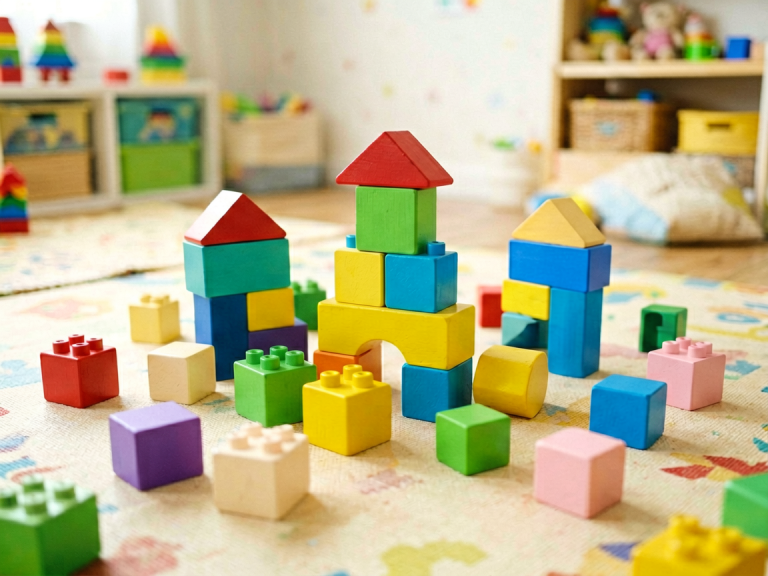
- Construction and Engineering Toys: LEGO Classic boxes, Magna-Tiles, wooden unit blocks, and gear sets develop spatial awareness, hand-eye coordination, and patience. Choose sets that allow free building rather than only specific models. For beginners, larger pieces are easiest.
- Imaginative Play Props: Dress-up costumes (community helpers, animals), play kitchens, puppet theatres, and doctor kits encourage storytelling, empathy, and language development. Look for gender-neutral sets that allow roles like scientist or construction worker.
- Simple Board Games: Games like *Candy Land*, *Hi Ho! Cherry-O*, *Sequence for Kids*, and *The Sneaky, Snacky Squirrel Game* teach turn-taking, counting, and following simple rules. Cooperative games (e.g., *Hoot Owl Hoot!*) build teamwork without the stress of losing.
- Art and Creativity Supplies: Washable markers, child-safe scissors, modelling clay, watercolour sets, and blank paper or activity books allow open-ended creation. Rotate supplies to keep interest high.
- Early STEM Kits: Basic science kits (e.g., sink and float, magnetic exploration, colour mixing) and simple coding toys (like Code-a-Pillar or Fisher-Price Think & Learn) introduce cause and effect in a playful way.
- Physical Play: Tricycles, scooters, jump ropes, basketball hoops with adjustable height, and foam balls for indoor catch improve gross motor coordination. Outdoor swings and climbing structures are excellent for body awareness.
For Ages 9–12: Challenging Minds and Cultivating Skills
- Advanced Building and Robotics: LEGO Technic, K’NEX, and robotics kits (like LEGO Mindstorms or Sphero) require following detailed instructions and troubleshooting. Kids can motorize creations, introducing basic engineering principles.
- Strategy and Logic Games: Board games such as *Settlers of Catan* (junior version), *Ticket to Ride*, *Carcassonne*, or *Blokus* teach resource management, planning, and spatial reasoning. Abstract strategy games like *Chess* or *Checkers* are timeless. For solo play, brain teasers, sudoku puzzles, and Rubik’s cubes sharpen reasoning.
- Science and Experiment Kits: Chemistry sets (with safe materials), crystal growing, volcano making, rock and fossil kits, and microscopes encourage systematic observation. Look for kits that include a journal or prompts for recording results.
- Creative Construction and Crafts: Sewing machines for kids, knitting looms, friendship bracelet kits, and advanced origami sets develop fine motor skills and patience. Stop-motion animation sets (with a simple app) combine storytelling with technology.
- Reading and Writing Aids: Chapter books tailored to their interests, joke books, DIY comic book templates, and journals with writing prompts nurture literacy. A high-quality desk lamp and a cosy reading corner can make independent reading a habit.
- Sports and Active Gear: Age-appropriate bikes, skateboards, roller skates, archery sets (with foam arrows), table tennis, badminton kits, and fitness trackers (if parent-managed) encourage a healthy lifestyle. Team sports equipment also teaches cooperation.
- Introductory Tech and Coding: Kid-safe tablets with educational subscriptions (e.g., Khan Academy Kids, ScratchJr), coding games like *Botley* or *Bitsbox*, and programmable toys (Dash robot, Ozobot) introduce computational thinking without screen overload. Always set time limits and monitor content.
—
Avoiding Common Pitfalls
Even well-intentioned parents can fall into traps. Here are the most frequent missteps—and how to sidestep them.
1. Over-relying on Gender Stereotypes
Many toys are marketed as “for boys” or “for girls,” but this limits exposure. A boy may love cooking toys; a girl may crave construction sets. Let your child’s interests guide you, not the toy aisle’s pink or blue sections. Provide a balanced mix of building, nurturing, active, and creative toys regardless of gender.
2. Succumbing to Screen-Time Pressure
Electronic toys—tablets, video games, voice-activated dolls—can be engaging, but they often reduce active, hands-on play. Opt for toys that require the child to be the active agent (building, moving, solving) rather than passive spectators. When you do choose tech, prioritize creative tools (animation apps, coding games) over pure entertainment or “edutainment” that merely rewards tapping.
3. Buying Based on a Movie or Trend
Tie-in toys (from the latest blockbuster or YouTube sensation) often have short-lived appeal and may lack developmental depth. If your child insists on a trending toy, see if it offers open-ended play value beyond the brand. Occasionally it’s okay for joy, but don’t let trends dominate the toy box.
4. Ignoring the “Too Many Toys” Problem
An overload of toys can overwhelm children, leading to shallow play and lack of focus. Instead of constantly adding, consider rotating toys every few weeks. Keep out a manageable selection (e.g., five categories at a time) and store the rest. This increases novelty and appreciation when toys return.
5. Overestimating or Underestimating Complexity
A toy too easy leads to boredom; one too hard leads to frustration. Read reviews from trusted sources, check the manufacturer’s recommended age, but also consider your child’s actual skills. For example, a nine-year-old who struggles with fine motor skills might benefit from an age-6 building set rather than a complex robotics kit. Meanwhile, a gifted eight-year-old may thrive on a 10+ strategy game.
—
Practical Tips for Parents
Beyond the toy itself, how you introduce and use toys can greatly enhance their benefits.
Involve Your Child in the Process
Let your child have a voice in choices—within sensible boundaries. Show them three options that meet your criteria (safe, educational, within budget) and let them decide. This builds decision-making skills and ownership, leading to deeper engagement.
Observe How They Play
Before buying more, watch what your child already owns. Do they spend hours building? Consider construction sets. Do they love acting out stories? Get puppets or dress-up. Do they prefer solitary play? Puzzle or logic games may suit them. Matching the toy to their natural play style increases success.
Rotate Toys Regularly
Divide toys into three to four bins. Every few weeks, swap one bin with the current collection. This mimics having new toys without spending money, reduces clutter, and reignites interest in forgotten items.
Emphasize Quality Over Quantity
Ten well-chosen toys—durable, open-ended, and developmentally matched—are far more valuable than fifty cheap, one-purpose plastic gadgets. Look for toys that can be used in multiple ways, grow with the child (e.g., building bricks from ages 3 to 12), and are built to last. Consider supporting local toy stores that curate thoughtful selections.
Create Space and Time for Uninterrupted Play
A toy only works if a child has time to explore it. Minimize scheduled activities and allow free-form playtime. Also, create a tidy, accessible storage system so children can independently choose and clean up. When possible, play alongside them—your presence enriches their learning.
Stay Alert to Changes
Children mature quickly. A toy that was perfect last birthday may feel babyish six months later. Regularly assess your child’s evolving interests and skills. Don’t be afraid to donate or pass on toys to make room for more appropriate challenges.
—
Conclusion
Choosing age-appropriate toys for elementary school kids is not about following a list of brands or buying the newest gadget. It is about understanding where your child is developmentally, respecting their unique interests, and providing tools that stretch their minds, bodies, and social skills. The best toys are those that become treasured companions in a child’s journey of discovery—sparking curiosity, encouraging perseverance, and, most importantly, bringing pure joy. With the insights from this guide, you are now equipped to make confident, informed choices that will enrich your child’s play and growth for years to come. Happy playing!