A Comprehensive Parent Guide to Choosing Age-Appropriate Toys for 6-Year-Old Girls
Introduction
Selecting the perfect toy for a six-year-old girl can feel like navigating a vast, colorful maze. At this age, children are no longer toddlers but not yet fully independent school-age kids. They are bursting with curiosity, developing social skills, and beginning to form their own identities. A six-year-old girl might adore princesses one day and dinosaurs the next, or she might want to build complex structures while also craving imaginative play with friends. As a parent, you want a toy that is safe, engaging, and—most importantly—supportive of her rapidly developing mind and body. This guide will walk you through the essential considerations, from developmental milestones to specific toy categories, ensuring that every purchase brings joy, learning, and long-lasting value.
Understanding the Developmental Milestones of a 6-Year-Old Girl
Before diving into toy options, it is crucial to understand what a typical six-year-old is experiencing developmentally. At this stage, girls are often more verbal and socially aware than their male peers, but individual differences abound. Here are key areas of growth:
- Cognitive Development: Six-year-olds are moving from preoperational to concrete operational thinking. They can understand cause and effect, sort objects by multiple attributes, and follow multi-step instructions. They love riddles, simple board games, and projects that require planning. Attention spans have lengthened to about 15–20 minutes for focused activities, though they still benefit from variety.
- Social and Emotional Growth: Friendships become increasingly important. A six-year-old girl may engage in complex pretend play with peers, negotiate roles, and practice empathy. She is also learning to manage big emotions like frustration and jealousy. Toys that encourage cooperative play, turn-taking, and expression of feelings are highly beneficial.
- Physical Development: Gross motor skills have improved dramatically—she can ride a bike, skip, and climb confidently. Fine motor skills are also advancing, allowing for more precise writing, cutting, and manipulating small objects like beads or LEGO bricks. Balance, coordination, and hand-eye coordination continue to refine.
- Language and Imagination: Vocabulary expands rapidly, and she loves storytelling, jokes, and wordplay. Imagination is vivid: she might create elaborate scenarios with dolls, action figures, or stuffed animals. She also enjoys imitating adult roles, from cooking to running a pretend store.
Understanding these milestones helps you select toys that challenge without frustrating and inspire without overwhelming. A toy that perfectly matches her current abilities will boost confidence and motivation.
Key Criteria for Selecting Toys: Safety, Engagement, and Educational Value
When evaluating any toy for a six-year-old girl, three pillars should guide your decision: safety, engagement, and educational value. Let's break each down.
Safety First
Even though she is older, safety remains paramount. Check for small parts that could pose a choking hazard—though at six, the risk is lower, it is still present for younger siblings. Look for non-toxic materials, especially in art supplies, slime, or craft kits. Avoid toys with sharp edges, long cords that could become strangulation hazards, or inexpensive plastics that may contain harmful chemicals like phthalates or BPA. For outdoor toys like scooters or bicycles, always pair them with appropriate safety gear (helmets, knee pads). Also, consider battery-operated toys: they should have secure battery compartments that require a screwdriver to open, preventing accidental ingestion of batteries.
Engagement: The "Wow" Factor
A toy that sits unused in a corner is a wasted investment. Engagement means the toy captures her interest repeatedly, not just for a few minutes. At six, girls often prefer toys that offer open-ended play—possibilities that change each time. For example, a dollhouse can be redecorated, a construction set can be rebuilt, and art supplies can produce infinite creations. Conversely, a single-purpose toy (e.g., a battery-operated singing plush that only does one song) may quickly bore her. Observe what currently fascinates her: is she obsessed with horses, space, cooking, or mysteries? Tie the toy to her passions. Also, consider toys that allow for both solitary and social play, as her mood and circumstances vary.
Educational Value: Learning Through Play
"Educational" does not have to mean flashcards or workbooks. At six, learning happens naturally through play. The best educational toys foster critical thinking, creativity, literacy, numeracy, problem-solving, and social skills. For instance, a simple board game like *Candy Land* teaches color recognition and turn-taking, while *Zingo!* builds vocabulary and matching. Science kits introduce basic concepts of cause and effect. Puzzles strengthen spatial reasoning. Even a high-quality doll can teach empathy and nurture. Look for toys that have a clear developmental purpose but mask it as fun. Avoid toys that are overly prescriptive (e.g., those with only one correct answer) because they limit creative exploration.
Top Toy Categories That Foster Growth for 6-Year-Old Girls
Now, let's explore specific categories of toys that are particularly well-suited for this age group. Each category addresses different aspects of development and can be mixed to create a well-rounded play experience.
Creative and Artistic Toys
Six-year-olds love to express themselves visually and tactilely. Artistic toys boost fine motor skills, creativity, and emotional regulation.
- Art supplies: High-quality markers, colored pencils, watercolor sets, and crayons allow for self-expression. Consider adding a sketchbook or canvas. *Fun fact: washable markers are a parent’s best friend.*
- Craft kits: Beading sets, friendship bracelet looms, and simple sewing projects teach patience and dexterity. Look for kits that come with clear instructions but also encourage customization.
- Play-Doh and clay: Modeling compounds are excellent for sensory play and sculpting. Add tools like rolling pins and shape cutters to extend the fun.
- Easels and chalkboards: A standing easel invites large-movement drawing and can be used for both art and learning (e.g., practicing letters or math problems).
STEM Toys for Curious Minds
Science, technology, engineering, and math toys are not just for boys. Many six-year-old girls show immense interest in building, experimenting, and understanding how things work. Choose age-appropriate kits that prioritize hands-on discovery.
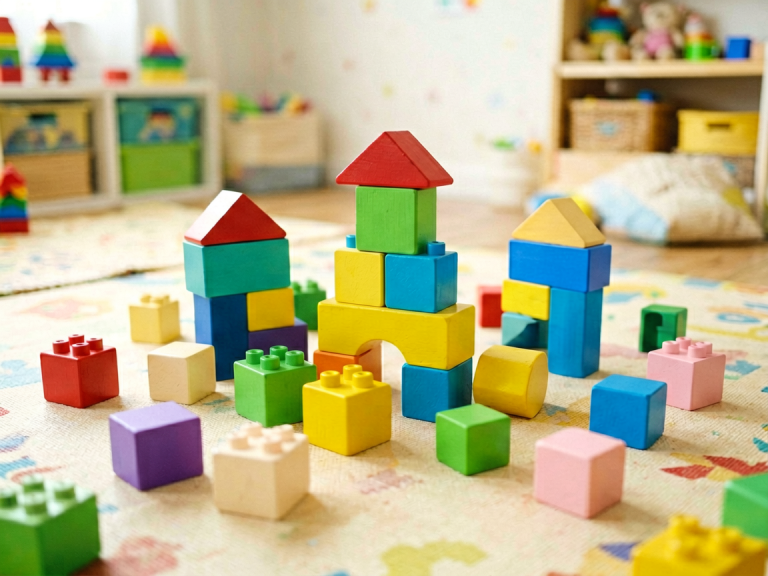
- Building sets: LEGO Classic bricks, Magnetic Tiles (like Magna-Tiles), or wooden block sets encourage engineering thinking. Magformers and Picasso Tiles are especially popular because they allow 3D construction with ease.
- Simple science kits: Kits that explore magnetism, color mixing, or growing crystals are safe and fascinating. Thames & Kosmos and National Geographic offer excellent options for this age.
- Coding toys: Screen-free coding sets like *Code-a-Pillar* or robot mice teach sequencing and logic. More advanced: *Osmo* combines physical pieces with an iPad app for interactive learning.
- Puzzles and logic games: Jigsaw puzzles (100-200 pieces), tangrams, and logic puzzles like *Rush Hour Jr.* develop spatial reasoning and persistence.
Active and Outdoor Play
Physical activity is vital for healthy growth. Outdoor toys encourage gross motor skills, coordination, and a love for nature.
- Ride-on toys: A scooter, bike with training wheels, or balance bike (if she hasn't mastered pedaling) promotes balance and leg strength. Always include a helmet.
- Sports equipment: A kid-sized basketball hoop, soccer ball, jump rope, or badminton set can be played solo or with friends. Look for lightweight, colorful gear.
- Nature exploration: A magnifying glass, bug catcher, and nature journal inspire outdoor curiosity. Binoculars and a simple compass turn a walk into an adventure.
- Play structures: If space allows, a small slide, swing set, or climbing dome builds confidence and strength.
Social and Cooperative Games
Board games and group activities teach turn-taking, following rules, winning and losing gracefully, and collaboration. These skills are crucial for school and friendships.
- Classic board games: *Candy Land*, *Chutes and Ladders*, *Hi Ho! Cherry-O* are simple but effective. For a bit more strategy, try *Sequence for Kids* or *The Sneaky Snacky Squirrel Game*.
- Cooperative games: *Outfoxed!* or *Hoot Owl Hoot!* require players to work together toward a common goal, reducing the stress of competition.
- Card games: *Go Fish*, *Old Maid*, and *Uno* are perfect for car rides or quick family bonding.
- Imaginative party games: Dress-up relay, freeze dance, or scavenger hunts can be done with minimal equipment.
Imaginative and Role-Play Toys
At six, pretend play is still a dominant mode of learning. Role-playing helps children understand social roles, practice language, and explore emotions.
- Dolls and accessories: Barbie, L.O.L. Surprise, or Waldorf-style dolls allow for nurturing and storytelling. Add a doll stroller, bed, or clothes for extended play.
- Kitchen and food sets: A play kitchen with pots, pans, and plastic food encourages cooking role-play—great for language development and understanding daily routines.
- Costumes and dress-up: A trunk filled with princess gowns, superhero capes, doctor coats, and animal masks fuels endless scenarios. Thrift stores are treasure troves.
- Puppets and theaters: Hand puppets or finger puppets inspire storytelling and can help shy children express feelings.
- Construction play sets: Playmobil or LEGO Friends sets with themes (e.g., a school, a castle, a farm) combine building with narrative play.
Avoiding Common Pitfalls: What to Steer Clear Of
Even well-intentioned purchases can miss the mark. Here are common mistakes parents make when choosing toys for six-year-old girls:
- Overly gendered marketing: While many six-year-old girls love pink and princesses, many also love dinosaurs, trucks, and space. Don’t limit her choices based on stereotypes. A toy that sparks her curiosity is always better than one that fits a "girl" label.
- Toys that are too advanced: Kits labeled for ages 8+ may frustrate her. She might lose interest or need constant adult help, reducing independent play. Respect the age range on packaging.
- Toys that are too simple: Conversely, baby toys (like rattles or simple shape sorters) will bore her. She needs a challenge to stay engaged.
- Battery-operated toys with limited use: Those that only make noise or move in a fixed pattern quickly lose appeal. They also deprive her of creative input.
- Toys that promote passive consumption: Electronic tablets loaded with apps can be entertaining but should not replace active, hands-on play. If you do use digital toys, choose those requiring physical interaction (like Osmo or a LeapFrog).
- Toys with many small pieces without proper storage: Lost pieces lead to frustration. Always consider storage solutions—bins, bags, or zip pouches help keep sets intact.
Involving Your Child in the Selection Process
One of the best ways to ensure a toy is a hit is to involve your six-year-old in choosing it. This does not mean giving unlimited control, but rather guiding her decision-making. Take her to a toy store or browse online together. Ask open-ended questions: "What do you like about that toy? How would you play with it? Would you want to play with it alone or with a friend?" Listen carefully. If she wants something that seems inappropriate, explain why gently and offer alternatives. For example, if she wants a video game rated for older kids, you might say, "That game is for bigger kids. How about we find a game where you can design your own characters?"
Giving her a say builds autonomy and teaches her to evaluate choices. It also prevents disappointment after the gift is unwrapped. For birthdays or holidays, you might provide a shortlist of 3–4 options and let her pick. This way, you maintain control over safety and budget while respecting her interests.
Conclusion: The Joy of Thoughtful Gifting
Choosing age-appropriate toys for a six-year-old girl is a delightful opportunity to nurture her growth, creativity, and happiness. By understanding her developmental stage, prioritizing safety, seeking engaging and educational options, and involving her in the process, you can turn every gift into a meaningful experience. Remember that the best toys are not necessarily the most expensive or the trendiest. They are the ones that invite her to explore, imagine, connect with others, and discover her own capabilities. Whether it’s a set of colorful markers, a simple board game, or a sturdy tricycle, your thoughtful selection says, “I see you, I believe in you, and I want to support your wonderful journey.” So take a deep breath, trust your instincts, and enjoy the magical world of play with your growing daughter.