Parent Guide to Choose Age-Appropriate Toys for 6-Year-Old Boys
Choosing the right toy for a 6-year-old boy can feel like navigating a maze of flashing lights, superhero logos, and endless aisles of plastic gadgets. At this age, children are no longer toddlers but not yet tweens; they are bursting with energy, curiosity, and a rapidly developing sense of independence. The toy you select can shape how he learns, plays, and interacts with the world. A well-chosen toy does more than entertain—it nurtures cognitive skills, physical coordination, social abilities, and emotional growth. This comprehensive guide will help parents make informed decisions that match their son's developmental stage, interests, and safety needs.
Understanding the Developmental Milestones of a 6-Year-Old Boy
Before diving into specific toy categories, it is essential to recognize what a typical 6-year-old boy is capable of and what he needs. At this age, boys experience significant growth in several key areas:
- Cognitive development: Six-year-olds have longer attention spans and can follow multi-step instructions. They begin to understand cause and effect, practice basic problem-solving, and show interest in rules and logic. Their imaginations are vivid, but they also start distinguishing fantasy from reality more clearly.
- Physical development: Gross motor skills improve rapidly—running, jumping, climbing, kicking, and throwing become more coordinated. Fine motor skills also advance: they can write letters, use scissors, tie simple knots, and manipulate small objects with greater precision.
- Social and emotional development: Friendships become more important. Boys at this age enjoy cooperative play but may still struggle with sharing and taking turns. They are more aware of social norms, rules of games, and fairness. Emotional regulation is still developing; frustration and excitement can be intense.
- Language and communication: Vocabulary expands dramatically. They can tell longer stories, ask "why" questions repeatedly, and enjoy riddles, jokes, and wordplay. They may become fascinated with facts, especially about dinosaurs, space, vehicles, or animals.
Keeping these milestones in mind helps you choose toys that are challenging enough to stimulate growth without causing frustration. The best toys offer a “just right” level of complexity—not too easy, not too hard.
Categories of Great Toys for 6-Year-Old Boys
1. STEM and Building Toys: Fueling Logical Thinking and Creativity
STEM (Science, Technology, Engineering, and Math) toys are especially valuable at this age because they tap into a child’s natural curiosity and love of construction. Look for sets that allow open-ended building rather than predetermined models. A few standout options include:
- Magnetic building tiles (e.g., Magna-Tiles or Picasso Tiles): These colorful geometric pieces snap together with magnets. They encourage spatial reasoning, symmetry, and architectural thinking. A 6-year-old can build towers, bridges, or even simple machines.
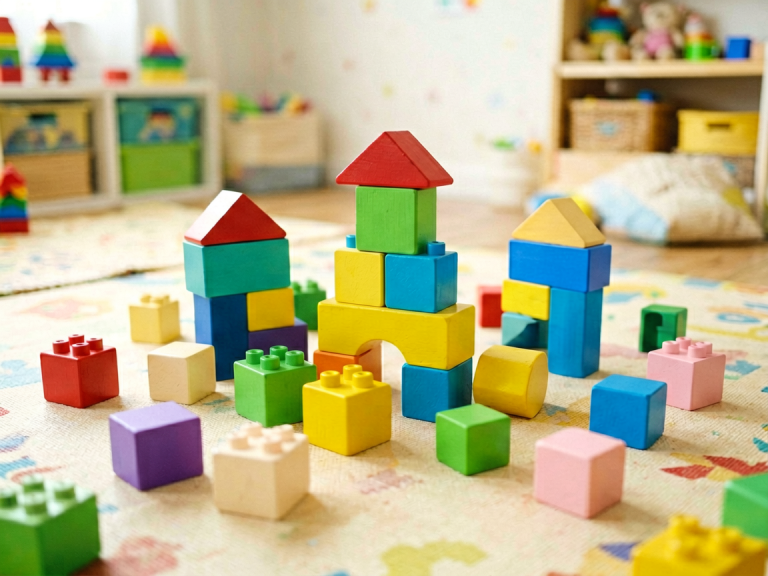
- Construction kits with interlocking pieces (e.g., LEGO Classic or LEGO Creator): Sets with 200–500 pieces are ideal. Avoid sets with too many specialized, one-use pieces; instead, go for basic bricks that can be used to create anything. Themed sets (like LEGO City or LEGO Speed Champions) also work well if your child is passionate about vehicles or community helpers.
- Simple circuit kits (e.g., Snap Circuits Junior): These allow children to build working lights, fans, and alarms by snapping components onto a base plate. They teach basic electricity concepts in a safe, hands-on way.
- Magnetic building rods and balls (e.g., Geomag or Magformers): These help develop 3D visualization and physics understanding as children build structures that need balance and symmetry.
STEM toys also include science experiment kits (with safe, non-toxic materials) for growing crystals, making slime, or exploring chemical reactions. For a 6-year-old, a kit should have clear, simple instructions and adult supervision recommended.
2. Active and Outdoor Toys: Channeling Endless Energy
A 6-year-old boy typically has an abundance of physical energy. Outdoor play is crucial for gross motor development, cardiovascular health, and even mood regulation. Look for toys that encourage running, balancing, and coordination:
- Bicycles with training wheels (or a balance bike if he is still learning) – make sure the bike fits properly and that a helmet is always worn. This is an age where many children transition to a two-wheeler.
- Scooters and skateboards – three-wheeled scooters offer stability while two-wheeled ones challenge balance. Lightweight, adjustable models are best.
- Sports sets – a child-sized basketball hoop, a soccer goal with a soft ball, or a t-ball set. Focus on skill-building rather than competition. Baseball and tee sets help hand-eye coordination; a lightweight, plastic bowling set can be played indoors or outdoors.
- Jump ropes and chalk – classics that promote endurance and creativity. Sidewalk chalk can turn the driveway into a giant game board for hopscotch or a treasure map.
- Kites and frisbees – simple flying toys that teach cause and effect (wind direction, angle) and require running. A beginner’s kite with a long tail is easier to launch.
- Water play toys – water guns, sprinklers, and sand-and-water tables (if space allows) provide sensory fun and cooling relief in summer.
Remember that active toys should be durable and safe. Avoid toys with sharp edges, small parts that could be swallowed, or strings longer than 12 inches that could pose a strangulation risk.
3. Imaginative and Role-Play Toys: Building Social Skills and Empathy
Six-year-olds love to mimic adults and invent scenarios. Role-play toys allow them to act out stories, practice language, and explore different identities. Great choices include:
- Costume sets – firefighter helmet and coat, doctor’s lab coat and stethoscope, knight armor, or superhero capes. Keep it simple; one or two high-quality pieces can spark hours of play.
- Play kitchen with accessories – both boys and girls enjoy cooking and serving. A small wooden or plastic kitchen set with pots, pans, and play food encourages sequencing (cooking steps) and social interaction (pretending to host a meal).
- Tool bench with plastic tools – wooden or sturdy plastic hammers, wrenches, screws, and a workbench. This develops fine motor skills and problem-solving (how to fix something). Look for realistic features like working clamps or a vise.
- Dress-up versions of everyday occupations – mail carrier, construction worker, chef, or astronaut. You can also provide simple props like cardboard boxes to turn into spaceships, cars, or castles.
- Puppets and puppet theaters – hand puppets with different characters encourage storytelling, dialogue, and emotional expression. A child can reenact social situations or create original tales.
Another fantastic role-play option is train sets or car tracks (like wooden train tracks or Hot Wheels sets). The open-ended building of tracks teaches planning and geometry, while playing with vehicles encourages narrative: “The train is going to the mountain to rescue the puppy.”
4. Board Games and Puzzles: Teaching Patience and Strategy
Board games are excellent for developing social skills, following rules, and practicing turn-taking. For 6-year-olds, focus on games with simple rules, short playtime (15–30 minutes), and no reading required (or very little). Examples:
- Cooperative games (e.g., “Hoot Owl Hoot!” or “Race to the Treasure”) – these emphasize teamwork rather than competition, which can reduce frustration.
- Classic strategy games (e.g., “Connect 4,” “Guess Who?,” “Jenga” – a wooden block stacking game that tests fine motor control and spatial planning). “Candy Land” or “Chutes and Ladders” are still appropriate but might seem too simple for some 6-year-olds; try “Sequence for Kids” or “Monopoly Junior” instead.
- Matching and memory games – with themes like dinosaurs, animals, or vehicles. These strengthen visual memory and concentration.
- Puzzles – 50 to 100-piece floor puzzles with bright images. Puzzles improve spatial reasoning, patience, and shape recognition. Choose subject matter your child loves (maps, outer space, undersea life).
Board games also offer a valuable way to bond as a family. Use them to teach good sportsmanship: both winning and losing gracefully are skills that 6-year-olds can learn through guided play.
5. Creative Arts and Crafts: Encouraging Self-Expression
Artistic toys allow boys to express their emotions, practice fine motor skills, and build confidence. Many parents overlook crafts for boys, but creativity has no gender. Look for:
- Coloring supplies – high-quality crayons, markers, colored pencils, and washable paints. Thick pencils are easier for emerging writers. Consider a large roll of paper for mural projects.
- Modeling clay or Play-Doh – use accessories like rolling pins, shape cutters, and plastic knives. This strengthens hand muscles needed for writing. You can also find air-dry clay for permanent sculptures.
- Simple craft kits – e.g., making a paper airplane kit, bead kits for bracelets, or scratch art sets. Kits should come with all materials and clear instructions. Avoid ones with tiny beads if your child still mouths objects.
- Sticker books and stencils – easy and mess-free ways to create scenes. You can also buy blank sticker paper so he can design his own stickers.
- Musical instruments – a small keyboard, a ukulele, a set of hand drums or maracas. Making music improves auditory processing, rhythm, and coordination. Simple percussion instruments are especially good for active boys who want to move while playing.
Art projects also have therapeutic benefits: they help regulate emotions, reduce stress, and improve focus. Don’t worry about making a final product look “nice”—the process matters far more.
Safety Considerations When Choosing Toys
Safety remains a top priority for children of any age, but 6-year-olds are adventurers who push boundaries. Keep these points in mind:
- Small parts hazard – Even though most 6-year-olds have stopped mouthing objects, some still put small items in their mouths. Any toy containing parts smaller than 1.75 inches in diameter (the size of a standard small-parts test cylinder) should be avoided unless you are certain your child is beyond this phase. Check the label for age recommendations, and trust your own observation.
- Sharp edges and points – Inspect toys for rough edges, especially on metal or plastic pieces. Toy swords or tools should be blunt and made of soft material.
- Batteries and electrical safety – If a toy requires batteries, ensure the battery compartment is secured with a screwdriver-required closure. Lithium button batteries are extremely dangerous if swallowed; avoid toys that use them whenever possible. Also, keep cords and wires short to prevent tripping or strangulation.
- Lead and phthalates – Choose toys from reputable brands that comply with safety standards (e.g., ASTM in the US, CE in Europe). Avoid cheap, unlabeled toys from unknown sources, as they may contain harmful chemicals. Look for “non-toxic” and “BPA-free” labels on plastic toys, paints, and clay.
- Activity-specific safety – For bikes, scooters, and skates, always require a properly fitted helmet (and knee/elbow pads for beginners). For sports sets, use lightweight balls that won’t cause injury. For water toys, never leave a child unattended near any body of water, even a small pool.
- Age recommendations on boxes – While age labels are a starting point, they are not absolute. Some 6-year-olds are ready for toys marked 7+ if they have advanced skills, while others may still need toys for 4+. Always base your decision on your child’s actual abilities, not just the box.
How to Choose Based on Your Child’s Unique Interests
No two 6-year-old boys are alike. A toy that excites one may bore another. To choose wisely, observe your child’s natural inclinations:
- The builder: He loves blocks, puzzles, and taking things apart. Invest in advanced construction sets, marble runs, or gear toys.
- The athlete: He is always running, jumping, climbing. Look for backyard sports equipment, obstacle course items (cones, hurdles), or a trampoline with safety net.
- The artist: He draws on every scrap of paper, sings, or makes up stories. Give him art supplies, a digital drawing tablet (with parental controls), or a simple video camera for making short films.
- The scientist: He asks endless questions about how things work, loves bugs, and mixes things. Science kits, nature exploration tools (magnifying glass, bug catcher, compass), and gardening tools are perfect.
- The social player: He loves playing with friends or siblings. Board games, cooperative games, dress-up costumes, and outdoor group games like tag or hide-and-seek equipment (walkie-talkies, flashlights) will delight him.
If you are unsure, ask your child directly but also watch what he gravitates toward during free play. You can also ask his teacher or observe him at a friend’s house. Remember that interests can change quickly; it’s okay to rotate toys and store away ones he has outgrown.
Toys to Avoid for 6-Year-Old Boys
While many toys are beneficial, some are best avoided:
- Toys that are too advanced (e.g., complex electronic gadgets, model kits requiring glue and sharp tools) may lead to frustration and safety risks.
- Toys that promote violence in a realistic way – while many 6-year-olds play “cops and robbers” with pretend guns, realistic toy guns that look like real weapons can be dangerous in public and confuse children about reality. Instead, choose water blasters, foam dart blasters, or light-up toy swords that are clearly pretend.
- Toys with excessive screens – tablets marketed specifically for young children often have limited educational content. Passive screen time is less beneficial than interactive play. If you do choose a screen-based toy, set strict time limits and use it as a tool, not a babysitter.
- Toys with many small, non-essential pieces – for example, some building sets have hundreds of tiny decorative stickers or fragile accessories that are easily lost. Frustration can mount when pieces go missing.
- Overly gender-stereotyped toys – avoid assuming a boy won’t enjoy dolls, play kitchens, or art sets. Conversely, some boys prefer trucks and tools, and that’s fine too. The key is to follow his interests rather than societal expectations.
Final Tips for Parents
- Less is more: A few high-quality, open-ended toys are more valuable than a mountain of cheap, single-purpose items. Rotate toys every few weeks to keep interest fresh.
- Play with him: Your engagement is the best “toy” of all. Sit on the floor, build a tower, or ask questions about his imaginary world. This strengthens your bond and teaches him that play is worthwhile.
- Consider second-hand or hand-me-down: Quality toys often last for many children. Wooden blocks, LEGO bricks, and classic board games can be found at thrift stores or passed along by friends.
- Balance independence and guidance: Let your child struggle a little before solving a problem for him. The feeling of mastering a difficult task is a powerful confidence booster.
- Think about storage: Toys with many pieces require a system (bins, shelves, zipper bags) so that your child can easily clean up. This teaches responsibility.
By choosing age-appropriate toys thoughtfully, you are not just buying a product—you are investing in your child’s development, happiness, and lifelong love of learning. Every new toy is an invitation to explore, create, and connect. So go ahead, pick a toy that sparks his imagination, and watch him grow.