Navigating the Toy Aisle: A Parents Guide to Selecting Age-Appropriate Toys for 9-Year-Old Boys
Introduction
Choosing the right toy for a 9-year-old boy can feel like a minefield. At this age, children are no longer toddlers who simply push buttons or preschoolers who love stuffed animals. Nine-year-olds sit at a fascinating crossroads: they are curious, energetic, and increasingly sophisticated in their thinking. They can engage in complex games, understand rules, and even create their own narratives. Yet they still crave hands-on fun and physical activity. As a parent, you want a toy that is safe, engaging, and developmentally beneficial—but how do you find that perfect balance? This guide will walk you through the developmental milestones of a typical 9-year-old boy, outline key considerations for toy selection, and provide specific recommendations across different categories. By the end, you’ll feel confident walking into any store (or browsing online) and picking a toy that sparks joy, learning, and growth.
Understanding the 9-Year-Old Developmental Stage
Before diving into toy categories, it’s essential to understand what’s happening inside your 9-year-old’s mind and body. At this age, boys are in the middle of middle childhood, a period marked by rapid cognitive, social, and physical changes.
Cognitive growth is perhaps the most striking. Nine-year-olds have moved beyond simple concrete thinking and are beginning to think more logically and abstractly. They can understand cause and effect, plan ahead, and solve multi-step problems. For example, they might enjoy building a complex LEGO set that requires following a 200-step instruction manual, or they can strategize in a board game like Chess or Settlers of Catan. Their attention span has lengthened significantly—most can focus on a single activity for 30 to 45 minutes or more, especially if it’s something they are passionate about.
Socially, 9-year-old boys are increasingly aware of peer dynamics. Friendships become more important than ever. They enjoy cooperative play, but also competitive games that test their skills. They may form small groups with shared interests—sports, video games, or building projects. This is also an age when teasing and social hierarchies can emerge, so toys that encourage teamwork or inclusive play are valuable. At the same time, they still need adult guidance to navigate conflicts.
Physically, boys this age are often bundles of energy. Gross motor skills are well-developed: they can run, jump, throw, and kick with increasing coordination. Fine motor skills are also improving rapidly, allowing them to handle intricate manipulations like assembling tiny parts or drawing with precision. However, they may become self-conscious about their abilities, especially if they compare themselves to peers. Toys that offer a sense of mastery—like a new skateboard trick or a more difficult puzzle—can boost their confidence.
Emotionally, 9-year-olds are beginning to manage their feelings better but still need outlets for frustration and excitement. They enjoy taking on responsibilities and may love toys that mimic adult roles, such as a basic tool set or a chemistry kit. They also appreciate a sense of autonomy; allowing them to choose their own toys (within reasonable parameters) can foster independence.
Key Considerations for Toy Selection
Knowing the developmental stage is only half the battle. Here are five critical factors to weigh when choosing a toy for your 9-year-old boy:
- Safety First – While nine-year-olds are less likely to put small objects in their mouths, safety remains paramount. Check for sharp edges, toxic materials (especially in paints or glues), and choking hazards for any small parts that could be used by younger siblings. Look for age recommendations on packaging, but also use your judgment. For example, a kit with small magnets can be dangerous if swallowed. Always supervise new activities like chemistry experiments or woodworking projects.
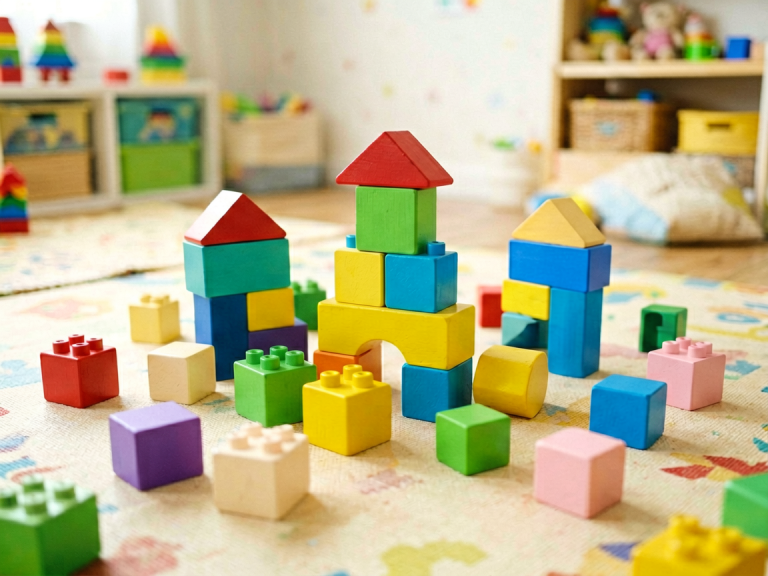
- Open-Ended Play Potential – The best toys are those that can be used in multiple ways. A set of wooden blocks might seem too simple, but a 9-year-old can use them to build complex structures, create marble runs, or even design a catapult. Similarly, a programmable robot kit like a LEGO Boost or a simple coding toy like a Sphero ball offers endless variations. Open-ended toys encourage creativity, problem-solving, and repeated use, whereas single-use toys (e.g., a plastic action figure that does one thing) often end up in the closet.
- Alignment with Interests – Every child is unique. Some 9-year-old boys are obsessed with dinosaurs, others with space, planes, sports, or video games. The key is to find toys that connect to their passions while still offering challenge and learning. For instance, a boy who loves dinosaurs might enjoy a fossil excavation kit that teaches paleontology. A future engineer might love a Snap Circuits set. Don’t force a “generic” educational toy if it doesn’t match his enthusiasm; instead, use his interest as a springboard.
- Social and Solitary Balance – Nine-year-olds need a mix of both. Solo play allows them to concentrate deeply and develop independent skills. Social play builds teamwork, negotiation, and empathy. Aim for a variety. A complex puzzle or a model-building kit is great for alone time. Board games (like Catan Junior, Ticket to Ride, or Exploding Kittens) are perfect for family game night or with friends. Outdoor sports equipment (a soccer ball, a frisbee, a basketball hoop) encourages active group play.
- Screen Time vs. Hands-On – It’s a modern dilemma. Many 9-year-old boys are drawn to video games, and there are certainly high-quality educational games out there (e.g., Minecraft, programming games, puzzle games). However, the American Academy of Pediatrics recommends no more than two hours of recreational screen time per day for this age. Toys that are screen-free or that integrate screen use in a limited, controlled way (like a robotics kit that uses a tablet only for programming) are a wise choice. Prioritize toys that involve building, moving, creating, and interacting with the real world.
Recommended Toy Categories
Now let’s get specific. Here are the top categories of age-appropriate toys for 9-year-old boys, with concrete examples and why they work.
STEM and Educational Kits
At nine, boys are naturally curious about how things work. STEM (Science, Technology, Engineering, and Math) toys channel this curiosity into systematic learning. Look for kits that offer a clear “wow” factor.
- Snap Circuits 100 or 300 – These electronic kits let kids build working circuits for lights, alarms, motors, and more. They follow color-coded instructions and can be recombined in endless ways. A 9-year-old can understand basic concepts like series vs. parallel circuits, and the sense of accomplishment when a buzzer sounds is huge.
- LEGO Technic or LEGO Boost – LEGO Technic sets (like the heavy-duty tow truck or the race car) involve gears, axles, and pneumatics. They require patience and reading diagrams, which is excellent for fine motor and analytical skills. The Boost kit adds a programmable motor and sensor, introducing coding in a playful way.
- Thames & Kosmos Chemistry Set – Simple chemistry experiments (like making slime, growing crystals, or testing pH) are safe and exciting. Ensure the set is designed for ages 8+ and includes safety goggles. Supervise, but let him take the lead.
Building and Construction
Boys love to create. Building toys go beyond LEGO to include more sophisticated systems.
- K’NEX – This system uses rods and connectors to build working models like roller coasters, bridges, or vehicles. The roller coaster set, for instance, teaches physics (gravity, momentum) while being incredibly fun to test.
- Magnetic Tiles (like Magna-Tiles) – While often seen as a preschool toy, large sets of magnetic tiles can be used by older children to build 3D geometric shapes, castles, or even marble runs. They are gender-neutral and encourage spatial reasoning.
- Wooden Model Kits – There are many kits to build a wooden catapult, a trebuchet, or a model airplane. Some require glue and paint. The hands-on process teaches measurement, patience, and basic engineering.
Outdoor and Active Toys
Physical activity is crucial at this age, and the right outdoor toy can turn a couch potato into a adventurer.
- Bicycle or Scooter – A well-fitted bike (20-inch wheels is common) or a high-quality scooter (like a Razor) is a classic for a reason. It builds balance, endurance, and independence. Add a helmet and knee pads.
- Sports Equipment – If he shows interest in a specific sport, invest in a decent ball, gloves, or a net. A basketball hoop that can be adjusted in height, a soccer goal, a baseball tee and bat, or a simple frisbee golf set can provide hours of active play.
- Nerf Blasters or Water Blasters – These are perennial favorites for outdoor group games. Choose models that are well-made and have sufficient range. Establish clear safety rules: no aiming at faces, and wear eye protection. The social aspect (organizing teams, planning ambushes) is a bonus.
Board Games and Strategy Games
Board games have experienced a renaissance, and there are fantastic options for 9-year-olds that teach critical thinking, patience, and sportsmanship.
- Catan Junior – A simplified version of the classic game, it introduces resource management and trading. Players build pirate ships and camps. It’s perfect for 2-4 players and takes about 45 minutes.
- Robot Turtles – A coding board game for kids. Players move their turtle token through obstacles using basic programming cards. It’s intuitive and teaches sequencing without a screen.
- Blokus – A geometric puzzle game for 2-4 players where you place colored pieces on a grid. The goal is to block opponents while expanding your own territory. It’s addictive and improves spatial awareness.
Creative and Artistic Toys
Not all 9-year-old boys are into building or sports; many have vivid imaginations and love to draw, paint, or invent stories.
- Advanced Art Sets – A set of quality markers, colored pencils, or watercolor paints, combined with a sketchbook, can unleash creativity. Look for “how to draw” books for boys (e.g., drawing manga, cars, or animals) that provide structured guidance.
- Stop Motion Animation Kit – With a simple app (like Stop Motion Studio) and a plasticine clay set or action figures, a boy can create short films. This combines storytelling, photography, and patience.
- Kaleidoscope and Periscope Kits – Building devices that manipulate light and mirrors is both educational and artistic. These kits often come with instructions to build a working periscope or kaleidoscope.
Toys to Avoid
Just as important as knowing what to buy is knowing what to avoid. Here are a few red flags:
- Overly Complex Toys – If the instructions are too advanced for a 9-year-old, he may become frustrated and give up. Check reviews and age recommendations. For example, a 1000-piece abstract puzzle might be too much; a 500-piece puzzle with a favorite theme is better.
- Toys that Encourage Passive Consumption – Avoid toys that do all the work for the child, such as cheap battery-operated toys that just move or make noise. They offer no challenge and quickly bore.
- Violent or Inappropriate Content – While many 9-year-olds watch action movies, be mindful of toys that glorify extreme violence, especially if they are highly realistic. War toys with gore or weapons that resemble real guns should be discussed. Some parents allow Nerf blasters but draw the line at toy firearms that look like AK-47s. Know your family’s values.
- Single-Use Fads – Be wary of trendy items that are only popular for a week (e.g., certain cheap plastic gadgets). They often break easily and teach no lasting skills.
Tips for Encouraging Healthy Play
Beyond choosing the right toy, your involvement matters. Here are some pointers:
- Play with him – Even if you’re not a fan of building robots or playing Minecraft, ask questions. “How did you get that gear to turn?” “What happens if you add that piece?” Your interest validates his efforts.
- Set limits on screen-based toys – If you buy a video game console or a tablet-compatible toy, establish rules: no more than one hour of gaming before homework, and no games after 8 p.m. Encourage him to play outside or build something after screen time.
- Rotate toys – If his room is overflowing, put half the toys in storage for a few months. When they reappear, they feel new again. This reduces clutter and extends the life of every toy.
- Encourage sharing and swapping – Organize a toy swap with friends or neighbors. This teaches sustainability and social skills. He might discover a new interest from a friend’s toy.
- Remember that boredom is okay – A child who complains “I’m bored” is actually being prompted to use his creativity. Don’t immediately offer a new toy. Instead, ask, “What do you think you can do with what you already have?” Sometimes the best play comes from a cardboard box and tape.
Conclusion
Selecting age-appropriate toys for a 9-year-old boy doesn’t have to be a guessing game. By understanding his developmental stage—his growing cognitive abilities, social needs, and physical energy—you can choose toys that are both fun and formative. Focus on open-ended, hands-on, and safe items that align with his unique interests. Whether it’s a Snap Circuits kit that sparks a love for electronics, a soccer ball that builds teamwork, or a board game that teaches strategic thinking, the right toy can be a powerful tool for growth. But remember: the most important ingredient is your presence. Play alongside him, guide without hovering, and let him explore. In doing so, you’re not just giving him a toy—you’re giving him the confidence to learn, the joy of discovery, and memories that will last far longer than any battery-powered gadget. So next time you see that long aisle of colorful boxes, take a deep breath. You’ve got this.