Engaging Play Activities for Babies on Road Trips: A Parent’s Guide to Happy Miles
Introduction
Road trips with a baby can be both exhilarating and exhausting. The open road promises adventure, but for a little one confined to a car seat for hours, boredom, discomfort, and restlessness are inevitable. Without proper stimulation, even the calmest baby can turn into a fussy traveler. The key to a successful journey lies not in rushing to the destination, but in making the ride itself an enjoyable experience. Play activities designed specifically for car travel can transform a potentially stressful trip into a series of delightful discoveries. This guide offers a comprehensive collection of safe, creative, and developmentally appropriate play ideas that keep babies engaged, parents sane, and miles flying by.
—
Safety First: Preparing the Car Environment
Before diving into activities, it is crucial to prioritize safety. The car seat must remain the baby’s only “seat” – never hold a baby on your lap or allow them to climb out of the harness. All toys should be soft, lightweight, and free of small parts that could become choking hazards. Avoid hard plastic toys that could become projectiles during sudden stops. Attach toys with short tethers (no longer than 6 inches) to the car seat handle or a special toy strap, ensuring they cannot swing into the baby’s face or get tangled around the neck. Also, consider the car’s temperature and sun exposure; a sunshade on the rear window can prevent glare while keeping the baby comfortable. With safety as the foundation, you can focus on fun.
—
Age-Appropriate Play Activities
For Newborns to 6 Months: Sensory Soothers
At this stage, babies are most responsive to visual, auditory, and tactile stimulation. Their world is built on high-contrast patterns, gentle sounds, and familiar textures.
- High-Contrast Picture Books: Cards or soft cloth books with bold black-and-white patterns (or simple primary colors) can be clipped to the back of the front seat. Babies will focus on the sharp shapes, and you can narrate what you see as you drive.
- Crinkle and Rattle Toys: Attach a soft crinkle toy or a rattle to the car seat handle. The unexpected sound when the baby kicks or grabs it provides instant feedback and encourages cause-and-effect learning.
- Baby-Safe Mirror: A shatterproof mirror positioned so the baby can see their own reflection (or you through the rearview mirror) creates a sense of connection. Babies love watching their own expressions and movements.
- Sensory Silks or Scarves: Drape a lightweight silk scarf over the baby’s hands and let them feel the smooth texture. Just ensure it cannot cover their face.
- White Noise App or Lullabies: Download a playlist of gentle white noise or soft lullabies. The consistent sound can mask road noise and help the baby drift off to sleep.
For 6 to 12 Months: Interactive Exploration
Mobile babies are hungry to touch, mouth, and manipulate objects. They also begin to understand object permanence and enjoy peek-a-boo games.
- Busy Board or Soft Activity Book: A small board with zippers, loops, and soft buttons (sold as “quiet books”) provides endless tactile exploration. Look for pages with crinkly textures, flaps to lift, and ribbons to pull.
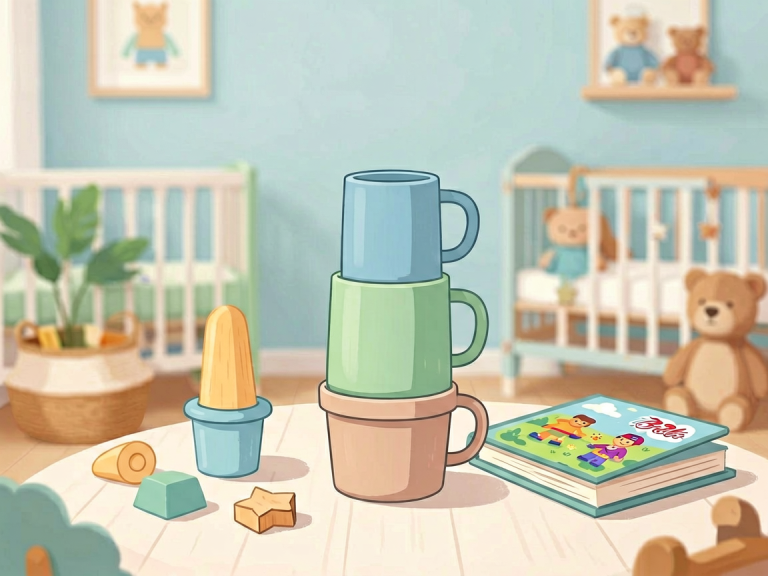
- Stacking Cups or Nesting Boxes: Bring a set of soft, collapsible stacking cups. Your baby can bang them together, stack them, or watch you stack them and knock them down. They are easy to clean and take up minimal space.
- Finger Puppets: Slip a few finger puppets (animals or people) on your hand while driving (if you are the passenger) or hand them to the baby. Make silly sounds or have the puppet “talk” to the baby.
- **Toy Keys: A set of small, plastic toy keys on a ring with different textures (ridges, bumps, smooth) is a classic favorite. The jingling sound and variety of surfaces keep little hands busy.
- Peek-a-Boo with a Muslin Cloth: Drape a breathable muslin cloth over your own face (if passenger) or over the baby’s hands and say “Where’s baby?” then pull it away with a big smile. This simple game never gets old.
For 12 to 18 Months (and up): Imaginative Play
Toddlers on road trips have a longer attention span and can follow simple instructions. They love naming objects and imitating actions.
- Magnetic Play Sets: A small magnetic board with animals or vehicles (such as “Magna-Tiles” travel sets or a magnetic dollhouse) sticks to the car’s metal side or a backing sheet. The magnets prevent pieces from scattering when the car bumps.
- Sticker Books: Reusable sticker books (e.g., “farms” or “oceans”) provide endless sorting, sticking, and storytelling. Choose a book with large, repositionable stickers that are not too sticky.
- Felt Board Playsets: A simple felt board and a zippered bag of felt shapes (stars, circles, animals) allow for open-ended creation. The pieces don’t slide off easily and are quiet.
- Sing-Along and Rhyme Games: Use nursery rhyme hand motions like “The Wheels on the Bus” (which is ironic and fun while actually on a bus-like road trip). Encourage the child to mimic actions like “swish” or “beep beep.”
- “I Spy” (Road Trip Edition): For older toddlers, adapt “I Spy” to the car environment. Say, “I spy something big and red!” (a red car or a fire truck) and help them point it out the window. Use bright, obvious targets first.
—
Sensory Play on the Go
Because babies learn through their senses, dedicated sensory activities can be a lifesaver during long stretches.
- DiY Sensory Bottles: Fill a small, clear plastic bottle (with a leak-proof cap) with water, a few drops of food coloring, and some sparkles or small beads. Glue the cap shut. The baby can watch the slow swirl of colors and objects. Alternatively, use a bottle with baby oil and water to create a lava-lamp effect.
- Zipper Bags with Gels: Seal a small amount of hair gel or hand sanitizer (non-toxic) in a zippered plastic bag. Add a few buttons or pom-poms (make sure the bag is double-bagged and taped shut). The baby can squish the bag flat and watch the items move.
- Textured Objects in a Drawstring Bag: Prepare a “feely bag” with small items like a soft sponge, a piece of velvet, a wooden block, and a smooth pebble (always taste-safe for mouthing babies). Let the baby reach in and discover textures.
- Water Wows or Paint-with-Water Books: These reusable books filled with simple line drawings (animals, cars) come with a water pen. When the baby marks the page, colors appear; as the page dries, it fades. No mess, no ink, just magic.
- Blowing Bubbles (Out the Window): If you are the passenger, roll down the window at a slow speed (ensuring baby is safely in the car seat) and blow bubbles out the window. The baby will watch the bubbles float away. Make sure the wind doesn’t blow them back inside.
—
Interactive Games for Bonding
Road trips offer a rare chance for extended one-on-one interaction without the usual distractions of home. Use this time to connect.
- Face-to-Face Mirror Game: Sit in the back seat next to the baby (if you are the passenger) or position your mirror so you can see each other. Make exaggerated happy, surprised, or silly faces, and encourage the baby to copy them.
- Simple Hand Games: Pat-a-cake, “This Little Piggy,” and “Round and Round the Garden” are classics that involve light touch and anticipation. For example, trace a circle on the baby’s palm and then “chase” their chin with your fingers.
- Singing with Gestures: Beyond nursery rhymes, make up simple songs about what you see on the road. For example, “We see a big yellow truck, big yellow truck, big yellow truck…” to the tune of “Row, Row, Row Your Boat.”
- Touch-and-Tell: Touch different parts of the baby’s body and name them: “Where is your nose? Here is your nose!” Then let the baby try to touch your nose.
- Name That Sound: Make animal sounds (“Moo!” “Baa!” “Quack!”) and see if the baby laughs or tries to imitate. For older babies, hold up a toy animal and make its sound.
—
Quiet Time & Soothing Techniques
Even the most playful baby will eventually need to rest. Overstimulation can lead to meltdowns, so incorporate gentle, calming activities.
- Weighted Lap Pad or Wooly Blanket: A small, soft blanket with a subtle texture can provide comfort. Some babies are soothed by gentle pressure; a light lap pad (not a weighted blanket that could be pulled up) can mimic a hug.
- White Noise or Nature Sounds: A dedicated white noise app or a small white noise machine (battery operated) can block out sudden road sounds like horns or construction. Consider playing rain sounds or ocean waves.
- Gentle Massage: While stopped at a traffic light or rest area, give the baby a quick hand or foot massage using a gentle lotion. This relaxes tense muscles and signals it is time to sleep.
- Sucking for Comfort: Offer a pacifier or a bottle (if the car is safely pulled over) or a teether. The rhythmic sucking motion releases endorphins that calm the nervous system.
- Dim Lights and Soft Singing: Lower the car’s interior lights in the evening or close the sunshade to create a darker, sleep-friendly environment. Sing a soft lullaby on repeat. Repetition is key to soothing.
—
Making the Most of Rest Stops
Rest stops are not just for bathroom breaks; they are opportunities for movement and novel experiences.
- Tummy Time on a Clean Mat: Spread a waterproof picnic blanket on the grass and let the baby have supervised tummy time. The change of scenery and fresh air revitalize their senses.
- Nature Exploration: Hold the baby up to look at trees, flowers, or birds. Describe what you see: “Look, a green leaf! Feel the soft grass.”
- Rolling a Ball: Bring a lightweight, soft ball and roll it gently back and forth between you and the baby. This also promotes tracking and hand-eye coordination.
- Sensory Walk (for crawlers): If the ground is safe (no sharp objects, no extreme heat), let the baby crawl on a towel or bare grass for a few minutes. Different surfaces engage their sense of touch.
- Stretching and Bouncing: Gently bounce the baby on your knee while making eye contact and talking. This releases the wiggles and allows them to use muscles that were restricted in the car seat.
—
Conclusion
Road trips with a baby do not have to be a test of endurance. With a bit of planning and a variety of play activities tailored to your child’s age and temperament, you can turn the car into a mobile playground and bonding station. Remember that flexibility is your greatest ally – what works on the first leg may need to be swapped for a new activity on the next. The goal is not to keep the baby entertained every single second, but to provide a rhythm of engagement and rest, curiosity and calm. By incorporating sensory play, interactive games, soothing techniques, and rest-stop adventures, you create a journey filled with laughter, learning, and love. Happy miles await – just pack your imagination and a few toys, and hit the road with confidence.