Empowering Young Minds: The Best Science Toys for 7-Year-Old Girls
—
Introduction: Why Science Toys Matter for Girls at Age Seven
At the age of seven, girls are experiencing a critical developmental window. Their cognitive abilities are expanding rapidly: they begin to grasp cause-and-effect relationships, ask deeper “why” questions, and exhibit a growing capacity for logical reasoning. Yet, this is also the age when subtle societal cues—from toy marketing to classroom dynamics—can begin to steer girls away from STEM (Science, Technology, Engineering, and Mathematics) interests. Research shows that by age eight, many girls start to internalize stereotypes that science and math are “for boys.” Therefore, choosing the right science toys for a 7-year-old girl is not merely about keeping her busy; it is about nurturing her natural curiosity, building confidence in problem-solving, and offering her a playful, low-pressure introduction to the scientific method. Science toys designed specifically with this age group in mind can transform abstract concepts into tangible, exciting experiences. They encourage tinkering, observation, and hypothesis testing—all while sparking joy and wonder. In this article, we will explore the types of science toys that resonate most with 7-year-old girls, why they work, and how parents can select the best options for their child’s unique interests.
—
The Unique Needs of a 7-Year-Old Girl in Science Play
Cognitive and Emotional Development at Age Seven
At seven, children are in what developmental psychologist Jean Piaget called the “concrete operational stage.” They can perform logical operations on concrete objects but struggle with purely abstract ideas. This means they benefit enormously from hands-on, physical experiments. A 7-year-old girl can follow multi-step instructions (with some guidance), classify objects by properties, and understand simple cause-and-effect sequences. Emotionally, she is beginning to form a sense of competence and mastery—she wants to feel “smart” and capable. Science toys that offer a clear, satisfying result (like a successful crystal growth or a working circuit) provide powerful reinforcement. Additionally, girls at this age often enjoy storytelling and imaginative play. Science toys that incorporate narrative—such as a “chemistry lab for princess scientists” or a “space explorer set”—can blend her love of stories with systematic investigation.
How to Avoid Gender Stereotypes in Toy Selection
It is crucial to avoid the trap of “pinkification.” Many science toys marketed to girls are overly pink, glittery, or focused on cosmetics (e.g., “make your own lip gloss” kits). While there is nothing inherently wrong with color or beauty, if every science toy for girls defaults to these themes, it subtly conveys that science is only acceptable when it is “girly.” Instead, the best science toys for 7-year-old girls are those that respect her intelligence and treat her as a capable scientist. A well-designed kit should feature neutral or vibrant colors, clear instructions, and real scientific content—whether that be physics, biology, chemistry, or engineering. The goal is not to erase femininity but to offer variety. A girl who loves both dinosaurs and glitter should have access to a fossil-digging kit as readily as a gemstone mining set.
—
Top Categories of Science Toys That Engage 7-Year-Old Girls
1. Chemistry and Lab Kits: Hands-On Experiments with Safe Reactions
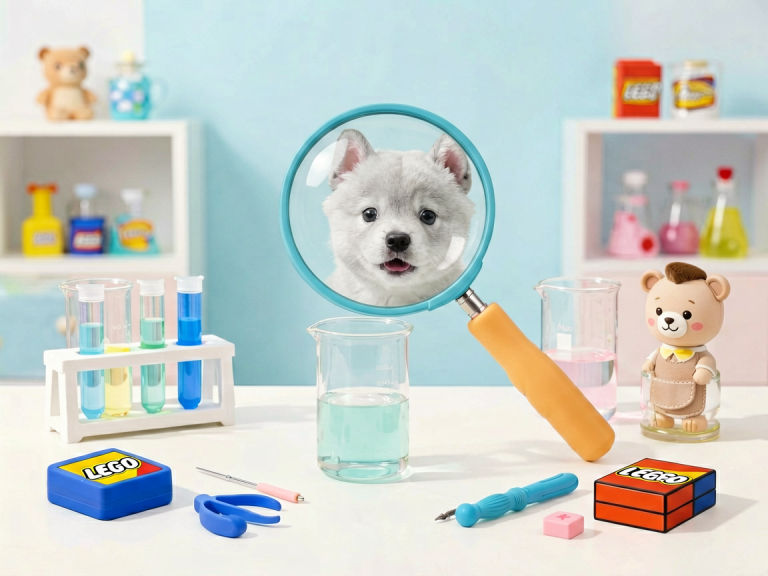
Chemistry kits are perennial favorites. At age seven, children are fascinated by color changes, fizzing, and unexpected transformations. Look for sets that include safe, non-toxic chemicals, clear test tubes, goggles, and a manual with step-by-step experiments. Examples include making a volcano erupt with baking soda and vinegar, creating slime with different textures, or growing crystals. The key is to choose kits that emphasize *process* over just the final product. A good kit will encourage the girl to ask: “What happens if I add more vinegar?” or “Why did the color turn blue instead of green?” Brands like *Thames & Kosmos* and *National Geographic* offer excellent options that are both educational and fun. For a 7-year-old girl, a chemistry kit that allows her to create her own “magic potions” with a story twist (e.g., a “potions lab” inspired by wizards) can be particularly compelling.
2. Engineering and Building Sets: From Simple Machines to Structural Design
Engineering toys teach spatial reasoning, cause-and-effect, and persistence. At seven, girls can handle more complex building sets than simple blocks. Consider kits that involve gears, pulleys, levers, or motorized parts. *LEGO Classic* or *LEGO Technic* sets are excellent, but also look for purpose-built engineering kits like *Snap Circuits* or *Engino*. Snap Circuits, for instance, allow a child to create working electronic projects (a radio, a light alarm, a fan) by snapping components onto a board—no soldering required. For a girl who loves art and design, consider architectural building sets (like *Arckit* or *Kapla*) that combine engineering with aesthetics. Engineering toys also teach resilience: when a structure collapses, she learns to iterate and try a new approach. That is a powerful life lesson.
3. Biology and Nature Exploration Sets: Cultivating a Love for Living Things
Many 7-year-old girls have a natural affinity for animals and plants. Biology kits that involve hatching butterflies, growing garden cress, or examining insect specimens (with safe, preserved samples) can deepen this interest. A microscope is a fantastic investment—choose a sturdy, child-friendly model with low magnification (40x–400x) and prepared slides. Alternatively, a *Bug Catcher* kit with a magnifying jar encourages outdoor exploration. For girls who are squeamish, start with plant-based experiments: a “grow your own terrarium” set or a seed germination kit. These toys teach observation, documentation (she can draw what she sees), and respect for living systems. The gentle, nurturing aspect of biology often resonates strongly with girls, providing a gateway to deeper scientific inquiry.
4. Astronomy and Space-Themed Toys: Sparking Wonder About the Universe
Space captures the imagination of almost every child. For a 7-year-old girl, a solar system model she can paint and assemble, or a star projector that turns her ceiling into a night sky, can ignite a lifelong fascination. Consider a telescope designed for kids (easy to focus, tabletop model) or a set of glow-in-the-dark planets. Combine with a book about female astronauts (like Mae Jemison) to show her that women belong in space science. Astronomy toys encourage her to think about scale, distance, and light—abstract concepts made concrete through models and stories.
5. Coding and Robotics Toys: Early Introduction to Computational Thinking
Coding is now considered a foundational science skill. For a 7-year-old girl, the best coding toys are screen-free, tangible, and game-like. *Botley* (a coding robot that doesn’t require a tablet) or *Code & Go Robot Mouse* by Learning Resources allow her to program sequences of movements using physical buttons or cards. These toys teach logic, sequencing, and debugging—all without reading a single line of text. For girls who enjoy building, *LEGO Boost* or *Minecraft-themed coding sets* blend construction with programming. The goal is to demystify technology and show her that she can be a creator, not just a consumer.
—
How to Choose the Right Science Toy: Practical Tips for Parents
Align with Her Existing Interests
The best science toy is one that connects to something she already loves. Does she adore fairies? Get a “fairy garden” engineering kit where she builds tiny structures. Does she love cooking? A molecular gastronomy kit (safe, edible experiments) can teach chemistry. Does she collect rocks? A geology kit with a rock tumbler and identification chart. By tapping into her passions, you make science relevant and personal.
Prioritize Open-Ended Play Over Scripted Outcomes
Some toys come with a single final project (e.g., build one specific robot). Others offer open-ended possibilities (e.g., a set of gears and motors with no prescribed end). For a 7-year-old, a mix is ideal. Scripted kits provide the satisfaction of following instructions and achieving a result. Open-ended toys encourage creativity and problem-solving. A great example is *Magna-Tiles* (magnetic building tiles), which can be used for science, art, and math simultaneously.
Check for Safety and Age Appropriateness
Always verify that the toy is non-toxic, has no small parts that could be choking hazards (for younger siblings), and carries safety certifications (e.g., ASTM, CE). The recommended age range on the box is a useful guide, but also consider your child’s maturity level. Some 7-year-olds can handle glass beakers with supervision; others may be more comfortable with plastic.
Encourage Parent-Child Collaboration
Science toys are most effective when an adult or older sibling participates, at least initially. Your involvement models enthusiasm and provides a safety net for potential frustration. Ask open-ended questions: “What do you think will happen if we mix these two colors?” “How could we make the tower taller without it falling?” This turns play into a genuine scientific dialogue. Also, let her make mistakes. A failed experiment is often more educational than a successful one.
—
The Long-Term Benefits of Science Toys for Girls
Building Confidence and a Growth Mindset
When a 7-year-old girl successfully completes a circuit and lights up a bulb, she experiences a surge of pride. That feeling says: *I can do this. I am smart.* Repeated successes with science toys build self-efficacy, which is a stronger predictor of future STEM participation than innate ability. Moreover, when an experiment fails, she learns that failure is a step toward discovery—a core tenet of the growth mindset. She realizes that a scientist is not someone who never makes mistakes, but someone who learns from them.
Developing Transferable Skills
Science toys teach more than science. They develop fine motor skills (pipetting, assembling small parts), executive function (planning, sequencing), and language skills (describing observations, asking questions). They also cultivate patience. Growing a crystal takes days; hatching a butterfly takes weeks. These time-dependent processes teach delayed gratification and responsibility. Additionally, many science toys involve math—measuring liquids, counting seconds, or calculating ratios—making math less abstract and more applied.
Counteracting Gender Stereotypes Early
By actively providing a 7-year-old girl with engineering, coding, and chemistry toys, you send an unmistakable message: *Science is for you.* This counters the implicit bias she may encounter at school or in media. When she sees herself as a scientist now, she is far more likely to pursue advanced STEM classes in middle and high school. Studies show that girls who play with construction toys and science kits before age 10 are significantly more likely to major in STEM fields in college. You are not just buying a toy; you are shaping her future identity.
—
Conclusion: A Gift That Keeps on Growing
Selecting a science toy for a 7-year-old girl is an investment in her intellectual and emotional development. It is a gift that says, “Your curiosity matters. Your questions are valuable. You are capable of understanding the world.” Unlike a passive toy that entertains for a moment, a well-chosen science kit sparks repeat play, deep inquiry, and lasting memories. Whether she is mixing potions, building a bridge, or coding a robot, she is not just playing—she is practicing the habits of a scientist: observing, questioning, experimenting, and refining. And in doing so, she is laying the foundation for a lifetime of confident, creative thinking. So the next time you look for a present, skip the princess dress and pick up a chemistry set. You might just be giving her the keys to the universe.
*(Word count: 1,488)*