Building Logic in Babies Through Play: Activities That Foster Early Reasoning Skills
Introduction: Why Logic Matters from the Very Beginning
Logic is often thought of as a skill reserved for older children and adults—something tied to formal schooling, math problems, and complex reasoning. However, the foundations of logical thinking are laid much earlier, during the first year of life. Babies are natural scientists: they observe, experiment, and draw conclusions from their environment long before they can speak. Every time an infant shakes a rattle and hears a sound, or drops a toy and watches it fall, they are engaging in a fundamental logical process: cause and effect. Play, therefore, is not merely entertainment; it is the primary vehicle through which babies construct an understanding of how the world works.
This article explores a variety of play activities specifically designed to nurture logic in babies, from newborns to toddlers. Each activity is grounded in developmental science and can be adapted to the child’s age and abilities. By intentionally incorporating these games into daily routines, parents and caregivers can support the growth of cognitive skills such as sequencing, categorization, problem-solving, and prediction—all of which are the building blocks of logical thought.
The Developmental Context: What “Logic” Means for a Baby
Before diving into specific activities, it is helpful to clarify what logic looks like in infancy. A three-month-old does not solve puzzles, but they do learn that kicking a mobile makes it move. An eight-month-old may not sort blocks by color, but they understand that a hidden object still exists (object permanence). A twelve-month-old begins to imitate sequences, such as putting a lid on a pot. These are all examples of early logical processes: recognizing patterns, understanding consequences, and forming mental representations.
The brain of a baby is highly plastic, and the first three years are a critical window for developing neural connections related to reasoning. Activities that involve repetition, variation, and gentle challenges help strengthen these pathways. The key is to follow the baby’s lead, offer just enough novelty to spark curiosity, and provide opportunities for the baby to act on their environment. With that in mind, here are several categories of play that build logic.
Activity Category 1: Cause-and-Effect Play
Why It Matters for Logic
Cause-and-effect is the most basic logical relationship: “If I do A, then B happens.” Babies begin to notice this as early as two or three months, and by six months they actively try to produce interesting effects. Understanding cause and effect is essential for later skills like hypothesis testing and scientific reasoning.
Practical Activities
Rattles and Shakers
Give your baby a rattle or a homemade shaker (e.g., a sealed plastic bottle with rice inside). Shake it yourself first, then let the baby explore. When they shake it and hear the noise, verbally reinforce the connection: “You shook it! That made a sound!” For older babies (6+ months), offer two different shakers with different sounds and let them compare.
Drop-and-Retrieve Games
Around 6–9 months, babies love dropping objects from their high chair or crib. Instead of discouraging this, turn it into a learning game. Use soft, safe items like a cloth ball or a silicone cup. Drop it yourself and say “boom!” or “down!” then hand it back. The baby will quickly learn that dropping leads to a specific outcome, and they may even start anticipating the sound. This reinforces the logic of action and reaction.
Light-Up or Musical Toys
Toys that activate when pressed (e.g., a button that plays music or lights up) are excellent for teaching cause and effect. Show the baby how pressing the button works, then encourage them to try. Even if they cannot press firmly at first, assist their hand. Celebrate the result. Over time, the baby will deliberately press the button to hear the music—a clear demonstration of logical reasoning.
Activity Category 2: Sorting and Matching Games
Why They Strengthen Logical Categories
Sorting and matching require the baby to recognize similarities and differences, which is the foundation of classification—a core logical skill. Even before they can physically sort objects, babies are capable of visual discrimination. By six months, they can distinguish between different shapes and colors. By twelve months, many can begin simple sorting with guidance.
Practical Activities
Simple Shape Sorter
Introduce a shape sorter with large, easy-to-handle pieces (e.g., a ball and a cube). Initially, the baby may just bang blocks together. Show them how the block fits into the hole, then take their hand and guide it. Use verbal cues: “Round goes in the round hole. Square goes in the square hole.” Eventually, the baby will attempt to match shapes on their own, developing the logic of “same vs. different.”
Color Matching with Baskets
Place two small baskets or boxes—one red, one blue. Give your baby a collection of red and blue balls (or other safe objects). Start by putting a red ball in the red basket, then a blue ball in the blue basket, narrating as you go. Hand the baby a ball and ask, “Where does this go?” Even if they don’t get it right, the exposure to categorization builds neural pathways for logical grouping.
Nesting Cups or Stacking Rings
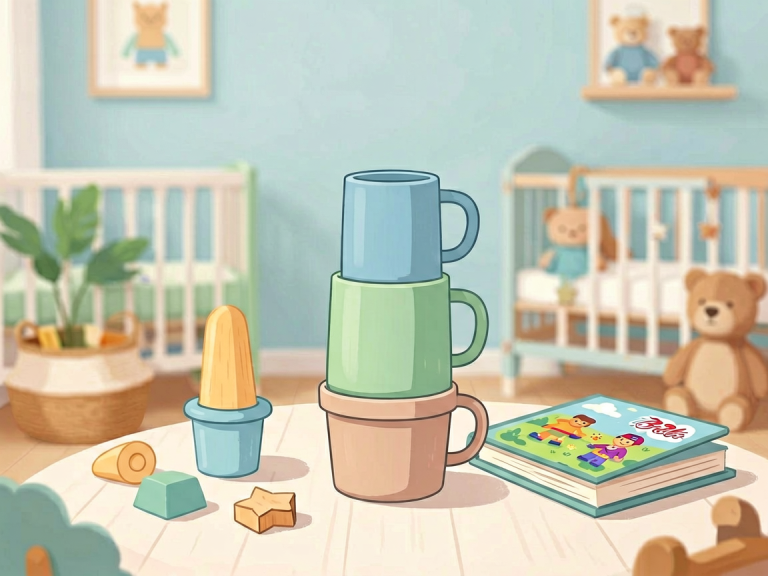
Stacking rings from largest to smallest is a classic logic activity. The baby learns that order matters: the largest ring must go on first, then the next largest, etc. Similarly, nesting cups teach size relationships. Begin by demonstrating, then let the baby explore freely. They will eventually experiment with different sequences, learning through trial and error—a key logical process.
Activity Category 3: Problem-Solving and Obstacle Play
The Role of Frustration and Persistence
Logic is not just about knowing what works; it’s also about figuring out what to do when something doesn’t work. Problem-solving activities encourage babies to think flexibly and persist through small challenges. This builds executive function and logical reasoning.
Practical Activities
Blanket Pull Game
Place a favorite toy just out of your baby’s reach on a soft blanket or towel. Show them that pulling the blanket brings the toy closer. For a younger baby (6–9 months), demonstrate once or twice. The baby will soon learn the logical relationship: pull blanket → toy moves. This is a simple but powerful lesson in indirect action.
Toy Behind a Barrier
Hide a squeaky toy under a small, clear cup or a thin cloth. Let the baby see you hide it. Then encourage them to remove the cover to find the toy. For older babies (10–12 months), use a bigger barrier like a cardboard box. They must figure out that the object still exists and that lifting or pushing the barrier reveals it. This combines object permanence and logical deduction.
Puzzle Play for Toddlers
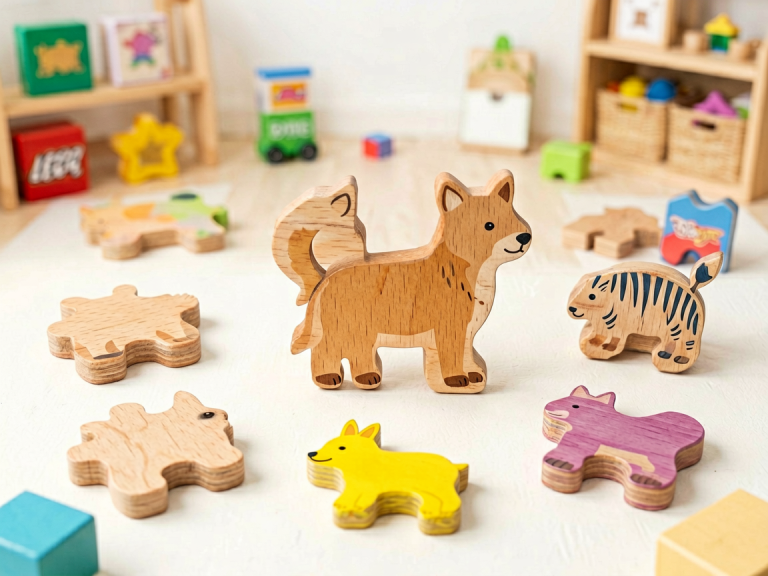
From around 12 months, simple peg puzzles (with large knobs) are excellent. The baby must match the shape to the correct cutout. Start with just one or two pieces. When the baby tries to force a piece into the wrong spot, they learn that it doesn’t fit and must try a different approach—a direct lesson in logical consistency.
Activity Category 4: Sequence and Pattern Play
Recognizing Order and Predictability
Logic often involves understanding sequences: first this, then that. Babies begin to grasp simple routines (like diaper change → feeding) as early as a few months old. Play activities that highlight order help strengthen this understanding.
Practical Activities
Peek-a-Boo with Variations
Peek-a-boo is more than a social game; it teaches the logic of presence and absence, and the predictable sequence of “now you see me, now you don’t.” Vary the timing to keep the baby engaged. For example, cover your face for two seconds, then for four seconds. The baby learns to anticipate the reappearance, a form of logical prediction.
Rhythm and Repetition Games
Clap your hands in a steady rhythm (e.g., three claps, then a pause). Sing a simple song with motions, like “The Wheels on the Bus.” After repeating the same sequence several times, pause expectantly. Many babies will start to move their hands or make sounds to continue the pattern. This demonstrates that they have internalized the logical order of the sequence.
Object Sequence with Stacking
Give your baby three large wooden blocks. Show them how to stack one on top of another in a specific order (e.g., red, then blue, then yellow). Then knock them down and encourage the baby to try. Initially, they may just put one block on top of another randomly, but over time they will attempt to replicate the order. This introduces the concept of a series, a building block of logical thinking.
Activity Category 5: Sensory Exploration with Logical Tweaks
Using the Senses to Compare and Contrast
Sensory play is often thought of as purely physical, but it can be adapted to encourage logical comparisons. By presenting contrasting stimuli, you help the baby notice differences and draw conclusions.
Practical Activities
Warm and Cold Touch
Fill two small bowls with water—one warm (not hot) and one cool. Let your baby dip their hands (or feet) into each bowl. Describe the sensation: “This is warm! This is cold!” After a few repetitions, the baby will start to show a preference or react differently to each bowl, indicating they recognize the logical distinction.
Texture Matching
Prepare two pieces of fabric: one smooth (satin) and one rough (corduroy). Let the baby feel them both. Then place the same textures on two separate surfaces. Show the baby that the smooth fabric goes with the smooth surface. This is a very early form of matching based on tactile properties, which requires logical association.
Sound Shakers with Different Fillings
Make two shakers: one filled with rice (soft sound) and one filled with dried beans (loud sound). Shake each near the baby and notice their reaction. Then play a game: shake the quiet one, then the loud one. See if the baby looks toward the loud one when heard. This discrimination is a form of logical categorization.
Conclusion: Integrating Logic Play into Everyday Routines
Building logic in babies does not require expensive toys or structured lessons. The most effective activities are simple, repetitive, and rooted in the baby’s natural curiosity. Whether it’s shaking a rattle, stacking cups, or playing peek-a-boo, each moment of play is an opportunity for the baby to test ideas, observe outcomes, and construct a mental model of the world.
Remember that babies learn best through active involvement and emotional connection. When you narrate what is happening (“Look, the ball went inside!”), you are providing language that helps anchor the logical concept. When you let the baby struggle a little before offering help, you are teaching persistence and problem-solving. Most importantly, follow the baby’s interests. If they are fascinated by dropping spoons, use that fascination to talk about gravity and cause and effect. If they love to open and close containers, turn that into a game about containment and fitting.
By embedding these logic-building play activities into daily life, you are giving your baby the cognitive tools they need to think clearly, reason effectively, and eventually solve complex problems. Every laugh, every dropped toy, every puzzled expression is a sign that a little mind is hard at work building the foundations of logic—one playful experiment at a time.