Fueling Curiosity: The Best Science Toys for 10-Year-Old Boys
—
Introduction
At the age of ten, a boy’s mind is a fertile ground for wonder. He has moved beyond the simple "why" questions of early childhood and begun to ask "how" and "what if." This is the golden age of exploration, when abstract concepts like gravity, chemical reactions, and electricity start to click into place. The right science toy can transform these sparks of curiosity into a lasting passion for discovery. For parents, educators, and gift-givers, choosing a science toy for a 10-year-old boy is not merely about entertainment—it is about investing in his cognitive development, problem-solving skills, and future engagement with STEM (Science, Technology, Engineering, and Mathematics). This article explores the profound benefits of science toys, categorizes the most effective types for this age group, and provides practical guidance for selecting the perfect kit.
—
The Cognitive and Developmental Benefits of Science Toys
Building Critical Thinking and Problem-Solving Skills
A science toy is never just a toy. It is a miniature laboratory where cause and effect are made visible. When a 10-year-old assembles a circuit to light an LED or mixes baking soda and vinegar to produce a fizzy eruption, he is not merely following instructions—he is forming hypotheses, testing variables, and drawing conclusions. These activities strengthen executive functions such as planning, sequencing, and logical reasoning. Unlike passive screen time, hands-on science play requires active mental engagement. The child must anticipate outcomes, adjust his methods when something fails, and celebrate the "aha moment" when his prediction matches reality. This process builds resilience and a growth mindset, teaching him that failure is simply data for the next attempt.
Fostering Independent Exploration
At ten, boys are beginning to crave autonomy. Science toys that allow open-ended experimentation—rather than rigid, single-outcome projects—give them a sense of ownership over their learning. A chemistry set with multiple possible reactions, a robotics kit that can be programmed in different ways, or a telescope that invites nightly sky-gazing all encourage self-directed inquiry. The child becomes the scientist, setting his own questions and pacing. This independence is crucial for developing intrinsic motivation—the desire to learn for the sheer joy of understanding, not for a grade or a reward.
Bridging the Gap Between Abstract Concepts and Tangible Reality
Many STEM concepts taught in school can feel abstract and distant to a fifth-grader. Physics equations, chemical formulas, and engineering principles become real when they are experienced through a toy. For instance, a simple pulley system kit demonstrates mechanical advantage in a way a textbook never could. A crystal-growing set turns "supersaturated solution" into a visible, tactile wonder. By anchoring abstract ideas in concrete results, science toys create mental hooks that help children recall and apply knowledge later in academic settings.
—
Top Categories of Science Toys for 10-Year-Old Boys
1. Chemistry Sets and Lab Kits
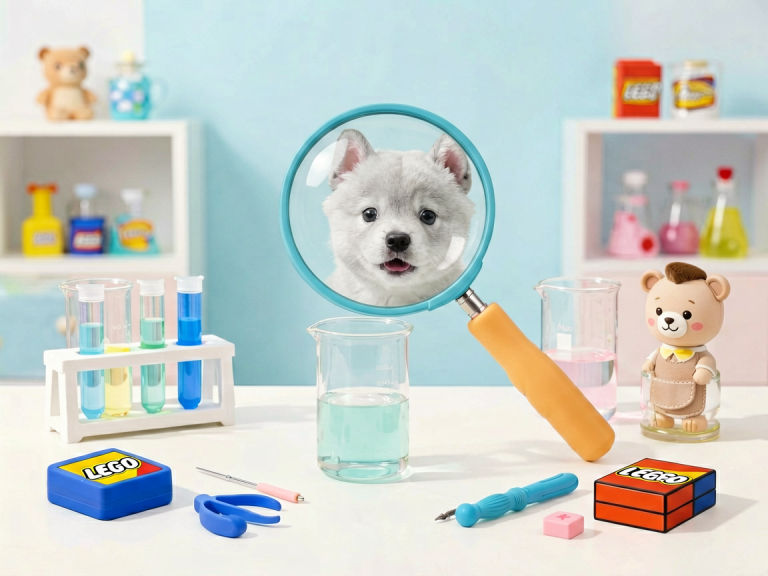
Chemistry is the most visually dramatic science for this age group. A good chemistry set for a 10-year-old includes safe, non-toxic chemicals, clear instructions, and equipment such as test tubes, beakers, and pipettes. Look for sets that offer a wide variety of experiments—color-changing reactions, crystal formation, pH testing, and even simple projects like making slime or a lava lamp. Brands like Thames & Kosmos and National Geographic produce excellent kits that balance excitement with educational rigor. Safety is paramount: choose kits that are labeled for ages 8+ or 10+ and that include protective goggles and gloves. The thrill of watching a liquid turn from clear to deep blue with a single drop of indicator solution is unforgettable and can ignite a lifelong interest in chemistry.
2. Physics and Engineering Kits
Physics toys for this age should focus on forces, motion, energy, and simple machines. Construction-based kits, such as those using gears, pulleys, levers, and wheels, allow boys to build working models of real-world devices. A marble run kit, for example, teaches gravity, momentum, and trajectory while demanding spatial reasoning and patience. Snap Circuits is another classic: snap-together components let a child build radios, doorbells, and even flying discs while learning about current, voltage, and resistance. More advanced options include hydraulic or pneumatic arm kits that introduce fluid dynamics. The key is that the kit must be challenging enough to hold attention but not so complex that it causes frustration. Ten-year-olds can typically handle 50 to 100 steps or components with minimal adult assistance.
3. Robotics and Coding Toys
In an increasingly digital world, giving a 10-year-old a robotics or coding toy is like giving a modern Swiss Army knife. These toys combine mechanical assembly with logical programming, teaching both hardware and software skills. Entry-level programmable robots, such as those from the LEGO Boost or littleBits kits, use block-based visual coding (similar to Scratch) and can be controlled via a tablet. For a boy who loves building, a kit that requires him to construct the robot before coding its movements provides double the engagement. More advanced options, like the Makeblock mBot, use Arduino-compatible boards and introduce text-based coding gently. The satisfaction of seeing a robot complete a maze or follow a line he designed himself is immense, and the skills learned—sequencing, debugging, iteration—are directly transferable to computer science and engineering.
4. Astronomy and Space Exploration Kits
Space has an almost magical allure for 10-year-old boys. An astronomy kit can be as simple as a high-quality refractor telescope with a sturdy tripod and eyepieces, allowing him to observe the Moon's craters, Jupiter's moons, or Saturn's rings. Supplement the telescope with a planisphere (star chart) and a book of constellations to turn solo stargazing into a guided adventure. For more interactive fun, consider a rocket-building kit. Water-powered or chemical-reaction rockets (using baking soda and vinegar, or safe citric acid blends) teach Newton's third law of motion and provide explosive excitement—literally. Glow-in-the-dark solar system models, planetarium projectors, and meteorite identification kits also extend the experience indoors. Astronomy toys have the unique benefit of connecting a child to something vast and timeless, fostering a sense of wonder and humility.
5. Biology and Nature Exploration Kits
For the boy who is more interested in living things, biology kits offer endless discovery. A high-quality microscope (with prepared slides and blank slides for his own specimens) can reveal the hidden world of pond water, onion cells, and insect legs. Encourage him to collect leaves, feathers, or soil samples from the backyard and examine them. Ant farms, butterfly gardens, and habitat kits for critters like hermit crabs or triops (dinosaur shrimp) teach life cycles and ecological interdependence. A dissection kit for owl pellets—though it sounds macabre—is a favorite among 10-year-olds because it allows them to reconstruct a skeletal meal, learning anatomy and predator-prey relationships. DNA extraction kits, where a child can extract real DNA from a strawberry or a banana, are also wonderful gateways to molecular biology. These activities connect the science to the natural world he already loves.
—
How to Choose the Right Science Toy
Match the Toy to His Interests, Not Just His Age
While age recommendations are a good starting point, the best science toy aligns with a boy's existing passions. Does he love building with LEGO? Then a mechanical engineering kit is a natural fit. Does he spend hours watching nature documentaries? A microscope or bug-catching kit will feel like a personalized gift. Does he enjoy video games? A coding or robotics toy bridges his screen obsession with constructive creation. Don't be afraid to ask him directly or observe his play patterns. A toy that he is genuinely excited about will be used again and again; one that seems "educational" but boring to him will gather dust.
Prioritize Safety and Supervision
Even for "safe" science toys, adult supervision is recommended for children under 12. Check labels for choking hazards, chemical safety, and electrical safety. Avoid kits that contain toxic substances, sharp glass, or high-voltage components. Reputable brands clearly list safety warnings and provide guidelines for adult involvement. A good rule: if a toy requires chemicals, make sure the kit includes safety goggles and a detailed first-aid information card. For robotics kits, ensure that batteries are securely enclosed and that wires are insulated.
Choose Open-Ended Over One-Time Kits
Some science kits offer a single project: build a volcano, grow one crystal, or make a single car. While these are fun, they often lead to a single burst of activity. Higher-value kits are those that allow multiple experiments or reconfiguration. For example, a chemistry set with 30+ experiments, a Snap Circuits kit with hundreds of possible circuits, or a robotics kit that can be rebuilt into different designs. These toys grow with the child, offering new challenges as his skills develop. The mark of an excellent science toy is that after the final experiment is done, the child immediately wants to start tweaking the design to see what happens if he changes one variable.
Consider the Physical Space
Some science toys are messy, some are noisey, and some require a lot of space. A chemistry set might need a well-ventilated area and a table that can be wiped down. A rocket kit requires an outdoor launch site. A telescope needs a dark, open sky. Before buying, think about where the toy will be used. If space is limited, consider smaller, tabletop-friendly options like a mini electronics lab or a pocket microscope. If you have a backyard, a large-scale physics or rocketry kit could be perfect.
—
Conclusion
Science toys for 10-year-old boys are far more than diversions—they are catalysts for intellectual growth, creativity, and confidence. Whether it’s the fizzy thrill of a chemical reaction, the satisfying click of a gear train, or the quiet awe of observing Jupiter through a telescope, these experiences plant seeds that can grow into lifelong interests and careers. The best gift we can give a curious boy is not a passive screen but an active tool for discovery. By choosing a well-designed, age-appropriate, and interest-aligned science toy, we empower him to ask bigger questions, take calculated risks, and enjoy the process of learning itself. So next time you are looking for a gift, skip the video game and reach for a kit that turns his bedroom into a lab, his backyard into a launchpad, and his imagination into a force of nature.
*(Word count: approximately 1,680)*