Building Minds, One Toy at a Time: The Best Toys for Hands-On Learning
Introduction: Why Hands-On Learning Matters
In an age dominated by screens and passive entertainment, the value of hands-on learning has never been more critical. Children learn best when they are actively engaged—touching, manipulating, building, and experimenting. Hands-on learning is not just about keeping little fingers busy; it is a proven pathway to deeper understanding, problem-solving skills, and long-term retention. The right toys can transform play into a powerful educational experience, nurturing creativity, critical thinking, and fine motor development. This article explores the best toys for hands-on learning, each category carefully selected to stimulate curiosity and foster genuine, tactile engagement. Whether you are a parent, educator, or caregiver, these toys will help turn playtime into a foundation for lifelong learning.
1. Building Blocks and Construction Sets: The Foundation of Spatial Intelligence
1.1 Classic Wooden Blocks
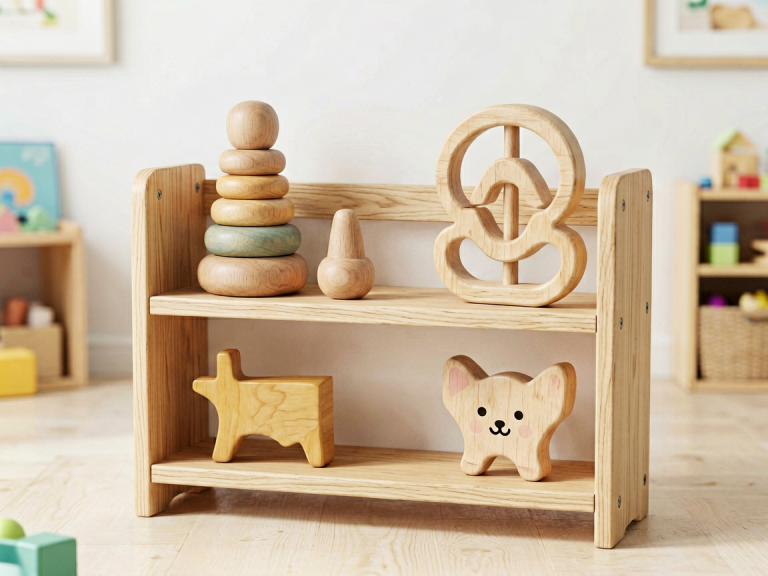
Few toys are as timeless or as educationally rich as a set of simple wooden blocks. Unlike pre-formed plastic pieces, wooden blocks come in basic shapes—cubes, rectangles, cylinders, and triangles—allowing children to experiment with balance, gravity, and structural integrity. A toddler stacking blocks learns cause and effect: too high, and the tower topples. A preschooler designing a castle practices symmetry and spatial reasoning. The open-ended nature of wooden blocks means that no two play sessions are alike, encouraging divergent thinking. Studies have shown that block play is linked to improved mathematical skills, including geometry and measurement, as children naturally compare sizes, count pieces, and understand volume.
1.2 Magnetic Tiles
Magnetic tiles, such as Magna-Tiles or Picasso Tiles, have become a modern classic for hands-on learning. These translucent, geometric shapes snap together with embedded magnets, allowing children to build three-dimensional structures with ease. The satisfying click of magnets connecting provides immediate tactile feedback, reinforcing the concept of attraction and repulsion. Children quickly learn to create cubes, pyramids, bridges, and even complex castles with moving parts. Magnetic tiles are particularly effective for teaching geometry, symmetry, and preliminary engineering concepts. Because the pieces are easy to connect and disconnect, children can iterate rapidly—testing, failing, and redesigning without frustration. This iteration process is at the heart of the scientific method and design thinking.
1.3 Interlocking Plastic Bricks (LEGO and Compatible Sets)
LEGO bricks remain the gold standard for construction-based hands-on learning. Beyond simple stacking, LEGO sets teach children to follow instructions (a crucial skill for sequencing and reading comprehension), but the real magic happens when children create their own designs. Building a custom car, a house, or a robot from loose bricks requires planning, problem-solving, and fine motor precision. LEGO also offers specialized sets for robotics (LEGO Spike, LEGO Mindstorms) that introduce coding and mechanics, making the connection between physical construction and digital logic tangible. The act of pressing two bricks together until they lock is a powerful sensory experience that reinforces patience and perseverance.
2. Science and Experimentation Kits: Cultivating Inquiry and Discovery
2.1 Chemistry and Reaction Kits
Hands-on science kits allow children to become junior chemists in their own kitchens (with supervision). Products like the Thames & Kosmos Chem C200 or the Learning Resources Primary Science Lab Set provide real tools—test tubes, beakers, droppers, and safe chemicals—for conducting experiments. When a child mixes baking soda and vinegar to create a fizzing eruption, they are not just watching a demonstration; they are observing a chemical reaction, measuring quantities, and experiencing the cause-and-effect relationship firsthand. These kits often include guidebooks that explain the science behind each experiment, merging tactile experience with conceptual learning. The messiness of such play is actually a feature: it teaches children that learning can be chaotic, messy, and joyful.
2.2 Geology and Fossil Dig Kits
Dig kits, where children excavate “fossils” or “crystals” from a block of plaster or sand, offer a uniquely immersive hands-on experience. Using brushes, chisels, and sometimes even small hammers, children must carefully extract embedded objects without damaging them. This activity develops hand-eye coordination, patience, and attention to detail. More importantly, it sparks curiosity about paleontology, geology, and natural history. When a child uncovers a plastic dinosaur bone or a quartz crystal, the sense of discovery is profound. They learn that knowledge requires effort and that the process of uncovering is as valuable as the result.
2.3 Robotics and Coding Kits
For older children (ages 6 and up), robotics kits like the Botley 2.0 or the Makeblock mBot provide a hands-on introduction to programming and engineering. These kits require children to assemble physical components—motors, sensors, wheels, and frames—using screws and connectors. Once assembled, they use block-based coding (or simple text-based languages) to program the robot to move, avoid obstacles, or follow lines. The immediate feedback is powerful: if the code is wrong, the robot crashes into a wall. If it is correct, it navigates a maze. This combination of physical building and logical coding reinforces abstract concepts in a concrete way, teaching sequencing, loops, and conditional statements.
3. Art and Craft Toys: Expressing Creativity through Texture and Technique
3.1 Modeling Clay and Dough
Play-Doh, air-dry clay, and polymer clay offer unparalleled opportunities for tactile exploration. Squishing, rolling, sculpting, and cutting clay engages the small muscles of the hands, building dexterity that is essential for writing and other fine motor tasks. Beyond motor skills, clay encourages three-dimensional thinking. A child who wants to make a dog must consider the shape of the body, the placement of legs, and how to attach a tail. They learn about proportions, textures, and the properties of materials (e.g., clay dries out if left uncovered; adding water makes it stickier). Art-based hands-on toys also promote emotional regulation: kneading and shaping clay can be calming and meditative.
3.2 Weaving Looms and Sewing Kits
Weaving, knitting, and sewing are often overlooked as learning toys, but they are among the best for developing bilateral coordination, pattern recognition, and planning. Simple wooden looms or plastic knitting frames allow children to create potholders, scarves, or small tapestries. The repetitive motion of winding yarn back and forth teaches rhythm and focus. Sewing kits for children (with plastic needles and pre-punched felt shapes) let them create stuffed animals or pillows. These activities require following a sequence, counting stitches, and visualizing the final product. They also build grit—if a stitch is missed, the child must undo and redo, a lesson in resilience.
3.3 Puzzle and Mosaic Kits
Perler beads (or hama beads) are tiny plastic beads that are placed on a pegboard to form patterns, then fused together with an iron. This activity demands precision and patience: picking up a single bead and placing it exactly where it belongs improves fine motor control and hand-eye coordination. More importantly, children learn to follow a pattern or create their own pixel art, which introduces concepts of symmetry, scaling, and color theory. Similarly, mosaic sticker kits or diamond painting kits (where children place small resin “diamonds” onto a sticky canvas) provide a meditative, detail-oriented experience that builds concentration and perseverance.
4. Puzzles and Logic Games: Sharpening the Mind with Tangible Challenges
4.1 Jigsaw Puzzles
Jigsaw puzzles are a quintessential hands-on learning toy. As children piece together a puzzle, they engage in visual discrimination—matching shapes, colors, and patterns. They also develop spatial awareness (knowing how a piece fits into the whole) and executive function (planning where to start, how to group edge pieces, and when to switch strategies). A child who repeatedly tries a piece that doesn’t fit learns to adapt and try a different approach—a core component of flexible thinking. Larger puzzles (300–1000 pieces) for older children also teach delayed gratification and project management, as completing the puzzle may take several days.
4.2 Tangrams and Geometric Puzzles
Tangrams, pattern blocks, and pentominoes are puzzles that require arranging a set of geometric shapes into a specific silhouette or pattern. These toys are excellent for developing spatial reasoning and geometric vocabulary (e.g., symmetry, rotation, translation). A child attempting to form a square from seven tangram pieces must mentally rotate and flip shapes, a skill that translates directly to higher mathematics and engineering. The tactile nature of these puzzles—picking up a wooden triangle, turning it over, sliding it into place—reinforces the mental manipulation with physical feedback.
4.3 Mechanical Puzzles and Brain Teasers
Rubik’s Cubes, metal disentanglement puzzles, and brain teasers like the “Soma Cube” require manual manipulation and logical deduction. A child trying to solve a Rubik’s Cube must learn algorithms, pattern recognition, and persistence. Unlike a video game, a physical puzzle cannot be reset with a button; each turn is irreversible, and the child lives with the consequences of their moves. This teaches careful planning and the value of systematic trial and error. Mechanical puzzles are particularly good for children who enjoy solitary, focused challenges.
5. Role-Play and Real-World Tools: Learning by Doing
5.1 Toy Tool Sets and Workbenches
A child’s toy workbench with plastic hammers, screwdrivers, and bolts allows them to mimic adult activities while developing real skills. Hammering a peg into a hole teaches hand-eye coordination and force control. Screwing a bolt into a nut introduces the concept of threading and torque. These toys also encourage imaginative play—a child might “fix” a broken chair or “build” a house, which fosters narrative thinking and social cooperation when playing with others. Some advanced sets include real (child-safe) tools like a small hand saw or a working clamp, providing authentic learning experiences.
5.2 Play Kitchens and Pretend Cooking
A play kitchen with pots, pans, plastic food, and utensils is a rich environment for hands-on learning. Children practice measuring, pouring, chopping (with safe knives), and mixing. They learn about fractions when cutting a pizza into halves or quarters, and about sequencing when “baking” a cake (first add flour, then eggs, then stir). Role-playing as a chef also encourages language development, as children describe recipes, negotiate roles, and follow imaginary orders. For an extra layer of hands-on learning, parents can involve children in real cooking (with supervision), reinforcing the connection between pretend and reality.
5.3 Gardening Tools and Nature Kits
Child-sized gardening tools—trowels, rakes, gloves, watering cans—introduce children to biology, ecology, and responsibility. Planting a seed, watering it daily, and watching it sprout is a hands-on lesson in life cycles, plant needs, and patience. Digging in soil provides rich sensory input (texture, smell, moisture), and identifying insects or worms fosters scientific observation. Nature kits that include magnifying glasses, bug catchers, and field guides encourage children to explore the outdoors, turning a walk in the park into a hands-on investigation.
6. Choosing the Best Hands-On Toys: Key Principles
When selecting toys for hands-on learning, prioritize those that are open-ended (allowing many ways to play), durable (able to withstand repeated manipulation), and age-appropriate. The best toys often have no single “right” answer; they invite exploration, trial and error, and creativity. Avoid toys that do the work for the child (e.g., flashy electronic toys that require only a button press). Instead, look for toys that require the child to actively think, build, manipulate, and solve. Finally, remember that the presence of an adult or older peer can enhance the learning experience—asking questions like “What happens if you add another block?” or “How could you make that stronger?” turns simple play into guided discovery.
Conclusion: The Lasting Value of Tangible Play
Hands-on learning is not a luxury or a trend; it is a fundamental way in which children understand the world. The toys recommended in this article—wooden blocks, science kits, clay, puzzles, and role-play tools—are more than mere playthings. They are instruments of cognitive development, emotional resilience, and creative expression. In a world that increasingly values instant digital gratification, these tangible toys remind us that the most profound learning happens when we use our hands to shape, build, and discover. By investing in the best toys for hands-on learning, we give children the tools not only to master academic concepts but also to develop the curiosity, persistence, and imagination that will serve them for a lifetime. So clear some shelf space, prepare for a little mess, and let the hands-on learning begin.