The Art of Waiting: Playful Activities to Cultivate Patience in Your Baby
Patience is often considered a virtue for adults, but its roots are planted much earlier—in the first months and years of life. For babies, waiting is not a natural instinct; they live in a world of immediate needs, where a cry brings food and a whimper invites comfort. Yet the ability to delay gratification, to tolerate a few seconds of uncertainty, and to persist toward a goal is a foundational skill for emotional regulation, social interaction, and even academic success. The good news is that patience can be nurtured through carefully chosen play activities that turn waiting into a joyful, manageable game. This article explores a range of developmentally appropriate play ideas designed to help babies build patience, one playful moment at a time.
Understanding Patience in the Baby Brain
Before diving into specific activities, it is helpful to understand what patience looks like in a baby’s world. A three-month-old has no concept of “waiting for five minutes”; their sense of time is tied to bodily rhythms and caregiver responsiveness. As babies grow, they begin to understand sequences, cause and effect, and the idea that a desired outcome will follow a short delay. Patience, then, is not about forcing a baby to wait passively but about creating safe, predictable environments where waiting is embedded in fun, and where the baby learns that the wait is worth it. The activities below are designed with this principle in mind: they structure waiting in tiny, achievable increments, celebrate the moment of reward, and gradually lengthen the delay as the baby’s tolerance grows.
Sensory Play with Turn-Taking: The Foundation of Waiting Together
Sensory play is a powerhouse for infant development, and it also provides a natural context for practicing patience. One simple activity involves a scarf or a piece of soft fabric and a small basket. Sit face-to-face with your baby, who is likely around six to twelve months old. Take turns dropping the scarf into the basket: first you drop it, then pause, look at your baby, and say “Your turn!” Hand the scarf to your baby. When they drop it (or try to), celebrate with a smile and a clap. Then say “My turn!” and wait for your baby to watch you. This back-and-forth—even if your baby only participates for one or two turns—teaches them the rhythm of waiting for another person. You can vary the sensory element by using crinkly paper, a soft rattle, or even a small, safe mirror.
Why does this build patience? Because the baby learns that the fun is shared, and that after a short pause, their turn will come again. They observe your waiting and mirror it. Over time, you can lengthen the pause between turns from one second to three or four seconds. The key is to keep the mood light and playful—if your baby becomes frustrated, shorten the wait or return to a faster pace. This activity also strengthens social reciprocity, which is a precursor to cooperative play and emotional control.
Cause-and-Effect Toys: The Magic of the Delay
From about four months onward, babies become fascinated with cause-and-effect relationships. Toys that respond to an action with a delayed reaction—such as a pop-up toy that springs up after a button is pushed, a jack-in-the-box that plays music before the lid opens, or a simple ball ramp—are ideal patience-building tools. The crucial element is the built-in delay. For instance, a classic “busy box” with a button that, when pressed, causes a small animal to peek out after two seconds of music. Sit with your baby and demonstrate: press the button, wait with an excited expression, and then exclaim when the animal appears. Then guide your baby’s hand to press the button. Help them hold their finger down if needed, and then wait together.
The waiting period—even two seconds—is a tiny lesson in patience. The baby learns that the reward (the pop-up, the sound, the sight) is coming, and that it is worth the brief pause. Over weeks, you can introduce toys with slightly longer delays, or you can create your own: for example, covering a toy with a thin cloth and slowly lifting it while saying “Here it comes… peek-a-boo!” The gradual increase in waiting time, paired with your reassuring presence, helps the baby tolerate the gap between action and outcome. This is the neural foundation of self-regulation.
Peek-a-Boo and Anticipation Games: The Joy of Waiting
Peek-a-boo is more than just a silly face game—it is a masterclass in patience for babies. The classic version involves hiding your face behind your hands, waiting a beat, and then revealing yourself with a joyful “Peek-a-boo!” The baby’s anticipation builds during the hidden seconds, and the release brings laughter and connection. To turn this into a patience-building exercise, vary the length of the hide. Start with a very quick reveal (one second), then gradually extend to three or four seconds. Watch your baby’s cues: if they start to fuss, go back to a shorter delay. Some babies love the suspense; others need more time to develop tolerance.
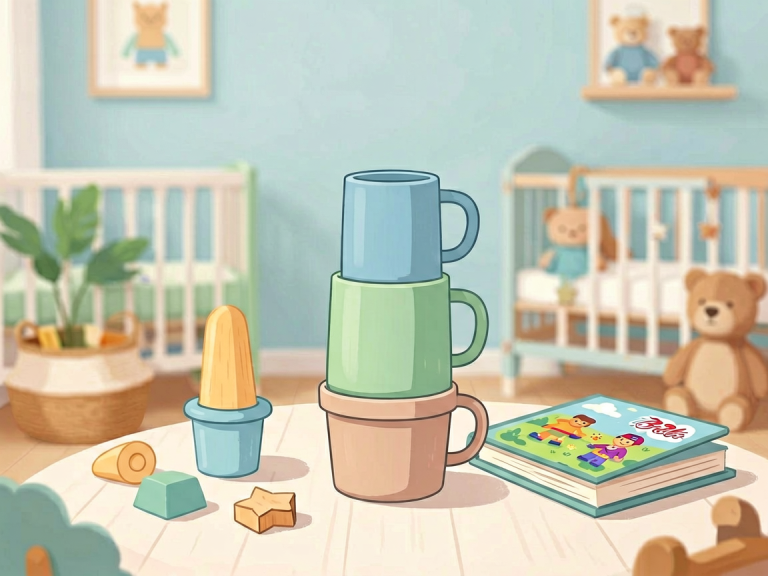
You can also play anticipation games with objects. Place a small toy under a cup while your baby watches. Slowly lift the cup—not all at once, but a little at a time—saying “Where is it? Almost there… here it comes!” The slowness of the reveal forces the baby to attend and wait. For older babies (ten to twelve months), you can use three cups and hide a snack or a favourite toy under one, then shuffle them slowly. Encourage your baby to point or crawl toward the cup. The process of searching and waiting for the reveal builds sustained attention and the ability to delay the gratification of finding the object. These games also teach the baby that waiting can be a source of fun and mystery, not frustration.
Stacking and Building Blocks: Persistence Through Small Failures
Stacking blocks is a classic milestone activity, but it is also a powerful patience teacher—not because the baby waits for something, but because they learn to try again after a tower falls. Around nine to twelve months, babies begin to stack two or three blocks. The activity inherently involves patience: the stack may wobble, the block may slip, and the tower topples. How you respond matters. Instead of immediately fixing the tower or showing frustration, model a calm reaction. Say “Uh-oh! It fell. Let’s try again.” Then slowly rebuild, narrating your actions: “I’m putting this block on… careful… there!” Invite your baby to help. When they place a block, even if it falls, celebrate the attempt. Exaggerate your own waiting as you hand them the next block: “Okay, here’s another one… ready… set… go!”
The patience here is in the process. The baby learns that the desired outcome (a tall tower) requires multiple attempts and that falling is not a disaster. This builds frustration tolerance—a close cousin of patience. You can also use soft cloth blocks for younger babies or those who get easily frustrated, as they are less likely to topple loudly. For added waiting, place the blocks just out of reach so your baby has to crawl or reach toward them, delaying the moment of grasping.
Water Play with Pouring and Filling: Slowing Down the Senses
Water play is naturally soothing and can be a patient, meditative activity for babies. Fill a shallow container with lukewarm water and provide a few safe items: a small cup, a plastic measuring spoon, a floating ball, or a rubber duck. Sit with your baby and model slow, deliberate actions. Dip the cup into the water slowly, then slowly pour it out, saying “I’m pouring… watch the water… drip, drip, drip.” Encourage your baby to mimic you. They may want to splash frantically at first, which is fine—let them explore. Then gently guide their hand to pour water from one cup to another. The act of pouring requires a steady hand and a certain patience: the water doesn’t pour instantly; it trickles. The baby must wait for the cup to empty.
You can also introduce the concept of “waiting for the water” by placing a toy at the bottom of the container and slowly lowering your hand into the water to pick it up, narrating the slow descent. For older babies, use a funnel or a small watering can to fill a bottle. The slow drip-drip-drip of water through a funnel is a perfect lesson in patience—the bottle fills gradually, and the baby watches the water level rise. This kind of slowed-down sensory input helps regulate the baby’s nervous system and teaches them that good things come with a little persistence.
Musical Instruments and Rhythmic Waiting
Music is inherently structured by pauses and rhythms, making it a natural tool for patience. Sit with your baby and a simple instrument—a small drum, a shaker egg, or a xylophone. Play a short pattern: two beats, then a pause, then two beats. During the pause, hold up your hand and say “Wait… listen… now!” Then play again. Your baby will soon anticipate the pause and may even hold their own hand still during the silence. For babies who can sit independently, hand them a shaker and take turns shaking. You shake for two seconds, then stop and hold out your hand—they shake. The turn-taking builds the same waiting muscle as the sensory play described earlier.
You can also sing songs with intentional pauses, such as “Row, Row, Row Your Boat” but stop before the last word, look at your baby expectantly, and then finish. The baby learns to wait for the completion of the musical phrase. Over time, they may vocalize or gesture to fill the pause, which is a sign that they are actively anticipating—a core component of patience. Use a variety of tempos: slow, lullaby-like songs encourage a relaxed, patient state, while faster songs with sudden stops (like “Freeze Dance” for older babies) teach impulse control and waiting for the start signal.
Reading Books with Interactive Pauses
Reading is a daily activity in most households, and it can be adapted to foster patience. Choose books with repetitive phrases, flaps, or textures. When you read a line like “Brown bear, brown bear, what do you see?” pause after the question, look at your baby, and wait for a moment before turning the page. Even a three-second pause lets your baby anticipate the next picture. For lift-the-flap books, slow down the lift. Instead of flipping the flap quickly, hold your finger on the edge, say “I wonder what’s under here… let’s see… slowly… slowly… oh, it’s a duck!” The drawn-out reveal builds suspense and waiting.
For babies who are a bit older (ten months plus), point to a picture and wait for them to look or babble before moving on. This gives them a sense of agency and teaches that waiting leads to interaction. If your baby tries to grab the book or turn pages impatiently, gently guide their hand and say “We’re still reading this page… wait just a moment… now we can turn.” The key is consistency and a calm voice. Over weeks, your baby will learn that the pause is part of the reading ritual, not a punishment.
Conclusion: Patience as a Gift, Not a Demand
Building patience in babies is not about teaching them to sit still or suppress their needs. It is about creating a world where waiting is woven into joyful, safe, and predictable play. Each activity in this article—from turn-taking with a scarf to the slow drip of water—offers a tiny, manageable dose of delay, paired with a reward that is always worth the wait. As your baby grows, these early experiences lay the groundwork for self-control, empathy, and the ability to persevere through challenges. Remember that patience develops gradually; some days your baby will wait with delight, and other days they will fuss. That is normal. What matters is the consistent, loving presence of a caregiver who models patience themselves. By playing these games, you are not just filling time—you are planting seeds that will bloom for a lifetime.