Unlocking Imagination: The Power of Open-Ended Play Activities for Toddler Boys
Introduction: Why Open-Ended Play Matters for Toddler Boys
In the whirlwind years of toddlerhood, every moment is a discovery. For parents and caregivers of toddler boys—those energetic, curious, and often boundary-testing little humans—finding activities that engage, educate, and exhaust them in a healthy way can feel like a constant puzzle. Many commercial toys promise developmental benefits but often come with a single, pre-scripted function: a button to push, a light to flash, a sound to repeat. While these have their place, they rarely ignite the deep, sustained imaginative fire that open-ended play activities can.
Open-ended play is exactly what it sounds like: play that has no fixed outcome, no single “right” way to use a material, and no end point dictated by a manufacturer. A cardboard box becomes a spaceship, a castle, a race car, or a cave. A pile of wooden blocks transforms into a tower, a bridge, or a dinosaur’s feeding station. For toddler boys, who are often driven by physical movement, cause-and-effect curiosity, and a desire to test the world’s limits, open-ended play is not just fun—it is essential. It builds problem-solving skills, enhances language development, strengthens fine and gross motor abilities, and perhaps most importantly, nurtures the creative confidence that will serve them for a lifetime.
This article explores a wide range of open-ended play activities specifically suited to toddler boys, organized into clear categories. Each activity emphasizes simplicity, safety, and the freedom to explore without a fixed agenda. Let’s dive into a world where the only limit is a child’s imagination.
1. The Magic of Loose Parts: Simple Objects, Infinite Possibilities
Loose parts are perhaps the ultimate open-ended play material. They are any collection of objects that can be moved, combined, stacked, sorted, and reimagined without prescribed rules. For toddler boys, who love to manipulate and crash things together, loose parts are a goldmine.
*What to collect:* Think of safe, non-toxic, and child-friendly items: large wooden blocks, chunky cardboard tubes (from wrapping paper or paper towels), fabric scraps in bright colors, plastic or metal lids from jars (ensure no sharp edges), pinecones, smooth stones, and large corks. Even empty plastic bottles with lids can be fantastic.
*How a toddler boy might use them:* A two-year-old boy might spend twenty minutes stacking five cardboard tubes, then gleefully knock them over with a soft ball. He might fill a plastic bottle with stones, screw the lid on, and shake it as a homemade rattle. He might arrange fabric scraps on the floor to make a “bed” for his toy dinosaur, then decide the fabric is actually a river and the blocks are stepping stones. There is no adult instruction needed—only an invitation to explore.
*Why it works:* Loose parts develop hand-eye coordination, spatial reasoning, and early mathematical concepts like size, shape, and volume. They also encourage persistence. When a block tower falls, a toddler boy learns that failure is just another step in the play process. He rebuilds, adjusts, tries again. This resilience is a gift that grows with him.
2. Sensory Play That Goes Beyond the Mess-Free Promise
Toddler boys are famously sensory seekers. They love to feel, squeeze, pour, and smear. While many parents shy away from messy play, the developmental benefits are too significant to ignore. The key is to embrace the mess in controlled, contained environments that still allow for total open-ended exploration.
*Water and sand:* A simple bin of water with cups, funnels, and spoons can occupy a toddler boy for an hour. He pours water from one cup to another, watches it splash, experiments with floating and sinking. Add a few drops of food coloring for extra delight. Similarly, a sand table or even a large plastic bin filled with clean play sand offers endless digging, molding, and burying opportunities. For a boy who loves trucks, add a few mini dump trucks and watch him “load” sand from the bin to a toy construction site.
*Edible sensory dough:* Make a simple, no-cook dough using flour, salt, water, and a bit of oil. Add a few drops of natural coloring (beet juice for red, turmeric for yellow). This dough can be poked, rolled, squished, and shaped. Toddler boys often turn it into “cookies” for stuffed animals, or they simply enjoy the feeling of squishing it between their fingers. There is no end product—just process.
*Why it works:* Sensory play stimulates the brain’s neural connections. For boys especially, who sometimes have more difficulty with fine motor control at this age, manipulating small objects in water or dough strengthens finger muscles and coordination. It also provides a calming, repetitive activity that can help regulate emotions—very useful after a tantrum or before nap time.
3. The Great Outdoors: Nature as the Ultimate Open-Ended Playground
Few settings rival the outdoors for offering open-ended play opportunities. Nature does not come with instructions, and it changes with every season. For energetic toddler boys, an outdoor session is more than just exercise—it is a full sensory and cognitive workout.
*Sticks, stones, and leaves:* In a safe outdoor space (a backyard, a park, a forest trail), a toddler boy can collect sticks of different lengths, line them up, make a “road” for his wheeled toys, or use them as pretend “wands.” Leaves can be crunched, raked into piles for jumping, or floated in a puddle. A fallen log becomes a balance beam. A small hill becomes a mountain to climb.
*Mud kitchen:* Set up a small area with an old pot, a plastic spoon, some water, and dirt. This is the ultimate messy activity, but also the ultimate creative one. A toddler boy can stir “soup,” mix “potions,” and pretend to cook a feast for his toy animals. There is no recipe, no right flavor, no clean-up expectation—just pure imaginative joy.
*Why it works:* Outdoor play develops gross motor skills—running, crawling, balancing, climbing. It also connects children to the natural world, which has been shown to reduce stress and improve attention spans. For boys who are often told to “calm down” indoors, the outdoors gives them permission to be big, loud, and physical. They learn to assess risk by themselves (that stick is too big to carry, that rock is too slippery to stand on) in a safe, supervised environment.
4. Constructive Chaos: Building and Taking Apart
Toddler boys often have an innate drive to build things—and then knock them down. This cycle is not destructive; it is a fundamental form of learning. Open-ended construction toys allow for this without limitation.
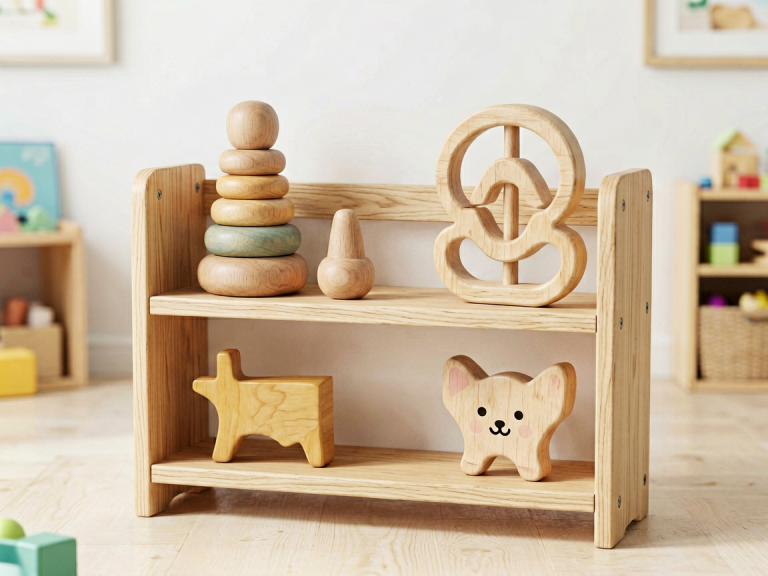
*Wooden blocks and alternative materials:* A set of simple, unpainted wooden blocks (in various shapes) is a classic for good reason. But don’t stop there. Offer recycled materials like cardboard boxes, paper towel tubes, and plastic lids. Show your toddler how to balance a tube on two boxes to create a tunnel. Then let him take over. He might build a “garage” for his toy cars, then decide it’s actually a “cage” for a dinosaur.
*Magnetic tiles:* While some magnetic building sets are pricey, they are worth the investment. Toddler boys can connect tiles into flat shapes, then lift them into 3D structures. Because the magnets do the holding, there is less frustration than with blocks that topple easily. Watching a boy realize he can make a cube, then put a small toy inside it, is a beautiful moment of cognitive leap.
*Why it works:* Construction play teaches physics principles—gravity, balance, cause and effect. It also requires planning and problem-solving. When a structure falls, a toddler boy must decide: Do I rebuild exactly the same way? Do I make the base wider? Do I give up and try something else? These micro-decisions build executive function skills that are crucial for school readiness.
5. Dramatic Imitation: Costumes, Props, and Pretend Worlds
By around 18 months, toddler boys begin to engage in pretend play. This is where open-ended activities truly shine, because no script is needed. The world of imagination is their stage.
*Simple dress-up:* Collect old hats, scarves, capes, and safe accessories (no small choking hazards). A toddler boy might put on a hat and immediately become a “firefighter” running to save his teddy bear from a paper-towel-roll “hose.” He might wrap a scarf around his waist and become a “superhero” leaping off the couch (supervised!). The costume doesn’t have to look realistic—it just has to feel special.
*Prop-based storytelling:* Set out a few props with no context: a plastic phone, a small blanket, a toy animal, a cardboard steering wheel. Let your toddler boy decide the story. He might call Grandma on the phone, then wrap the blanket around the animal to “put it to bed,” then drive the steering wheel to the grocery store. You can gently extend the play by asking a question: “Is your puppy hungry?” But avoid directing the narrative. Let his imagination lead.
*Why it works:* Dramatic play develops language skills (he uses words to describe what he is doing), social-emotional understanding (he practices empathy with his toys), and creativity. For boys, whom society sometimes steers away from “nurturing” play, offering dolls, strollers, and kitchen sets is equally important. These toys teach caregiving and emotional expression—skills all children need.
6. Music and Movement: No Sheet Music Required
Music is another open-ended domain. Toddler boys respond to rhythm and sound instinctively. You don’t need a music class; you just need noise-makers and space.
*Homemade instruments:* Fill a plastic bottle with rice to make a shaker. Tape two paper plates together with dried beans inside for a tambourine. Use a wooden spoon on an upside-down pot for a drum. Let your boy experiment with different sounds—loud, soft, fast, slow. There is no song to learn; only sound to discover.
*Free dance:* Put on a variety of music—classical, folk, pop, world music—and let your toddler boy move however he wants. He might spin, stomp, wiggle, or just stand still and sway. Dance releases physical energy and helps with body awareness. You can join him to model that there is no wrong way to dance.
*Why it works:* Musical play develops auditory discrimination (hearing differences in pitch and rhythm), gross motor coordination, and emotional expression. For a toddler boy who is frustrated or overstimulated, five minutes of drumming on a pot can be remarkably grounding.
Conclusion: Letting Go of the Agenda
As adults, we often feel pressured to direct our children’s play—to teach them the “right” way to stack blocks, to show them how to draw a circle, to correct their “mistakes.” But open-ended play demands the opposite: it asks us to step back, to trust the child’s instincts, and to embrace the mess and the chaos.
For toddler boys especially, whose physical energy and desire for autonomy can sometimes clash with our own need for order, open-ended activities offer a safe outlet. They allow boys to be loud, messy, and wild within a framework that is still safe and loving. They teach that the process matters more than the product, that failure is just another kind of experiment, and that the best play comes from within.
So the next time your toddler boy empties the recycling bin and starts stacking yogurt cups on top of the cat, resist the urge to redirect. Instead, smile, hand him one more cup, and watch the magic unfold. That is open-ended play—and it is one of the greatest gifts you can give him.