The Power of Unstructured Wonder: How Open-Ended Play Shapes Learning in Six-Year-Old Girls
Introduction: Beyond the Toy Aisle
In a world increasingly saturated with digital screens, structured extracurricular activities, and early academic pressure, the concept of “open-ended play” might seem almost rebellious. Yet for a six-year-old girl, a cardboard box can become a castle, a spaceship, or a time machine; a handful of pebbles can transform into a village of tiny inhabitants with their own stories and conflicts. This type of play—unscripted, child-led, and rich with possibility—is not merely a pastime. It is a profound and scientifically supported vehicle for learning, particularly for girls at the developmental crossroads of early childhood. At age six, girls are transitioning from the egocentric world of toddlerhood into a more complex social and cognitive landscape. They are beginning to grasp concepts of friendship, fairness, narrative, and cause and effect. Open-ended play provides the perfect laboratory for this growth, offering a safe, flexible environment where imagination, problem-solving, and emotional intelligence can flourish without the constraints of predetermined outcomes or external rewards. This article explores the multifaceted benefits of open-ended play for six-year-old girls, offering both theoretical insights and practical examples that parents, educators, and caregivers can embrace.
The Essence of Open-Ended Play: What It Is and Is Not
Open-ended play is characterized by the absence of a fixed goal, set rules, or a prescribed end product. Unlike a puzzle with one correct solution or a board game with a winner and loser, open-ended play invites infinite possibilities. A set of wooden blocks, a collection of fabric scraps, a pile of sand, or a simple dollhouse with no story attached—these materials become catalysts for the child’s own narrative. For six-year-old girls, this freedom is particularly valuable because it allows them to explore identity, relationships, and power dynamics in a low-stakes setting. They can experiment with being a bossy princess, a nurturing mother, a brave explorer, or a shy bunny—all within the same afternoon. This is not “free time” in the sense of unstructured idleness; rather, it is active, engaged, and deeply cognitive. The child is constantly making decisions: How do these blocks fit together? What happens if I put the blue scarf on the doll? Why is my character angry today? Each choice builds neural connections, reinforces executive function <a href="https://www.playlearningguide.com/category/skills/”>skills like planning and self-regulation, and cultivates a sense of agency.
Why Six-Year-Old Girls? The Developmental Sweet Spot
At age six, girls typically exhibit advanced language skills, a growing sense of empathy, and a keen interest in social hierarchies. They are also increasingly aware of gender expectations—subtle messages from media, peers, and adults about what girls should like, how they should behave, and what they should aspire to be. Open-ended play offers a critical counterbalance to these pressures. When a six-year-old girl builds a towering block structure and then commands her toy dinosaurs to attack it, she is practicing spatial reasoning and physics, but she is also challenging the stereotype that girls should play only with dolls or in quiet, cooperative ways. Similarly, when she engages in pretend cooking with a diverse set of ingredients (a red leaf, a pinecone, a piece of string), she is not just mimicking domestic roles; she is experimenting with chemistry, fractions, and creativity. The play itself is gender-neutral by design—it is the child who decides the narrative. This autonomy is especially important for girls, who are often socialized to be pleasers and rule-followers. Open-ended play allows them to lead, to make mistakes, and to revise their own rules without fear of judgment.
Cognitive and Academic Gains: More Than Just Fun
The notion that play and learning are separate activities is a persistent myth. In reality, open-ended play is a powerhouse of cognitive development. For a six-year-old girl, building a fort from blankets and chairs requires planning, estimation, and trial-and-error problem-solving. She must calculate whether the blanket will reach, how to stabilize the structure, and what to do when it collapses. These are the foundational skills of engineering and mathematics. Moreover, the narrative that accompanies play—the story of the fort being a castle under siege—demands language organization, sequencing, and the ability to hold multiple characters and plotlines in mind. Research in developmental psychology consistently shows that children who engage in high-quality pretend play demonstrate stronger language abilities, better narrative comprehension, and more advanced executive functions, including inhibitory control (the ability to resist impulses) and cognitive flexibility (the ability to shift between rules or perspectives). For girls, who often have an early advantage in verbal skills, open-ended play can further strengthen these strengths while simultaneously challenging them in spatial and logical reasoning—areas where girls sometimes receive less encouragement at an early age.
Social and Emotional Intelligence: The Invisible Curriculum
Perhaps the most profound benefits of open-ended play for six-year-old girls lie in the social and emotional domain. This is the age when friendships become more complex, and conflicts over sharing, turn-taking, and inclusion become daily occurrences. In a structured game or a teacher-led activity, the rules are externally imposed. In open-ended play, the social rules are negotiated in real time. Two girls playing with dolls might disagree on the storyline: one wants the doll to go to school, the other wants it to go to a dance party. To continue the play, they must communicate, compromise, and sometimes assert themselves. These moments are rich with learning about empathy, perspective-taking, and conflict resolution. A girl who learns to say, “No, I want to be the mom today, you can be the big sister,” is practicing assertiveness. Another who says, “Okay, let’s do both—first school, then dance party,” is practicing flexible thinking and generosity. These are not skills that can be taught through a worksheet; they are honed through repeated, real-world rehearsals in the safe theater of play. Additionally, open-ended play allows girls to process emotions. After a difficult day at school, a six-year-old might enact a scenario where a doll gets lost and feels scared, then finds a friend—a way of working through her own feelings of anxiety or loneliness. This emotional regulation is a cornerstone of mental health and resilience.
Suggestions for Parents and Educators: Cultivating the Play Environment
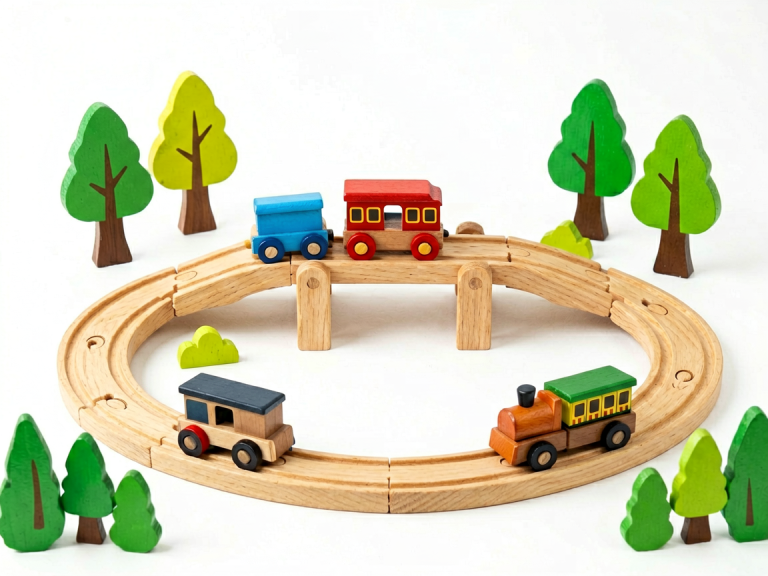
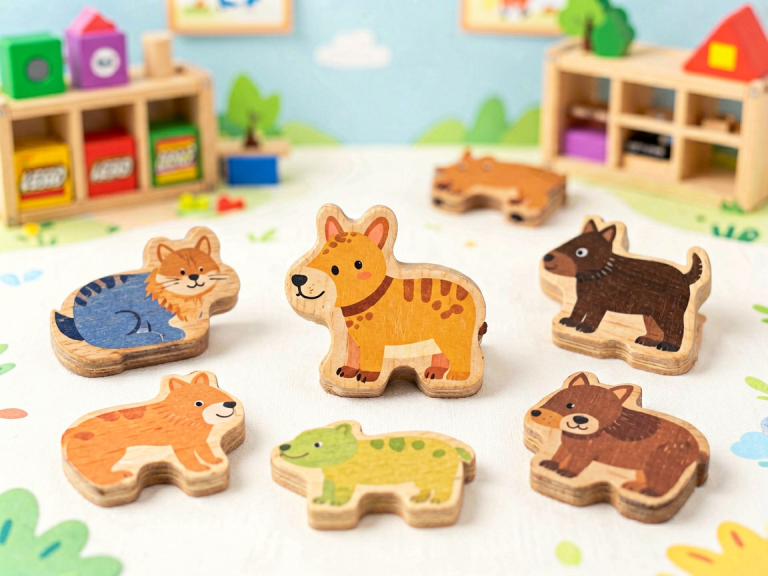
To maximize the learning potential of open-ended play for six-year-old girls, adults must adopt a supportive but non-directive role. The first step is to provide “loose parts”—materials that can be used in a multitude of ways. These include: wooden blocks, fabric pieces, scarves, stones, shells, buttons, empty containers, art supplies like clay and markers, and simple dolls or animal figures without intricate accessories. Avoid toys that dictate a specific story (like a princess castle with a pre-installed sound effect) because they limit imagination. Instead, a plain wooden boat can be a pirate ship, a rescue vessel, or a floating market. The second step is to carve out uninterrupted time. A six-year-old’s deep play cannot flourish in 15-minute segments between piano lessons and dinner. A dedicated block of at least 45 minutes to an hour, free from screens and scheduled activities, allows her to enter a state of flow. Third, resist the urge to intervene with suggestions or corrections. If she is building a lopsided tower that is about to fall, let it fall. The lesson of gravity and balance learned through failure is far more powerful than a perfect structure built with adult guidance. Instead, ask open-ended questions: “What’s happening in your story now?” “What could the doll do next?” This validates her creativity and encourages deeper thinking.
Navigating Common Challenges: Screens, Gender Stereotypes, and Parental Anxiety
In an age of tablets and algorithm-driven entertainment, many parents worry that their six-year-old girl will prefer a digital game over a pile of blocks. This concern is valid, but the solution is not to eliminate screens entirely—rather, to create a compelling alternative. When a child experiences the deep satisfaction of creating her own world, the passive consumption of a screen often loses its appeal. However, the first few attempts may require patience. A parent can model open-ended play by sitting on the floor and simply starting to build or arrange objects without a plan. Another challenge is the pressure of gender stereotypes. A girl who loves open-ended construction play might be told by peers that “building is for boys.” Parents and educators can counteract this by exposing her to stories and role models of women inventors, architects, and scientists, and by explicitly celebrating her spatial and mechanical achievements. Finally, many adults feel anxious that open-ended play is not “productive” enough—that it doesn’t teach letters, numbers, or specific skills. The evidence, however, is clear: the skills developed through free play—creativity, problem-solving, social negotiation, self-regulation—are the very ones that predict long-term academic success and life satisfaction. The girl who learns to imagine and invent at six will be the entrepreneur, the leader, and the innovator of tomorrow.
Conclusion: A Lifelong Gift
The six-year-old girl who spends her afternoons constructing imaginary worlds, negotiating pretend conflicts, and experimenting with materials is not just playing—she is building the architecture of her own mind. Open-ended play offers a unique and irreplaceable form of learning that respects her developmental needs, nurtures her curiosity, and honors her individuality. In a culture that often rushes children toward early academics and measurable outcomes, choosing to prioritize unstructured, imaginative play is an act of profound trust in the child’s natural drive to learn. For parents and educators, the task is not to instruct, but to provide the space, the materials, and the time—and then simply to watch in wonder as the learning unfolds. The cardboard box is not a cheap alternative to a fancy toy; it is a portal to infinite possibilities. And for a six-year-old girl, those possibilities are the foundation of everything she will become.
Sources and further reading
For additional evidence-based guidance, consult these authoritative resources: