Unleashing Imagination: The Power of Open‑Ended Play Activities for Preschool Boys
Introduction
In the world of early childhood development, play is not merely a pastime—it is the primary vehicle through which children learn, explore, and make sense of their environment. For preschool boys, whose boundless energy and natural curiosity drive them to touch, build, and dismantle everything in sight, the type of play matters profoundly. Open‑ended play activities, those that have no predetermined outcome, no single “right” way to play, and no fixed set of instructions, offer a fertile ground for cognitive, social, emotional, and physical growth. Unlike closed‑ended toys that flash lights and sing songs when a button is pressed, open‑ended materials invite children to become architects of their own narratives, engineers of their own structures, and heroes of their own adventures.
This article explores why open‑ended play is especially beneficial for preschool boys, presents a rich variety of activity ideas, and explains how parents, caregivers, and educators can facilitate such play effectively. By the end, you will have a practical toolkit for nurturing creativity, resilience, and problem‑solving skills in the energetic, imaginative minds of young boys.
—
Why Open‑Ended Play Matters for Preschool Boys
1. Supporting Natural Developmental Urges
Preschool boys often exhibit strong impulses to move, to test physical limits, and to engage in rough‑and‑tumble play. Open‑ended activities channel these urges constructively. When a boy can pile up cardboard boxes to create a castle, hammer wooden pegs into a foam block, or roll a collection of balls down a ramp he designed himself, he satisfies his need for active, hands‑on exploration without being constrained by a toy’s limited functions. Such play also builds fine and gross motor skills, coordination, and spatial awareness—all critical at this age.
2. Encouraging Problem‑Solving and Executive Function
Because open‑ended activities lack a prescribed end goal, children must constantly make decisions: “What should I build next?” “How can I make this tower stand?” “What happens if I add water to the sand?” Each choice requires planning, self‑regulation, and flexible thinking. For preschool boys, who are often labeled as “too active” or “distracted,” these moments of focused problem‑solving help develop executive function skills—the very abilities that underpin later academic success and social competence.
3. Fostering Emotional Resilience and Social Skills
When a block tower collapses, a boy can either throw a tantrum or try a new approach. Open‑ended play provides a safe space for frustration, experimentation, and eventual mastery. Moreover, when boys play together with open‑ended materials, they negotiate roles, share resources, and co‑create stories. A pile of scarves becomes lava, a rope becomes a fire hose, and a blanket becomes a superhero cape. Through these collaborative scenarios, boys learn empathy, turn‑taking, and conflict resolution—skills that are often under‑nurtured in more structured, adult‑directed settings.
—
Open‑Ended Play Activity Ideas for Preschool Boys
1. Construction and Loose‑Parts Play
The Magic of Cardboard and Tape
Provide a stack of clean cardboard boxes of various sizes, along with masking tape, child‑safe scissors, and markers. Preschool boys will instinctively start connecting boxes, cutting doors, and drawing windows. They might build a rocket ship destined for Mars, a hiding fort, or a “robot” that has three arms. The beauty of cardboard is that it can be transformed, painted, and reconfigured endlessly. Supervision is needed for scissors, but the cognitive gains—understanding balance, symmetry, and cause‑and‑effect—are immense.
Loose Parts: The Ultimate Open Materials
Gather a collection of loose parts: wooden blocks, plastic lids, fabric scraps, pinecones, pebbles, bottle caps, and large buttons. Scatter them on a low table or a floor mat. Boys will sort, stack, line up, and combine these items in ways you could never predict. One day, the lid collection becomes a fleet of flying saucers; the next, the pebbles are dinosaur eggs. Loose‑parts play supports mathematical thinking (classification, counting, patterning) and creative storytelling.
2. Sensory and Messy Play
Sand and Water Tables with a Twist
Instead of a pre‑molded beach set, add unconventional tools: funnels, turkey basters, colanders, measuring cups, and toy animals. Boys can experiment with pouring, sifting, and flooding. Ask open questions like, “How can you make the water move faster?” or “What happens if you bury the dinosaur completely?” The sensory input is calming for many active boys, while the open‑ended nature encourages scientific hypothesizing.
Homemade Playdough and “Stick‑Together” Creations
Commercial playdough often comes with cookie cutters that dictate a shape (a star, a heart). Instead, make your own dough (flour, salt, cream of tartar, oil, and food coloring) and add natural materials: twigs, leaves, googly eyes, feathers, and beads. Boys will sculpt creatures, vehicles, or abstract blobs. The key is to avoid showing them “how to make a dog.” Let them discover their own forms, even if the result looks like a lumpy monster. This builds confidence in their own creative choices.
3. Outdoor and Gross‑Motor Adventures
Obstacle Courses from Found Objects
Use tree stumps, old tires, cardboard tunnels, rope, and chalk to create a custom obstacle course. The boys themselves can help design it: “We need a balance beam made from a fallen branch! The tunnel is a dragon’s mouth!” The course changes every time because the materials are rearranged. This activity develops large muscle groups, risk‑assessment skills, and perseverance. It also burns off energy in a purposeful way.
Mud Kitchen and “Potions”
Designate a corner of the yard with a small table, old pots, wooden spoons, and a bucket of dirt. Add water, leaves, flower petals, and acorns. Boys can “cook” mud pies, brew magical potions, or mix “lava” with sand. The sensory blast is unparalleled, and the pretend‑play scripts (super‑hero elixirs, dinosaur food) tap into their love of action and fantasy.
4. Pretend Play with Minimal Props
The “Clothes‑Up” Box
Fill a large bin with old shirts, scarves, hats, boots, capes, and fabric belts. No specific costumes—just open pieces. A boy might tie a scarf around his waist to become a ninja, drape a blanket over his shoulders to be a king, or put on mismatched boots to pretend he is a construction worker. The absence of themed costumes (like a fixed “firefighter” jacket) forces imagination to do the heavy lifting. He can be anyone, anywhere.
Story Stones and Narrative Building
Paint or draw simple images on flat stones: a tree, a boat, a star, a house, a dragon, a boy. Place them in a basket. Boys can pick a few stones randomly and then invent a story that connects them. “Once there was a boy who lived in a house next to a giant tree. One day a dragon came….” This oral storytelling builds language skills, sequencing, and creativity. For boys who struggle to sit still, moving the stones around as they talk keeps them engaged physically.
—
How to Facilitate Open‑Ended Play Effectively
1. Create a “Yes” Environment
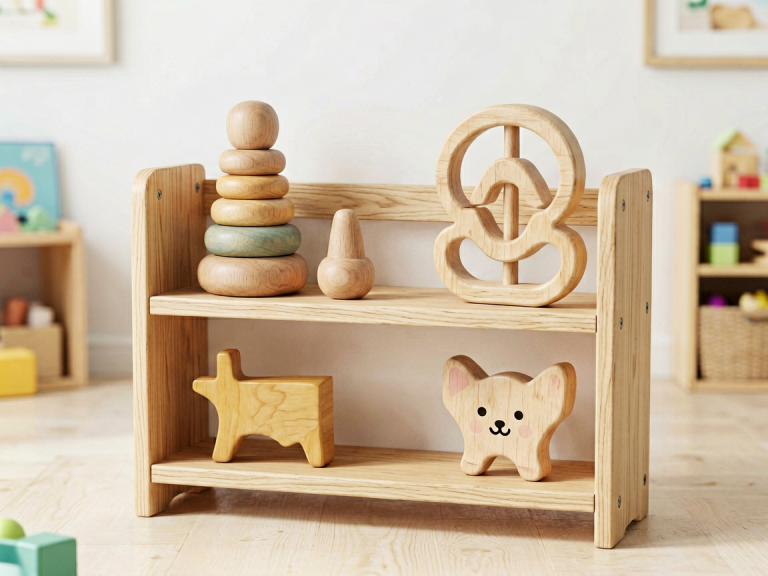
Set up a space where mess is allowed—a garage floor, a kitchen table covered with newspaper, or a garden patch. When boys know they won’t be scolded for spilling or mixing, they explore more freely. Use neutral, calming colors for the play area to avoid overstimulation, and keep materials within easy reach on low shelves.
2. Step Back and Observe
Resist the urge to demonstrate or correct. If a boy builds a tower that repeatedly falls, let him try different solutions. Your role is to narrate without judging: “I see you are trying to balance that block on the round one. What do you think would happen if you put a flat block underneath?” Such language encourages reflection without taking over the problem.
3. Ask Open Questions
Instead of “What did you make?” (which implies there is a fixed product), ask “Tell me about your creation. How does it work? Where is it going?” This shifts the focus from product to process. For boys, the action is often more important than the finished piece. Honor that.
4. Rotate Materials to Spark Renewed Interest
Boys can tire of the same blocks after a week. Keep a rotation bin in storage. Every two weeks, swap out half the loose parts—bring in pipe cleaners, add fabric, introduce a new type of container. The novelty will re‑engage their curiosity.
5. Embrace “Rough” Play Within Open Boundaries
Preschool boys often use open‑ended materials for mock battles, crashes, and explosions. That is acceptable inside a framework of safety and respect. Set ground rules: “We do not throw hard objects at people’s faces. You can crash the cardboard tower as long as everyone agrees.” This allows them to express their high energy while learning self‑control.
—
Overcoming Common Concerns
“But he just makes messes!”
Mess is the evidence of engagement. A boy who has turned the living room into a version of Jupiter with pillows and blankets is learning spatial reasoning and narrative structure. Keep a broom handy; clean‑up can be part of the play (e.g., “Let’s see who can put all the blocks back the fastest!”).
“He always wants to destroy what he builds.”
Destruction is a legitimate form of play for many boys. It helps them understand force, gravity, and the cycle of creation and decay. After he demolishes, he often builds something new. The process—not the preservation—is the learning.
“What about screen time? He prefers his tablet.”
Open‑ended digital tools (like drawing apps or simple construction sandbox games) can complement physical play, but they should not replace it. The tactile, sensory, and social richness of real‑world play is irreplaceable for preschool brains. Set clear limits on screens and ensure ample time for hands‑on exploration.
—
Conclusion
Open‑ended play activities offer preschool boys a vital canvas on which to paint their own learning journeys. By providing simple, flexible materials and trusting their innate creativity, we empower them to become confident problem‑solvers, compassionate collaborators, and fearless adventurers. A cardboard box is never just a box—it is a spaceship, a fortress, a time machine. A pile of pebbles is never just stones—it is a treasure map, a baby dinosaur nest, a counting game. In the world of open‑ended play, the only limits are those of imagination itself.
As parents and educators, our most important task is not to direct, but to facilitate; not to instruct, but to wonder alongside. When we watch a preschool boy spend forty minutes arranging old keys into a pattern, then declare it a “secret code,” we are witnessing the birth of originality. That is the real magic of open‑ended play—it hands the reins of learning directly to the child, and in doing so, it prepares him for a lifetime of curiosity, resilience, and joy.
(Word count: approximately 1,550)