Beyond Dolls and Dresses: How Open-Ended Play Shapes the Minds of Preschool Girls
Introduction: The Quiet Revolution in the Preschool Playroom
For decades, the toy aisle has been a silent curriculum. Pink aisles overflow with miniature kitchens, talking dolls, and glittery dress-up sets, while blue aisles boast building blocks, science kits, and construction vehicles. For preschool girls, this division can unintentionally limit the range of experiences they encounter during their most formative years. Yet a growing body of research—and the joyful testimony of educators and parents—suggests that the most powerful learning happens not when a toy dictates a single outcome, but when a child is free to imagine, experiment, and create. This is the world of open-ended play.
Open-ended play refers to activities that have no fixed goal, no prescribed sequence, and no single “correct” answer. A set of cardboard tubes, a pile of wooden blocks, a collection of fabric scraps, a sandbox, or a simple puddle of water—these are the raw materials of open-ended play. For preschool girls, who are often socialized toward neatness, compliance, and verbal expression, embracing the messy, iterative, and sometimes chaotic nature of open-ended play can be transformative. It is not just about having fun; it is about building the cognitive, emotional, and social architecture that will support lifelong learning, problem-solving, and creativity.
The Cognitive Scaffold: How Unstructured Play Builds Executive Function
One of the most compelling arguments for open-ended play is its role in developing executive function skills—the brain’s “air traffic control” system that includes working memory, inhibitory control, and cognitive flexibility. These skills are better predictors of academic success than early literacy or numeracy instruction. How does play contribute?
When a preschool girl is given a set of magnetic tiles with no instructions, her brain enters a state of active problem-solving. She might try to build a tower, only to watch it collapse. She adjusts the angle, adds a base, and tries again. This cycle of hypothesis-testing-failure-adjustment is identical to the scientific method, yet it happens naturally in play. A study by researchers at the University of Cambridge found that children who engaged in more open-ended construction play showed significantly stronger spatial reasoning and mathematical thinking by age five. For girls, who are often subtly steered away from spatial activities, this kind of play directly counters the stereotype that “girls aren’t good at math.”
Moreover, open-ended play nurtures what psychologist Carol Dweck calls a “growth mindset.” Because there is no right answer, a child cannot “fail” in a traditional sense. A block tower that falls is not a mistake; it is data. A girl who paints a purple horse is not wrong; she is exploring color theory and personal expression. This resilience is critical for later academic challenges. When she encounters a difficult subtraction problem in first grade, she will remember that she once solved the problem of the wobbly tower—not by giving up, but by trying a new strategy.
Social and Emotional Growth: Negotiation, Empathy, and Self-Regulation
Preschool is a time of intense social development, and open-ended play provides a natural laboratory for learning how to share, negotiate, and resolve conflicts. Unlike a board game with fixed rules, open-ended play requires children to invent their own rules as they go. Imagine two three-year-old girls with a set of hollow blocks and a piece of blue fabric. One says, “This is a castle.” The other says, “No, it’s a rocket ship.” They must now negotiate. Do they merge the ideas? Does one child concede? Do they take turns? Every interaction is a micro-lesson in perspective-taking and emotional regulation.
For preschool girls, who are often praised for being “nice” and “cooperative,” open-ended play offers a safe space to practice assertiveness. When a girl defends her idea that the blocks should be a hospital, not a grocery store, she learns that disagreement is not the same as meanness. She learns to advocate for her vision while also listening to another’s. This balance is foundational for healthy relationships and leadership later in life.
Furthermore, open-ended play can be deeply therapeutic. A child who has experienced a stressful event—moving to a new home, the arrival of a sibling, a parent’s long work hours—often processes these feelings through symbolic play. A preschool girl might use dolls to reenact a goodbye scene, or build a “safe house” out of pillows and sheets. Without an adult directing the narrative, she can work through difficult emotions at her own pace. This form of emotional regulation is a gift that structured, adult-led activities rarely provide.
Breaking the Pink Ceiling: How Open-Ended Play Challenges Gender Stereotypes
It is no secret that the toy industry markets aggressively to gender. By age two, many girls have already internalized the message that their play should be about caregiving, appearance, and domesticity. Open-ended play, by its very nature, resists these narrow scripts. A cardboard box can become a fire truck, a time machine, or a drum. A collection of seashells can be currency, a family photo album, or a set of counting tools.
When preschool girls are encouraged to engage in open-ended play that spans traditionally “masculine” themes—construction, rough-and-tumble movement, exploration of mechanical objects—they develop a wider sense of what is possible for them. A 2020 study from the Journal of Play found that girls who regularly engaged in open-ended outdoor play (building forts, digging in dirt, climbing trees) scored higher on measures of self-efficacy and spatial confidence than peers who played primarily with dolls and dress-up indoors.
This is not to say that dolls and dress-up are bad. Rather, the issue is one of variety. A girl who only plays with dolls learns one set of skills: empathy, nurturance, language. A girl who also plays with blocks, sand, water, and loose parts learns all of those plus physics, geometry, risk-assessment, and creative problem-solving. Open-ended play widens the aperture of possibility, allowing each child to discover her own interests and strengths without the weight of gendered expectations.
The Role of the Adult: Facilitating Without Directing
Some parents and educators worry that open-ended play means doing nothing—that they must simply stand back and let chaos unfold. In reality, the adult’s role is subtle but crucial. It involves three key practices: providing rich materials, asking open-ended questions, and protecting playtime.
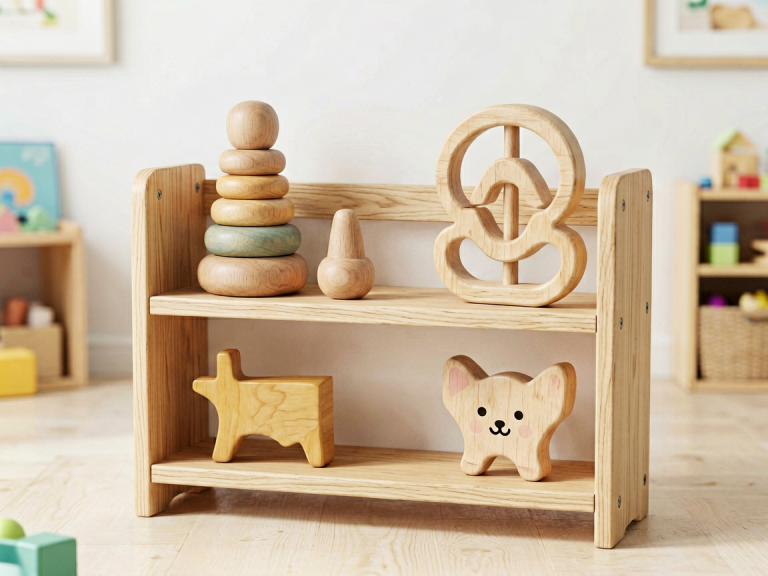
First, the environment matters. A preschool girl learns best when she has access to “loose parts”—objects that can be moved, combined, and transformed. Think of wooden rings, fabric scraps, pinecones, corks, empty thread spools, yarn, clay, water, and sand. The more variety, the more cognitive connections she can make. Second, adults should ask questions that extend thinking without imposing solutions. Instead of “What color is that?” try “Tell me about your creation,” or “What happens if you add more water to the sand?” These questions invite elaboration and metacognition—thinking about one’s own thinking.
Finally, adults must protect the uninterrupted time for play. In a world of scheduled enrichment classes, screen time, and academic pressure, free play is often the first thing to be cut. Yet its value is immeasurable. A forty-five-minute session of open-ended play can teach more about engineering, cooperation, and resilience than a thirty-minute structured science lesson—especially for a four-year-old whose attention span and motivation are naturally tied to her own interests.
Conclusion: Letting Girls Lead Their Own Learning
Open-ended play is not a luxury or a frill; it is a fundamental right of childhood. For preschool girls, it offers a counterbalance to a world that often tells them to be quiet, to be neat, to be helpful, and to follow instructions. In the freedom of unstructured play, they learn to raise their voices, to build something that falls and try again, to argue for their ideas, and to imagine worlds far beyond the pink aisle.
As parents, educators, and caregivers, we can do one powerful thing: step back. Provide the blocks, the fabric, the mud, the time. Then watch as a four-year-old girl picks up a wooden spoon and a plastic bottle, and declares, “I’m building a spaceship to take Gramma to the moon.” In that moment, she is not just playing. She is learning physics, storytelling, empathy, and ambition. She is practicing for a future that does not yet exist, building the skills she will need to shape it herself. And that is the most important lesson of all.