Building Bright Minds: The Essential Guide to Early STEM Toys for Preschoolers
In today’s fast-evolving world, the foundations of critical thinking, problem-solving, and creativity are being laid earlier than ever before. For parents and educators seeking to prepare young children for a future dominated by technology and innovation, early STEM (Science, Technology, Engineering, and Mathematics) toys have emerged as powerful tools. Far from being mere playthings, these toys are carefully designed to spark curiosity, encourage experimentation, and nurture the cognitive skills that will serve children throughout their lives. Preschoolers—ages three to five—are at a uniquely receptive stage of brain development, making it the perfect time to introduce hands-on, exploratory learning through play. This article delves into the world of early STEM toys, exploring why they matter, what types are most effective, how to choose them wisely, and the vital role adults play in maximizing their benefits.
The Importance of Early STEM Exposure
The first few years of life are a period of explosive neural growth. According to developmental psychologists, a child’s brain forms more than one million new neural connections every second during the first three years. By age five, the brain has already reached about 90% of its adult volume. This window of remarkable plasticity means that early experiences—especially those that involve active, hands-on engagement—profoundly shape a child’s ability to learn and adapt later in life.
STEM toys capitalize on this critical period by presenting concepts in concrete, tangible ways. A preschooler who stacks blocks to build a tower is not just playing; she is intuitively learning about balance, gravity, and structural stability. A child who mixes colored water in cups is exploring cause and effect, volume, and the properties of liquids. These experiences lay the groundwork for more abstract scientific reasoning in elementary school and beyond.
Moreover, early exposure to STEM helps break down gender and socioeconomic stereotypes. When both boys and girls are given equal access to building sets, simple coding toys, and nature exploration kits from an early age, they develop confidence in their ability to engage with science and math. This early confidence can counteract the societal messages that often steer girls away from STEM fields later on. By integrating STEM play into the preschool years, we cultivate a generation of children who see themselves as capable problem-solvers, inventors, and thinkers.
Types of Early STEM Toys for Preschoolers
Not all toys marketed as “STEM” are created equal. The best ones encourage open-ended exploration, allow for multiple solutions, and require active participation rather than passive observation. Here are several categories that research and early childhood experts consistently recommend.
Building and Construction Sets
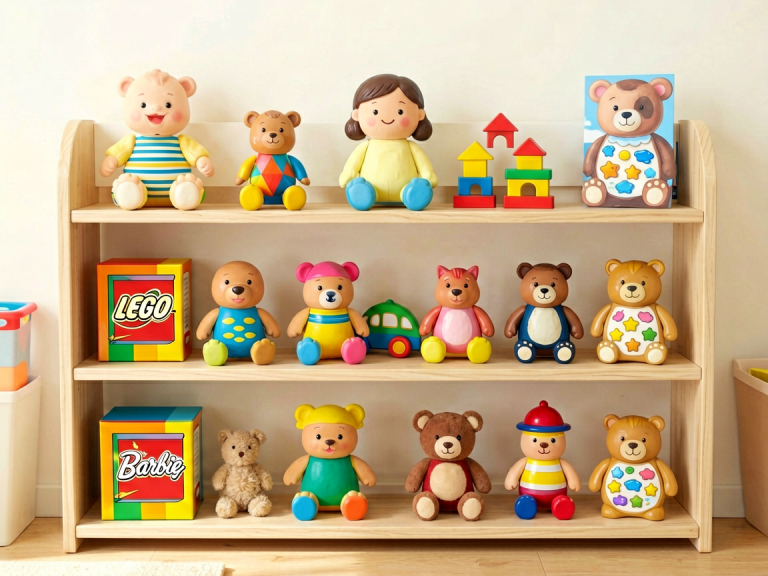
Classic building blocks, magnetic tiles, interlocking plastic bricks, and snap-together beams are quintessential STEM toys. They teach spatial awareness, geometry, and engineering principles. When a preschooler tries to build a bridge that can hold a toy car, he must consider weight distribution, support structures, and symmetry. These toys also foster persistence and resilience—when a tower falls, the child learns to try again, adjusting the design. Brands like Magna-Tiles, LEGO Duplo, and wooden unit blocks offer age-appropriate options that grow with the child.
Simple Coding and Logic Toys
Many people assume coding is too advanced for preschoolers, but screen-free coding toys have made it accessible and fun. Toys like Botley the Coding Robot, Code-a-Pillar, or even simple sequencing games with cards and arrows teach the basics of algorithms: breaking a task into a series of ordered steps. Preschoolers learn directional language (forward, backward, left, right), pattern recognition, and the concept of debugging—finding and fixing what went wrong. These skills are foundational not just for computer science but for logical thinking in any domain.
Science Exploration Kits
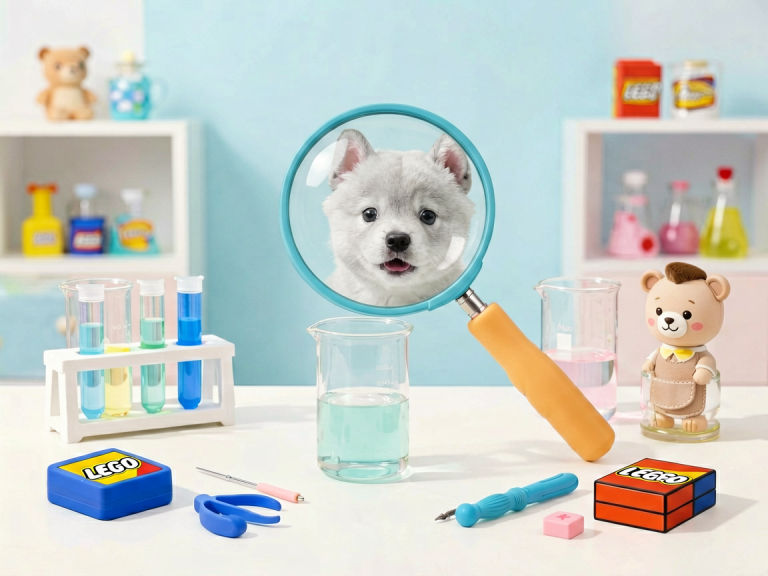
Science kits for young children should be safe, messy-friendly, and sensory-rich. Examples include simple chemistry sets (with non-toxic ingredients like baking soda and vinegar), magnifying glasses for outdoor bug hunts, and water play tables with pipes and funnels. Preschoolers are natural scientists—they ask endless “why” questions. A kit that lets them grow crystals, observe caterpillars transform into butterflies, or test which objects sink and float satisfies that curiosity while introducing the scientific method: make a hypothesis, test it, observe, and conclude.
Math and Pattern Games
Counting bears, sorting trays, number puzzles, and pattern blocks are classic math toys that teach one-to-one correspondence, classification, and early arithmetic. More modern options include balance scales that let children compare weights, or stacking rings that introduce size seriation. The key is to make math tactile and visual. When a child arranges colorful bears into a pattern (red, blue, red, blue), she is practicing algebraic thinking without even knowing it. Dice games, board games with counting, and simple measuring tapes also embed math into everyday play.
Real-World Tool and Role-Play Sets
Toy tool benches, doctor kits, and pretend kitchen sets with working scales, timers, and measuring cups allow children to mimic real-world STEM professions. Using a toy screwdriver to assemble a pretend shelf teaches mechanical reasoning. Role-playing as a chef who follows a recipe involves measurement, sequencing, and chemistry (mixing ingredients). These toys also build language and social skills as children narrate their actions and cooperate with peers.
How to Choose the Right STEM Toys for Your Preschooler
With a flood of products on the market, selecting the best toys can feel overwhelming. The following guidelines can help parents and educators make informed choices.
Age Appropriateness and Safety
Always check the recommended age range. Toys for preschoolers must be large enough to prevent choking hazards, made from non-toxic materials, and free of sharp edges. Complexity should match the child’s developmental stage. For a three-year-old, a simple shape sorter is more appropriate than a 50-piece building set. Pushing a child too far beyond their ability can lead to frustration, while toys that are too simple will fail to engage.
Open-Endedness Over Single-Function
The best STEM toys have no single “right” way to play. A set of magnetic tiles can become a castle, a spaceship, a bridge, or a zoo enclosure. Open-ended toys encourage creativity and prolonged interest. In contrast, a toy that lights up and makes sounds when you press one button may entertain briefly but offers limited cognitive challenge. Look for toys that invite the child to explore multiple possibilities and to combine elements in new ways.
Emphasis on Process, Not Product
Avoid toys that are purely about achieving a predetermined outcome. A kit that instructs the child to build a specific model using step-by-step directions can teach following instructions, but it may stifle experimentation. Toys that allow trial and error—where a child can observe the consequences of their actions and adjust—are far more valuable. For example, a marble run that the child must figure out how to design so the marble reaches the ground is a lesson in physics and persistence.
Gender-Neutral and Diverse Representation
Choose toys that are marketed to all children, not just boys or girls. Avoid overly pink “princess science” kits or hyper-masculine construction sets. Similarly, look for toys that depict diverse families, children with disabilities, and different ethnic backgrounds in their packaging and instructions. This inclusive approach helps all children see themselves as potential scientists, engineers, and mathematicians.
The Role of Parents and Educators in Maximizing Learning
Even the best STEM toy is only as effective as the support provided by the adults in a child’s life. Research shows that guided play—where an adult or older peer scaffolds the child’s experience—significantly boosts learning outcomes. Here is how parents and teachers can enhance the value of early STEM toys.
Ask Open-Ended Questions
Instead of saying, “That’s a nice tower,” try asking, “What do you think will happen if you add one more block to the top?” or “How can you make your bridge stronger?” Questions like these encourage the child to think critically, predict outcomes, and articulate their reasoning. Use “wonder” language: “I wonder why the red block sinks but the green one floats.” This models scientific curiosity and gives the child vocabulary to describe their observations.
Allow Failure and Celebrate Persistence
Preschoolers often get frustrated when a creation falls apart or a toy doesn’t work as expected. Instead of rushing in to fix it, let the child struggle a little. Offer guidance (“What if you try a bigger base?”) rather than solutions. Praise the effort and the process, not just the success. Say, “You tried so many ways to make the marble go through that loop! That’s what real engineers do—they keep trying.” This builds a growth mindset that embraces challenges.
Connect Play to Real-World Experiences
Help the child see the connection between toy play and everyday life. When building with blocks, point out the construction sites you see on a walk. When playing with a balance scale, weigh fruits at the grocery store. When using a magnet set, explore which kitchen items are magnetic. These real-world links make STEM concepts meaningful and memorable.
Provide a Rich, Varied Environment
No single toy can cover all aspects of STEM learning. Rotate toys to maintain interest, and supplement them with non-toy materials: cardboard boxes, tape, paper, sand, water, and natural objects like pinecones and rocks. A cardboard box can be a car, a rocket, or a fort, offering infinite engineering possibilities. Also, take advantage of outdoor play—digging in dirt, observing insects, and building with sticks are nature’s original STEM toys.
Conclusion
Early STEM toys for preschoolers are far more than a passing trend—they are a thoughtful investment in a child’s cognitive, social, and emotional development. By choosing toys that are open-ended, hands-on, and age-appropriate, and by actively engaging with children during play, parents and educators can unlock a world of curiosity and discovery. In a time when technology and science shape nearly every aspect of life, giving preschoolers a strong foundation in STEM is not about pushing them to be prodigies; it is about nurturing their innate wonder and equipping them with the tools to think, question, and create. The blocks they stack today may become the bridges they design tomorrow, and the patterns they arrange may be the first steps toward coding the future. Let the play begin.