Building Little Engineers: The Transformative Power of Early STEM Toys at Home
Introduction
In a world increasingly shaped by algorithms, renewable energy, and space exploration, the foundational principles of science, technology, engineering, and mathematics (STEM) are no longer optional—they are essential. Yet for many parents, the idea of introducing STEM concepts to a toddler or preschooler feels daunting. How do you explain gravity to a three‑year‑old? Can a five‑year‑old really understand coding? The answer lies not in lectures or workbooks, but in the playful, hands‑on universe of early STEM toys.
From magnetic tiles that click into bridges to simple coding robots that respond to arrows, early STEM toys are designed to make abstract concepts tangible. They transform a living room floor into a laboratory, a kitchen table into a workshop. More importantly, they plant the seeds of curiosity, persistence, and creative problem‑solving long before a child ever steps into a formal classroom. This article explores why early STEM toys belong in every home, how to select age‑appropriate options, and what parents can do to maximize the learning hidden inside a pile of colorful blocks.
—
Why Home Matters: The Case for Early STEM Play
The early years (ages 1–6) are a critical window for brain development. During this period, children are natural scientists: they drop spoons to test gravity, pour water to observe flow, and stack blocks to understand balance. When we provide intentional STEM toys at home, we channel this innate curiosity into structured discovery.
Research from the National Science Foundation shows that early exposure to STEM concepts significantly boosts later academic performance, especially in math and spatial reasoning. But the benefits go beyond grades. Playing with STEM toys teaches children how to *fail forward*—a tower collapses, a marble doesn’t roll where planned, a circuit won’t light. Each “failure” becomes a data point. The child learns to hypothesize (“Maybe the base needs to be wider”), test, and revise. This resilience is a life skill.
Furthermore, home is where attitudes form. A child who sees a parent excitedly building a model rocket or puzzling over a gear mechanism internalizes that STEM is fun, not scary. Early STEM toys normalize math and science as part of everyday life, not as separate “school subjects.” They also level the playing field: regardless of a family’s background, a set of wooden blocks or a simple microscope can spark the same wonder.
—
Choosing the Right Toys: What to Look For
Not all toys marketed as “STEM” actually deliver meaningful learning. The best early STEM toys share several key characteristics.
Open‑ended possibilities. A toy that can be used in only one way—like a plastic replica of a robot that beeps a fixed tune—limits creativity. Instead, look for toys that encourage multiple configurations. Magnetic building sets, marble runs, and interlocking gears allow children to create endless variations. Each new arrangement tests a different principle of physics or engineering.
Age‑appropriate complexity. For toddlers (1–3 years), the focus should be on sensory exploration and cause‑and‑effect: stacking cups, shape sorters, large snap‑together blocks. For preschoolers (3–5), introduce toys that involve simple sequencing, such as coding mice or pattern‑based puzzles. For kindergarteners (5–6), gear sets, simple machines (levers, pulleys), and beginner microscopes offer deeper challenges. Avoid toys that frustrate rather than intrigue; the goal is a “just right” level of difficulty.
Real materials over flashy gimmicks. Wood, metal, and sturdy plastic often provide richer tactile feedback than toys covered in blinking lights and loud sounds. A wooden balance scale teaches about weight and equality more effectively than a digital scale that announces “5 grams.” Similarly, a set of real (child‑safe) tools—a screwdriver, a wrench, a measuring tape—can outlast and out‑teach any plastic toolbox.
Connection to real‑world phenomena. The best STEM toys mirror what children see in the world: water flows, shadows change, wheels turn. A gardening kit that lets a child measure plant growth, a wind‑up car that stores energy, or a set of prisms that split light into rainbows—all make abstract concepts visible. Whenever possible, choose toys that invite outdoor or kitchen use, blending play with everyday life.
—
Practical Play: Ideas for Every Room
Bringing STEM into the home doesn’t require a dedicated “science lab.” Every room offers opportunities.
In the living room: Set up a “construction zone” with magnetic tiles, wooden unit blocks, or large cardboard bricks. Challenge your child to build a bridge that can hold a toy car, or a tower taller than their little brother. Use a tape measure to compare heights. As they build, ask questions: “What happens if you move that block underneath?” “Why do you think the tower wobbles?”
In the kitchen: Cooking is chemistry in disguise. Use measuring cups to practice fractions, a kitchen scale to compare weights, and ice cubes to explore melting. A simple experiment: place an ice cube on a metal tray and another on a wooden cutting board. Which melts faster? Why? Let your child hypothesize before concluding.
In the backyard or balcony: Take the toys outside. A water table with cups, funnels, and floating objects teaches volume and buoyancy. A wind sock or pinwheel shows air movement. Plant a bean in a clear cup and watch roots grow. Document the daily changes with a simple chart—this is data collection.
In the bedroom: Use bedtime stories that feature STEM themes—Ada Twist, Scientist, Rosie Revere, Engineer, or The Most Magnificent Thing. Follow up with a related toy: after reading about Ada, pull out a magnifying glass and explore a leaf. After Rosie, build a prototype of a flying machine using paper and tape.
—
The Parent’s Role: Facilitator, Not Instructor
One common mistake is to treat STEM toys as “teaching tools” that require a lesson plan. In fact, the most powerful learning happens when a parent steps back and observes. Your job is not to explain every principle, but to ask open‑ended questions that guide discovery: “I wonder what would happen if…” “How could we make it stronger?” “Can you show me how you got that to work?”
Also, model curiosity yourself. If you don’t know why a marble run doesn’t work, say, “Let’s figure this out together.” Get out a notebook and draw the setup. Try three different variations. This collaborative problem‑solving teaches children that learning is a process, not a product.
Finally, rotate toys regularly. A child who sees the same magnets every day may lose interest. Store half the toys away for a month, then swap. The “new” toys will feel fresh, and the child will return to them with renewed creativity.
—
Beyond the Toy: Building a STEM‑Rich Environment
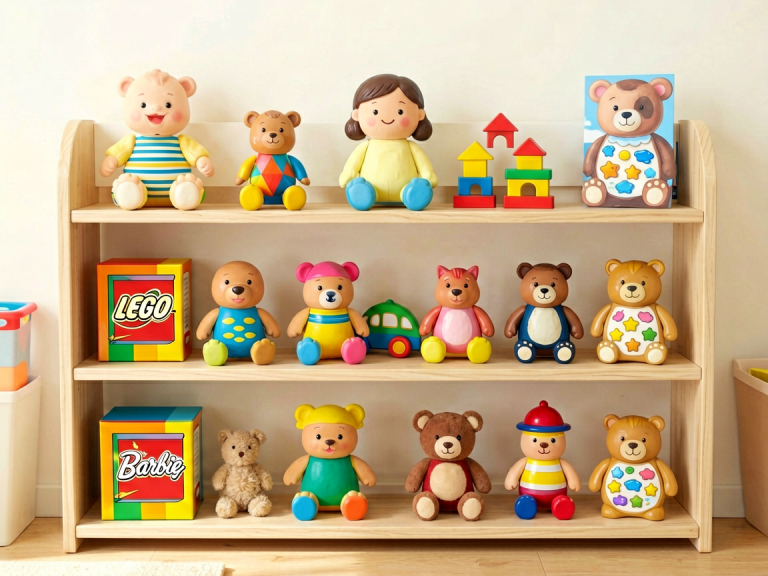
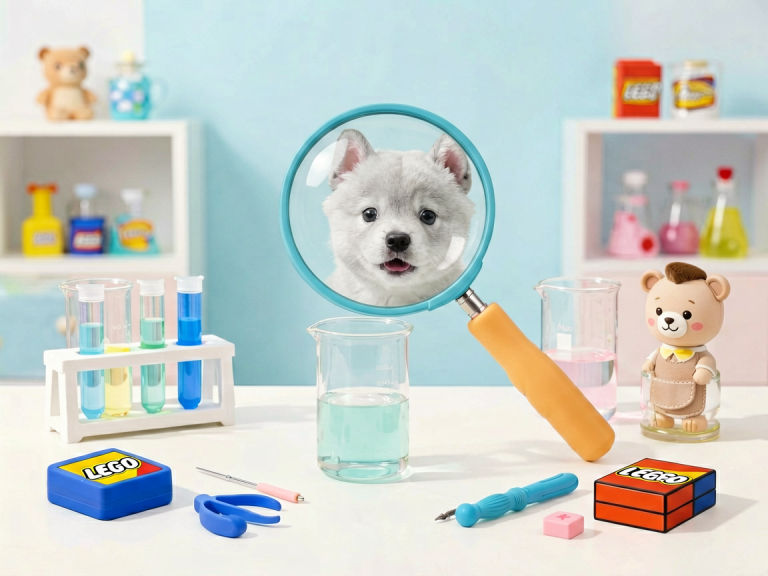
While high‑quality toys are valuable, the environment matters equally. Create a low shelf where your child can access toys independently. Keep a basket of recyclables—cardboard tubes, bottle caps, egg cartons—for open‑ended building. Stock a “tinker tray” with simple tools: a magnifying glass, a tape measure, tweezers, a mirror, a flashlight. These everyday objects are often more captivating than expensive gadgets.
Also, celebrate questions. When a child asks “Why is the sky blue?” don’t just Google the answer. Instead, do a simple demonstration with a flashlight and a glass of water (adding a drop of milk to scatter the light). Turn “I don’t know” into an adventure. The early STEM toys you choose are merely catalysts; the true engine of learning is a home culture that values wonder.
—
Conclusion
Early STEM toys for home are far more than playthings. They are bridges between the concrete world a child can touch and the abstract ideas that will one day solve real problems. A toddler stacking rings is learning order and size. A preschooler connecting magnetic gears is internalizing ratios and mechanical advantage. A kindergartener programming a robot mouse is writing algorithms without knowing the word.
What matters most is not the toy itself, but the mindset it cultivates: *I can try, I can fail, I can try again.* In a home that nurtures this mindset, every block, every marble, every gear becomes a stepping stone toward a lifetime of curiosity. So clear a space on the living room floor. Pull out the magnets. Ask a question. Then step back and watch a young mind begin to build.
*Word count: 1,230*