Beyond the Playroom: How to Use Toys for Effective STEM Play
Introduction
STEM (Science, Technology, Engineering, and Mathematics) education is no longer confined to classrooms and textbooks. In fact, some of the most powerful learning moments happen when children are simply playing. Toys, when chosen and used thoughtfully, become the perfect vehicles for introducing STEM concepts in an intuitive, hands-on way. But not every toy automatically teaches STEM, and not every play session leads to deeper understanding. The secret lies in how you, as a parent, educator, or caregiver, structure the play environment, ask the right questions, and allow room for open-ended exploration. This article will guide you through practical strategies for using toys to spark curiosity, build problem-solving skills, and nurture a lifelong love for science and engineering. From building blocks to robot kits, you will learn how to transform ordinary playtime into a mini laboratory of discovery.
The Philosophy Behind STEM Play: Why Toys Work
Toys are effective for STEM learning because they engage multiple senses and allow children to manipulate the physical world. When a child stacks blocks, she is unconsciously learning about balance, gravity, and structural integrity. When she rolls a marble down a ramp, she experiments with incline, speed, and friction. The key is that toys provide immediate, tangible feedback: the tower falls, the marble stops, the circuit lights up. This feedback loop is far more memorable than a diagram in a book.
Moreover, STEM play is inherently interdisciplinary. A simple construction set can teach engineering (how to build a stable bridge), math (counting blocks, measuring height), and even physics (understanding force distribution). The best STEM toys are “open-ended”—they have no single correct answer and can be used in countless ways. Think of wooden blocks, magnetic tiles, or loose parts like gears and pulleys. These toys allow children to become problem-posers, not just problem-solvers. They learn to hypothesize (“What if I put a heavy block on top?”), test, observe, and iterate—exactly the scientific method in action.
How to Choose Toys That Promote STEM Thinking
Not all toys marketed as “STEM” are created equal. Some are overly prescriptive, with step-by-step instructions that leave little room for creativity. Others are too abstract for young children. When selecting toys for STEM play, consider these criteria:
- Open-endedness: Can the toy be used in many different ways? A set of wooden planks and balls (like a marble run) is far more valuable than a single-purpose toy.
- Modularity: Can parts be combined, separated, and rearranged? This encourages iterative design.
- Real-world connection: Does the toy mimic real systems? Gears, levers, pulleys, and circuits all have direct analogues in engineering and science.
- Scalability: Can the toy grow with the child? For example, a simple building block set can become more complex over time, or a robotics kit can be upgraded with sensors and motors.
Examples of excellent STEM toys include:
- Magnetic building tiles (e.g., Magna-Tiles) for geometry and spatial reasoning.
- Snap Circuits or littleBits for electronics and circuit design.
- LEGO (especially the Technic or Mindstorms lines) for mechanical engineering and programming.
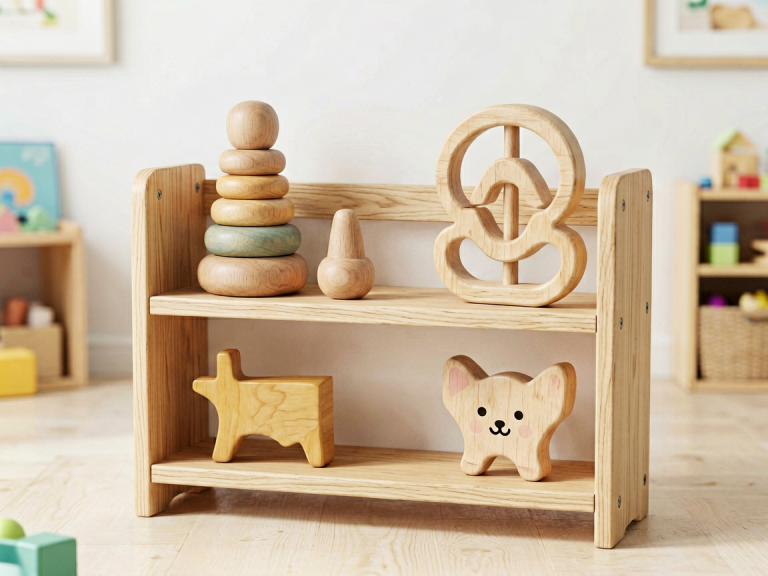
- Wooden blocks, planks, and marble runs for physics and structural engineering.
- Coding robots like Botley or Sphero for computational thinking.
Setting Up the Environment for Productive STEM Play
The physical space where children play matters. A cluttered, distracting room can hinder focus, while a too-sparse environment can lack inspiration. Create a “STEM station” with a low table or a large rug where building projects can be left in progress. Organize toys by type—blocks in one bin, gears in another, measuring tools in a third—so that children can easily access what they need and see the variety of options.
More importantly, prepare yourself. Your role is not to give instructions but to facilitate discovery. Place challenges in the environment: “Can you build a bridge that can hold this toy car?” or “How tall can you stack these cups without them falling?” Don’t be afraid to let children fail. A tower that collapses is a rich learning experience. Instead of fixing it, ask: “What do you think made it fall? What could you change?” This turns a moment of frustration into a scientific investigation.
Structured Play Ideas for Different Age Groups
*Preschool (Ages 3–5)*
At this stage, children are developing fine motor skills and basic cause-and-effect understanding. Simple building blocks, puzzle shapes, and sorting toys are ideal.
- Water play with measuring cups: Fill a basin with water and provide clear plastic cups of different sizes. Ask: “Which cup holds more water? How many small cups fill one big cup?” This introduces volume and estimation.
- Magnet exploration: Give them a set of magnetic wands and a tray of magnetic and non-magnetic objects. Let them sort and experiment. Ask: “Why does the paperclip stick but the crayon doesn’t?”
- Stacking challenges: Using wooden blocks, challenge them to build a tower as tall as their own arm. This teaches balance and symmetry.
*Elementary School (Ages 6–10)*
Children can now handle more complex systems and follow simple instructions. This is a great age for kits that combine engineering and coding.
- Marble run engineering: Provide a marble run set or a collection of cardboard tubes, tape, and a marble. Challenge: “Build a track that takes the marble at least 10 seconds to reach the end.” They will adjust inclines, add turns, and test friction.
- Snap Circuits: Let them build a simple circuit that lights a bulb or spins a fan. Then ask: “What happens if you add a switch? What if you reverse the battery?” This teaches electrical flow and components.
- Lego pulley systems: Build a simple pulley using Lego pieces and a string. Challenge: “Can you lift a heavy toy using only one pulley? How about two?” This introduces mechanical advantage.
*Middle School (Ages 11–13)*
Older children can handle abstract concepts, programming, and multi-step projects. Robotics and coding toys shine here.
- Sphero or Dash robot: Program the robot to navigate a maze drawn on paper. Start with simple arrow commands, then move to block-based coding (e.g., Scratch). They learn sequencing, loops, and conditional logic.
- Bridge building challenge: Use popsicle sticks, glue, and string to build a bridge that can support a load. Introduce real engineering constraints: budget (limited supplies), time, and aesthetics. Weigh the final product and test its strength.
- Coding with micro:bit: Show them how to create a simple game like “rock-paper-scissors” on the micro:bit’s LED screen. They learn variables, input/output, and debugging.
The Role of Adult Facilitation: Questions Over Answers
The most impactful way to use toys for STEM play is to ask strategic questions that guide inquiry without giving away the solution. Here are some go-to prompts:
- “What do you notice?” (Observation)
- “What happens if you change the angle?” (Experimentation)
- “How could you make it stronger / faster / taller?” (Engineering design)
- “Why do you think that happened? Can you test your idea?” (Hypothesis testing)
- “What would you do differently next time?” (Reflection)
Avoid praising only success. Instead, praise effort and creative thinking: “I love how you tried three different ways to fix that!” This builds a growth mindset, which is essential for STEM perseverance.
Also, model curiosity yourself. If your child builds a simple ramp, you might say, “I wonder what would happen if we put a heavier car on it?” Your genuine interest is contagious.
Common Pitfalls to Avoid
- Over-direction: If you tell a child exactly what to build, you rob them of the chance to invent. Let them tinker, even if the result is a lopsided tower or a circuit that doesn’t light up.
- Focusing only on final product: The process of trial and error IS the learning. Celebrate the failed attempts as much as the final success.
- Gender bias: Avoid assuming that certain toys (like construction sets or robots) are “for boys” and others (like art supplies) are “for girls.” STEM play is for everyone.
- Screen overload: Many “STEM” apps are essentially passive entertainment. Physical, hands-on toys provide richer sensory feedback and fine motor practice.
- Pushing too hard: If a child loses interest, step back. Play should remain joyful. Sometimes the best learning happens when they return to a toy on their own terms.
Conclusion: From Toys to Thinkers
Using toys for STEM play is not about creating little engineers overnight. It is about cultivating a mindset—a willingness to ask questions, try new ideas, learn from mistakes, and see the world as a place full of fascinating puzzles waiting to be solved. By selecting the right toys, arranging an inviting play space, and engaging with thoughtful questions, you can turn everyday play into a powerful learning experience. The next time your child builds a castle with magnetic tiles or sends a marble down a cardboard tube, remember: they are not just playing. They are designing, testing, analyzing, and discovering. And that is the very heart of STEM.