Building Foundations: The Essential Guide to Learning Toys for Beginners
Introduction
In the early stages of a child’s cognitive, motor, and social development, play is not merely a pastime—it is the primary vehicle through which learning occurs. For beginners, whether toddlers taking their first steps or preschoolers encountering letters and numbers for the first time, the right learning toys can transform abstract concepts into tangible, engaging experiences. These toys are specifically designed to bridge the gap between innate curiosity and structured knowledge, offering a safe and stimulating environment where mistakes are part of the process and discovery is the reward. This article explores the multifaceted world of learning toys for beginners, delving into their importance, the various categories available, criteria for selection, and the active role parents and educators play in maximizing their educational potential. By the end, readers will understand why investing in well-chosen learning toys is one of the most impactful decisions for a child’s early development.
The Importance of Learning Toys for Beginners
The first few years of life are characterized by rapid brain development, with neural connections forming at an astonishing rate. During this critical window, children absorb information from their surroundings through sensory exploration and repetitive actions. Learning toys are purpose-built to capitalize on this neuroplasticity, providing structured yet flexible opportunities for skill acquisition. Unlike passive entertainment such as screens, these toys require active participation—pushing, pulling, stacking, sorting, and solving. This hands-on engagement stimulates multiple areas of the brain simultaneously, reinforcing memory, problem-solving abilities, and fine motor coordination. For a beginner, the feeling of success when a block tower stands or a puzzle piece clicks into place fosters a sense of agency and self-confidence that underpins all future learning. Moreover, quality learning toys introduce foundational concepts like cause and effect, spatial relationships, and basic mathematics without the pressure of formal instruction. They turn learning into a natural, joyful process rather than a chore. Studies in developmental psychology consistently show that children who have access to age-appropriate learning toys develop stronger executive function skills, including attention control, working memory, and cognitive flexibility—abilities that correlate strongly with academic success later in life.
Key Categories of Learning Toys for Beginners
Sensory and Motor Development Toys
For the youngest beginners, typically infants and toddlers, sensory and motor development is paramount. Toys in this category include soft blocks with different textures, rattles that produce varied sounds, activity gyms with dangling objects, and stacking rings. These items encourage grasping, shaking, reaching, and mouthing—all essential for building muscle strength and hand-eye coordination. For example, a simple set of wooden blocks in primary colors allows a child to experiment with weight, balance, and symmetry. The tactile feedback from different materials (smooth wood, rough fabric, cool metal) also enriches the sensory pathways that support later cognitive processing. As children grow, they progress to toys that require more precise movements, such as shape sorters, pegboards, and bead-threading sets. These activities demand finger dexterity and visual discrimination, laying the groundwork for writing and drawing.
Language and Communication Toys
Language acquisition is a cornerstone of early development, and learning toys can accelerate vocabulary growth, phonemic awareness, and conversational skills. Alphabet puzzles, magnetic letters, and picture books with lift-the-flaps introduce letters and words in a playful context. Electronic toys that pronounce letters, numbers, or animal sounds can be effective when used interactively with an adult, but caution is advised to avoid over-reliance on passive listening. The best language toys encourage back-and-forth interaction—for instance, a simple telephone toy that prompts the child to “call” a friend or family member. Puppets and storytelling kits allow beginners to create narratives, thereby practicing sequencing and expression. Flashcards with real images are also valuable, but they should be used as part of a game rather than rote memorization. For bilingual or multilingual homes, toys that label objects in multiple languages can naturally support dual language development.
Mathematical and Logical Thinking Toys
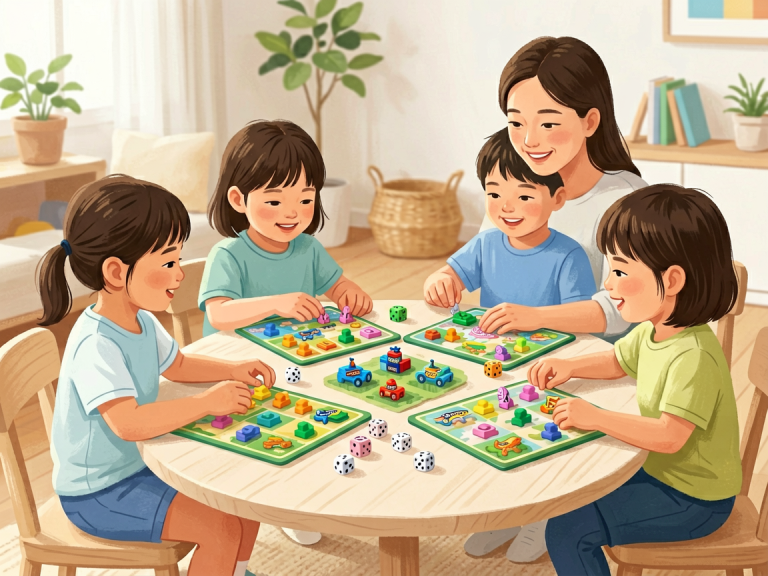
Early math skills are not about counting to one hundred; they are about understanding patterns, comparisons, and quantity. Beginner-friendly math toys include counting bears, number puzzles, and simple abacuses. These tools help children see that numbers represent real objects and can be manipulated. For example, a set of stacking cups in different sizes introduces the concept of seriation (ordering from smallest to largest), while a balance scale lets a child compare weights. Logic and reasoning come into play with toys like nesting boxes, pattern blocks, and simple board games that require turn-taking. Puzzles with increasing complexity—starting with two-piece knob puzzles and progressing to jigsaws of eight to twelve pieces—teach spatial reasoning and persistence. Magnetic tiles are another excellent option; they allow for free-form construction while incorporating symmetry, geometry, and counting as children build towers, houses, or bridges.
Creative and Imaginative Play Toys
Imagination is the engine of innovation, and learning toys that encourage pretend play are crucial for social and emotional development. Beginner sets might include play kitchens with plastic food, doctor’s kits, tool benches, or dollhouses. Through these toys, children rehearse real-life scenarios, practice empathy, and experiment with roles and rules. Art supplies—such as chunky crayons, washable markers, play dough, and finger paints—are also learning toys that foster creativity while developing fine motor control. When beginners mix colors or roll dough into shapes, they are not just having fun; they are engaging in scientific experimentation and artistic expression. Open-ended toys like building blocks, LEGO Duplo, and magnetic construction sets are particularly valuable because they have no single correct outcome. A child can build a tower today, a spaceship tomorrow, and a farm the next day, each time applying different problem-solving strategies. This flexibility ensures that the toy remains challenging and interesting over prolonged periods.
How to Choose the Right Learning Toy for a Beginner
Selecting the appropriate learning toy requires careful consideration of several factors, the most important being the child’s developmental stage. A toy that is too advanced can cause frustration, while one that is too simple will bore the child and offer no learning value. The golden rule is to choose toys that are slightly above the child’s current ability level but achievable with effort and perhaps minimal adult guidance. For example, a 12-month-old may be ready for a shape sorter with three large, distinct shapes, while an 18-month-old can handle one with six shapes and more similar outlines. Safety is non-negotiable: toys should be made of non-toxic materials, have no small parts that could be swallowed, and have smooth edges. Look for certifications like ASTM (American Society for Testing and Materials) or CE (Conformité Européenne) marks.
Durability matters because beginners often drop, throw, or chew on toys. Wooden toys that are well-sanded and painted with lead-free paint are generally sturdier than cheap plastic alternatives. Versatility is another criterion—a toy that can be used in multiple ways or grows with the child offers better long-term value. For instance, a set of wooden blocks can be used for stacking, sorting by color, counting, and building structures over several years. Finally, consider the child’s natural interests. A child who loves animals might engage more with an animal-themed puzzle or a farm playset; a child who is fascinated by music might benefit from a xylophone or a set of simple percussion instruments. The most effective learning toys are those that align with the child’s intrinsic motivation, because intrinsic motivation drives deeper engagement.
The Role of Parents and Educators in Maximizing Learning Toys
No toy, no matter how well-designed, can replace the guidance of a caring adult. Parents and educators play a critical role in scaffolding a child’s learning with toys. This means not simply handing over a toy and walking away, but sitting with the child, demonstrating how to use it, asking open-ended questions (“What happens if you put the big block on top of the little one?”), and celebrating small victories. The adult can also introduce vocabulary during play—naming colors, shapes, actions, and emotions. For example, while playing with a kitchen set, a parent might say, “You are stirring the soup. That’s a circular motion. The soup is hot, so we have to be careful.” This language-rich interaction enhances the toy’s educational value exponentially.
Moreover, adults should observe the child’s play patterns to identify strengths and areas that need support. If a child avoids puzzles, it might be because they are too difficult; the adult can offer a simpler version or break the task into smaller steps. Conversely, if a child repeatedly succeeds at a task, it is time to introduce a more challenging variant. Rotating toys every few weeks prevents boredom and keeps the child’s curiosity alive. Finally, adults should model a growth mindset by treating mistakes as learning opportunities. When a block tower falls, the parent can say, “Oh, that fell. Let’s see if we can build it differently so it stays up.” This teaches resilience and problem-solving—skills far more valuable than any specific content knowledge.
Conclusion
Learning toys for beginners are far more than mere entertainment; they are the building blocks of cognitive, motor, social, and emotional development. By providing sensory-rich experiences, fostering language and math skills, and encouraging creative expression, these toys set the stage for a lifelong love of learning. However, their effectiveness hinges on thoughtful selection based on developmental readiness, safety, and individual interests, as well as active adult involvement. In a world increasingly dominated by screens and passive media, well-chosen learning toys offer an irreplaceable tactile, interactive, and joyful pathway to understanding. For parents, caregivers, and educators looking to give beginners the best possible start, investing time and thought into learning toys is one of the most rewarding decisions they can make—because every block stacked, every puzzle solved, and every role played is a small but significant step toward a bright future.