Everyday STEM Play for Parents: Simple Learning Activities
Introduction
In a world increasingly shaped by science, technology, engineering, and mathematics (STEM), parents often wonder how to best prepare their children for the future. The answer may be simpler than you think: play. Young children are natural explorers, and when you infuse their playtime with STEM concepts, you’re not just keeping them entertained—you’re building critical thinking, creativity, and resilience. This guide is designed for parents who want to turn ordinary household moments into extraordinary learning opportunities. Whether your child is a toddler stacking blocks or a grade-schooler asking “why is the sky blue?” you’ll find practical, age-appropriate strategies here. No fancy equipment, no lesson plans—just the power of playful curiosity. Let’s dive into the world of STEM play, one giggle, mess, and “aha” moment at a time.
—
Why STEM Play Matters: The Science Behind Learning Through Play
Children’s brains are wired for exploration. When they build a tower, splash water, or sort objects by color, they are engaging in the same fundamental processes that scientists and engineers use: observing, hypothesizing, testing, and revising. Research in early childhood development shows that play-based learning strengthens neural connections, enhances problem-solving skills, and builds a positive attitude toward challenges.
For parents, understanding this “why” makes the journey more meaningful. You don’t need to teach formulas or vocabulary; you just need to create an environment where questions are welcomed and mistakes are seen as experiments. STEM play isn’t about turning your child into a genius—it’s about nurturing a lifelong love of discovery. And the best part? It strengthens your bond as you explore together.
—
Setting the Stage: Creating a STEM-Friendly Home Environment
You don’t need a laboratory to encourage STEM thinking. A few intentional tweaks to your home can spark endless investigations.
Stock a “Tinker Tray”
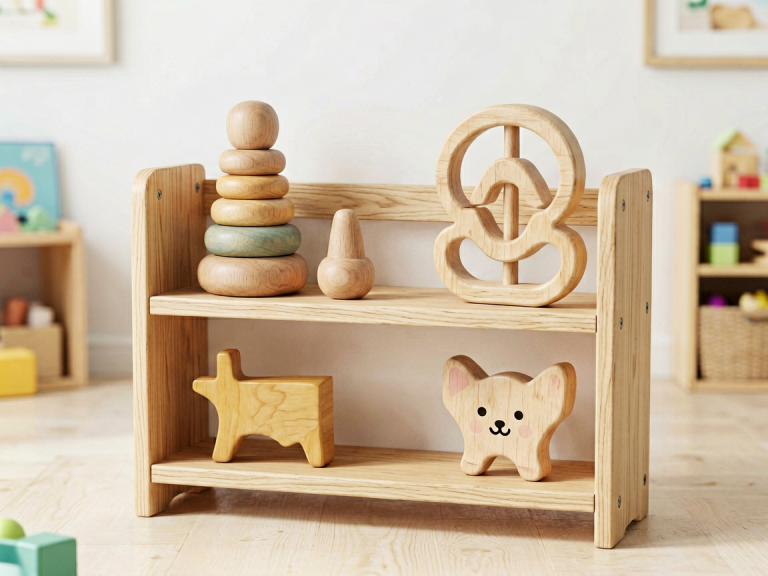
Fill a low shelf or drawer with open-ended materials: wooden blocks, plastic cups, cardboard tubes, magnets, measuring tapes, small containers, and old keys. Rotate items every few weeks to keep interest fresh. The goal is to let your child manipulate, combine, and test these materials freely.
Make Mistakes Visible
When you drop a spoon, say “Oops! Let’s see why it fell.” When a tower collapses, comment “That was a good test—now we know this shape isn’t stable.” By modeling curiosity about failures, you teach that “wrong” is just a stepping stone to “right.”
Ask Open-Ended Questions
Instead of “What color is this?” try “What do you think will happen if we add more water?” or “How could we make this ramp steeper?” These questions invite exploration rather than a single correct answer.
Create a “Wonder Wall”
Use a piece of poster paper or a whiteboard to jot down your child’s questions throughout the day. “Why do bubbles pop?” “How do birds fly?” Then, choose one question each week to explore together through a simple experiment or a library book.
—
Ages & Stages: Age-Appropriate STEM Activities
STEM play evolves with your child. Here’s a quick roadmap for different developmental stages.
Toddlers (1–3 years): Sensory and Cause-and-Effect
At this age, play is all about senses and motor skills. Provide water tables, sand, and stacking cups. Let them drop objects into containers and observe what fits. Talk about “up” and “down,” “full” and “empty.” A simple ramp made from a cardboard box can entertain for hours as they roll cars and balls.
Preschoolers (3–5 years): Pattern Play and Simple Engineering
Introduce pattern-making with colored pasta or beads. Build structures with blocks and test how many books they can hold. Use magnetic tiles to explore attraction and repulsion. At this stage, ask “What if we tried a different shape?”
Early Elementary (5–8 years): Systematic Experiments and Design Challenges
Kids this age can hypothesize and record results. Try the classic “sink or float” activity with household objects and a tub of water. Challenge them to build a bridge from newspaper and tape that can hold a toy car. Introduce simple coding concepts through board games like Robot Turtles or unplugged activities where you act as the “computer” and follow their instructions.
Older Children (8–12 years): Project-Based STEM
Encourage longer-term projects: building a simple circuit with a battery and LED, designing a catapult from popsicle sticks, or growing crystals. They can also use free apps like Scratch to create animations or program a simple game. At this age, children thrive when they are given a problem to solve with limited materials—like designing a water filter from a plastic bottle, sand, and gravel.
—
The “T” in STEM: Technology Play Without Screens
Technology doesn’t have to mean tablets. In fact, the best “T” experiences for young children are hands-on and screen-free.
Gears and Pulleys
Simple gear toys or a string-and-bucket pulley system let children see how machines transfer force. Hang a small basket on the staircase railing with a rope—they can haul toys up and down, learning about lifting and load.
Simple Machines in the Kitchen
Use a can opener, scissors, or a nutcracker. Talk about levers, wedges, and screws. Let them help you use a rolling pin (a cylinder) to flatten dough, and ask “Why does this make it easier?”
Analog Coding
Create “coding” grids on the floor with masking tape. Have your child stand in a square and give you commands: “move forward 2 steps, turn right, pick up the red block.” This teaches sequences and debugging when the command doesn’t work correctly.
Photography and Observational Technology
Give your child a cheap digital camera or your old smartphone (in airplane mode) and challenge them to photograph patterns, shadows, or textures. Zoom in on a leaf or a drop of water. This builds observation skills and introduces the idea of magnification and documentation.
—
The “E” in STEM: Engineering Challenges for Little Builders
Engineering is about designing solutions to problems. These challenges are perfect for a rainy afternoon.
The Marshmallow Tower
Give your child a handful of dry spaghetti sticks, some tape, and a single marshmallow. Challenge them to build the tallest free-standing tower that can hold the marshmallow on top. Watch them iterate—breaking spaghetti, reinforcing joints, and debating balance.
Water-Proof Fort
Using plastic wrap, cardboard, and tape, ask your child to build a small shelter that can keep a toy dry when you spray it with a water bottle. This introduces concepts of impermeability and structure.
The Newspaper Bridge
Roll newspapers into tight tubes and tape them together. Challenge your child to make a bridge that spans two chairs and holds a stack of books. They’ll quickly learn about compression, tension, and the need for supports in the middle.
Magnetic Maze
Draw a maze on a paper plate. Place a paperclip inside, and guide it through the maze using a magnet under the plate. This simple activity combines engineering (maze design) with physics (magnetic force).
—
The “S” and “M”: Science and Math in Daily Life
Science and math are everywhere—you just need to point them out.
In the Kitchen
Baking is a perfect math lesson: measuring cups, fractions, doubling recipes. Let your child guess how many raisins are in a box, then count to verify. Talk about why bread rises (yeast produces gas) or why salt makes ice melt.
In the Garden
Plant a bean in a clear cup with wet paper towel. Watch roots and stems grow. Measure height each day and make a chart. Discuss what plants need: sunlight, water, air. That’s biology and data collection in one.
On a Walk
Collect leaves, rocks, or sticks. Sort them by size, color, or texture. Count steps between streetlights. Look for symmetry in flowers or spider webs. Ask “How many red cars did we see?” and tally together.
With Water Play
Fill different containers: a tall skinny vase, a wide bowl, a measuring cup. Let your child pour water back and forth, discovering that the same amount of water looks different depending on the container shape (conservation of volume). Ice cubes floating in water lead to discussions about density.
—
Embracing the Mess: The Role of Failure in STEM Play
One of the most valuable lessons STEM play teaches is that failure is not the end—it’s data. When a structure falls, a plant wilts, or a magnet doesn’t pick up a coin, children have a chance to ask “Why?” and try again.
As a parent, your reaction sets the tone. Instead of jumping in to fix things yourself, try saying:
- “That didn’t work. What could we change?”
- “Let’s make a prediction about what might happen if we try a different approach.”
- “I see you’re frustrated. Let’s take a break and come back with fresh eyes.”
Praise the process, not the outcome. Celebrate the number of attempts, the creative ideas, and the questions asked. Over time, your child will develop a growth mindset—the belief that abilities can be developed through effort. This is arguably more important than any specific STEM fact.
Handling Messes
Yes, STEM play can get messy—water spills, paint smears, flour dust. Prepare by having a designated “mess zone” like a plastic tablecloth on the floor or an old shirt as a smock. Involve your child in cleanup; it’s part of the process. Wipe up spills together, wash materials, and talk about why cleaning is important for safety and respect for your space.
—
Resources for Continued Learning
You don’t have to reinvent the wheel. Many excellent (and often free) resources can support your STEM play journey.
Books for Parents
- *The Curious Kid’s Science Book* by Asia Citro
- *TinkerLab: A Hands-On Guide for Little Inventors* by Rachelle Doorley
Books for Children
- *Rosie Revere, Engineer* by Andrea Beaty
- *Ada Twist, Scientist* by Andrea Beaty
- *The Most Magnificent Thing* by Ashley Spires
Online Resources
- PBS Kids’ “Design Squad” (engineering challenges)
- National Geographic Kids (science facts and experiments)
- Scratch.mit.edu (free coding for ages 8+)
Everyday Material Substitutions
Don’t run out to buy special kits. Use:
- Toilet paper rolls as tunnels
- Egg cartons for sorting
- Yarn for measuring
- Old keys and paperclips for magnetic exploration
—
Conclusion
STEM play is not a curriculum—it’s a mindset. It’s the parent who stops to watch an ant carry a crumb, the child who pours water from cup to cup 20 times, and the shared laughter when a tower tumbles. By weaving science, technology, engineering, and math into ordinary moments, you give your child the greatest gift: the confidence to ask questions, the patience to fail, and the joy of discovery.
Start small. Pick one activity from this guide this week. Maybe it’s the marshmallow tower, or simply counting the number of stairs you climb. Observe your child’s wonder, and let their curiosity guide you. Remember, you don’t need to have all the answers—you just need to be curious together. Happy playing!
*(Word count: approximately 1,150 words)*