The Complete Early Learning Toys Buying Guide: How to Choose Toys That Truly Foster Development
Introduction
In the bustling world of modern parenting, few decisions feel as weighty—or as confusing—as choosing the right early learning toys for your child. Walk into any toy store or browse online, and you are immediately bombarded with flashing lights, cheerful melodies, and bold claims about “brain-boosting” and “STEM readiness.” Yet amid this sensory overload, many parents find themselves asking a fundamental question: *What actually makes a toy educational? And how do I choose one that my child will genuinely benefit from, rather than one that just looks impressive on the shelf?*
This guide is designed to demystify the process. Drawing on child development research, safety standards, and practical parenting wisdom, I will walk you through the key stages of early childhood, the essential features of high‑quality learning toys, and the specific types of toys that support different skill areas. By the end, you will feel confident in making informed, purposeful purchases that nourish your child’s curiosity, creativity, and growth—without breaking the bank or cluttering your home with toys that quickly lose their magic.
Understanding Developmental Stages: The Foundation of Smart Toy Choices
Before you even begin scrolling through product listings, it is crucial to understand that a “good” toy is always relative to your child’s current developmental stage. A toy that is perfect for a six‑month‑old may be utterly boring—or even dangerous—for a two‑year‑old. Early childhood is a period of rapid, uneven growth, and the most effective toys are those that meet a child exactly where they are, offering just enough challenge to keep them engaged without causing frustration.
0–6 Months: Sensory Exploration and Bonding
Newborns and young infants are primarily driven by their senses. They are learning about the world through touch, sight, sound, and eventually taste and smell. At this stage, toys should be simple, safe, and highly sensory. Look for:
- High‑contrast black‑and‑white cards or mobiles, which stimulate developing vision.
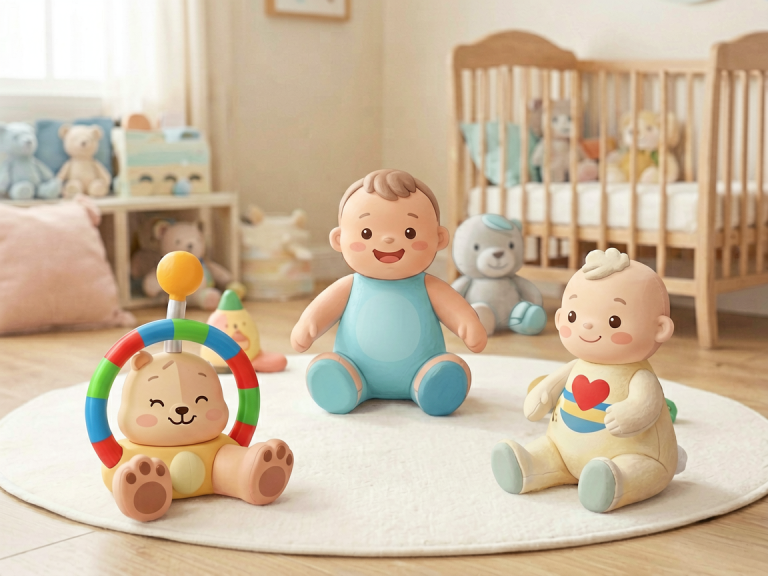
- Soft, rattling or crinkly fabric toys that encourage grasping and auditory feedback.
- Unbreakable mirrors that help babies begin to recognize their own reflection.
- Gentle music boxes or lullaby players that soothe and provide a rhythmic auditory pattern.
Key purchasing principle: *Safety first.* Ensure that all toys are free of small parts, made from non‑toxic materials, and easy to clean. Avoid anything with long strings or cords that could pose a strangulation risk.
6–12 Months: Grasping, Mouthing, and Cause‑and‑Effect
As babies become more mobile—sitting up, crawling, and even pulling themselves to stand—their toys need to support emerging motor skills and their growing understanding of cause and effect. During this period, everything goes into the mouth, so durability and non‑toxicity remain paramount. Recommended toys include:
- Stacking rings, nesting cups, or soft blocks that teach size, order, and fine motor control.
- Activity centers or busy boards with knobs, levers, flaps, and buttons that trigger sounds or movements.
- Teething rings with varied textures that provide oral stimulation and relief.
- Simple, sturdy balls that roll, spin, or make noise when batted around.
At this age, babies also begin to enjoy interactive play with caregivers. Toys that encourage peek‑a‑boo, like soft flap books, can be both delightful and educational.
12–18 Months: Walking, Language, and Pretend Play
Toddlers who are taking their first steps become explorers in every sense. Their cognitive world expands rapidly, and they start to imitate the actions they see adults perform. Language development also takes off, with many children saying their first words between 12 and 15 months. Look for toys that:
- Encourage walking and balance, such as push‑along carts or sturdy ride‑on toys (with a low center of gravity).
- Introduce simple vocabulary through chunky board books, picture cards, or toys that name animals or objects when pressed.
- Support early pretend play, such as toy phones, plastic dishes, or a small doll with a blanket.
- Promote problem‑solving, like shape sorters with large, easy‑to‑grasp pieces.
Avoid toys that require precise assembly or have many tiny components, as toddlers at this age are still developing their pincer grasp and attention span.
18–24 Months: Imitation, Imagination, and Fine Motor
The second year of life is a whirlwind of imagination and experimentation. Toddlers begin to engage in more complex pretend play, often imitating daily routines like cooking, cleaning, or caring for a baby. Their fine motor skills improve, allowing them to manipulate smaller objects. Great choices for this stage include:
- Simple puzzles with 2–4 large pieces featuring familiar images (animals, vehicles).
- Art supplies like chunky crayons, washable markers, and finger paints (always supervised).
- Building sets with large, interlocking bricks (e.g., Duplo) that encourage creativity and spatial reasoning.
- Musical instruments like drums, shakers, or xylophones that allow self‑expression and rhythm exploration.
At this age, children also benefit from toys that promote turn‑taking and simple rules, such as cooperative board games designed for toddlers.
2–3 Years: Language Explosion, Classification, and Social Play
Between ages two and three, children’s vocabularies explode from roughly 50 words to several hundred. They begin to categorize objects, understand concepts like “big/little” and “same/different,” and engage in parallel play alongside peers. This is a golden window for introducing more structured learning toys:
- Matching games (memory cards, lotto boards) that sharpen visual discrimination and memory.
- Lacing beads or threading toys that refine hand‑eye coordination.
- Simple construction sets with wheels, connectors, and people figures for building narratives.
- Role‑play costumes and props (doctor kits, tool sets, play kitchen) that support social‑emotional learning and language use.
Digital toys can be introduced sparingly at this age—think simple, ad‑free apps that require tapping or dragging—but physical, manipulative play should still dominate.
3–5 Years: Pre‑Academic Skills, Creativity, and Cooperation
Preschoolers are ready for toys that prepare them for formal schooling while still honoring the joy of unstructured play. Their imaginations run wild, and they can follow multi‑step instructions, work in small groups, and express complex ideas. Excellent investments include:
- Alphabet and number puzzles, magnetic letters, and counting bears that build early literacy and numeracy.
- Advanced building systems (LEGO Classic sets, magnetic tiles, wooden unit blocks) that teach geometry, balance, and physics.
- Art and craft kits (scissors, glue, beads, clay) that encourage creativity and fine motor precision.
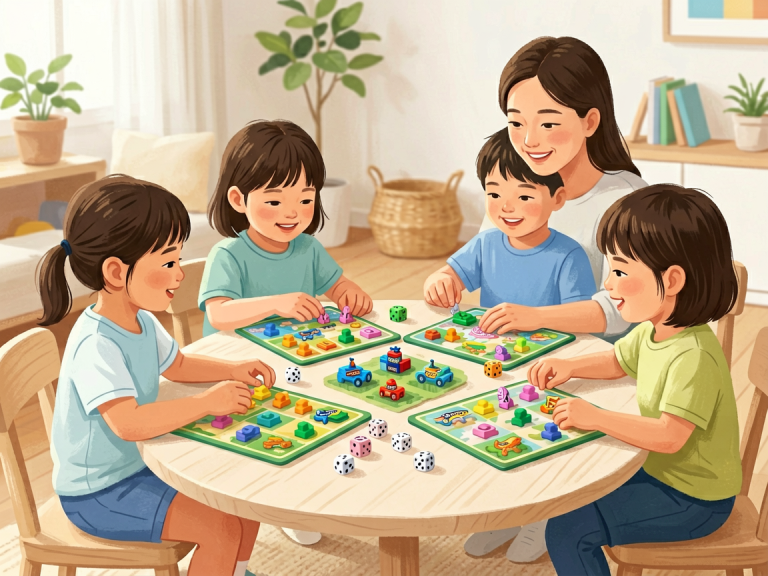
- Cooperative board games that require teamwork rather than competition, teaching patience and social skills.
- Science exploration toys like magnifying glasses, simple microscopes, or nature collection kits that spark curiosity about the natural world.
At this stage, children also benefit greatly from toys that can be used in multiple ways—open‑ended toys that adapt to their ever‑changing interests.
Key Factors to Consider When Buying Early Learning Toys
Now that you have a developmental map, let’s look at the universal criteria that separate a genuinely educational toy from a flashy distraction. Regardless of your child’s age, keep these five factors in mind.
Safety – The Non‑Negotiable Baseline
Safety is not just a feature; it is the foundation. Check for:
- Non‑toxic materials: Look for labels like “BPA‑free,” “phthalate‑free,” “lead‑free,” and CE or ASTM certification (depending on your region).
- No small parts: Follow the “toilet paper tube test”—if a part can fit inside a standard toilet paper tube, it is a choking hazard for children under three.
- Sturdy construction: Avoid toys with sharp edges, loose components, or weak joints that could break easily.
- Age recommendations: While every child develops at their own pace, age labels are based on safety testing and should be respected, especially for children under three.
Educational Value – Open‑Ended vs. Closed‑Ended
A crucial distinction: open‑ended toys (blocks, play dough, art supplies) can be used in countless ways, encouraging creativity, problem‑solving, and divergent thinking. Closed‑ended toys (a puzzle with only one solution, a toy that triggers a single song) teach specific skills but can limit play once mastered. The best early learning toy collection includes a healthy mix, with a strong emphasis on open‑ended options that grow with your child.
Materials and Durability – Quality Over Quantity
Children learn through repetition and exploration, which means toys need to withstand drops, throws, and enthusiastic chewing. Solid wood, food‑grade silicone, and high‑density plastic (free of harmful chemicals) are excellent choices. Avoid toys that feel flimsy or that have painted surfaces that might chip. Also consider ease of cleaning—toys that can be wiped down or tossed in the washing machine will stay hygienic longer.
Multi‑Sensory Stimulation – Engaging More Than One Sense
Toys that engage multiple senses simultaneously are especially effective for young learners. A toy that combines visual patterns, tactile textures, and a gentle sound creates a rich learning experience. However, be wary of toys that are overstimulating—too many flashing lights, loud noises, or constant automation can actually hinder a child’s ability to focus and explore independently.
Child’s Interest – The Most Underrated Factor
No matter how “educational” a toy is, it will teach nothing if your child ignores it. Pay close attention to what fascinates your little one: do they love hiding objects? Stacking things? Mimicking household chores? Mirroring their current passions will ensure engagement. The same toy can be introduced at different ages in different ways—a simple set of blocks can be a teether for a baby, a stacking challenge for a toddler, and a castle for a preschooler.
Types of Early Learning Toys by Skill Area
Beyond developmental stages and general criteria, it helps to think about the specific skills you want to nurture. Here is a breakdown of toy categories aligned with core areas of early development.
Cognitive and Problem‑Solving Toys
These toys challenge a child to think, plan, and reason.
- Puzzles (from 2‑piece knobs to 24‑piece interlocking)
- Shape sorters and nesting blocks
- Memory matching games
- Simple board games that require following rules
- Coding toys for preschoolers (e.g., a programmable robot that follows a sequence of arrows)
Language and Literacy Toys
Exposure to words and stories is the bedrock of future reading success.
- Board books with textures, flaps, or rhymes
- Alphabet puzzles and magnetic letters
- Picture cards for naming objects and actions
- Talking or sound‑toys that label animals, colors, or numbers
- Puppets and storytelling sets that encourage narrative creation
Fine Motor and Gross Motor Toys
Physical development is just as important as cognitive growth, and it directly impacts handwriting, self‑care, and overall confidence.
- Fine motor: Lacing cards, bead threading, tweezers and pom‑poms, play dough, scissors and safety scissors, finger paints
- Gross motor: Push toys, ride‑on toys, balance beams (low to the ground), soft balls, stepping stones, tunnels and tents
Social‑Emotional and Pretend Play Toys
These toys teach empathy, cooperation, and emotional regulation—skills that are increasingly recognized as essential for school readiness.
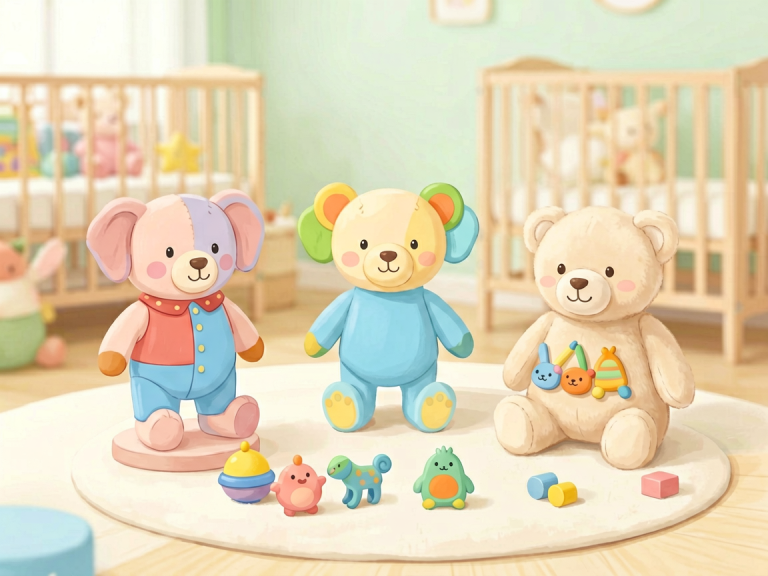
- Dolls, stuffed animals, and baby accessories (bottles, diapers, strollers)
- Play kitchens, toolsets, doctor kits, and cash registers
- Mirrors and emotion cards that help children identify feelings
- Cooperative games where players work together toward a common goal
Creative and Artistic Toys
Creativity is not just about art; it’s about flexible thinking and self‑expression.
- Crayons, markers, chalk, and washable paints
- Dough, clay, or kinetic sand
- Stamps, stickers, and collage materials
- Musical instruments (simple drums, shakers, xylophones, harmonicas)
- Costumes and dress‑up clothes
Top Recommendations and Shopping Tips
Brands and Products to Consider
While you do not need to buy expensive brands, some manufacturers consistently produce safe, durable, and developmentally appropriate toys. A few standouts include:
- Melissa & Doug: Excellent for wooden puzzles, pretend play sets, and art supplies.
- Lovevery: A subscription‑based service that delivers stage‑based toys with expert guidance.
- LEGO Duplo and Magna‑Tiles: Open‑ended construction toys that last for years.
- Hape and PlanToys: Eco‑friendly wooden toys with strong safety records.
- Manhattan Toy: Soft, sensory toys for infants and toddlers.
Budget‑Friendly Alternatives
Educational toys do not have to cost a fortune. Many of the best learning materials are everyday household items: empty boxes, plastic containers, scarves, pots and spoons. Thrift stores and online marketplaces often have high‑quality wooden toys at a fraction of retail prices. And when you do buy new, focus on fewer, better‑made items rather than a pile of cheap plastic.
Avoid the “Shiny Object” Trap
It is easy to be seduced by toys that promise to teach your child to read by age two. In reality, the most effective early learning happens through hands‑on, repeated, joyful interaction—not through screens or gimmicks. Be suspicious of claims that sound too good to be true. Trust your instincts: if a toy looks like it does all the work, your child likely has little to learn from it.
Rotate Toys, Don’t Overwhelm
A final, powerful tip: keep only a small number of toys available at any given time. Rotate them every two to three weeks. This practice maintains novelty, reduces clutter, and helps your child engage more deeply with each toy. You will be amazed at how a set of blocks that was “boring” two weeks ago becomes fascinating again after a short break.
Conclusion: Trust the Process, Not the Package
Choosing early learning toys is not about buying the “smartest” product on the market. It is about understanding your child’s unique developmental journey, selecting toys that align with their current needs and interests, and remembering that the most powerful learning tool in their environment is you. A simple cardboard box, a warm lap, and a parent who talks, sings, and plays alongside them will always outshine the most advanced electronic toy.
Use this guide as a compass, not a strict map. Observe your child, trust your intuition, and allow room for mess, for repetition, and for the glorious, unstructured freedom of play. When you do, the toys you choose will become not just objects, but stepping stones to a lifetime of curiosity and joy.